
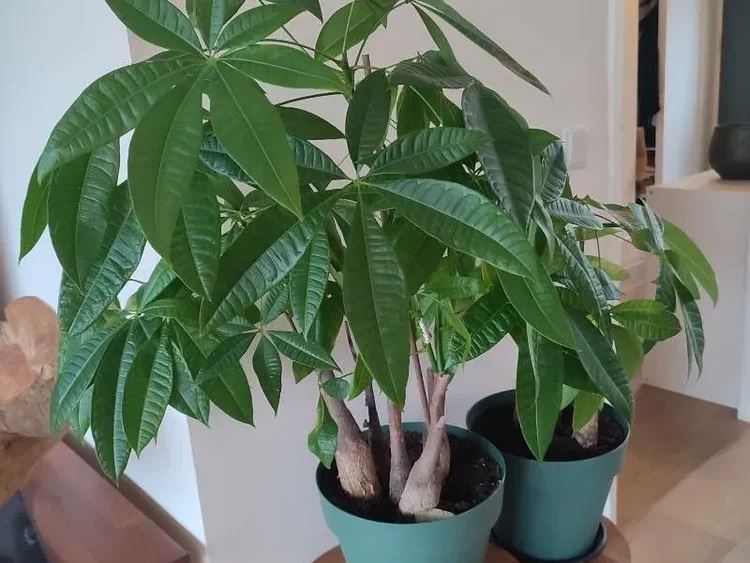
Money tree care runs on three habits: bright, indirect light, a deep drink only when the top two inches of soil have dried out (roughly every one to two weeks), and warmth with a little humidity. Do those and the plant with the braided trunk and the lucky reputation is one of the easiest small trees you can grow indoors.
A few things worth knowing up front, because this plant comes with surprises. That signature braided trunk is not one tree: it is three to five separate saplings woven together while young, and the braid is something you can continue yourself as it grows (the how is below). The species can hit 60 feet tall in the wild, yet lives happily at desk size in a pot, and how big yours gets is genuinely your choice. It is also one of the rare popular houseplants that is non-toxic to cats and dogs, which quietly explains half its popularity.
And one warning that saves new owners a panic: the money tree is a bit of a drama queen. Move it to a new room, park it near a draft, or change its routine, and it may protest by dropping a flurry of leaves. This is temper, not death, and the full explanation, plus everything else, waits below: watering and light in detail, the best soil, how to braid it, how to propagate a money tree into free new plants for pennies, and the fixes for every common complaint.
Cheat sheet at the bottom. First, sixty seconds on what this plant actually is, because its origin story explains every care rule.
Meet the Money Tree (A Swamp Tree in a Sweater)
The money tree is Pachira aquatica, a tropical tree from the wetlands of Central and South America, where it grows along rivers and in swampy ground with its feet near water and its head in humid air.
That origin explains its personality indoors. It loves humidity and warmth, because it is built for a floodplain. It tolerates an occasional overwatering better than most houseplants, same reason, yet it still cannot sit in a soggy pot forever, because standing water in a container is stagnant in a way a flowing swamp never is. And its love of steady, warm, bright conditions is why sudden change is the thing it hates most.
The lore, briefly, because someone will ask at a dinner party: the braided trunk is said to trap good fortune, the five-lobed leaves map to the five elements of feng shui, and the plant is a classic gift for graduations, new businesses, and housewarmings. The luck is unverifiable. The plant being a generous, forgiving grower is not.
And the practical blessing: the ASPCA lists Pachira aquatica as non-toxic to cats and dogs. In a category full of plants that require negotiating with your pets, this one simply does not.
Introductions made. Now the care, starting with the input that controls its growth rate.
Light: Bright and Indirect (The Indoor Sweet Spot)
An indoor money tree plant does its best work in bright, indirect light: near an east window, a few feet back from a south or west one, or behind a sheer curtain. That is the setting where it grows fast, full, and deep green.
What it tolerates: medium light, gracefully. A money tree in a dimmer corner survives fine, just slower and leggier, stretching toward the nearest window.
What it resents: harsh, direct midday sun, which scorches the leaves into crispy brown patches, and sudden relocations, which trigger the leaf-drop tantrum covered below. If a plant needs to move to a brighter spot, move it in stages over a week or two.
Two small habits with big returns: give the pot a quarter turn each time you water so the tree grows straight instead of leaning, and know that a standard full-spectrum grow light works perfectly for a money tree in a dim apartment or a dark winter, run 10 to 12 hours a day.
Light decides the growth rate. Water decides survival, and the rule is one sentence long.
Watering a Money Tree: Deep Drinks, Long Gaps
The rule: water thoroughly, then not at all until the top two inches of soil are dry. Sink two fingers in to the second knuckle; dry at that depth means water today, any dampness means wait.
When you water, really water: pour until it runs from the drainage holes, let it finish draining, and empty the saucer, because a money tree standing in a puddle is a money tree developing root rot, swamp heritage or not. In practice the rhythm lands around every 1 to 2 weeks in spring and summer, stretching to every 2 to 3 weeks or longer in winter, when growth and thirst both slow. Trust the knuckle test over the calendar every time.
How much water does a money plant need? Exactly as much as makes it to the drainage holes, however often the soil asks. Volume-per-schedule thinking is what kills these plants; the soak-then-dry rhythm is what grows them.
The humidity half of the equation: as a wetland tree, it appreciates 50 percent humidity or more, which most homes miss in winter. A pebble tray under the pot, a small humidifier nearby, or grouping it with other plants covers the gap, and crispy brown leaf edges are usually the plant requesting exactly this.
Can a money tree grow in water? Cuttings root beautifully in a glass of water (the propagation section below), but a mature money tree cannot live in water permanently; the roots need the oxygen of soil. Water is the nursery, not the home.
Soil and Repotting: The Best Mix Is a Fast One
The best soil for a money tree drains quickly while holding light moisture: a quality peat-based potting mix cut with about a third perlite or coarse sand nails it, and a bagged cactus or succulent mix with a handful of regular potting soil works just as well. Dense, water-hoarding soil is the silent partner in almost every root-rot story.
The pot: drainage holes, no exceptions, in a container only an inch or two wider than the root ball. Money trees actually like being slightly snug, and a snug pot dries on schedule.
Repotting: every 2 to 3 years in spring, one pot size up, or sooner if roots circle out of the drainage holes or water races through without soaking in. Keeping it in the same size pot with refreshed soil is also a legitimate move, and it is one of the levers for controlling size, covered shortly.
Feeding: a balanced liquid fertilizer at half strength, once a month through spring and summer, and nothing at all in fall and winter. Money trees are light feeders, and overfeeding buys you burned leaf tips, not growth.
Why Is My Money Tree Dropping Leaves? (The Drama Queen Clause)
Sooner or later, nearly every money tree owner watches healthy-looking leaves yellow and drop and assumes the worst. Here is the reassuring truth: leaf drop is this plant’s all-purpose protest, and it is usually temporary.
The most common trigger is change. A move to a new room, a ride home from the store, a draft from a door or AC vent, a heater kicking on nearby, a cold window in January: any sudden shift in light, temperature, or airflow can make a money tree shed leaves in complaint. The fix is stability: pick a good spot away from vents and drafts, keep it between roughly 65 and 80°F, and leave it there. Settled plants regrow their lost leaves within weeks.
The second trigger is water, at either extreme. Yellowing, soft leaves with soil that stays damp points to overwatering, so let it dry out properly and recheck your drainage. Crispy, curling, dropping leaves with bone-dry soil is thirst, solved with a deep soak and a shorter gap next time.
Brown, crispy edges on otherwise healthy leaves are the low-humidity signature, and the pebble tray from the watering section is the cure.
When to actually worry: a soft, darkening, mushy area on the trunk. That is rot from chronic overwatering, and it is the one money tree emergency: unpot, trim away mushy roots with clean scissors, let it dry a day, and repot in fresh, fast-draining mix, then water like a reformed person.
And yes, the leaves grow back. A money tree that keeps its trunk firm has kept everything that matters.
How Big Does a Money Tree Get? (Entirely Up to You)
In its native wetlands, Pachira aquatica is a genuine 60-foot tree. In your living room, it is whatever size you decide.
Indoors, a money tree typically tops out around 6 to 8 feet if you let it, and holds happily at desk or tabletop size if you do not. So how fast do money trees grow? Young, happy plants move quickly, up to a couple of feet a year in good light, making this one of the faster houseplants when its conditions are right, and a slow money tree is almost always a dim one.
The two size levers: the pot and the pruners. A snug pot politely caps root growth, which caps height. Pruning (below) shapes the rest. Between them, the same plant can be a bonsai, a bookshelf plant, or a six-foot floor tree, and money trees are in fact a classic beginner bonsai subject for exactly this reason.
Lifespan: a well-kept indoor money tree commonly lives 10 to 15 years, and plenty push well past that. The braided gift plant from a graduation can genuinely be a housewarming plant two homes later.
Pruning, the short version: in spring, snip just above a leaf node with clean shears to shape it or cap its height; pinch new growing tips to encourage bushiness instead of height. Every healthy cutting you remove is also propagation material, which brings up the best bargain in this entire guide.
How to Propagate a Money Tree (Free Plants From Cuttings)
Money trees propagate readily from stem cuttings, and one healthy plant can quietly fund gifts for everyone you know.
Take the cutting: in spring or summer, cut a 4 to 6 inch section of healthy stem just below a leaf node, with two or three nodes and a few leaves on it. Strip the leaves from the bottom node or two, since nodes are where roots emerge.
The water method (the fun one):
- Stand the cutting in a glass of water with the bare nodes submerged and the leaves above.
- Bright, indirect light, and fresh water every few days.
- Roots appear in 2 to 4 weeks, sometimes sooner in summer.
- When roots reach an inch or two, pot the cutting in the fast-draining mix from the soil section, keep it lightly moist for its first couple of weeks, and treat it as a normal (small, proud) money tree from there.
The soil method (the sturdy one): dip the cut end in rooting hormone, plant it directly in a small pot of moist mix, and keep it warm, bright, and lightly humid (a loose clear bag over the pot for the first weeks helps). Roots take a similar few weeks, and soil-rooted cuttings skip the water-to-soil transition entirely.
A note on seeds: money trees can be grown from the seeds of their wild-type pods, but indoor plants essentially never flower or fruit, so seed-growing is a curiosity for those who can source seeds, not the normal path. Cuttings are how money trees multiply in the real world.
Which leaves the question everyone with a braided plant eventually asks.
How to Braid a Money Tree (And Continue One)
The braid on a store-bought money tree was made in the nursery, from three to five separate young plants grown side by side and woven together while their green trunks were still soft and flexible. Once trunks mature and turn woody, they are set for life, which means two things: you cannot braid a single mature trunk, and you absolutely can keep an existing braid going.
To continue a braid: as the plants grow, new flexible green stem emerges above the existing woody braid. Every month or two, gently weave that new growth onward in the same over-under pattern, working loosely, because a tight braid strangles the trunks as they thicken. Tie the top of the braid off with a soft plant tie or loose string, never wire, and remove side shoots low on the trunks so the braid stays clean.
To braid from scratch: pot three to five young money tree plants (your propagated cuttings, conveniently) close together, wait until they are 10 inches or more of still-green stem, braid loosely, tie softly at the top, and keep weaving as they grow. In a year or two you have made the plant that stores sell at a markup.
One kindness: braided or not, the care is identical, and a braided plant that drops some interior leaves where the trunks meet is just shading itself, not failing.
Quick FAQ
Is a money tree safe for cats and dogs? Yes, non-toxic to both per the ASPCA, one of the safest popular houseplants there is.
Can it live outdoors? Only in genuinely tropical climates (roughly USDA zones 10 to 12) can it live outside year-round. Everywhere else it can summer on a shaded patio, coming in well before nights drop below about 50°F.
Does a money tree need sunlight? It needs light, not direct sun: bright and indirect is the target, medium light is tolerated, and a grow light substitutes fully.
Why is it called a money tree? The braided-trunk-traps-fortune lore, the five-lobed “lucky” leaves, and decades of being the default prosperity gift. The name is marketing with folklore roots, and the plant is good enough not to need it.
Bonsai money tree care: any different? Same rules, smaller margins: the tiny pot dries faster (check water more often) and shaping is ongoing. Otherwise identical.
The Cheat Sheet (Save This)
Screenshot this and keep the luck alive.
Light: bright and indirect, no harsh direct sun, quarter-turn at each watering. Grow light works.
Water: soak until it drains, then nothing until the top two inches are dry (the two-knuckle test). Every 1 to 2 weeks in summer, slower in winter. Empty the saucer, always.
Comfort: 65 to 80°F, no drafts or vents, humidity from a pebble tray or humidifier.
Soil: fast-draining mix (potting soil plus a third perlite), snug pot with drainage, repot every 2 to 3 years in spring. Feed half-strength monthly, spring and summer only.
Leaf drop: usually protest over a move, draft, or watering extreme. Stabilize the spot, fix the water, and the leaves return. Soft trunk is the real emergency.
Free plants: 4 to 6 inch cuttings root in a glass of water in 2 to 4 weeks.
The braid: three to five plants woven young. Keep weaving the new green growth loosely; never wire, never tight.
The Bottom Line
Growing a money tree is mostly the art of being boring: a bright spot it never has to leave, a deep drink only when the soil has truly dried, and a tolerance for the occasional theatrical leaf drop when life changes around it.
Give it that stability and it gives back for a decade or more: a fast-growing, pet-safe, braid-trunked little tree that shrugs off beginners’ mistakes and hands out free copies of itself on request. The fortune part is folklore. The value part is real.