
The rainbow Pride flag is still the most recognized LGBTQ+ symbol in the world, but it is not the only flag that matters. Across LGBTQ+ communities, different Pride flags help people express identity, visibility, history, solidarity, and belonging. Some represent sexual orientation, some represent gender identity, some highlight intersex visibility, and others focus on inclusion across race, gender, and community experience. During Pride Month 2026 and all year long, learning LGBTQ+ flag meanings is one simple way to show respect and support.
Gilbert Baker Pride Flag
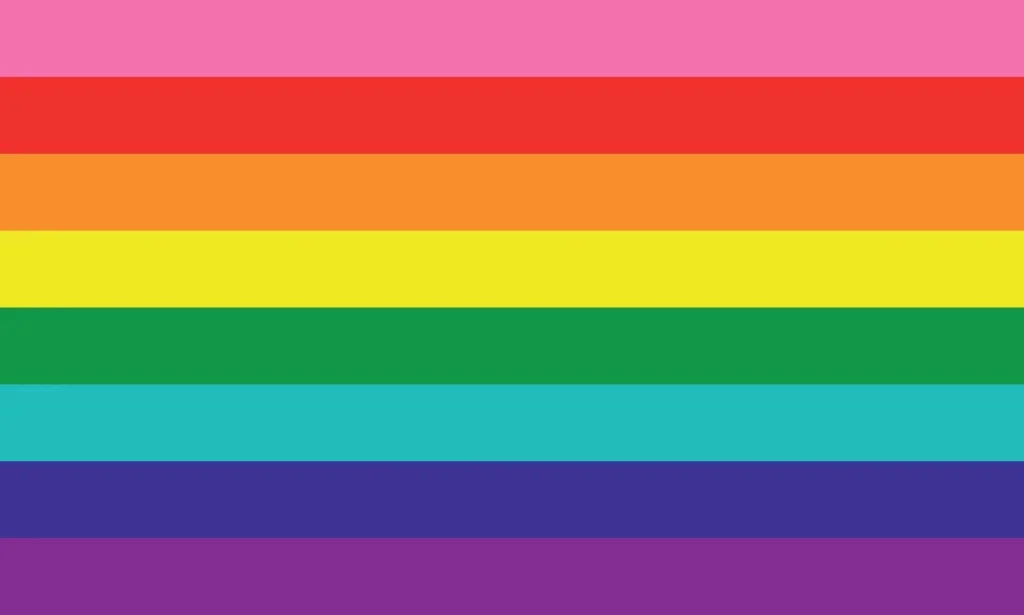
The original rainbow Pride flag was designed by artist Gilbert Baker in 1978 after Harvey Milk, one of the first openly gay elected officials in California, encouraged the creation of a new symbol for the gay community. The first version had eight stripes, each with its own meaning.
Its colors were:
- Hot pink: Sex
- Red: Life
- Orange: Healing
- Yellow: Sunlight
- Green: Nature
- Turquoise: Magic or art
- Indigo or blue: Serenity or harmony
- Violet: Spirit
This flag matters because it gave LGBTQ+ people a bright, public, joyful symbol at a time when visibility itself was powerful.
1978 Seven-Stripe Pride Flag
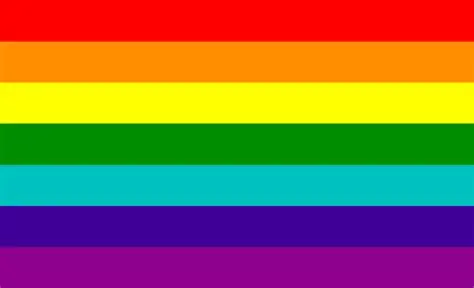
The seven-stripe Pride flag came shortly after the original eight-stripe version. Hot pink was removed because the fabric was difficult to produce at scale, especially as demand for Pride flags increased after Harvey Milk’s assassination in 1978.
This version kept the rainbow spirit while making the flag easier to manufacture and distribute. It is an important step in the history of the rainbow Pride flag because it shows how community symbols can change for practical reasons while still keeping their deeper meaning.
Six-Color Rainbow Pride Flag
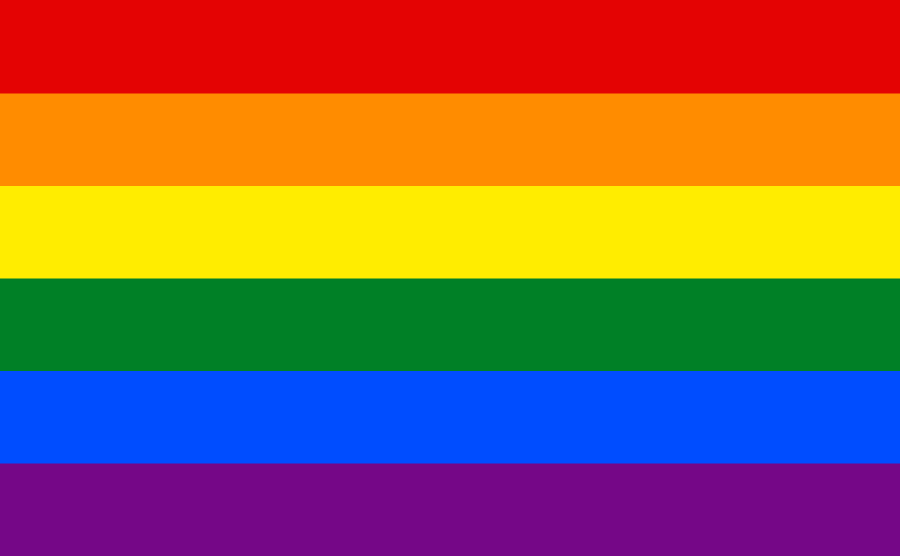
The six-color rainbow Pride flag is the version most people recognize today. It usually includes red, orange, yellow, green, blue, and violet stripes, and it represents broad LGBTQ+ pride, visibility, and community.
This flag is often used at Pride parades, schools, homes, workplaces, community centers, and public events. For many people, it remains a simple and powerful sign that LGBTQ+ people exist, belong, and deserve respect.
Philadelphia People of Color Inclusive Flag
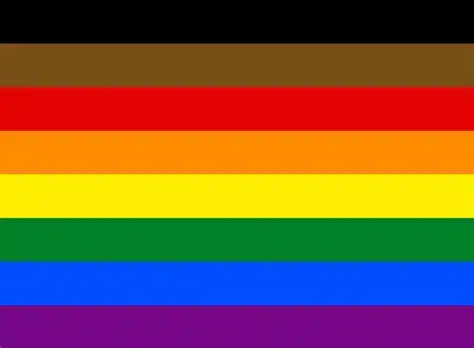
The Philadelphia People of Color Inclusive Flag was introduced in 2017. It added black and brown stripes to the traditional rainbow flag to recognize Black and Brown LGBTQ+ people and the racism they have faced both inside and outside LGBTQ+ spaces.
The added stripes made the message clear: LGBTQ+ pride should include racial justice and visibility for people of color. This flag helped influence later designs, including the Progress Pride Flag.
Progress Pride Flag
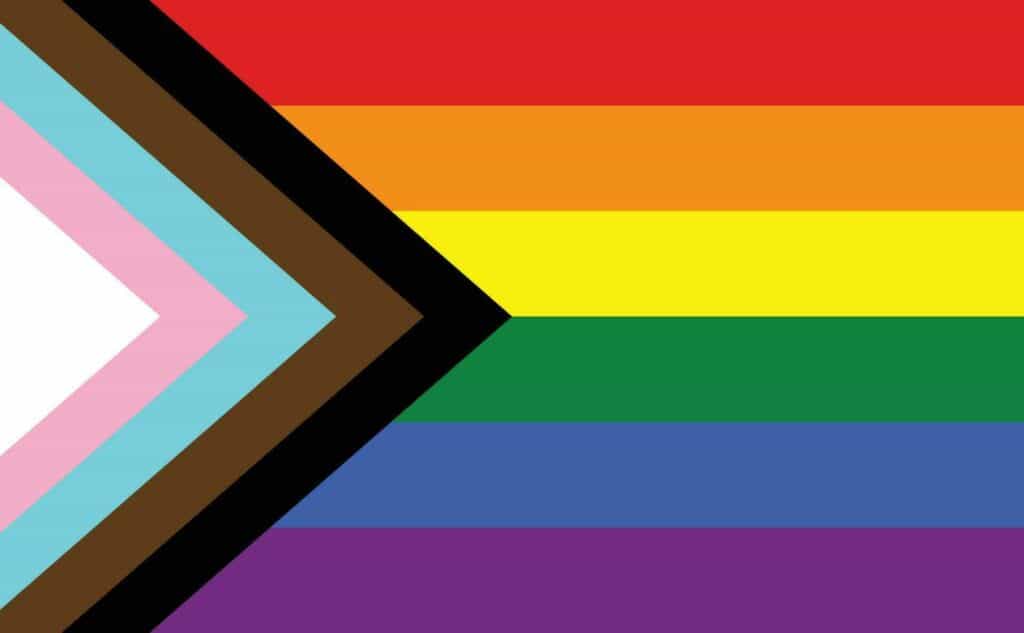
The Progress Pride Flag was designed by Daniel Quasar in 2018. It builds on the six-color rainbow flag and adds a chevron with black, brown, light blue, pink, and white. The black and brown stripes recognize LGBTQ+ people of color, while the light blue, pink, and white come from the transgender Pride flag.
The arrow shape points forward, symbolizing progress, movement, and the work still needed for full inclusion. The design also places marginalized communities at the hoist side of the flag, where the eye naturally notices them first.
Intersex-Inclusive Progress Pride Flag
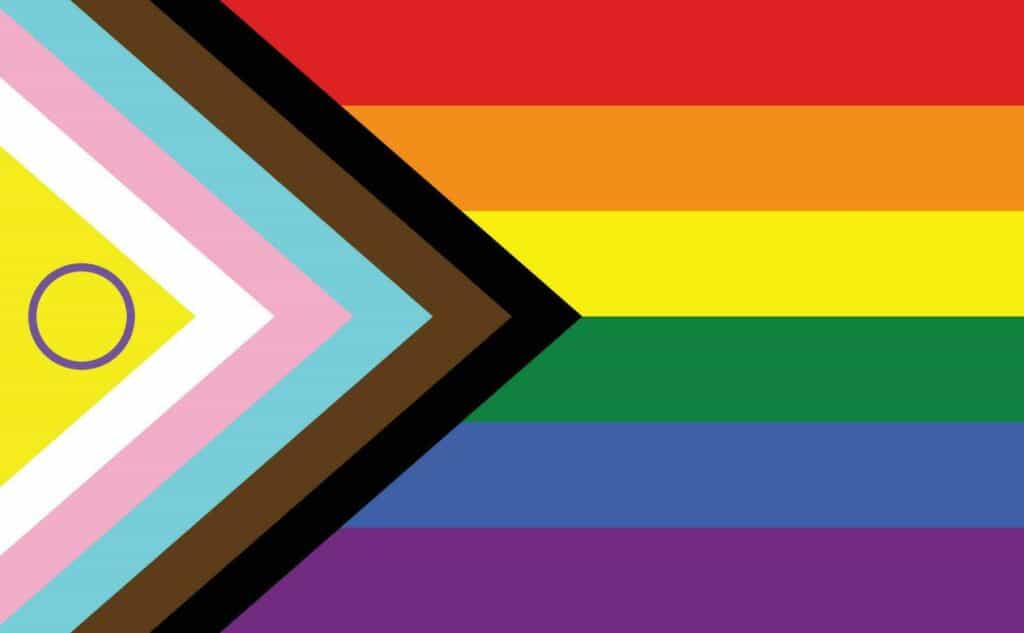
The Intersex-Inclusive Progress Pride Flag adds the intersex flag symbol to the Progress Pride Flag. The version is often associated with Valentino Vecchietti’s 2021 redesign, which added a yellow triangle and purple circle to represent intersex visibility.
The yellow field and purple circle are connected to the intersex flag designed by Morgan Carpenter in 2013. The circle is often understood as a symbol of wholeness and bodily autonomy, while the colors avoid traditional gendered pink and blue associations.
Transgender Pride Flag
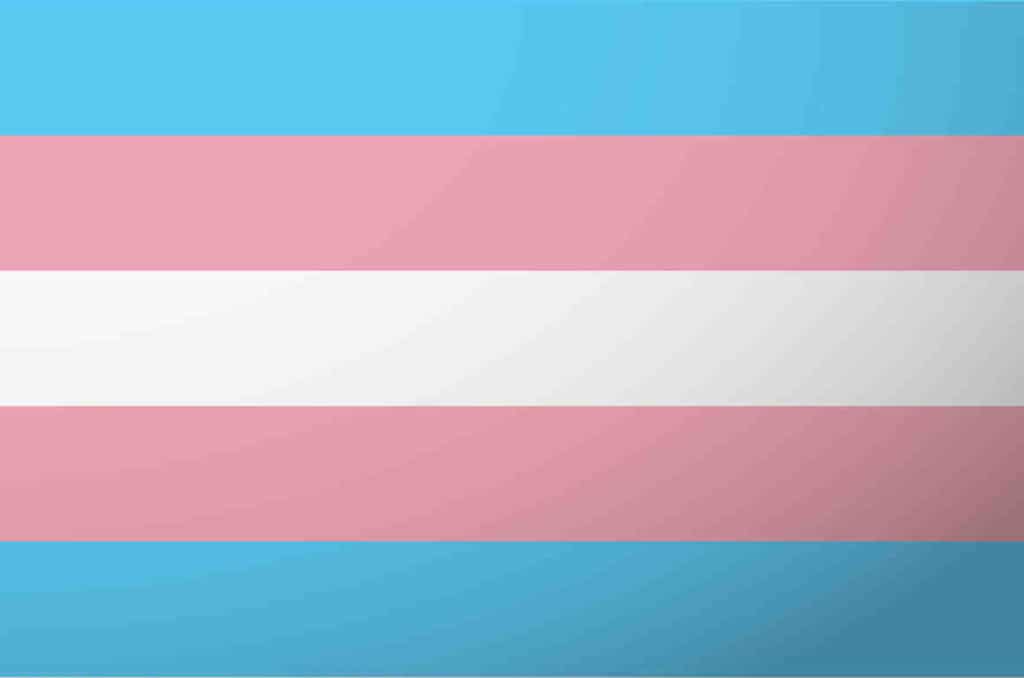
The transgender Pride flag was designed by Monica Helms in 1999 and first displayed at a Pride parade in Phoenix, Arizona, in 2000. It has five stripes: light blue, pink, white, pink, and light blue.
The light blue and pink are traditionally associated with boys and girls, while the white stripe represents people who are transitioning, intersex, gender-neutral, or outside traditional gender categories. Helms has also explained that the flag is designed so there is no wrong way to fly it.
Bisexual Pride Flag
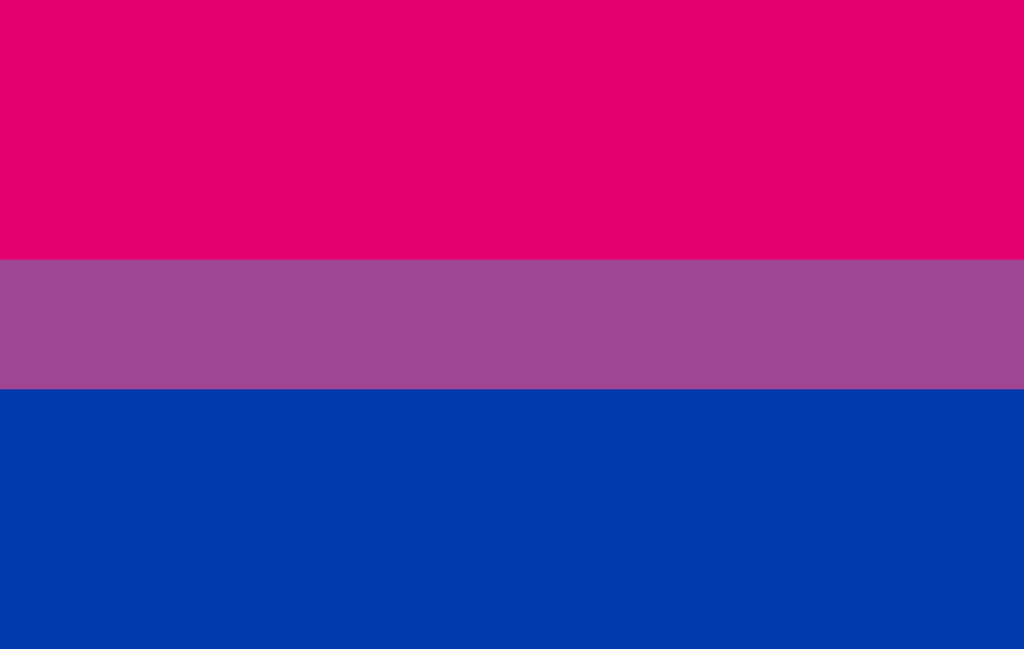
The bisexual Pride flag was designed by Michael Page in 1998 to increase bisexual visibility within LGBTQ+ spaces and society more broadly. It has three stripes: pink, purple, and blue.
The colors are commonly understood as:
- Pink: Attraction to the same gender
- Blue: Attraction to a different gender
- Purple: Attraction across or beyond those categories
The bisexual flag matters because bisexual people have often faced erasure, misunderstanding, and pressure to “pick a side.” This flag gives the community a clear symbol of recognition.
Pansexual Pride Flag
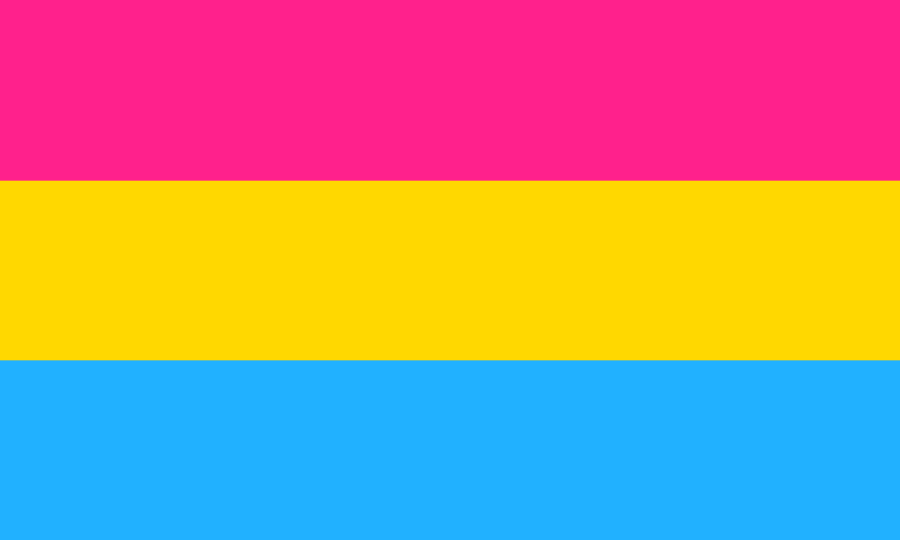
The pansexual Pride flag appeared online around 2010, and its exact creator is commonly listed as unknown or uncertain. It has three horizontal stripes: pink, yellow, and blue.
Pansexuality usually describes attraction regardless of gender. The colors are often explained as pink for attraction to women, blue for attraction to men, and yellow for attraction to nonbinary or gender-diverse people. Meanings can be phrased differently across communities, so it is best to treat the flag as a broad symbol of pansexual pride rather than a rigid definition.
Asexual Pride Flag
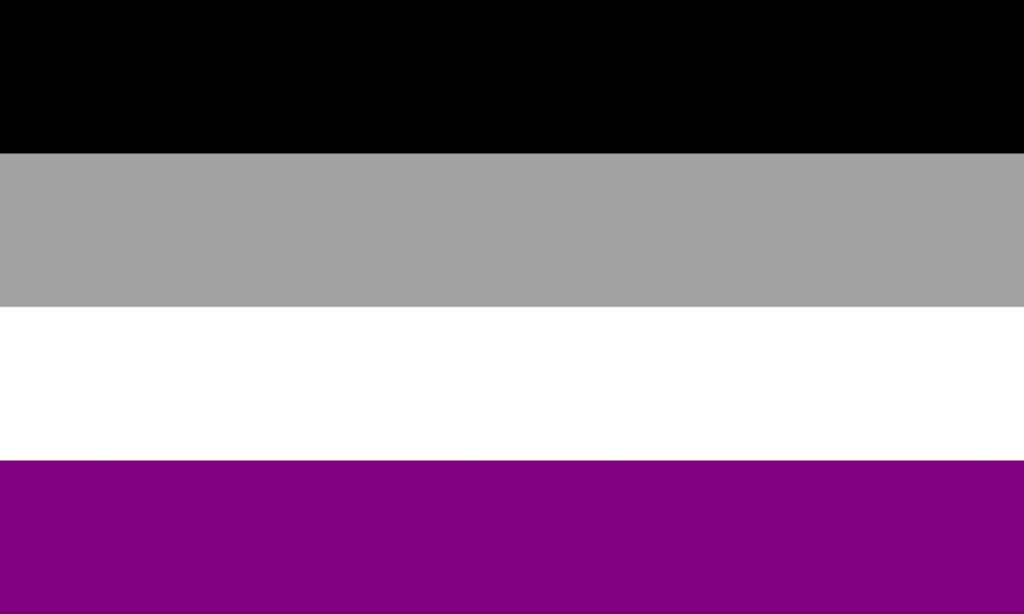
The asexual Pride flag was created in 2010 through community discussion connected to the Asexual Visibility and Education Network. It has four stripes: black, gray, white, and purple.
The colors are commonly read as:
- Black: Asexuality
- Gray: Gray-asexuality and demisexuality
- White: Allosexuality or allies
- Purple: Community
Asexuality exists on a spectrum. Some asexual people experience little or no sexual attraction, while others may describe their attraction in more specific ways.
Demisexual Pride Flag
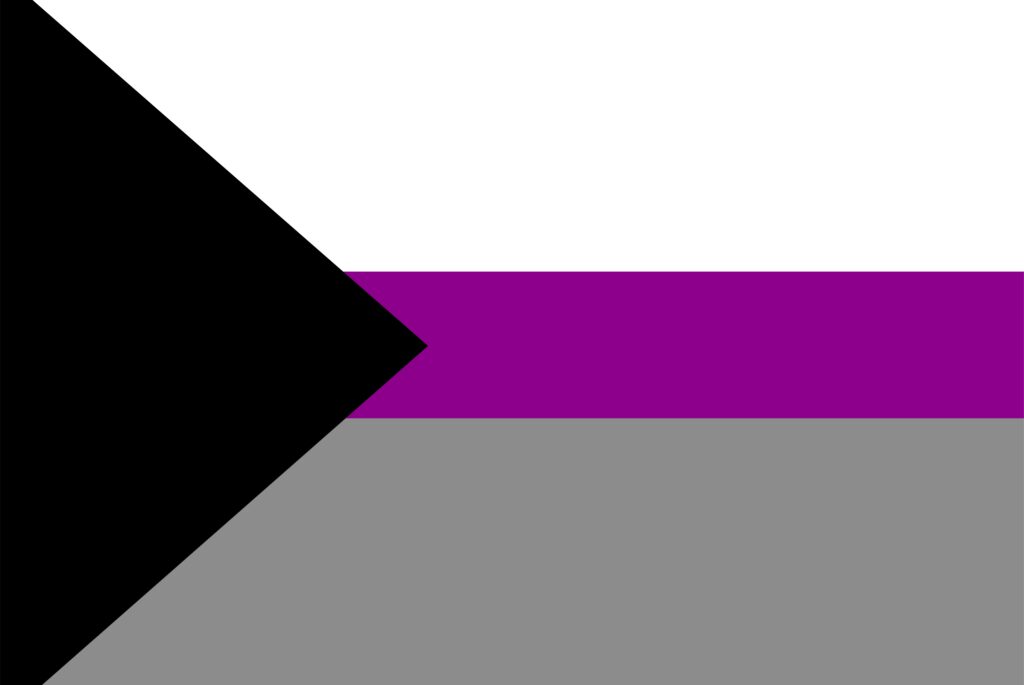
Demisexuality usually describes people who experience sexual attraction only after a strong emotional connection. It is often discussed as part of the asexual spectrum.
The demisexual flag’s exact origin is unclear, but it uses colors connected to the asexual flag: black, white, gray, and purple. The black triangle is often associated with asexuality, gray with the gray area between sexual and asexual experiences, white with sexuality, and purple with community.
Lesbian Pride Flag
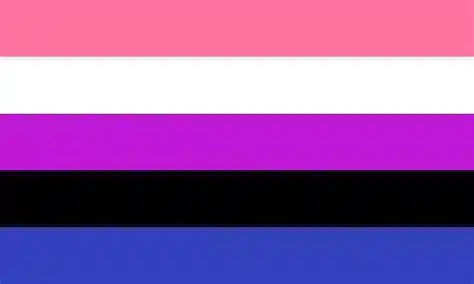
Several lesbian Pride flags have existed over time. Today, the orange-pink striped lesbian flag is widely used, though some people still prefer earlier versions or different community designs.
Meanings commonly associated with the modern version include gender nonconformity, independence, community, unique relationships to womanhood, peace, love, and femininity. Because lesbian communities are diverse, it is helpful to recognize that no single lesbian flag speaks for every lesbian person.
Gay Men’s Pride Flag
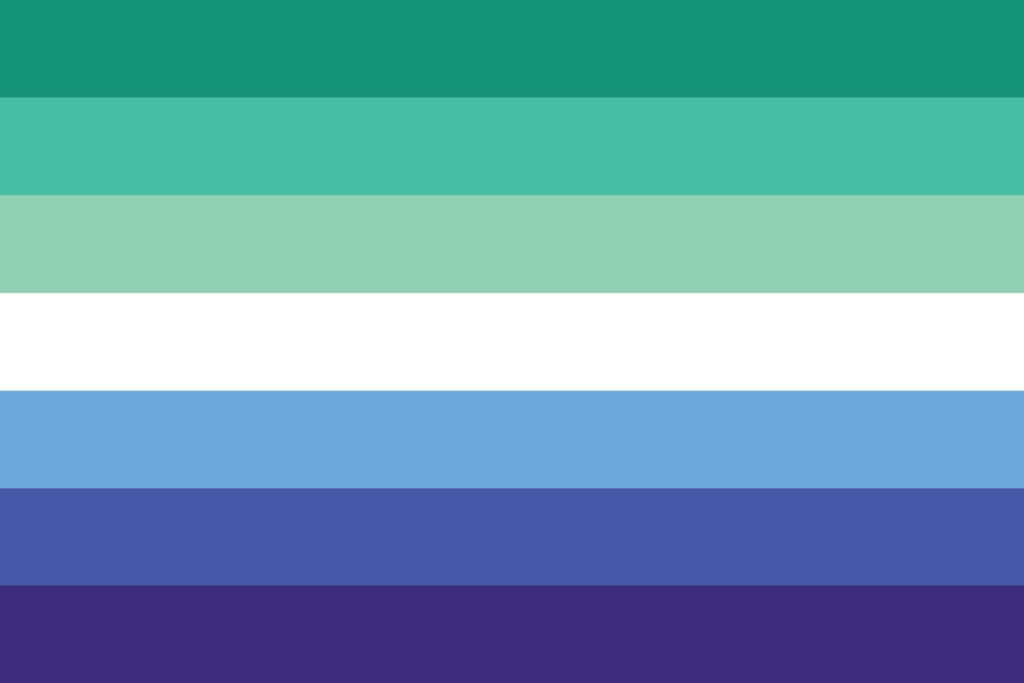
The gay men’s Pride flag with blue, green, teal, and white stripes is used by many gay men, although the rainbow Pride flag is also widely used by gay communities. Its meanings are not always presented in one single official way.
The colors are often connected to ideas such as community, healing, joy, nature, love, and connection. This flag gives gay men a more specific symbol while still existing alongside the broader rainbow flag.
Nonbinary Pride Flag
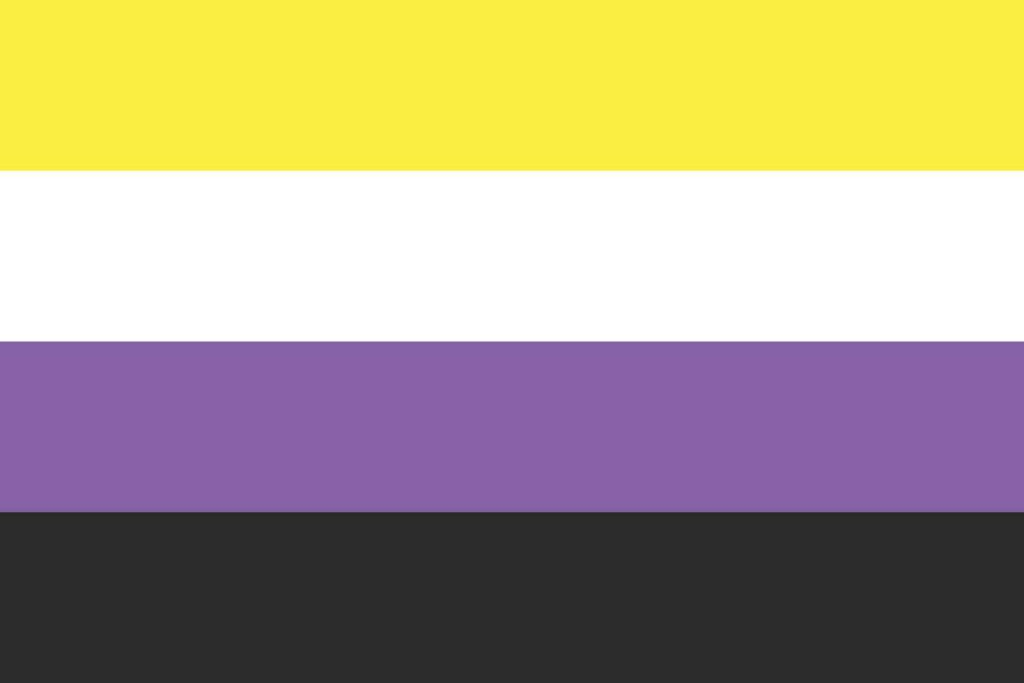
The nonbinary Pride flag was designed by Kye Rowan in 2014. It has four stripes: yellow, white, purple, and black.
The colors are usually explained as:
- Yellow: Genders outside the binary
- White: People with many or all genders
- Purple: A mix of masculine and feminine genders
- Black: Agender people or those without gender
The flag matters because nonbinary people may not feel represented by symbols built only around male and female categories.
Genderqueer Pride Flag
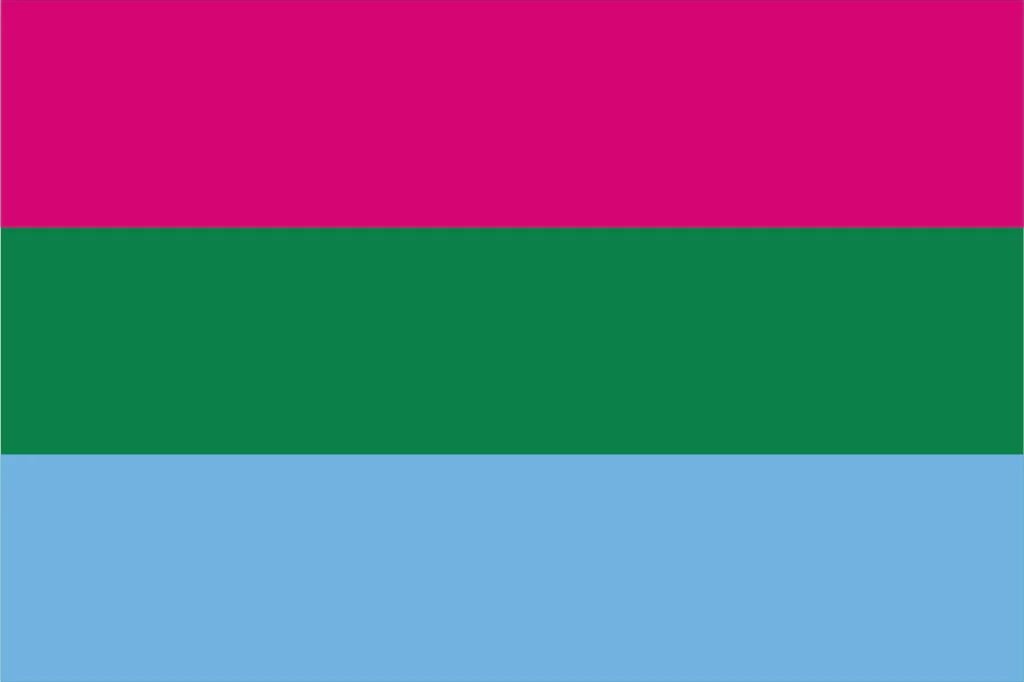
The genderqueer Pride flag was designed by Marilyn Roxie and finalized around 2011. It has lavender, white, and green stripes.
Lavender is commonly associated with androgyny or a mix of masculine and feminine qualities. White represents agender or gender-neutral identities. Green, the inverse of lavender, represents identities outside the gender binary. The flag remains an important symbol for people who use genderqueer as a personal or political identity.
Genderfluid Pride Flag
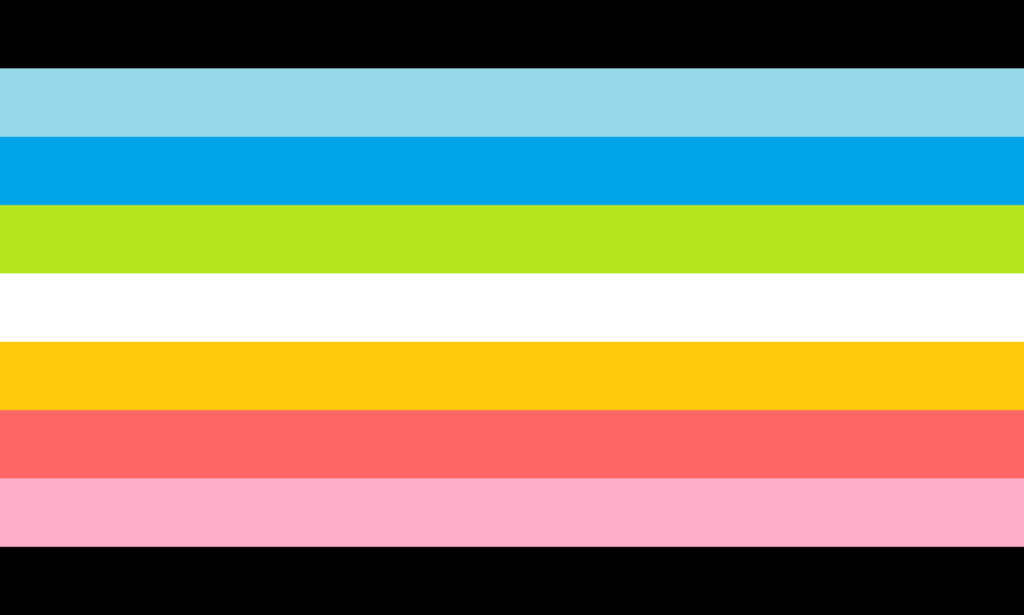
The genderfluid Pride flag was created by JJ Poole in 2012. It has five stripes: pink, white, purple, black, and blue.
The color meanings are commonly understood as:
- Pink: Femininity
- White: All genders
- Purple: A blend of masculinity and femininity
- Black: No gender
- Blue: Masculinity
Genderfluid people may experience their gender as changing over time. The flag gives visibility to that movement and flexibility.
Agender Pride Flag
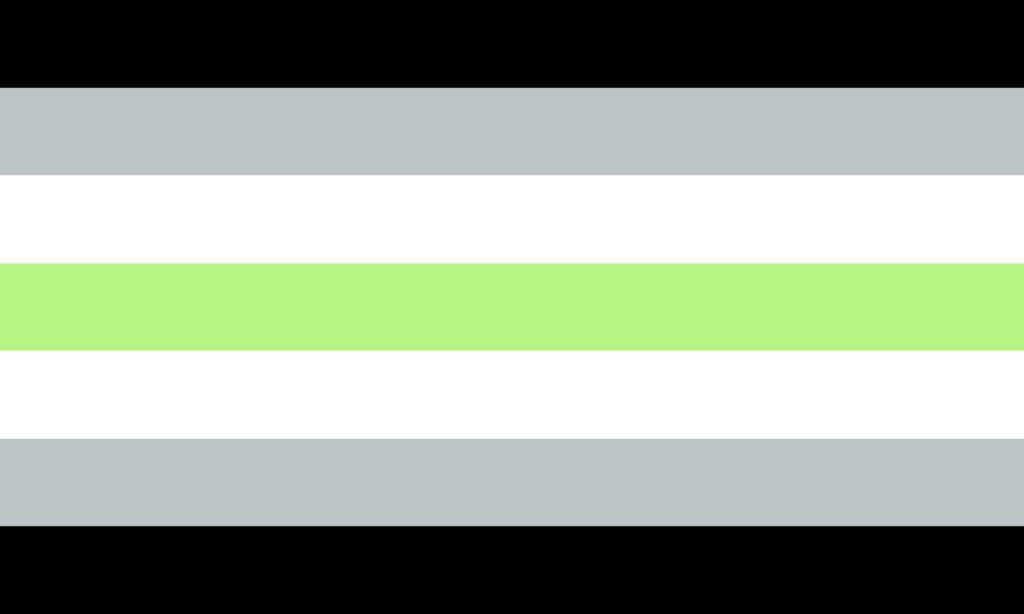
The agender Pride flag is commonly credited to Salem X and dates to 2014. It includes black, gray, white, and green stripes.
Black and white are often associated with the absence of gender. Gray can represent partial or uncertain connections to gender. Green, as a color outside traditional pink and blue gender symbolism, is often linked to nonbinary identity. The flag is used by people who identify as having no gender, being gender-neutral, or existing outside gendered categories.
Aromantic Pride Flag

The aromantic Pride flag represents people who experience little or no romantic attraction. The current widely used version was designed by Cameron Whimsy in 2014 and has dark green, light green, white, gray, and black stripes.
The two green stripes represent the aromantic spectrum. White represents platonic love, friendship, and non-romantic forms of connection. Gray and black represent the sexuality spectrum among aromantic people. This flag matters because romantic attraction and sexual attraction are not the same thing for everyone.
Polysexual Pride Flag
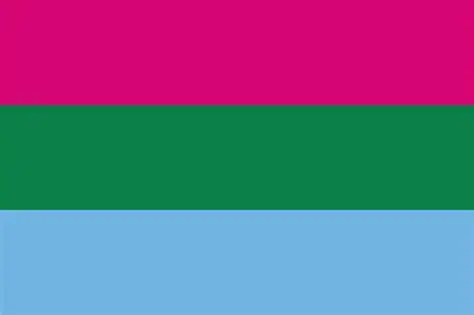
Polysexuality usually means attraction to multiple genders, but not necessarily all genders. The polysexual Pride flag appeared online around 2012 and is often credited to a Tumblr user named Samlin.
The flag has pink, green, and blue stripes. Pink is commonly linked to attraction to women, blue to attraction to men, and green to attraction to nonbinary people. Polysexuality is different from polyamory: polysexuality is an orientation, while polyamory is a relationship style.
Queer Pride Flag
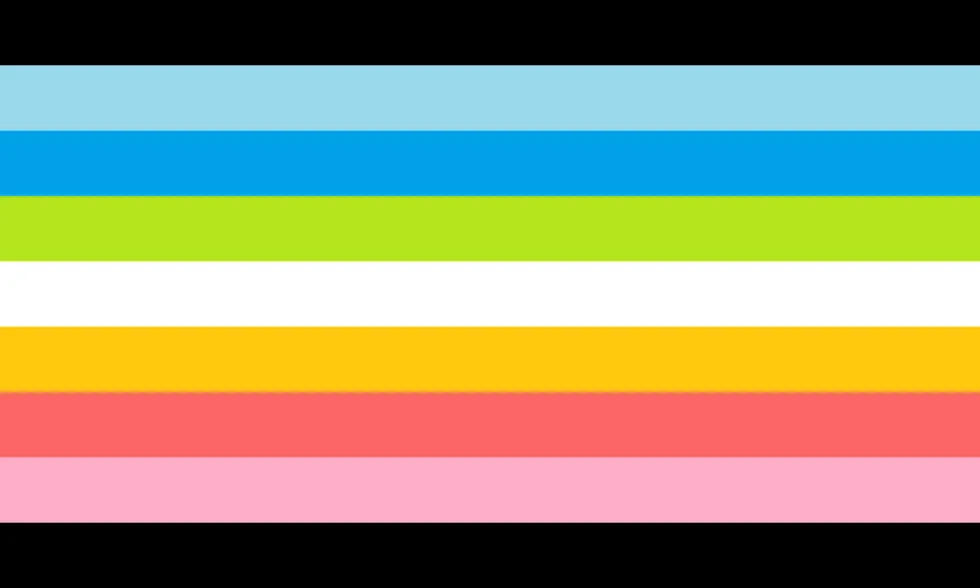
“Queer” is a reclaimed term used by many LGBTQ+ people, but not everyone is comfortable with it because of its history as a slur. Some people use queer as an umbrella identity, while others prefer more specific labels or avoid the word completely.
There are different queer Pride flag designs, and no single queer flag is universally used. That variety makes sense because queer identity itself is broad, flexible, and often intentionally resistant to strict categories.
Queer People of Color Pride Flag
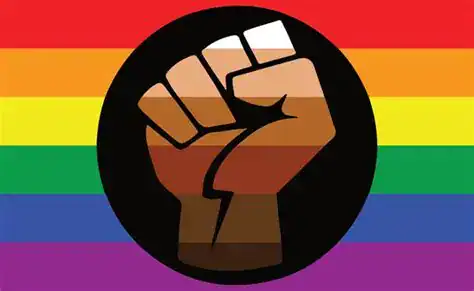
The Queer People of Color Pride Flag represents visibility, solidarity, and intersectionality for queer people of color. Exact origins are unclear, and different versions have circulated in community spaces over time.
The flag is often associated with the need to recognize race, culture, and LGBTQ+ identity together. It reminds Pride spaces that inclusion should not stop at sexuality or gender alone.
Two-Spirit Pride Flag
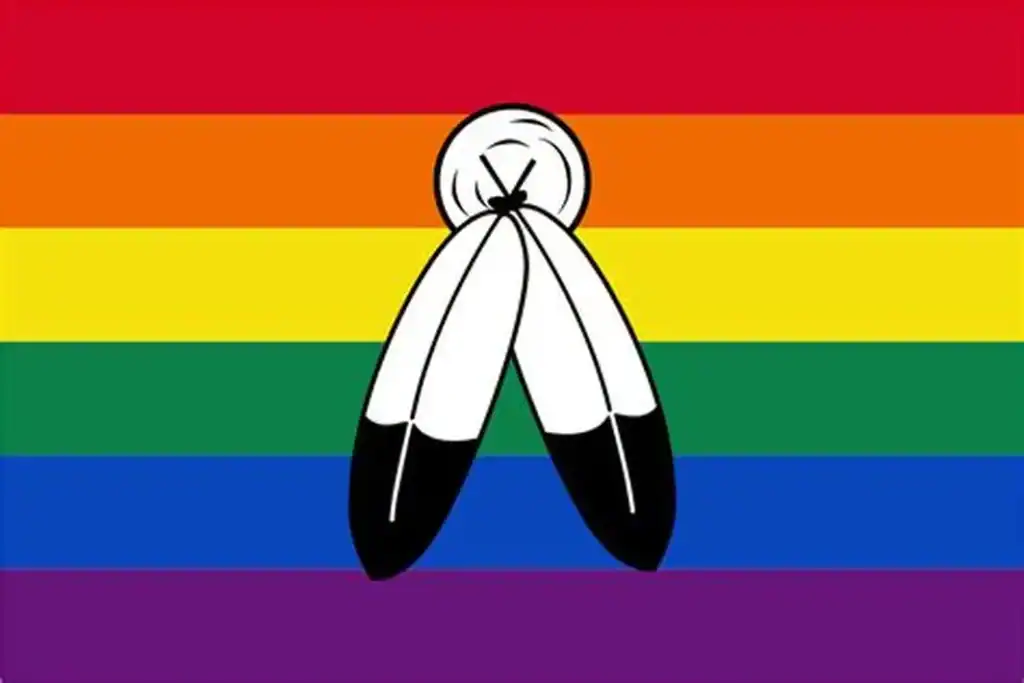
Two-Spirit is a term used by some Indigenous North American people. It should not be used as a general synonym for LGBTQ+, and it should not be separated from Indigenous identity, culture, and community context.
Two-Spirit symbols and flags vary by community. The most respectful approach is to avoid treating one design as universal and to listen to Indigenous Two-Spirit people when discussing the term, its history, and its meaning.
Polyamory Pride Flag
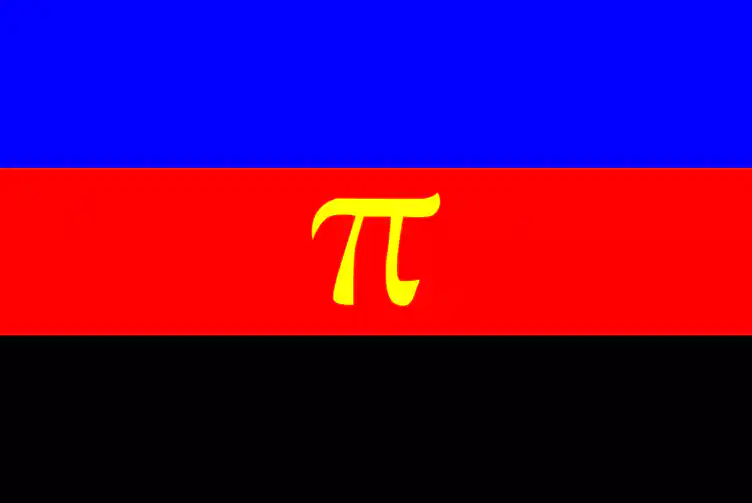
Polyamory describes consensual romantic or intimate relationships involving more than two people. It is not the same thing as a sexual orientation, and it should not be confused with polysexuality.
Multiple polyamory flag designs exist, including older and newer versions. Some include symbols related to openness, honesty, love, and multiple relationships. Since meanings vary by design, it is best to name the specific version when explaining a polyamory flag.
Straight Ally Flag
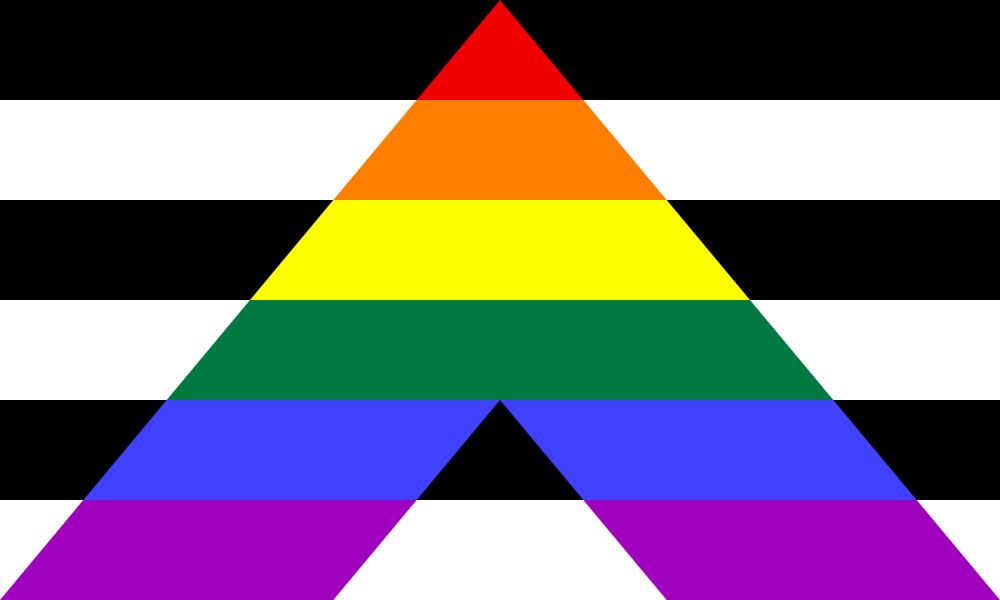
The straight ally flag usually combines black-and-white stripes, representing straight identity, with rainbow colors to show support for LGBTQ+ people. It is used by some allies at Pride events, in schools, workplaces, and community spaces.
Still, allyship is more than waving a flag. A respectful ally listens, speaks up against anti-LGBTQ+ behavior, supports equal rights, and does not center themselves in LGBTQ+ spaces.