
How to Kill Gnats in the House (And What Kills Them Fastest)
The fastest gnat killer is a trap you can build in sixty seconds: a small bowl of apple cider vinegar with a few drops of dish soap. The vinegar pulls the gnats in, and the soap breaks the water’s surface tension so they sink and drown instead of standing on it. Set two or three around the house tonight and you will have a bowl of dead gnats by morning.
But here is the thing that separates a gnat-free house from a family that fights gnats all summer: the gnats you can see are only about a tenth of the problem.
Every adult buzzing around your fruit bowl came from eggs, and the eggs are hatching somewhere in your house right now: in a drain, in a plant pot, in the trash. Traps kill the adults. If you do not also kill the source, fresh gnats hatch faster than the traps can drown them, and the “infestation that will not die” is born.
So this guide does both jobs. The killers that clear the air first, then the strike on the breeding site, which starts with a thirty-second identification, because the three gnats that invade houses die in three completely different ways. Get the ID right and this is over in days. Cheat sheet at the bottom. Bowl of vinegar first, then let’s find the nest.
First: Which Gnat Are You Fighting?
Look at one for a second before you squash it, because the ID decides your whole battle plan.
Round body, tan or reddish, hovering near fruit, trash, or the kitchen: that is a fruit fly. Its breeding site is food: ripe produce, juice residue, the trash can, a forgotten potato in the pantry.
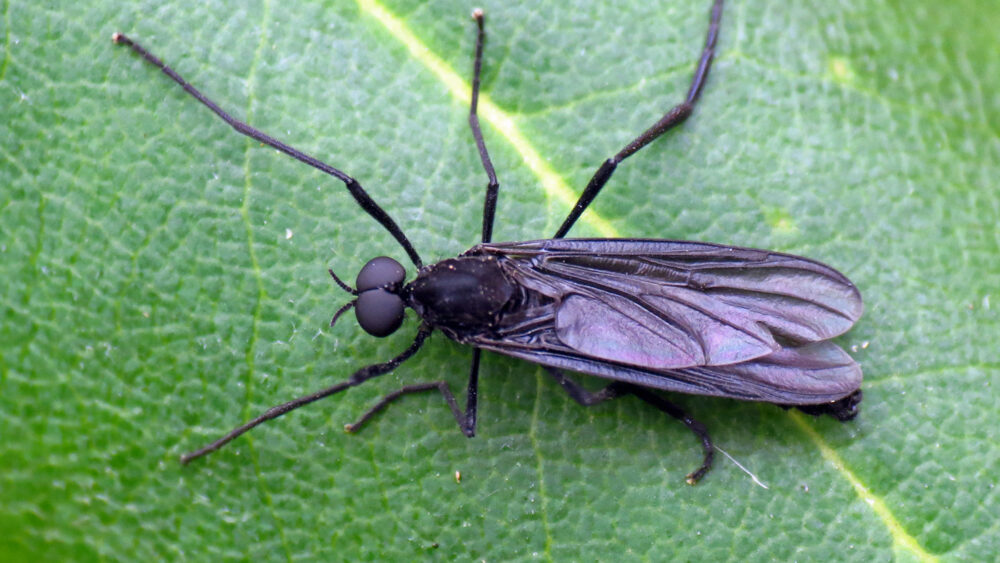
Dark, skinny, long-legged, hanging around your houseplants: that is a fungus gnat. It breeds in the damp soil of your potted plants, and its larvae are down there chewing on the roots right now.
Fuzzy, moth-like wings, sitting on the bathroom wall near the sink or shower: that is a drain fly. It breeds in the slime layer coating the inside of your drains.
Same traps kill all three adults. Completely different attacks kill their sources. Keep your ID in mind, because the guide splits by species further down.
First, the air war.
Killer 1: The Vinegar Trap (Best Overall)
The classic, and it earns the title. Here is the version that outperforms the others.
How to build it:
- Pour an inch of apple cider vinegar into a small bowl, glass, or jar. ACV beats white vinegar because gnats love the fruity, fermented smell, but white vinegar plus a pinch of sugar works too.
- Add 3 to 5 drops of dish soap. This is the actual killer. Without it, gnats stand on the liquid and fly away. With it, they break through and drown.
- Optional upgrade: stretch plastic wrap over the top and poke a few pencil-tip holes. Gnats find their way in and almost never find their way out. Some homes do better open, some covered, so run one of each and keep the winner.
- Place traps wherever you see gnats: kitchen counter, near plants, by the trash.
Refresh every 2 to 3 days. Old traps lose their pull, and a bowl full of drowned gnats is its own advertisement to stop working.
No vinegar in the house? The next killers use the wine rack and the fruit bowl.
Killer 2: Wine, Juice, or Rotten Fruit Traps
Anything sweet and fermenting is gnat bait, which means your kitchen is full of trap fuel.
The wine trap: an inch of leftover red wine in a glass, plus the mandatory drops of dish soap. Gnats find cheap merlot irresistible, which is at least relatable.
The fruit trap: drop a chunk of overripe banana or mashed fruit into a jar, cover with plastic wrap, and poke small holes. The fruit flies check in and do not check out. Shake the jar into soapy water every day or two to finish them.
The juice trap: an inch of any fruit juice plus dish soap works the same as vinegar.
All of these kill fruit flies especially well, since fermenting fruit is literally what they are hunting for. For the gnats that ignore bait entirely, you go on offense.
Killer 3: The Spray Bottle (Instant Contact Kill)
For gnats you can see right now, mix a kill spray in ten seconds.
How to do it:
- Fill a spray bottle with water and a good squeeze of dish soap.
- Spray gnats directly, mid-air or landed. The soap coats them and they drop within moments.
- Wipe surfaces after, since the mist leaves a light film.
It also doubles as a plant treatment: mist a gnat-swarmed houseplant lightly, let it sit a few hours, then rinse the leaves clean. Satisfying, cheap, and immediate. For higher volume, upgrade to hardware.
Killer 4: The Vacuum Pass
Silly looking, wildly effective, and strangely fun.
Pull the head attachment off a vacuum, cordless if you have one, and cruise the house sucking gnats out of the air and off walls. A slow approach works better than a lunge, since gnats launch away from fast movement.
This is the fastest way to knock down a visible swarm in minutes, especially combined with traps working in the background. And for around-the-clock automated killing, one gadget earns its price.
Killer 5: A UV Trap (The Overnight Machine)
Plug-in traps like the Katchy pull gnats in with ultraviolet light, drag them down with a small fan, and stick them to a glue board.
Run it at night in the gnat hot zone with the room lights off, so the UV is the brightest thing around. Mornings become a body count. It is the best hands-off option for a bad infestation and keeps working while the traps and sprays handle the day shift.
There is also a low-tech overnight version: a tea light floating in a bowl of soapy water in a dark room. The flame draws them, the soapy water drowns them. Cheap, effective, and only for rooms where a burning candle is safe and supervised.
Between vinegar bowls, spray, vacuum, and light, the air war is won in a couple of days. But remember the tenth-of-the-problem rule. If you stop here, next week looks exactly like this week, because the nursery is still running. Time to find it, by species.
Kill the Source: Fruit Flies (The Kitchen Strike)
Fruit flies breed in anything sweet that sits still. Your mission is a five-minute kitchen sweep.
Clear the produce. Ripe and overripe fruit goes in the fridge or a sealed container until the war is over. Check the sneaky spots: the banana hook, the potato and onion bin (one rotting onion can fuel a whole infestation), the bottom of the fruit bowl.
Seal the trash. Swap an open bin for one with a lid, take the trash out nightly during the fight, and rinse the can itself, since the film at the bottom is a breeding site.
Wipe the sticky spots. Juice spills, soda rings, the honey jar, the recycling bin with unrinsed bottles. Fruit flies need only a film of sugar.
Starve the nursery and the trap-line finishes the survivors within days. Fungus gnats, though, need you to attack a place most people never think to look.
Kill the Source: Fungus Gnats (The Houseplant Strike)
If your gnats are the dark, skinny ones drifting around your plants, the infestation is living in your potting soil, and this section is the one your houseplants have been waiting for.
The hydrogen peroxide drench, the killer nobody told you about. Mix 1 part ordinary 3 percent hydrogen peroxide with 4 parts water. Water your plants with it, enough to soak the top of the soil. The fizz you hear is the peroxide killing larvae on contact, and it breaks down into water and oxygen, so the plant is completely fine. Repeat with the next watering or two. This single treatment ends most fungus gnat infestations at the root, literally.
Let the soil dry out. Fungus gnat larvae need constant moisture. Let the top inch or two of soil dry fully between waterings and the nursery collapses. Overwatering is what invited them in the first place, and it also rots roots, which feeds larvae even more.
Add yellow sticky stakes. Small yellow sticky cards on stakes in the pots catch the adults as they emerge, which stops them from laying the next generation. A pack costs a few dollars and doubles as a gauge: when the cards stop filling, you have won.
Quarantine new plants. Most fungus gnat invasions ride in on a new plant from the store. Keep newcomers in a separate room, a shed, or outside for several days and watch the soil before they join the collection.
Drain flies, meanwhile, are hiding somewhere darker.
Kill the Source: Drain Flies (The Pipe Strike)
Fuzzy little moth-winged flies in the bathroom mean the breeding site is the gunk lining your drains.
Confirm the drain first. Dry the sink at night and tape a piece of clear tape sticky-side-down over the drain opening. Flies stuck to the tape in the morning means you found the nursery.
Scrub, then treat. The slime layer is the nest, so physical scrubbing with a drain brush does more than any pour-in alone. Follow the scrub with a foaming flush: a half cup of baking soda down the drain, chased with a cup of vinegar, then hot water after the foam settles. Diluted bleach also works, though never on the same day as vinegar, since the two together create toxic fumes.
Stopper the drains. Plug the drains overnight and between uses for a week. It suffocates the cycle and blocks new adults from surfacing.
Repeat for a week. Eggs already laid keep hatching for days, so one treatment feels like a win and then relapses. A daily flush for a week ends it.
Sources dead, adults dying in traps. Two last moves make sure a new wave never starts.
Seal the House So the Next Wave Never Enters
Some gnats did not hatch inside. They walked in, and they are still coming.
Caulk the entry points. Gnats slip through the tiniest exterior cracks: around window frames, door frames, and anywhere pipes, vents, or wires pass through the wall. If gnats congregate near one window, inspect it closely, inside and out, and seal what you find.
Fix the screens. A torn window screen or one left open on a summer evening is a gnat highway. Repair kits cost a few dollars.
Mind the door habits. Porch lights draw gnats to the door at night, and every entry is an invitation. A yellow bug bulb on the porch draws dramatically fewer insects than a white one.
When to Call a Pro (And What It Costs)
Do everything above and a genuine infestation folds within two to three weeks. If it does not, something bigger is feeding it.
Call pest control when: gnats persist past three weeks of trapping and source treatment, they are appearing in rooms with no plants, food, or drains, or the numbers are climbing instead of falling. That pattern points to a hidden moisture problem, a leak inside a wall, or a breeding site you cannot reach.
Expect to pay roughly $300 to $600 for professional gnat treatment, which targets the larvae as well as the adults. It stings, but a pro also finds the hidden moisture source, and that discovery is often worth more than the extermination.
What to Expect: The Kill Timeline
Set expectations right and you will not quit two days before victory.
Days 1 to 3: traps fill fast, visible swarms thin out. This is the adults dying.
Days 4 to 10: you still see some gnats, and this is the stage where people wrongly think the traps failed. These are new hatchlings from eggs laid before your strike. Keep traps fresh and source treatments going.
Weeks 2 to 3: the egg pipeline empties. Sticky cards and traps go quiet. Done.
Gnat eggs already laid will hatch no matter what you kill today, so the war is won by keeping the kill layer running longer than the egg supply lasts. Patience is a weapon.
The Cheat Sheet (Save This)
Screenshot this and start tonight.
Kill the adults: bowls of apple cider vinegar + 3 to 5 drops dish soap, refreshed every 2 to 3 days. Soap-water spray bottle for contact kills. Vacuum for swarms. UV trap overnight.
Fruit flies: produce into the fridge, sealed trash, wipe every sticky surface.
Fungus gnats: 1 part hydrogen peroxide to 4 parts water soil drench, let soil dry between waterings, yellow sticky stakes, quarantine new plants.
Drain flies: scrub the drain, then baking soda + vinegar flush daily for a week, stoppers overnight. Never mix bleach and vinegar.
Seal it: caulk cracks, fix screens, bug bulb on the porch.
Timeline: adults crash in days, full clear in 2 to 3 weeks. Still losing after 3 weeks? Pro time, roughly $300 to $600.
The Bottom Line
Killing gnats is easy. A bowl of vinegar and soap does it by itself. Winning is a different job, and it only takes one extra step: identify your gnat, then destroy the place it breeds, whether that is the fruit bowl, the plant pot, or the drain.
Do both, keep the traps running two weeks longer than feels necessary, and the last gnat in your house dies with no one left to replace it.