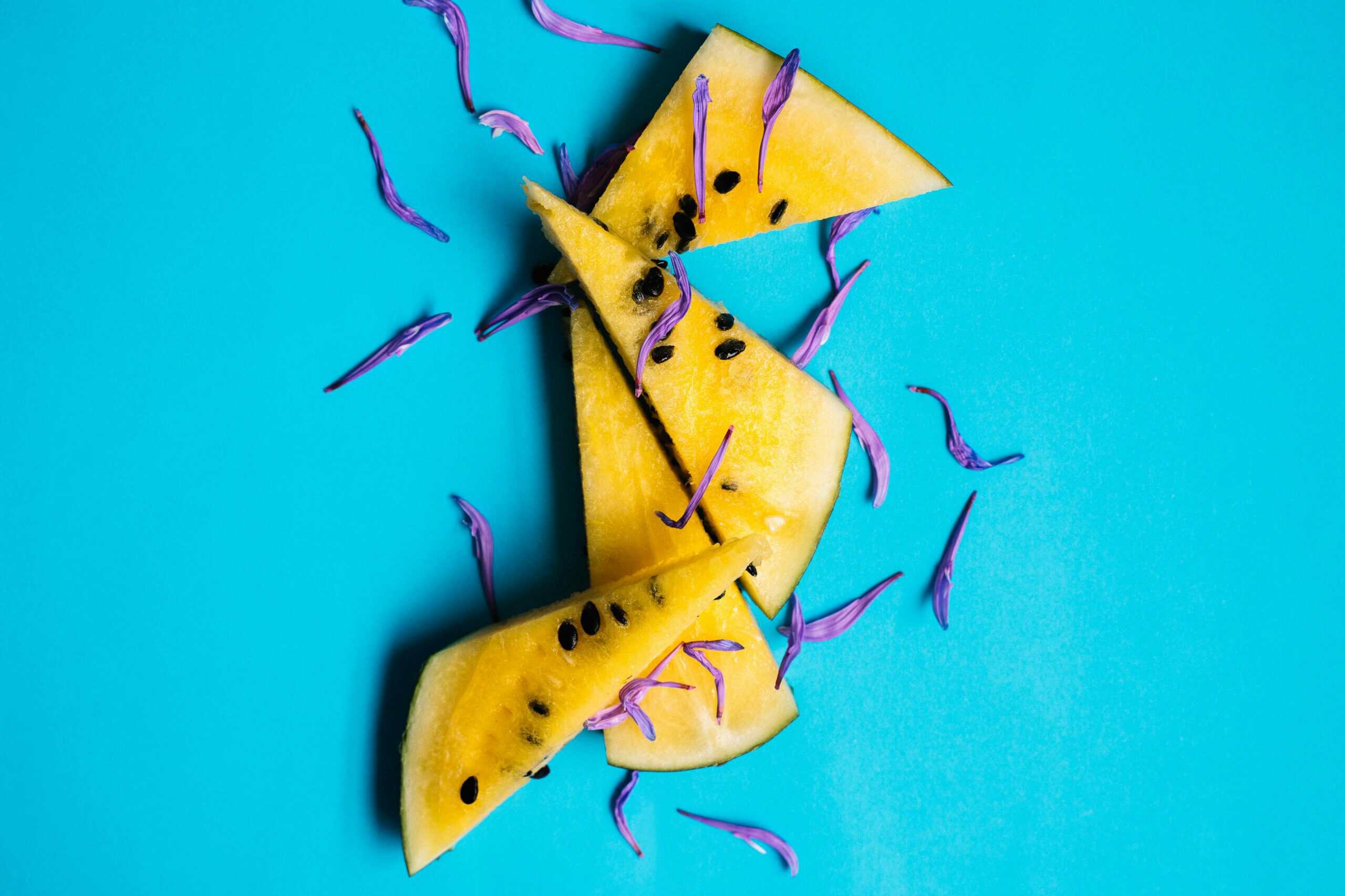

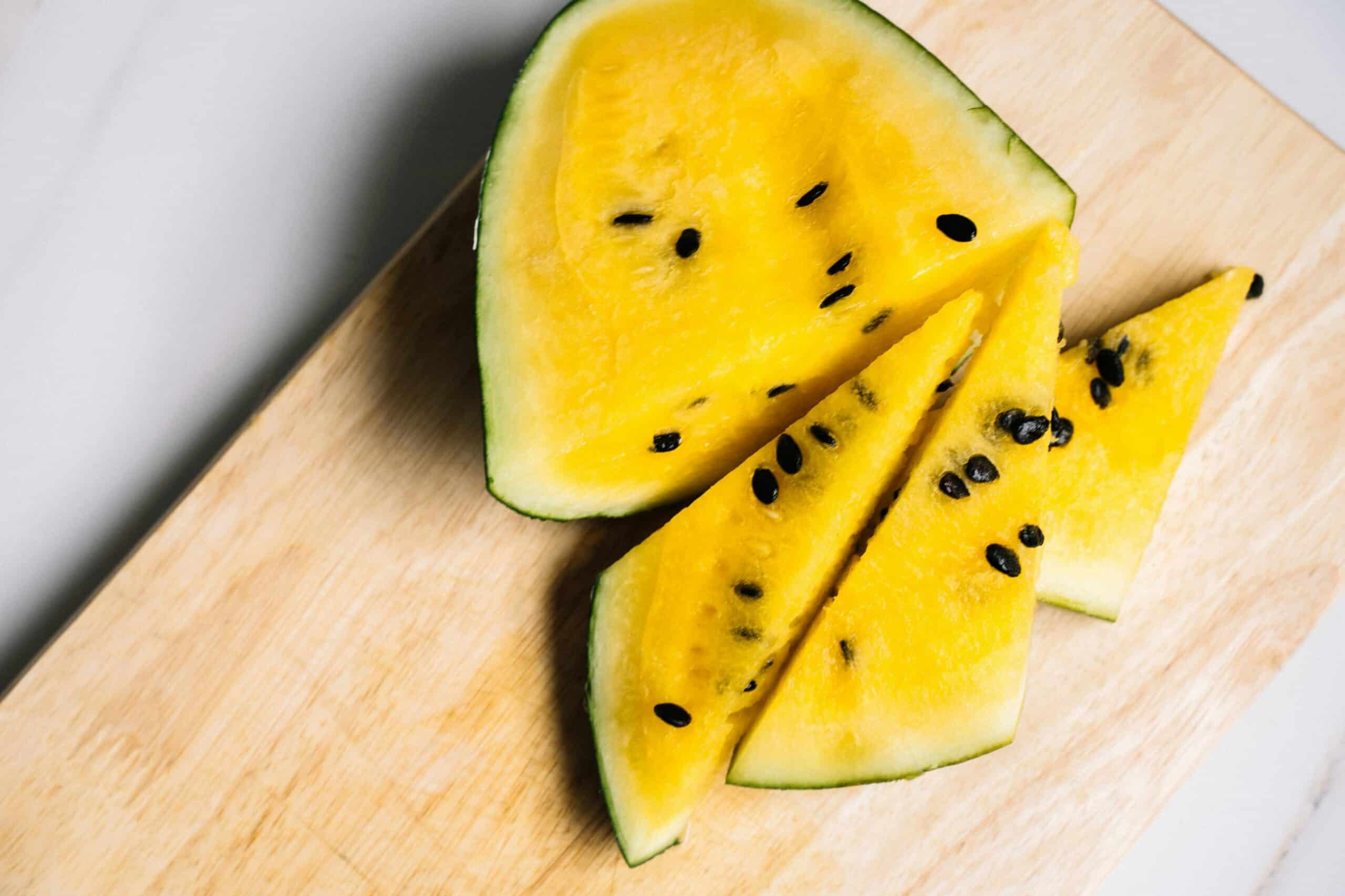
You slice into a watermelon expecting the usual pink-red center, then the knife opens up a bright golden middle instead. It looks like summer got a color upgrade. Yellow watermelon is sweet, juicy, naturally yellow, and a little more surprising than the classic red kind most of us grew up eating.
Here is the quick answer: yellow watermelon is a real variety of watermelon with yellow flesh instead of red flesh. It is not dyed, not under-ripe, and not some grocery store trick. It tastes like regular watermelon with a softer, sweeter, honey-like flavor, and you can eat it the same way you would eat any other watermelon.
What Is Yellow Watermelon?
Yellow watermelon is a type of watermelon with yellow or golden flesh inside. The outside usually looks just like a regular watermelon, with a green rind and stripes, so you often cannot tell what color it is until it is cut open.
The biggest difference is pigment. Red watermelon gets its color from lycopene, the same natural pigment that gives tomatoes their red shade. Yellow watermelon has little to no lycopene. Instead, its color comes from other natural plant pigments called carotenoids, including beta-carotene.
That means yellow watermelon is not artificial. It grows that way naturally.
Why Is Yellow Watermelon Yellow?
Yellow watermelon is yellow because of its natural pigment makeup. Red watermelon is rich in lycopene, while yellow watermelon has more yellow-orange carotenoids.
Think of it like the difference between a red tomato and a yellow tomato. Both are tomatoes, but their colors come from different pigments. Yellow watermelon works in a similar way. It is still watermelon, just with a different color inside.
The yellow color can range from pale lemon to deep golden yellow. A ripe one often looks bright, sunny, and juicy when sliced.
Does Yellow Watermelon Taste Different?
Yes, but not in a strange way. Yellow watermelon still tastes like watermelon, only a little sweeter and softer in flavor.
Many people describe yellow watermelon as:
- Sweet
- Juicy
- Mild
- Honey-like
- Less sharp than red watermelon
- Sometimes lightly tropical
Red watermelon has that familiar crisp, refreshing flavor. Yellow watermelon feels a little rounder and sweeter, especially when chilled. If red watermelon tastes like classic summer, yellow watermelon tastes like summer with a spoonful of honey stirred in.
My honest take: yellow watermelon is best cold, with lime and a tiny pinch of salt. That combo makes the sweetness pop without covering up the melon flavor.
Is Yellow Watermelon Natural or Genetically Modified?
Yellow watermelon is natural. It is not genetically modified just because it looks different.
Yellow-fleshed watermelons have been around for a long time. In fact, yellow and pale-fleshed watermelons are part of watermelon’s older history, while the deep red varieties became more common over time through selective growing.
So if you cut one open and see yellow flesh, there is no reason to panic. It is not spoiled because of the color alone.
Yellow Watermelon vs Red Watermelon
Yellow and red watermelon are close cousins. They look similar on the outside, taste similar in texture, and work in the same recipes. The main differences are color, flavor, and pigment.
Color
Red watermelon has pink to red flesh. Yellow watermelon has yellow to golden flesh.
Taste
Red watermelon tastes crisp, fresh, and familiar. Yellow watermelon is often sweeter with a honey-like note.
Nutrition
Both are hydrating fruits with vitamins and minerals. Red watermelon is known for lycopene. Yellow watermelon is known for beta-carotene.
Texture
The texture is almost the same. A good yellow watermelon should be juicy, crisp, and tender without feeling mushy.
Uses
You can use yellow watermelon anywhere you use red watermelon. It works in fruit salads, smoothies, popsicles, juices, salsas, summer salads, and snack trays.
Is Yellow Watermelon Good for You?
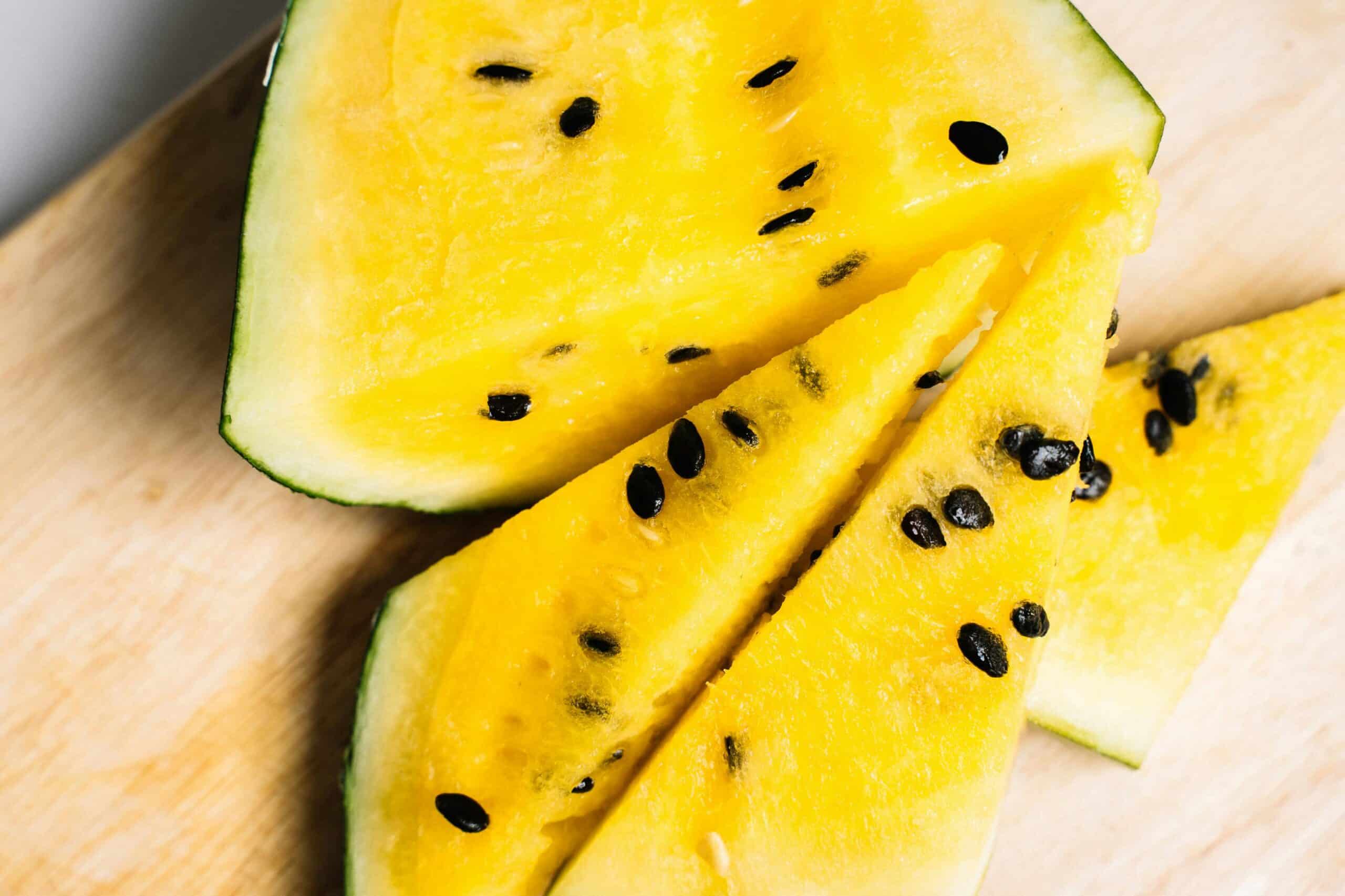
Yellow watermelon is a fresh, hydrating fruit with natural sweetness. It is mostly water, which makes it a refreshing snack on hot days, after outdoor play, or with a light summer meal.
Yellow watermelon contains:
- Vitamin C
- Vitamin A related nutrients
- Beta-carotene
- Potassium
- Magnesium in small amounts
- Natural fruit sugars
- Water for hydration
It is still fruit, so it has natural sugar. For most people, a chilled bowl of yellow watermelon is a lighter choice than many processed sweets.
How to Pick a Good Yellow Watermelon
Since the outside does not always reveal the inside color, the usual watermelon-picking tricks still matter.
Look for a creamy yellow field spot
The field spot is the patch where the watermelon sat on the ground while growing. A creamy yellow or buttery yellow spot usually means it had time to ripen.
Choose one that feels heavy
A ripe watermelon should feel heavy for its size. More weight usually means more water and better juiciness.
Check for a dull rind
A shiny rind can be a sign the melon was picked too early. A dull-looking rind is usually a better clue.
Avoid soft spots
Skip watermelons with deep bruises, cracks, leaking juice, or soft patches.
Tap it if you want, but do not rely on that alone
A ripe watermelon often sounds deep and hollow when tapped. Still, the field spot and weight are more useful for most shoppers.
Easy Yellow Watermelon Ideas
Yellow Watermelon Cubes With Lime
Cut the watermelon into cubes, squeeze lime over the top, and add a tiny pinch of salt. This is the easiest way to make the flavor brighter.
Yellow Watermelon Salad
Mix yellow watermelon with cucumber, feta, mint, olive oil, and lime juice. Serve it cold. It tastes fresh, salty, juicy, and perfect for cookouts.
Yellow Watermelon Smoothie
Blend frozen yellow watermelon cubes with coconut water, lime juice, and a few mint leaves. Add half a banana if you want it creamier.
Yellow Watermelon Lemonade
Blend yellow watermelon, strain it if you want a smoother drink, then stir it with lemon juice and cold water. Sweeten only if the melon needs it.
Yellow Watermelon Salsa
Dice yellow watermelon with cucumber, red onion, jalapeno, cilantro, lime juice, and salt. Serve it with chips, tacos, grilled chicken, or fish.
Yellow Watermelon Popsicles
Blend yellow watermelon with lime juice, pour into molds, and freeze for 4 to 6 hours. Kids love the color, and adults usually do too.
Yellow and Red Watermelon Platter
Serve yellow and red watermelon together on one tray. The color contrast looks great, especially for picnics, birthdays, baby showers, and summer parties.
How to Store Yellow Watermelon
Whole yellow watermelon can sit at room temperature for a short time, especially if your kitchen is cool. Once it is cut, it needs the fridge.
Whole yellow watermelon
Keep it in a cool, dry spot away from direct sun. If your kitchen is warm, refrigerate it.
Cut yellow watermelon
Store cubes or slices in an airtight container in the fridge. Eat them within 3 to 4 days for the best texture.
Frozen yellow watermelon
Freeze cubes on a tray first, then move them to a freezer bag. Frozen watermelon works best in smoothies, slushies, popsicles, and drinks. It will not thaw back into crisp fresh fruit.
Can You Grow Yellow Watermelon?
Yes, you can grow yellow watermelon if you have enough sun, warm weather, and space for the vines.
Yellow watermelon plants need:
- Full sun
- Warm soil
- Regular watering
- Well-draining soil
- Space for vines to spread
- A long warm growing season
If your garden is small, look for compact varieties. Watermelon vines can take over more room than beginners expect.
The Sweet Little Surprise Inside the Rind
Yellow watermelon is regular watermelon’s sunny cousin. It is natural, sweet, juicy, and easy to use in all the same ways as red watermelon. The color makes fruit bowls and party trays look brighter, while the honey-like flavor gives it a soft, summery twist.
If you spot one at the market, pick a heavy melon with a creamy yellow field spot, chill it well, and try the first bowl with lime. That is the easiest way to see why people get excited about the golden one.