
Do you know a random fun fact can save a boring conversation faster than you think? One weird sentence about space, animals, food, history, or the human body can turn awkward silence into “Wait, really?” energy. That is why fun facts never get old. They are quick, surprising, easy to remember, and perfect for parties, school, work icebreakers, group chats, dates, and family dinners.
Here are some weird, funny, and interesting fun facts you will actually want to repeat.
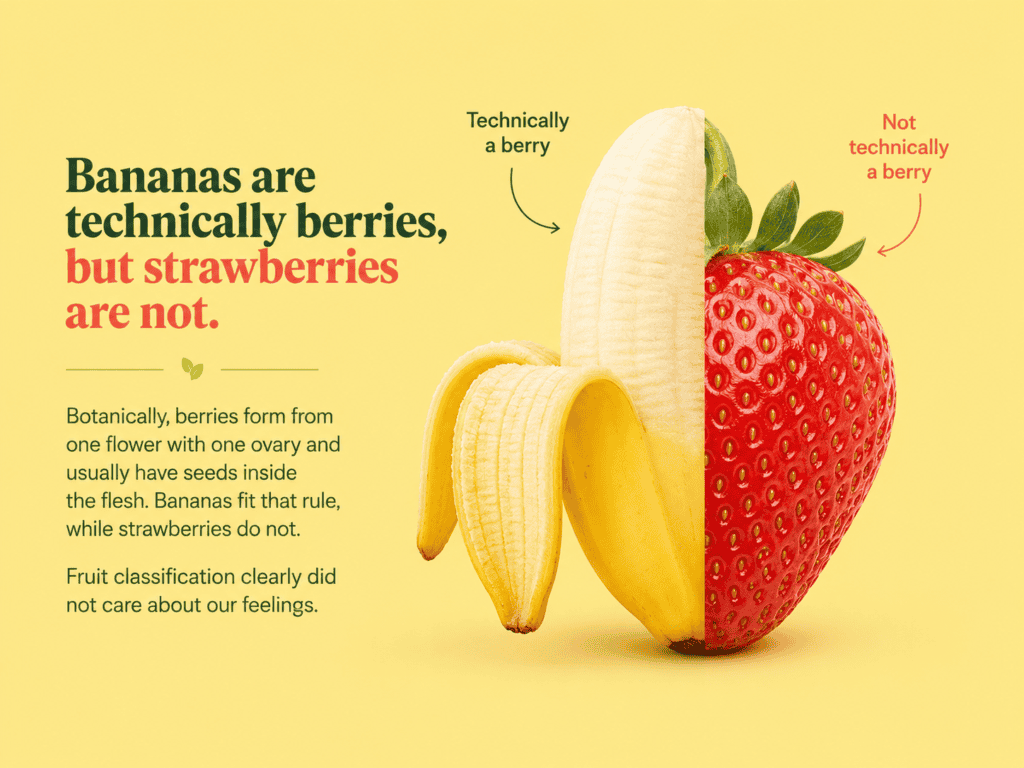
1. Bananas are technically berries, but strawberries are not. Botanically, berries form from one flower with one ovary and usually have seeds inside the flesh. Bananas fit that rule, while strawberries do not. Fruit classification clearly did not care about our feelings.
2. An ostrich’s eye is bigger than its brain. That sounds like an insult someone would whisper at a zoo, but it is true.
3. A jiffy can be an actual unit of time. In some contexts, it means 1/100th of a second, so “back in a jiffy” is technically faster than most people mean.
4. You can’t hum normally if you hold your nose. Be honest, you probably just tested it.
5. Vatican City is the smallest country in the world. It is so small that you can walk across it faster than some people pick a Netflix show.
6. Japan has released hundreds of Kit Kat flavors over the years. Some are delicious, like matcha and strawberry cheesecake, while others sound like a dare.
7. A group of flamingos is called a flamboyance. Finally, an animal group name with the correct amount of drama.
8. Octopuses have three hearts. Two pump blood to the gills, and one pumps it to the rest of the body.
9. Honey can last for thousands of years if sealed properly. It is basically nature’s original long-term storage plan.
10. The printing press helped spread books and ideas widely in Europe. It was the old-school version of going viral.
11. Sharks are older than trees. Sharks were swimming around long before forests became a thing.
12. The tiny pocket on jeans was originally made for pocket watches. Now it mostly stores lint, coins, and that one receipt you keep forgetting about.
13. Wombats make cube-shaped poop. Somewhere, nature became obsessed with geometry.
14. Butterflies taste with their feet. They use sensors on their feet to figure out whether a plant is good for feeding or laying eggs.
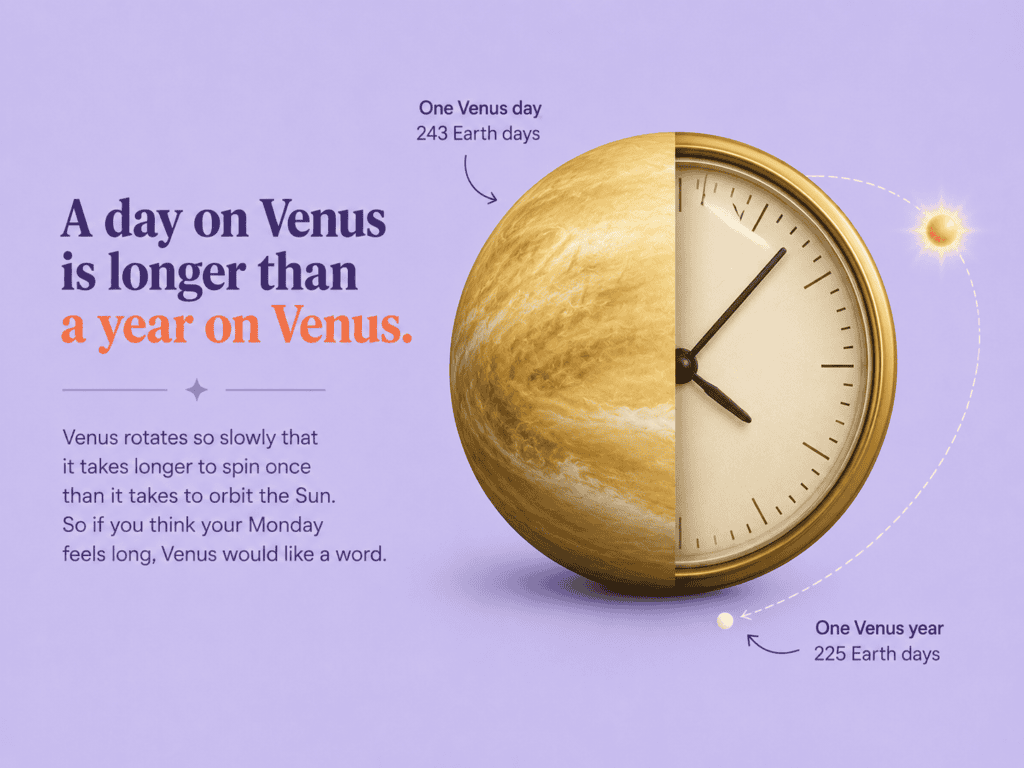
15. A day on Venus is longer than a year on Venus. Venus rotates so slowly that it takes longer to spin once than it takes to orbit the Sun. So if you think your Monday feels long, Venus would like a word.
16. The Eiffel Tower can grow slightly taller in hot weather. Metal expands with heat, so the tower gets a tiny summer boost. It is not much, but it is enough to make the Eiffel Tower feel relatable during hot weather.
17. Sea otters hold hands while sleeping so they do not drift apart. Cute and practical is a powerful combo.
18. The smell after rain has a name: petrichor. It comes from oils released by plants and compounds in soil.
19. A single strand of spaghetti is called a spaghetto. This fact sounds fake in the exact way great fun facts should.
20. The dot over a lowercase “i” or “j” is called a tittle. Tiny dot, tiny name, huge trivia energy.
21. Cows can have best friends. Research has shown that cows can form close social bonds and may become stressed when separated. So yes, farm besties are real, and honestly, that makes cows more emotionally advanced than some group chats.
22. The Moon is slowly moving away from Earth. It drifts about 3.8 centimeters farther away each year.
23. The first computer mouse was made of wood. Early tech had strong school project energy.
24. Rubber bands last longer when refrigerated. Even office supplies like a cool environment.
25. A cloud can weigh hundreds of thousands of kilograms. It looks soft and fluffy, but it is secretly a heavyweight.
26. Some cats can be allergic to humans. Cats can react to human skin flakes, perfumes, or household particles we carry around. So if a cat acts offended by your existence, there may be a tiny scientific excuse.
27. Peanuts are not true nuts. They are legumes, which means peanut butter has been living under a fake identity.
28. A group of pugs is called a grumble. That may be the most accurate animal group name ever created.
29. Pineapples can take around 18 months to 3 years to grow. Suddenly, pineapple chunks feel more luxurious.
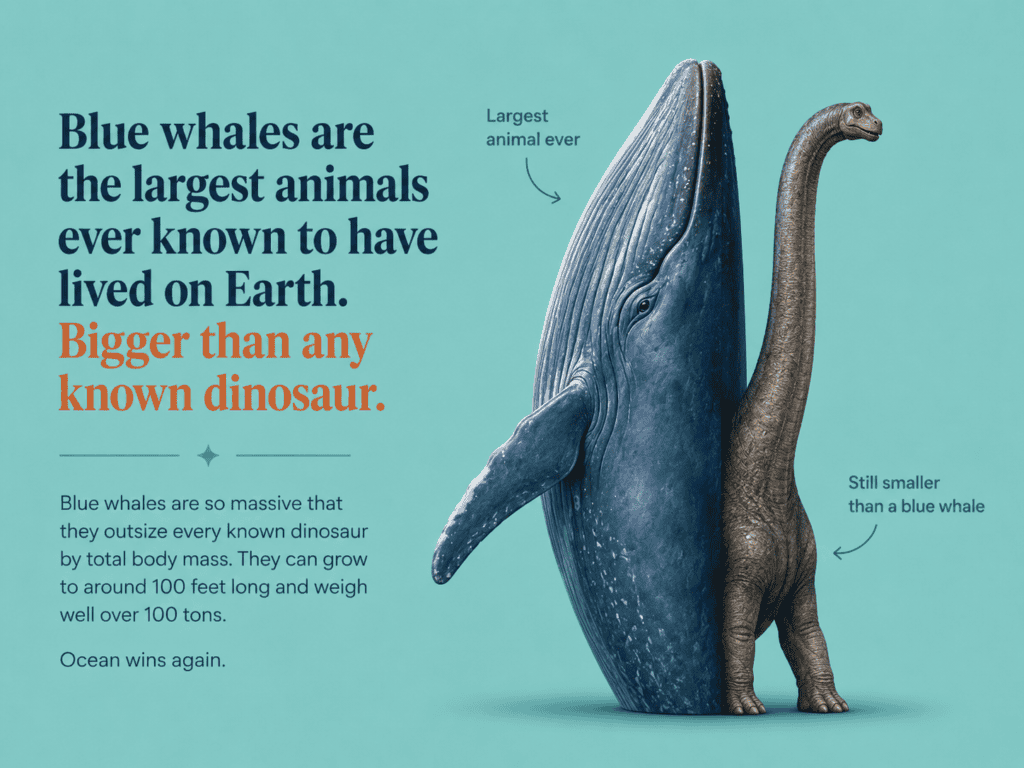
30. Blue whales are the largest animals ever known to have lived on Earth. Bigger than any known dinosaur. Ocean wins again.
31. The shortest war in recorded history lasted less than an hour. The Anglo-Zanzibar War of 1896 lasted around 38 to 45 minutes. Some people take longer than that to decide what to order for dinner.
32. The unicorn is Scotland’s national animal. A real country chose a mythical creature, and honestly, that is iconic.
33. Bubble wrap was originally invented as wallpaper. It failed as decor and became the world’s most satisfying packing material.
34. Some turtles can breathe through their rear end. Science really knows how to make a fact unforgettable.
35. There are more stars in the universe than grains of sand on Earth’s beaches, according to many estimates. Space loves making humans feel tiny.
36. A bolt of lightning can be hotter than the surface of the Sun. Lightning can heat the air around it to extremely high temperatures in an instant. Weather does not need to be that dramatic, but here we are.
37. Your teeth cannot heal themselves like bones. Enamel is not living tissue, so it cannot naturally repair itself once damaged.
38. The average person blinks thousands of times a day. Your eyes are basically refreshing themselves all day.
39. A giraffe’s tongue can be around 18 to 20 inches long. It helps them grab leaves from thorny branches without making a big deal about it.
40. The first product scanned with a barcode in a store was chewing gum. Retail history started minty.
41. Some frogs can freeze during winter and thaw back to life in spring. Their bodies use special survival tricks to protect their cells from damage. It is like nature gave them a seasonal pause button.
42. The hashtag symbol is also called an octothorpe. Social media has been using a very fancy little grid this whole time.
43. A lobster’s teeth are in its stomach. That sounds like bad design, but it works for the lobster.
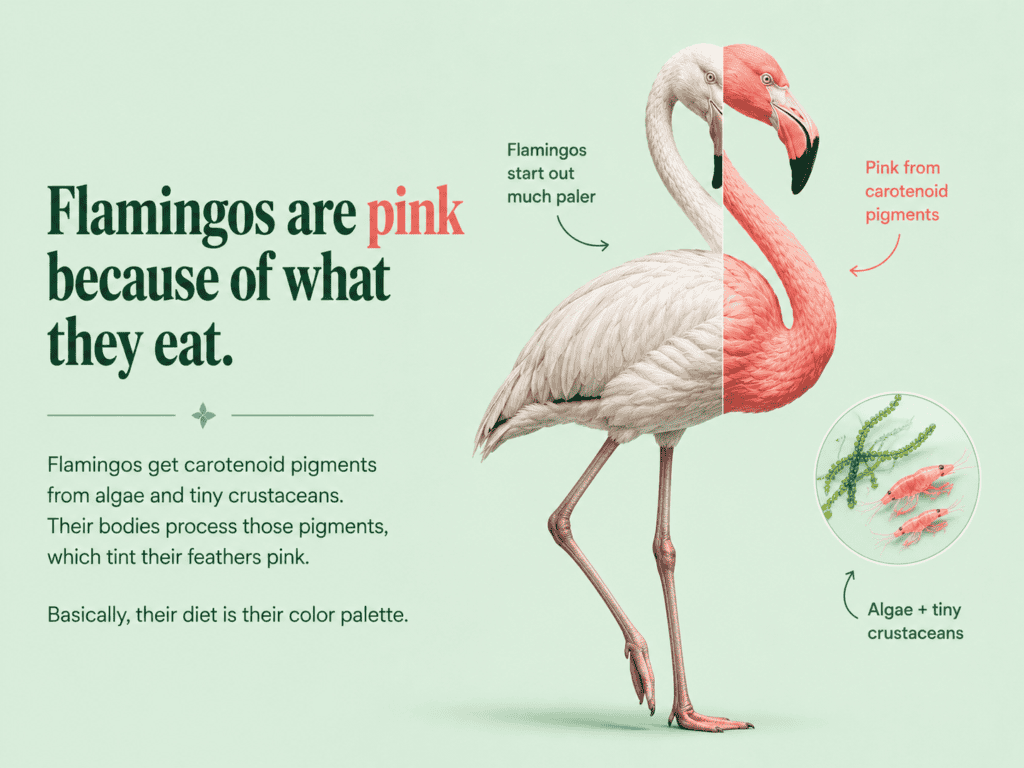
44. Flamingos are pink because of what they eat. Pigments in algae and tiny crustaceans color their feathers.
45. Your tongue print is unique. Please do not use this as an excuse to lick important paperwork.
46. Sloths can hold their breath longer than you might expect. They can slow their heart rate to conserve oxygen. Lazy? Maybe. Strategically lazy? Definitely.
47. The world’s first website is still online as a historical page. The internet kept its baby photo.
48. Some penguins give pebbles as part of courtship. Tiny rocks, huge romance.
49. The word “nerd” first appeared in a Dr. Seuss book. Geek culture has surprisingly whimsical roots.
50. A blue whale’s heart can be about the size of a small car. That is a lot of emotional storage.
51. Apples float because they are about 25 percent air. That is why bobbing for apples works so well. It is not magic, just snack physics.
52. The human nose can detect a huge range of smells. It may forget where your keys are, but it remembers suspicious fridge odor instantly.
53. The first alarm clocks could only ring at one set time. Snooze culture had not evolved yet.
54. Some fish can change sex during their lives. Ocean biology is more flexible than most paperwork.
55. There are more possible ways to shuffle a deck of cards than there are atoms on Earth. Your messy shuffle may have never happened before in history.
56. The word “queue” is just one letter followed by four silent letters. English looked at efficiency and said no thanks. It is basically the alphabet standing in line.
57. Croissants are strongly linked with France, but their roots connect to Austrian pastry traditions. Breakfast has origin drama.
58. A chicken can remember dozens of faces. So yes, that chicken might know exactly who you are.
59. Some fungi glow in the dark. Forests occasionally come with their own creepy night lights.
60. Bees can recognize human faces in some experiments. Be respectful near flowers.
61. The first mobile phone call was made in 1973. Someone had to begin the age of talking loudly in public.
62. Corn is grown on every continent except Antarctica. Even corn knows when conditions are too much. Antarctica is apparently where corn draws the line.
63. The word “alphabet” comes from alpha and beta. They are the first two letters of the Greek alphabet.
64. Your stomach gets a new lining every few days. Stomach acid is strong, so your body keeps replacing the protective layer.
65. The average pencil can draw a line many kilometers long. Tiny wooden productivity stick.
66. A male seahorse carries the babies. Ocean parenting loves a plot twist.
67. The largest desert in the world is Antarctica. A desert is defined by low precipitation, not heat. So yes, the coldest place can still be the biggest desert, which feels like geography trolling us.
68. Some dogs can understand hundreds of words. They still pretend not to understand “drop it.”
69. The Play-Doh smell is trademarked. Childhood nostalgia has legal protection.
70. Bees can recognize human faces in some experiments. Be respectful near flowers.
71. The first email was sent in the early 1970s. No one knew “per my last email” was waiting in the future.
72. Adults have 206 bones, but babies are born with more. Some bones fuse as babies grow, which means your skeleton starts with extra pieces and then edits itself. Very efficient. Slightly spooky.
73. A cat’s purr can happen while inhaling and exhaling. Fluffy multitasking at its finest.
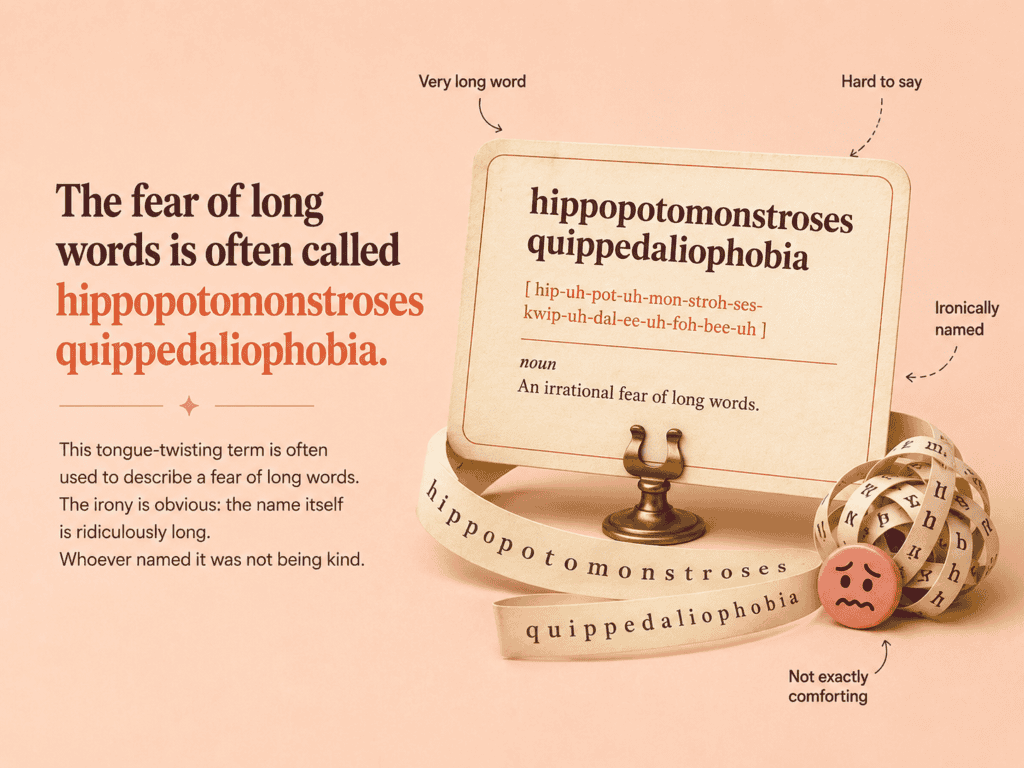
74. The fear of long words is often called hippopotomonstrosesquippedaliophobia. Whoever named it was not being kind.
75. The Titanic had its own onboard newspaper. Passengers could read the Atlantic Daily Bulletin during the voyage.
76. Ancient Romans used concrete. Some Roman concrete structures still survive today.
77. Fresh cranberries can bounce. They have tiny air pockets inside.
78. A rainbow is actually a full circle. From the ground, we usually see only part of it. If you view one from high enough, like from a plane, you may see more of the circle.
79. The International Space Station orbits Earth about every 90 minutes. Astronauts can see multiple sunrises and sunsets in one day.
80. The first oranges were not always orange. Some early varieties were green or yellowish depending on climate and type.
81. Crows can remember human faces. If you annoy a crow, it may recognize you later.
82. Salt was once extremely valuable in many places. Your fries are wearing ancient luxury seasoning.
83. Greenland is the world’s largest island that is not a continent. Australia is usually counted as a continent, so Greenland gets the island crown. Geography loves technicalities.
84. The human brain uses a lot of the body’s energy. Thinking about snacks still counts as work, technically.
85. Some spiders use silk to float through the air. Tiny skydivers, no boarding pass needed.
86. Coffee beans are actually seeds from coffee cherries. Your morning drink started as fruit.
87. The word “goodbye” comes from a phrase meaning “God be with ye.” A casual farewell has an old blessing hiding inside it. Language is basically history wearing everyday clothes.
88. Penguins have knees. Their body shape hides them, which somehow makes their waddle even funnier.
89. The Sun makes up most of the mass in our solar system. The planets are basically backup dancers.
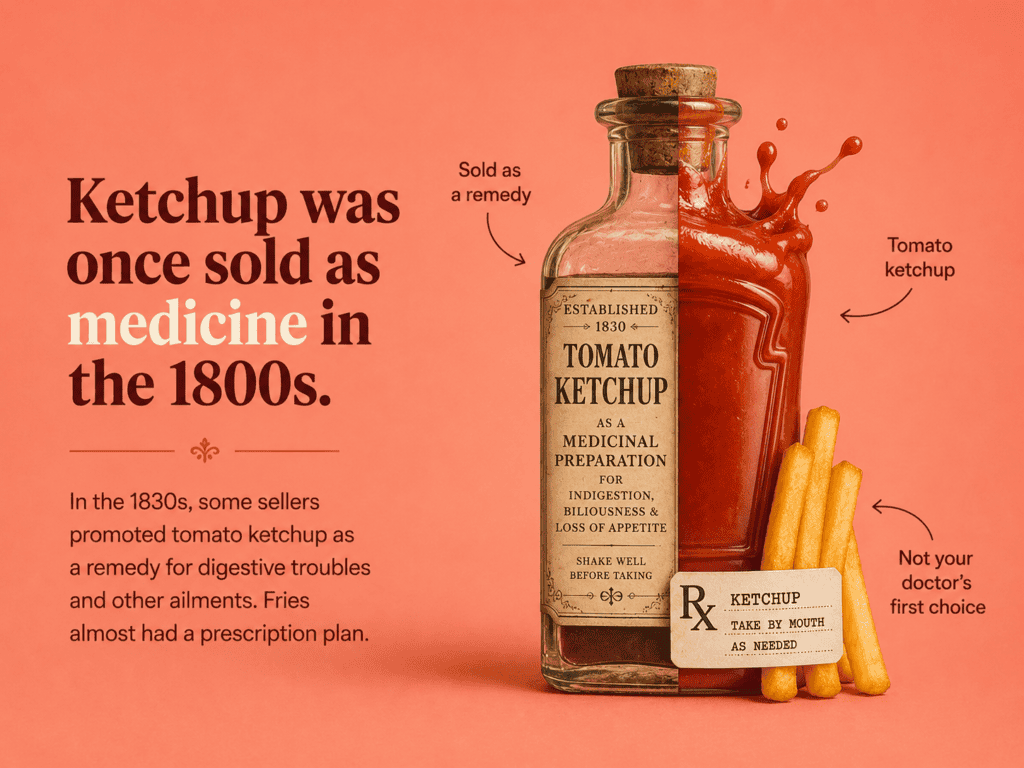
90. Ketchup was once sold as medicine in the 1800s. Fries almost had a prescription plan.
91. Vatican City is completely surrounded by Rome. It is a country inside a city.
92. Your skin is your largest organ. It protects you, helps regulate temperature, and constantly renews itself. It is doing a lot while you casually forget sunscreen.
93. The first known vending machine dates back to ancient Egypt. It dispensed holy water.
94. Hummingbirds can fly backward. Tiny bird, excellent reverse gear.
95. Some ants farm aphids for honeydew. Tiny agriculture existed long before office jobs.
96. The first iPhone was introduced in 2007. Pocket rectangles have been running our lives ever since.
97. Potatoes were the first vegetable grown in space. Scientists grew them as part of space agriculture research. Sadly, no one immediately opened a zero-gravity fry shop.
98. Starfish do not have brains like humans do. They use a nerve network to coordinate movement.
99. The word “robot” comes from a Czech word connected to forced labor. The future arrived with a slightly gloomy name.
100. Goats have rectangular pupils. Their eyes look like someone unlocked widescreen mode.
101. The Moon has moonquakes. Even the Moon gets shaky sometimes.
102. Carrots were not always orange. Purple, yellow, white, and red carrots existed too. Orange carrots became especially popular in Europe later, which means the carrot section of your grocery store is basically a historical fashion choice.
103. The first YouTube video was uploaded in 2005. It was about a visit to the zoo.
104. Human teeth are coated in enamel. It is the hardest substance in the human body.
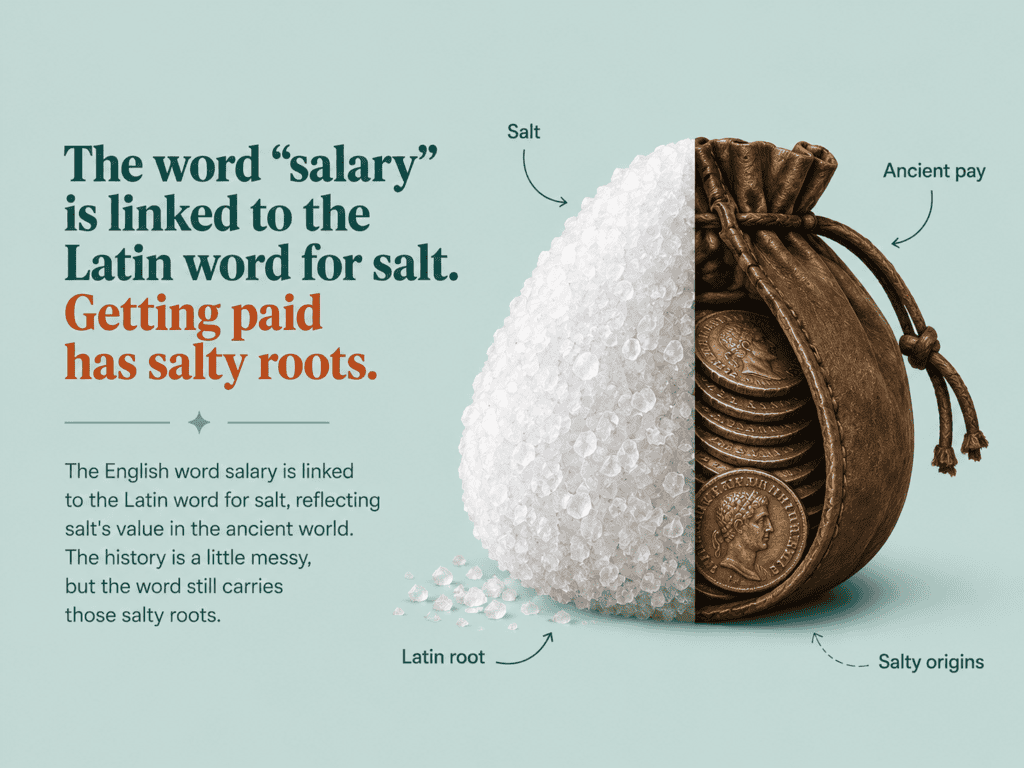
105. The word “salary” is linked to the Latin word for salt. Getting paid has salty roots.
106. A snail can sleep for very long stretches when conditions are bad. Extreme introvert energy.
107. The Statue of Liberty was a gift from France. It arrived in pieces and was assembled in New York. Imagine receiving a massive friendship gift and needing construction crews.
108. Popcorn pops because water inside the kernel turns into steam. Pressure builds until the kernel bursts.
109. Some parrots can live for decades. A pet parrot can become a lifelong roommate.
110. The Pacific Ocean is larger than all of Earth’s land area combined. Ocean really said, “I need space.”
111. The word “salary” is linked to the Latin word for salt. Getting paid has salty roots.
112. Your pupils change size to control how much light enters your eyes. They shrink in bright light and expand in darkness. Basically, your eyes have built-in camera settings.
113. The Great Pyramid of Giza was the tallest human-made structure in the world for thousands of years.
114. Mantis shrimp can punch incredibly fast. Their strike is so quick it can create tiny bubbles that collapse with force.
115. Tomatoes are fruits botanically. In the kitchen, they still get treated like vegetables.
116. The average smartphone has far more computing power than early spaceflight computers. You use it to watch short videos and ignore emails, which is humanity in one sentence.
117. Some lizards can detach their tails to escape predators. The tail keeps moving to distract the attacker. It is both brilliant and deeply unsettling.
118. The Milky Way is on a slow collision course with the Andromeda galaxy. Luckily, this will not happen for billions of years.
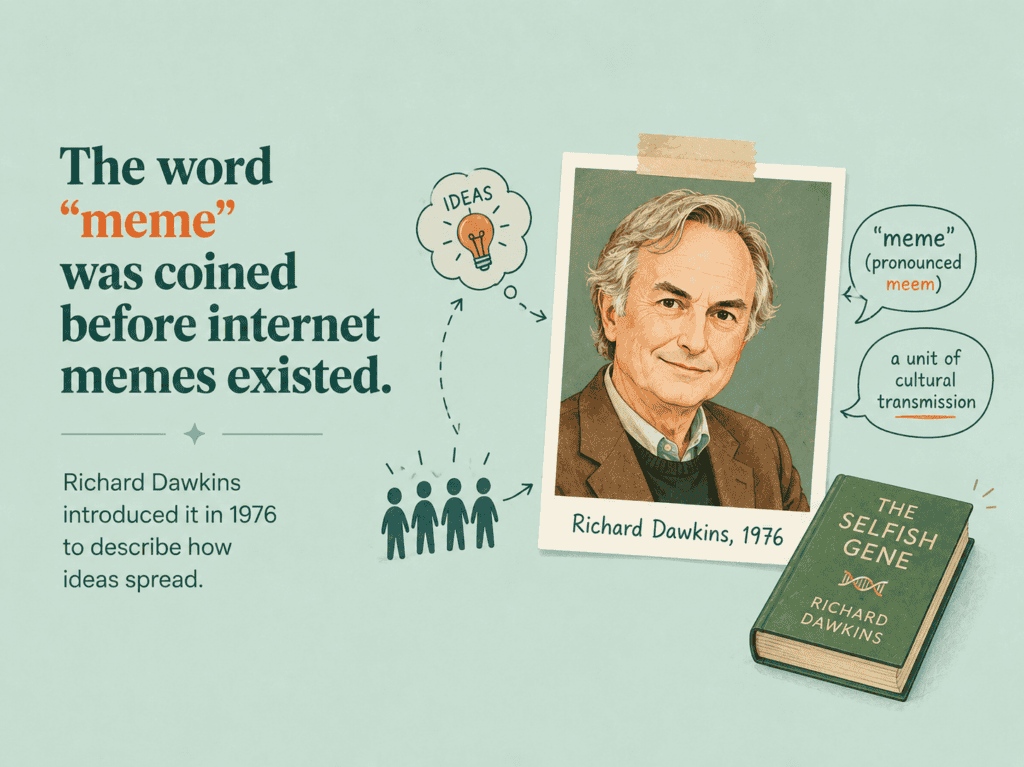
119. The word “meme” was coined before internet memes existed. Richard Dawkins introduced it in 1976 to describe how ideas spread.
120. Elephants can recognize themselves in mirrors. That is a sign of advanced self-awareness.
121. Nutmeg can be toxic in large amounts. A little is festive, but a lot is a terrible idea.
122. The shortest complete sentence in English is often said to be “Go.” Tiny sentence, bossy energy. It proves you do not need many words to sound urgent.
123. Early photographs required long exposure times. That is one reason people often looked serious in old photos.
124. Some bats eat insects, fruit, nectar, fish, or even blood depending on the species. Bats are not all the same spooky stereotype.
125. A baby puffin is called a puffling. It sounds like a plush toy, but it is real.
126. Jupiter has the shortest day of all the planets. It spins once in about 10 hours.
127. White chocolate is not chocolate in the same way milk or dark chocolate is. It contains cocoa butter but no cocoa solids. So yes, white chocolate lives in the chocolate family with a slightly complicated identity.
128. Your brain cannot feel pain directly. Headaches come from surrounding tissues, nerves, muscles, or blood vessels.
129. Ancient Romans had heated floors in some buildings. Their hypocaust system moved warm air under floors.
130. A group of ferrets is called a business. Imagine saying, “Sorry I am late, the business escaped.”
131. NASA’s Perseverance rover collected rock samples on Mars. Scientists hope these samples can help reveal more about the planet’s ancient environment.
132. The word “clue” comes from “clew,” meaning a ball of thread. It connects to the myth of Theseus using thread to find his way through a maze. So every mystery clue has a tiny maze story behind it.
133. Cats can rotate their ears independently. Built-in gossip radar.
134. Some plants release chemicals when attacked by insects. Plant drama has alerts.
135. The Empire State Building has its own zip code. Famous buildings get special treatment.
136. A turtle’s shell is part of its skeleton. It is connected to the ribs and spine, so a turtle is not wearing a shell like a backpack. The shell is part of the turtle itself, which is both amazing and slightly mind-bending.
137. The word “muscle” comes from a Latin word meaning “little mouse.” Ancient people looked at flexing and saw tiny rodents.
138. The QWERTY keyboard layout was designed in the 19th century for typewriters. Your texting life has old machine roots.
139. Water can boil and freeze at the same time under specific pressure conditions. This is called the triple point.
140. The first Olympic Games in ancient Greece had far fewer sports than today’s Olympics. No skateboarding, no surfing, no viral slow-motion replays. Just ancient athletes and very intense competition.
141. Dolphins have signature whistles that work a bit like names. The ocean has contact lists.
142. Wasabi served in many places is often made from horseradish, mustard, and coloring. Real wasabi is expensive and hard to grow.
143. The human heart beats about 100,000 times a day on average. Very hardworking, very underappreciated.
144. Minecraft began as an indie game. It later became one of the best-selling video games ever.
145. The Sahara is the largest hot desert in the world. Antarctica is larger overall, but it is a cold desert. So the phrase “desert” does not always mean sand, camels, and sunburn.
146. Ravens can mimic sounds, including human speech. Birds have range.
147. Earwax helps protect your ears. It traps dirt and helps slow unwanted germs.
148. The word “trivia” comes from Latin roots connected to “three roads.” It referred to common information shared in public places.
149. Pineapple contains bromelain, an enzyme that can break down proteins. That is why pineapple can make your mouth tingle.
150. Some grocery stores are designed to make you browse longer. Essential items are often placed deeper inside, and tempting snacks sit where you will notice them. The store is not random. It is a maze with chips.
151. The first Super Mario Bros. game helped define side-scrolling platform games. A mustached plumber changed gaming history.
152. A cheetah is the fastest land animal. It is built for short bursts of incredible speed.
153. The Moon has no wind or rain. That is why astronaut footprints can stay there for a very long time.
154. Cashews grow from the bottom of cashew apples. They look like nature added a weird little hook.
155. Human bones are living tissue. They can repair, rebuild, and adapt over time. Your skeleton is not just a Halloween decoration inside you. It is a maintenance project.
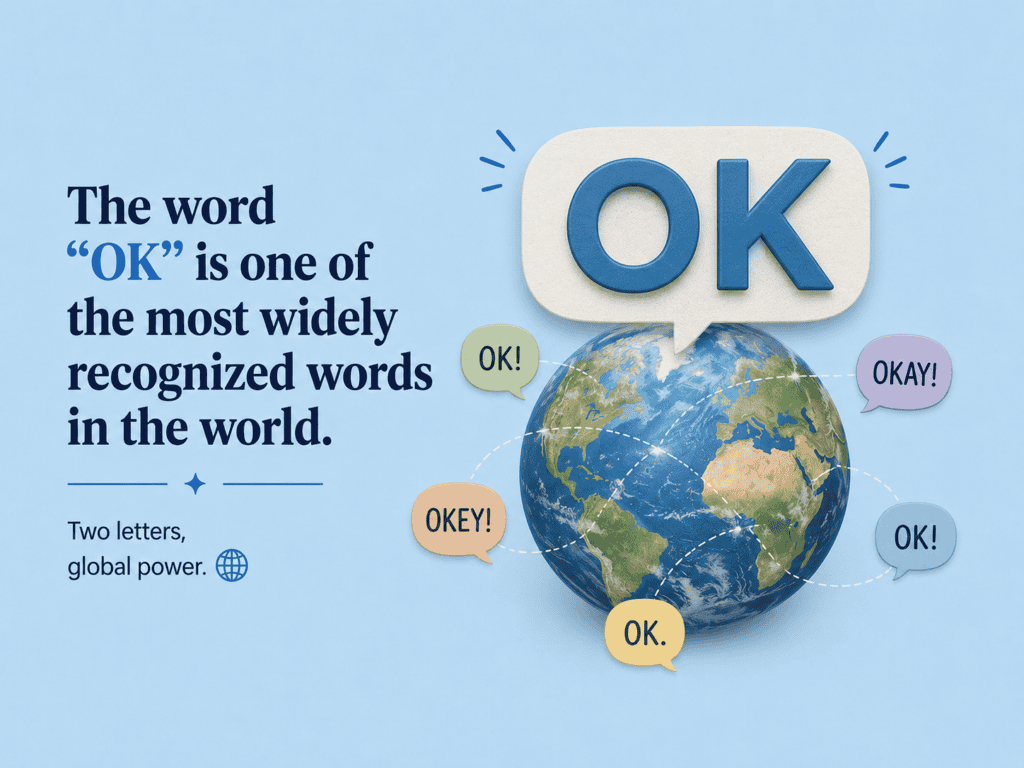
156. The word “OK” is one of the most widely recognized words in the world. Two letters, global power.
157. Sea turtles can travel thousands of miles across oceans. They have better long-distance commitment than most vacation plans.
158. Venus spins in the opposite direction from most planets. On Venus, the Sun would rise in the west and set in the east.
159. MSG occurs naturally in foods like tomatoes, mushrooms, and cheese. The flavor drama has been misunderstood for years.
160. The first emoji set was created in Japan in the late 1990s. Tiny digital faces have come a long way. Now they can end arguments, start arguments, or make a plain message feel suspicious.
161. The Amazon River carries more water than any other river. It is basically the heavyweight champion of rivers.
162. Your sense of taste is closely linked to smell. That is why food tastes boring when your nose is blocked.
163. Some ants can survive underwater for a surprising amount of time by trapping air bubbles. Tiny survival experts.
164. Uranus rotates on its side. It is basically rolling around the Sun. The solar system has at least one planet doing its own thing.
165. A baby goat is called a kid. That means goats have been using human slang forever.
166. The word “bookkeeper” has three consecutive double letters. It looks like spelling decided to show off.
167. Some cows may moo with regional accents. Even farm animals can have local flavor.
168. The Great Barrier Reef is the world’s largest coral reef system. It is so large that parts of it can be seen from space under the right conditions.
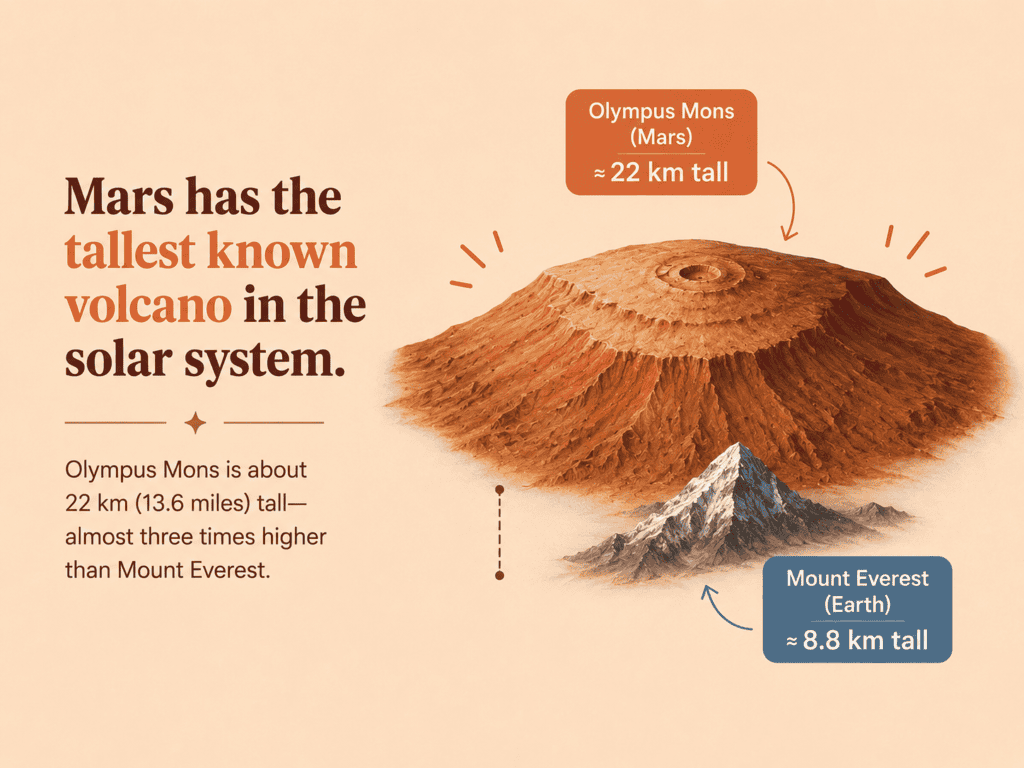
169. Mars has the tallest known volcano in the solar system. Olympus Mons is much taller than Mount Everest.
170. A good fun fact can make awkward silence disappear. One weird sentence can turn a quiet room into a full conversation. That is why the best fun facts are not just random. They are tiny social superpowers.