
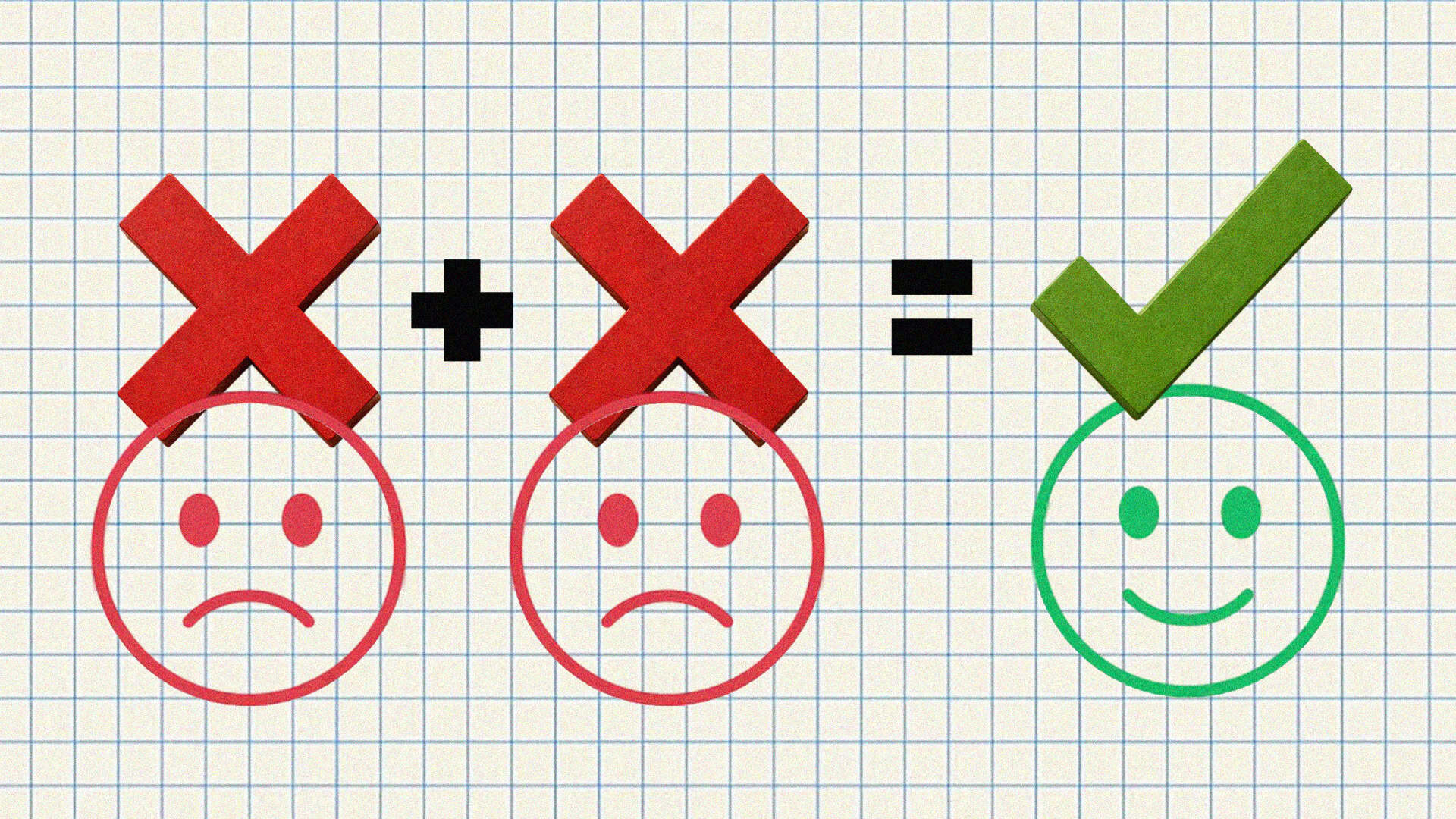
You read a sentence like “I do not know nothing” and your brain does that little stutter-step where it understands the vibe but not the logic. That is the double negative problem in one line. People use them all the time in speech, songs, jokes, and everyday conversation. But in standard English writing, they usually create confusion instead of emphasis.
The good news is that double negatives are easy to spot once you know what to look for.
What is a double negative?
A double negative happens when a sentence uses two negative forms in a way that clashes or cancels itself out.
For example:
- I do not need no help.
- She never said nothing.
- We cannot find it nowhere.
In standard English, those sentences are usually considered incorrect because the second negative muddies the meaning. The sentence sounds like it is saying the opposite of what the speaker probably intends.
Why double negatives cause trouble
The problem is simple. In standard English, two negatives in the same construction often cancel each other out or pull the meaning in different directions.
Take this sentence:
- I do not have no money.
The intended meaning is probably:
- I do not have any money.
But the actual sentence creates a logic problem. That is why teachers and editors usually flag it.
This is one of those grammar issues where the sentence may sound natural in conversation but still look wrong on the page.
Common double negative examples
Here are some of the most common ones people use without thinking about it.
1. Do not + no
Wrong:
- I do not want no coffee.
Better:
- I do not want any coffee.
- I want no coffee.
The first corrected version sounds more natural in modern English.
2. Cannot + nothing
Wrong:
- She cannot say nothing.
Better:
- She cannot say anything.
- She can say nothing.
Again, “anything” is usually the cleaner fix.
3. Never + nobody
Wrong:
- He never tells nobody the truth.
Better:
- He never tells anybody the truth.
- He tells nobody the truth.
4. Did not + nowhere
Wrong:
- We did not go nowhere.
Better:
- We did not go anywhere.
- We went nowhere.
5. Hardly + not
Wrong:
- I can hardly not laugh.
Sometimes this is a true double negative mistake. Sometimes it is trying to say something specific. A clearer version would usually be:
Better:
- I can hardly stop laughing.
- It is hard not to laugh.
That is often the better fix with tricky negatives. Rewrite the whole idea instead of patching one word.
The easiest way to spot a double negative
Look for a sentence that already has one negative word, then check whether another negative word shows up later in the same thought.
Common negative words include:
- not
- no
- nothing
- never
- nowhere
- neither
- nor
- hardly
- scarcely
- barely
If two of these are doing the same job in one sentence, there is a good chance you are looking at a double negative.
Words that often trigger double negative mistakes
Some words are especially sneaky because people do not always realize they are already negative in meaning.
Hardly
Wrong:
- I do not hardly know her.
Better:
- I hardly know her.
- I do not know her well.
Barely
Wrong:
- He cannot barely stand.
Better:
- He can barely stand.
Scarcely
Wrong:
- We did not scarcely have time.
Better:
- We scarcely had time.
- We barely had time.
These words already carry a negative or limiting sense. Adding another negative usually makes the sentence clumsy.
Double negatives in speech vs standard writing

This is where the topic gets more interesting.
In many dialects and speech communities, double negatives are a normal feature of natural spoken language. People use them for emphasis, rhythm, identity, or tone. In those settings, they are not random mistakes. They are part of how the language variety works.
But in standard academic and professional English, double negatives are usually treated as errors because they create confusion or look nonstandard.
That distinction matters. Something can sound completely normal in casual speech and still be the wrong choice for a formal piece of writing.
My view is that this is one of those grammar topics where context matters more than people admit. You do not need to mock the way people talk. You just need to know what standard written English expects.
When double negatives are actually acceptable
Not every sentence with two negatives is wrong.
Some double-negative constructions are perfectly acceptable because they are being used for a specific effect.
Litotes
This is a rhetorical style where a writer uses a double negative to soften or shape a positive statement.
Examples:
- He is not unhappy.
- That is not impossible.
- You are not wrong.
- The meal was not bad.
These are grammatically acceptable because the writer is intentionally using the double negative for tone. The meaning is not as strong as the direct positive.
For example:
- He is happy.
- He is not unhappy.
Those are not identical. The second one sounds more restrained.
I would not overuse this structure, but it can be useful when you want a sentence to sound careful, dry, or understated.
Double negatives people confuse with regular negatives
A few constructions trip people up because they look more complicated than they are.
Neither and nor
This is not automatically a double negative error.
Correct:
- Neither the blue one nor the red one fits.
That sentence is fine because “neither” and “nor” are working together as a proper pair.
Not uncommon
This is also not automatically wrong.
Correct:
- It is not uncommon to feel nervous before speaking in public.
This is another kind of softened phrasing. It is acceptable, though sometimes a clearer rewrite is stronger:
Clearer:
- It is common to feel nervous before speaking in public.
Cannot help but
Some people dislike this phrasing, but it is widely used and understood.
Example:
- I cannot help but laugh.
It is not the same kind of sloppy double negative as “I do not want no help.”
Common double negative mistakes in everyday writing
Here are a few mistakes that show up often in texts, emails, and school writing.
Wrong:
- I do not need no advice.
Better:
- I do not need any advice.
Wrong:
- She never called nobody.
Better:
- She never called anybody.
Wrong:
- We cannot do nothing now.
Better:
- We cannot do anything now.
Wrong:
- He did not say nothing about it.
Better:
- He did not say anything about it.
Wrong:
- There is not no reason to panic.
Better:
- There is no reason to panic.
- There is not any reason to panic.
That last one is a good reminder that sometimes the best fix is not tiny. Sometimes you should just rebuild the sentence cleanly.
How to fix a double negative fast
If you spot a double negative, use one of these three fixes.
1. Change the second negative to a positive-style word
Examples:
- no → any
- nothing → anything
- nobody → anybody
- nowhere → anywhere
Wrong:
- I did not see nobody.
Better:
- I did not see anybody.
2. Remove one of the negatives
Wrong:
- We cannot barely hear you.
Better:
- We can barely hear you.
3. Rewrite the whole sentence
Sometimes this is the smartest move.
Awkward:
- I cannot hardly believe it.
Better:
- I can hardly believe it.
- It is hard to believe.
That third option is my favorite because it usually produces the cleanest result.
Double negatives in songs, jokes, and pop culture
You will see double negatives everywhere in music, dialogue, comedy, and character writing. That is because they sound expressive. They can feel emotional, rhythmic, stubborn, funny, or authentic to a certain voice.
In creative writing, that can be a feature, not a flaw.
If a character says:
- I do not need nobody telling me what to do.
that line tells you something about voice and attitude.
If the same sentence appears in a formal report, it just looks wrong.
So the rule is not “double negatives never exist.” The rule is “know the effect you are creating.”
The easiest rule to remember
If your sentence already has one negative, be careful before adding another.
That simple habit catches most problems.
A fast mental check looks like this:
- Is there already a “not,” “never,” “nothing,” “no,” or “hardly” in the sentence?
- Am I adding another negative word that does the same job?
- Would “any,” “anyone,” or “anything” make the sentence clearer?
If yes, you probably found the issue.