

You hear someone say “it’s a bull market” on the news, then five minutes later another person warns that “the bears are taking over.” It sounds dramatic, almost like Wall Street opened a zoo. But the idea is much simpler than the jargon makes it feel.
Bull and bear markets are two basic ways to describe the mood and direction of financial markets. A bull market means prices are rising and investors feel confident. A bear market means prices are falling and fear has started to take the wheel. Once you understand the difference, market headlines become easier to read, and investing conversations feel a lot less intimidating.
What Are Bull and Bear Markets?
Bull and bear markets describe broad market trends.
A bull market is a period when stock prices are generally rising. Investors feel optimistic, companies often look stronger, and more people are willing to buy.
A bear market is a period when stock prices are generally falling. Investors feel nervous, selling increases, and many people start worrying about the economy.
The common shortcut is this:
- Bull market: prices rise by about 20% or more from a recent low
- Bear market: prices fall by about 20% or more from a recent high
- Market correction: prices fall by about 10% to 20%
- Market pullback: a smaller, shorter drop
The 20% mark is not magic, but it gives investors a rough line between normal market movement and a larger trend.
Why Are They Called Bull and Bear Markets?
The names are old, but the image is easy to remember.
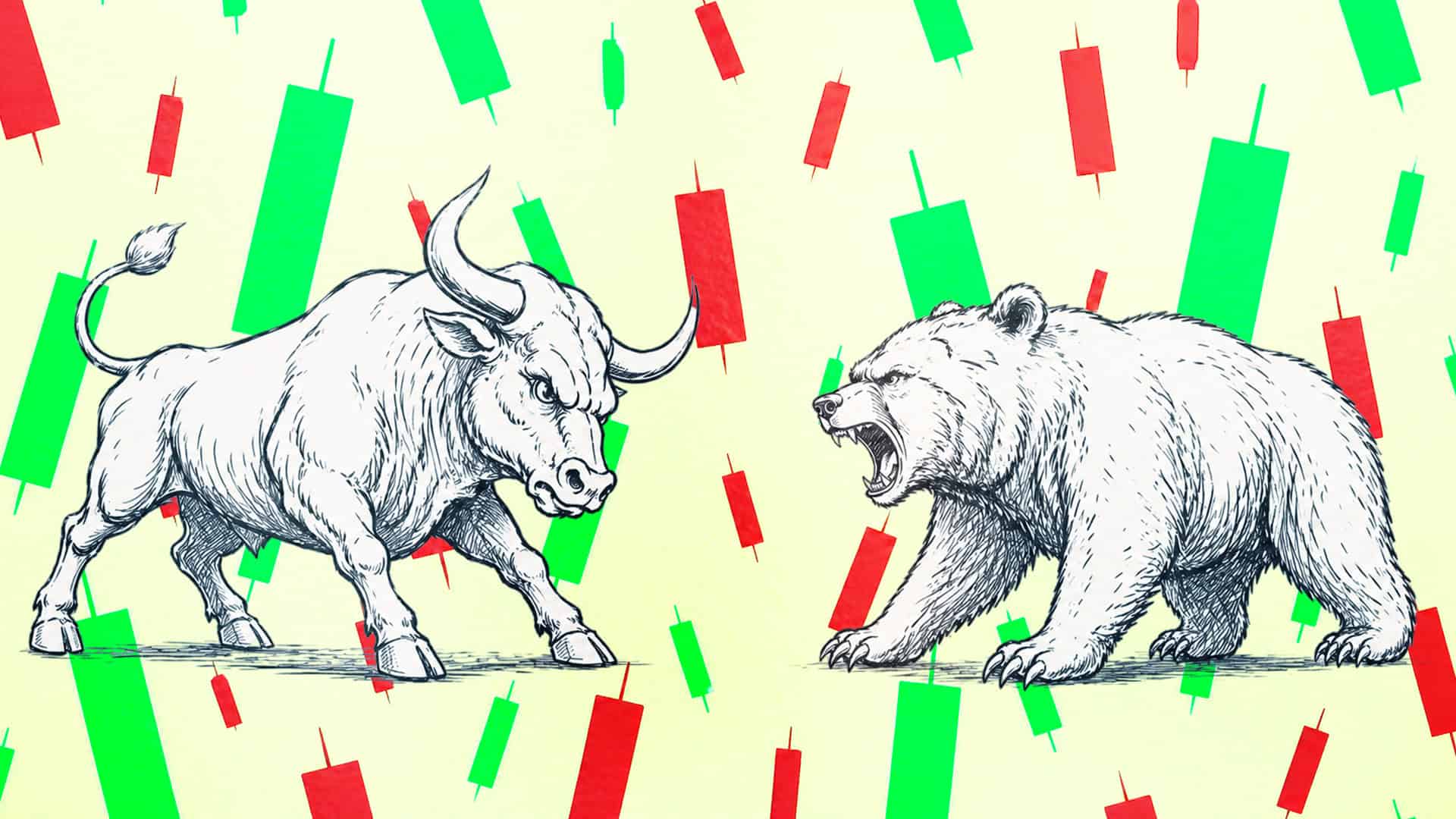
A bull attacks by thrusting its horns upward. That upward motion became linked with rising markets.
A bear attacks by swiping its paws downward. That downward motion became linked with falling markets.
So if someone says they are “bullish,” they expect prices to rise. If they are “bearish,” they expect prices to fall.
Bull Market Meaning
A bull market is a period of rising prices, growing confidence, and stronger demand for investments. It can happen in stocks, real estate, crypto, commodities, or even one specific sector like technology or energy.
A bull market does not mean prices rise every single day. There will still be bad days, scary headlines, and short dips. The bigger direction, though, is upward.
Common signs of a bull market
- Stock prices keep making higher highs
- Investors feel confident
- More people are buying than selling
- Company earnings look strong
- Jobs and wages may improve
- New businesses and investments grow
- IPO activity may increase
- News coverage feels more optimistic
- Riskier investments become more popular
- People start saying “this time is different”
That last one is worth watching. Bull markets can be exciting, but excitement can turn into overconfidence fast.
Bear Market Meaning
A bear market is a period of falling prices, weaker confidence, and heavier selling. It often feels uncomfortable because account balances drop, headlines get louder, and investors start wondering if they should do something dramatic.
A bear market does not mean every company is failing. It also does not mean the market will never recover. It means prices have fallen sharply enough that fear is driving much of the conversation.
Common signs of a bear market
- Stock prices fall 20% or more from recent highs
- Investors become cautious or fearful
- Selling pressure increases
- Company earnings may weaken
- Economic growth may slow
- Unemployment fears rise
- Interest rates or inflation may pressure markets
- Riskier investments drop harder
- News headlines turn gloomy
- People start saying they will “never invest again”
That last feeling is common. It is also one reason bear markets can create opportunities for patient investors.
Bull Market vs Bear Market: The Simple Difference
The easiest way to separate them is by direction and mood.
A bull market feels like optimism. Prices are climbing, investors are buying, and people expect better days ahead.
A bear market feels like caution. Prices are falling, investors are selling, and people worry that things may get worse before they improve.
Here is the clean version:
- Bull market means rising prices
- Bear market means falling prices
- Bullish means expecting prices to go up
- Bearish means expecting prices to go down
- Bulls focus on growth
- Bears focus on risk
- Bull markets reward patience and participation
- Bear markets test discipline and emotional control
How Long Do Bull and Bear Markets Last?
Bull markets often last longer than bear markets, but no one knows the exact timeline while living through one.
A bull market can run for months or years. It may include corrections along the way, but the larger trend keeps moving higher.
A bear market can last months or longer, depending on what caused it. Some are sharp and short. Others grind slowly and feel exhausting.
The harder truth is this: nobody rings a bell at the top or bottom. Most people only know a bull or bear market clearly after the move has already happened.
What Causes a Bull Market?
Bull markets often grow from a mix of strong earnings, confidence, and money flowing into investments.
Common causes include:
- Strong company profits
- Lower interest rates
- Economic growth
- Rising consumer confidence
- Falling inflation
- New technology trends
- Government support or stimulus
- Strong job markets
- More investor participation
- Optimism about the future
A bull market feeds on confidence. As prices rise, more people want to join. That can push prices even higher.
The danger is that confidence can become careless. Investors may start ignoring risks because everything looks easy.
What Causes a Bear Market?
Bear markets usually begin when investors lose confidence. The reason can be economic, political, financial, or emotional.
Common causes include:
- Recession fears
- High inflation
- Rising interest rates
- Weak company earnings
- Banking or credit problems
- Geopolitical uncertainty
- Overvalued stocks correcting
- Major global shocks
- Falling consumer confidence
- Panic selling
Bear markets can move quickly because fear spreads faster than optimism. People may sell not because they have a plan, but because they cannot stand watching prices fall.
Bull Market Example
Imagine a stock index drops to 3,000 during a rough period. Over the next year, the economy improves, companies earn more money, and investors start buying again.
The index climbs from 3,000 to 3,600. That is a 20% rise from the low.
At that point, many people would call it a bull market.
A simple bull market story looks like this:
- Prices fall and investors feel pessimistic
- Buyers slowly return
- Stocks begin rising
- Confidence improves
- More investors join
- Prices reach new highs
- Optimism becomes the main mood
The early part of a bull market often feels uncertain. By the time everyone feels comfortable, much of the move may already have happened.
Bear Market Example
Now imagine a stock index reaches 5,000 after a long run. Investors are excited, valuations are high, and people expect prices to keep rising.
Then inflation jumps, interest rates rise, and companies warn that profits may slow. Investors begin selling. The index falls from 5,000 to 4,000.
That is a 20% decline from the high.
That drop would usually be considered a bear market.
A simple bear market story looks like this:
- Prices rise for a long time
- Investors become too confident
- Bad news starts to matter again
- Selling increases
- Prices fall sharply
- Fear grows
- Patient buyers eventually return
Bear markets feel worst near the bottom because pessimism is everywhere. That is exactly why they are so emotionally difficult.
What Is a Market Correction?
A market correction is usually a decline of about 10% to 20% from a recent high.
Corrections are common. They can happen inside bull markets without ending the bull market. Think of them as the market taking a hard breath after running too fast.
Corrections may happen because of:
- Profit-taking
- Interest rate worries
- Overpriced stocks
- Political uncertainty
- Weak earnings reports
- Short-term panic
A correction can turn into a bear market, but it does not always happen.
What Is a Market Rally?
A rally is a period when prices rise. Rallies can happen in bull markets and bear markets.
This is where beginners often get confused. A few good weeks do not always mean the bear market is over. Sometimes prices bounce inside a larger downward trend. That is called a bear market rally.
The same idea works in reverse. A few bad weeks inside a bull market do not always mean a bear market has started.
Look at the broader trend, not just one dramatic day.
Bull Market Psychology
Bull markets feel good, which is exactly why they can become dangerous.
People become more willing to take risks. They may buy stocks they do not understand, chase hot trends, or assume prices will keep rising forever.
Common emotions in a bull market:
- Confidence
- Excitement
- Fear of missing out
- Greed
- Overconfidence
- Impatience
- Comfort with risk
The biggest mistake in a bull market is thinking gains are guaranteed.
A steady investor enjoys the upside but still keeps a plan. Cash needs, diversification, and risk limits still matter when everyone else sounds fearless.
Bear Market Psychology
Bear markets feel heavy. Even people with long-term plans can feel tempted to sell everything and stop looking at their accounts.
Common emotions in a bear market:
- Fear
- Regret
- Confusion
- Frustration
- Panic
- Exhaustion
- Loss of confidence
The biggest mistake in a bear market is making permanent decisions because of temporary fear.
Selling during a downturn can feel like relief in the moment. The problem is that getting back in at the right time is much harder than it sounds.
How Investors Act in a Bull Market
During bull markets, investors often:
- Buy more stocks
- Take on more risk
- Follow growth companies
- Pay higher prices for future potential
- Talk more openly about investing
- Feel comfortable with long-term plans
- Assume dips are buying opportunities
- Show interest in new sectors or trends
This can be reasonable in moderation. The danger starts when people buy only because prices are already up.
A good question to ask in a bull market is: “Would I still want this investment if it dropped 30%?”
If the answer is no, the risk may be bigger than it feels.
How Investors Act in a Bear Market
During bear markets, investors often:
- Sell stocks
- Move toward cash
- Prefer safer assets
- Avoid riskier companies
- Check accounts too often
- Delay investing
- Feel suspicious of good news
- Focus more on losses than long-term goals
Some caution is normal. But too much caution can lead to missed recovery periods.
A better bear market question is: “Has my long-term goal changed, or do I just hate how this feels?”
That one question can prevent a lot of panic decisions.
What Should Beginners Do in a Bull Market?
A bull market can make investing feel easy. That is why beginners need a plan before excitement takes over.
Useful moves in a bull market:
- Keep investing consistently
Regular investing helps avoid the pressure of picking the perfect day. - Avoid chasing hype
If everyone is suddenly talking about the same stock, pause before buying. - Rebalance your portfolio
If stocks have grown too much compared with your original plan, adjust carefully. - Keep an emergency fund
A bull market does not protect you from job loss, medical bills, or surprise expenses. - Know what you own
Do not buy investments because they are trending. - Stay diversified
One hot sector can cool down without warning. - Watch your risk level
If your portfolio keeps you awake at night, it may be too aggressive. - Avoid borrowing to invest
Debt can turn a normal market drop into a personal crisis.
What Should Beginners Do in a Bear Market?
A bear market is not fun, but it can teach better habits than a bull market ever could.
Useful moves in a bear market:
- Do not panic-sell without a plan
Selling everything often creates a second problem: deciding when to buy again. - Review your time horizon
Money needed soon should not be treated like money meant for 20 years from now. - Keep investing if your plan allows it
Buying during lower prices can help long-term investors, but only if their finances are stable. - Check your emergency fund
Cash gives you breathing room when markets and life both get messy. - Avoid doom-scrolling
Constant market news can make every dip feel like the end. - Revisit your asset mix
If the drop feels unbearable, your portfolio may have been too risky. - Focus on quality
Strong companies and broad funds often become more attractive when prices fall. - Be patient
Bear markets are uncomfortable, but they are part of investing.
Bull Market Mistakes to Avoid
A rising market can hide bad decisions for a while. That does not make them good decisions.
Avoid these bull market mistakes:
- Buying only because prices are rising
- Assuming recent gains will continue
- Ignoring valuation
- Putting too much money into one stock
- Confusing luck with skill
- Selling safe assets too aggressively
- Taking advice from loud strangers online
- Forgetting taxes and fees
- Investing emergency money
- Believing risk has disappeared
The market can make anyone feel smart during a strong run. Humility is cheaper than regret.
Bear Market Mistakes to Avoid
A falling market can make even sensible people act impulsively.
Avoid these bear market mistakes:
- Selling everything in panic
- Checking your portfolio every hour
- Assuming every company is doomed
- Stopping all investing out of fear
- Trying to perfectly call the bottom
- Moving money needed soon into risky assets
- Buying random beaten-down stocks without research
- Ignoring your original plan
- Letting headlines control every decision
- Forgetting that recovery often begins before the news feels good
The worst bear market choices usually happen when people want emotional relief more than a sound decision.
Bullish vs Bearish Meaning

You do not have to be inside a full bull or bear market to hear these words.
Bullish means someone expects prices to rise.
Bearish means someone expects prices to fall.
Examples:
- “I’m bullish on technology stocks” means the person expects tech stocks to do well.
- “She is bearish on real estate” means she expects real estate prices to struggle.
- “Analysts turned bearish after weak earnings” means they became more negative.
- “Investors are bullish after strong job numbers” means confidence improved.
These words describe opinions. They are not guarantees.
Can One Sector Be Bullish While the Market Is Bearish?
Yes. The overall market can be weak while one sector performs well.
For example:
- Energy stocks may rise while technology stocks fall
- Defensive sectors may hold up during recessions
- Gold may attract buyers when stocks are shaky
- Healthcare may stay stable while growth stocks struggle
- One country’s market may rise while another falls
This is why people talk about bull markets and bear markets in different ways. They can describe the whole stock market, one sector, one asset class, or even one individual investment.
Bull and Bear Markets Beyond Stocks
Bull and bear markets are not only for stocks.
You can hear the terms used for:
- Crypto
- Real estate
- Bonds
- Gold
- Oil
- Currencies
- Commodities
- Collectibles
- Specific sectors
- Individual stocks
A crypto bull market means crypto prices are broadly rising. A housing bear market means property prices are falling or demand has weakened.
The idea stays the same: bull means up, bear means down.
How Interest Rates Affect Bull and Bear Markets
Interest rates matter because they affect borrowing, spending, company profits, and investor behavior.
Lower interest rates can support bull markets because borrowing becomes cheaper. Companies may expand, consumers may spend more, and investors may look for higher returns in stocks.
Higher interest rates can pressure markets. Loans cost more, business growth may slow, and safer investments may become more attractive.
Interest rates do not control everything, but they shape the market mood.
How Inflation Affects Bull and Bear Markets
Inflation means prices are rising across the economy. A little inflation is normal. Too much inflation can scare investors.
High inflation can hurt markets because:
- Consumers have less spending power
- Companies face higher costs
- Interest rates may rise
- Profit margins may shrink
- Investors become more cautious
Falling inflation can improve confidence if investors believe the economy is stabilizing.
How Recessions Connect to Bear Markets
Bear markets and recessions are related, but they are not the same thing.
A bear market is about falling investment prices.
A recession is about shrinking economic activity.
Sometimes a bear market happens before a recession because investors expect trouble ahead. Sometimes markets recover before the economy feels better. This is why waiting for perfect news can be costly for long-term investors.
Markets often move on expectations, not just current conditions.
How to Tell If You Are in a Bull or Bear Market
No single clue tells the whole story. Look for a group of signs.
Signs of a bull market
- Major indexes are rising over time
- Dips are bought quickly
- Earnings growth looks strong
- Investor confidence is high
- New highs become common
- Riskier assets perform well
- Financial news feels optimistic
Signs of a bear market
- Major indexes fall sharply
- Rallies fade quickly
- Investors sell into good news
- Earnings expectations weaken
- Fear rises
- Defensive assets get attention
- Headlines focus on recession, inflation, or crisis
The market rarely announces itself clearly. Most of the time, investors are making decisions with incomplete information.
Simple Investing Strategies for Both Markets
You do not need a different personality for every market cycle. A steady plan matters more than a perfect prediction.
In a bull market
- Keep investing if it fits your plan
- Rebalance when your portfolio drifts
- Do not chase every hot trend
- Keep some cash for short-term needs
- Remember that prices can fall
In a bear market
- Review your goals
- Avoid emotional selling
- Keep buying only if your finances are stable
- Look for quality rather than hype
- Reduce risk if your plan was too aggressive
In both markets
- Diversify
- Watch fees
- Keep an emergency fund
- Know your time horizon
- Avoid decisions based on panic
- Review your plan once or twice a year
- Do not treat headlines as instructions
Dollar-Cost Averaging in Bull and Bear Markets
Dollar-cost averaging means investing a fixed amount at regular intervals, such as every month.
In a bull market, it helps you participate without waiting forever for a perfect entry point.
In a bear market, it lets you buy at lower prices over time instead of trying to guess the exact bottom.
It is not flashy, but it removes a lot of emotional pressure. For beginners, that is a major advantage.
Why Timing the Market Is So Hard
Market timing sounds easy in hindsight. Buy at the bottom. Sell at the top. Simple, right?
The problem is that bottoms feel terrible while they are happening. Tops feel safe and exciting. Human emotions are usually backward at market turning points.
A market bottom often arrives when headlines are still ugly. A market top often arrives when confidence is everywhere.
That is why many long-term investors prefer a consistent plan over constant prediction.
Quick Bull and Bear Market Terms to Know
- Bull market
A period of rising prices and stronger investor confidence. - Bear market
A period of falling prices and weaker investor confidence. - Bullish
Expecting prices to rise. - Bearish
Expecting prices to fall. - Correction
A decline of about 10% to 20% from a recent high. - Pullback
A smaller decline inside a larger trend. - Rally
A period when prices rise. - Bear market rally
A temporary rise during a larger falling market. - Volatility
How sharply prices move up and down. - Capitulation
A moment when many fearful investors sell at once. - Recession
A period of shrinking economic activity. - Expansion
A period of economic growth. - Diversification
Spreading investments across different assets to reduce risk. - Rebalancing
Adjusting your portfolio back to its planned mix. - Asset allocation
How your money is divided among stocks, bonds, cash, and other assets. - Risk tolerance
How much market movement you can handle emotionally and financially. - Time horizon
How long before you need the money. - Index
A group of investments used to track a market, such as a major stock index. - Defensive stocks
Stocks that may hold up better when the economy slows. - Growth stocks
Companies expected to grow faster than average, often more sensitive to market mood.
A Simple Way to Think About Bull and Bear Markets
Bull markets make people feel rich. Bear markets make people feel wrong. Neither feeling should control your entire financial life.
A bull market is a time to stay disciplined while things feel good. A bear market is a time to stay calm while things feel bad. The investors who handle both best usually are not the loudest people in the room. They are the ones with a plan, a long memory, and enough patience to let the cycle play out.