
The funny thing about body-part vocabulary is that most of us know more of it than we think, right up until someone asks us to list it properly. Then suddenly you get head, arm, leg, and a long pause. That is usually where the trouble starts. We use these words all the time, but we do not always sort them neatly in our heads.
So this version goes the way people naturally picture the body: from the top down. I’m keeping it practical, not too medical, and I’ll point out a few terms people tend to blur together.
Head and face body parts
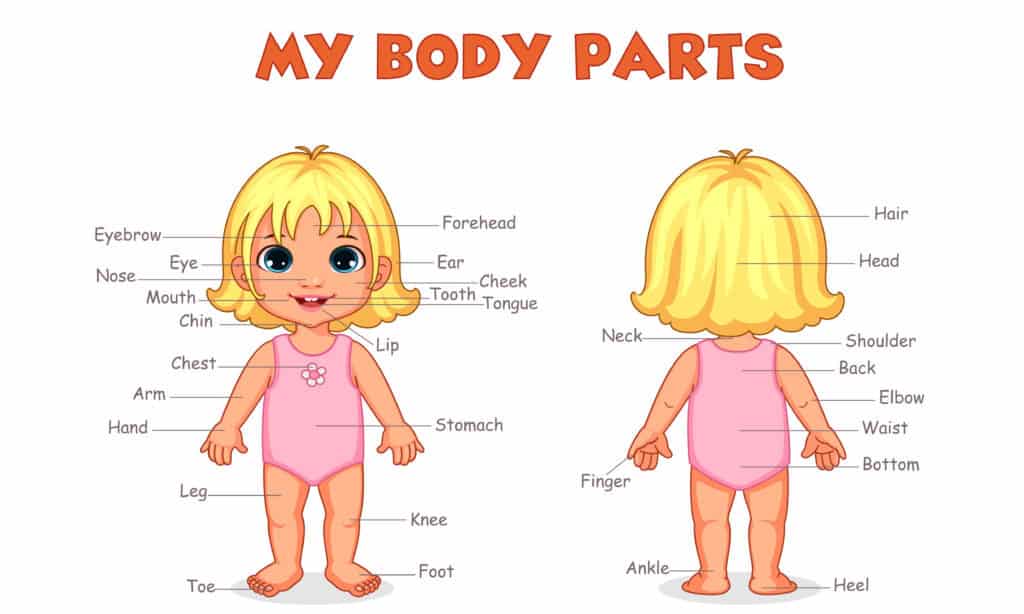
Head
The head is the top part of the body. It includes the brain, scalp, hair, face, eyes, ears, nose, and mouth. People sometimes use face when they really mean head, but they are not the same thing.
Hair
Hair grows from the scalp. It may seem obvious, but it belongs in everyday body-part vocabulary lists because people use the word constantly.
Forehead
The forehead is the flat area above the eyebrows. It gets left out of basic lists more often than it should.
Eyebrow
An eyebrow is the strip of hair above the eye. Singular is eyebrow. Plural is eyebrows.
Eyelash
Eyelashes are the small hairs along the edge of the eyelids. This is one of those useful detail words that helps build vocabulary beyond just eye.
Eye
The eye helps you see. It is one of the five sense organs and one of the first body parts most people learn.
Ear
The ear helps with hearing and balance. A lot of people think only about hearing, but balance is part of the job too.
Cheek
A cheek is the soft side of the face below the eye. It is a common everyday word, so I think it deserves a place over some more technical terms people rarely use.
Nose
The nose helps you smell and breathe. It is one of those body parts that shows up in both function and appearance language all the time.
Nostril
Each opening in the nose is a nostril. This word is basic enough to be useful, even if shorter lists skip it.
Mouth
The mouth is used for speaking, eating, and breathing. It includes several smaller body parts inside it.
Lip
The lips are the soft edges of the mouth. Singular is lip, plural is lips.
Tooth
A single tooth helps with biting and chewing. Plural is teeth, which is worth noting because the form changes.
Tongue
The tongue helps with taste, speech, and moving food while chewing. It quietly does a lot.
Chin
The chin is the lower front part of the face, below the mouth. Short word, easy to picture, easy to use.
Jaw
The jaw is the bony structure that holds the teeth and helps you chew. People sometimes confuse jaw with chin, but the jaw is broader.
Neck and upper body
Neck
The neck connects the head to the rest of the body. This is one people often mix up with throat.
Throat
The throat is the front inner passage area used for swallowing, breathing, and speaking. In casual speech, people say “my throat hurts,” while neck usually refers more to the outer area.
Shoulder
The shoulder connects the arm to the torso. It is both a joint area and a visible body part.
Chest
The chest is the front upper part of the body below the neck. In everyday speech, people usually mean the outside area, not the organs inside it.
Back
The back is the rear part of the torso. It supports posture and movement, and it tends to get a lot of complaints once adulthood starts getting involved.
Waist
The waist is the narrower middle area between the ribs and the hips. It shows up often in clothing language too.
Stomach
In everyday English, people often say stomach when they mean the front belly area. Technically, the stomach is an internal organ, but casual speech uses it more loosely.
Abdomen
The abdomen is the more formal word for the body area below the chest and above the hips. If stomach is the everyday term, abdomen is the more precise one.
Navel
The navel, also called the belly button, is the small mark in the center of the abdomen. Most people say belly button in casual conversation.
Hip
The hip is the area on either side of the lower torso where the legs attach. Another body-part word people know well in speech but sometimes forget in lists.
Arm and hand body parts
Arm
In everyday speech, people often use arm for the whole upper limb, but technically the arm is the part from shoulder to elbow.
Upper arm
The upper arm is the area between the shoulder and elbow. Useful when you want to be more specific.
Elbow
The elbow is the joint in the middle of the arm. Easy to spot, easy to teach.
Forearm
The forearm is the part between the elbow and wrist. People usually understand it when they hear it, even if they do not always think to list it.
Wrist
The wrist connects the hand to the forearm. Small but important.
Hand
The hand is used for holding, touching, and fine movement. It includes the palm, fingers, thumb, and knuckles.
Palm
The palm is the inner surface of the hand. It is the side you use to hold or carry things.
Finger
A finger is one of the long parts on the hand. The thumb is usually counted separately in basic teaching.
Thumb
The thumb is the shorter, stronger digit on the side of the hand. It is a big reason human hands work so well.
Knuckle
A knuckle is the joint in the finger, especially the part that stands out when you make a fist. This is one of those practical words many simple lists skip.
Nail
A nail grows at the tip of each finger and toe. In normal speech, fingernail and toenail are common too.
Leg and foot body parts
Leg
This is a common confusion point. In casual English, leg often means the whole lower limb. More technically, it is the section between the knee and ankle.
Thigh
The thigh is the upper part of the leg, between the hip and knee. Very useful word, and oddly forgotten in a lot of beginner articles.
Knee
The knee is the joint between the thigh and lower leg. It bends and supports movement.
Shin
The shin is the front part of the lower leg. If you have ever hit it on furniture, you know exactly where it is.
Calf
The calf is the muscular back part of the lower leg. Plural is calves, not calfs.
Ankle
The ankle connects the foot to the leg. Important for walking, standing, and balance.
Foot
The foot is the part at the end of the leg used for standing and walking. Very familiar word, but still worth distinguishing from leg.
Heel
The heel is the back part of the foot. It bears weight and shows up often in shoe vocabulary too.
Sole
The sole is the bottom of the foot. Easy to remember once you connect it with standing.
Toe
A toe is one of the digits on the foot. Like finger, it is early vocabulary but still essential.
Internal body parts
A lot of body-parts articles stop at the outside, but most readers also expect a few important internal parts.
Brain
The brain controls thought, memory, movement, and many body functions. It sits inside the head.
Heart
The heart pumps blood through the body. It is located in the chest.
Lungs
The lungs help you breathe by taking in oxygen and releasing carbon dioxide. They sit in the chest.
Liver
The liver helps process nutrients and filter substances in the body. It is one of the major internal organs people are commonly taught to name.
Stomach
The internal stomach is the organ that helps digest food. This is the more technical meaning of the same word people often use casually for the outside belly area.
Kidneys
The kidneys filter waste from the blood and help manage fluid balance. They are another major internal organ pair.
Skin
The skin is the body’s outer covering and is also considered an organ. That surprises some people, but it makes sense once you think about how much it does.