

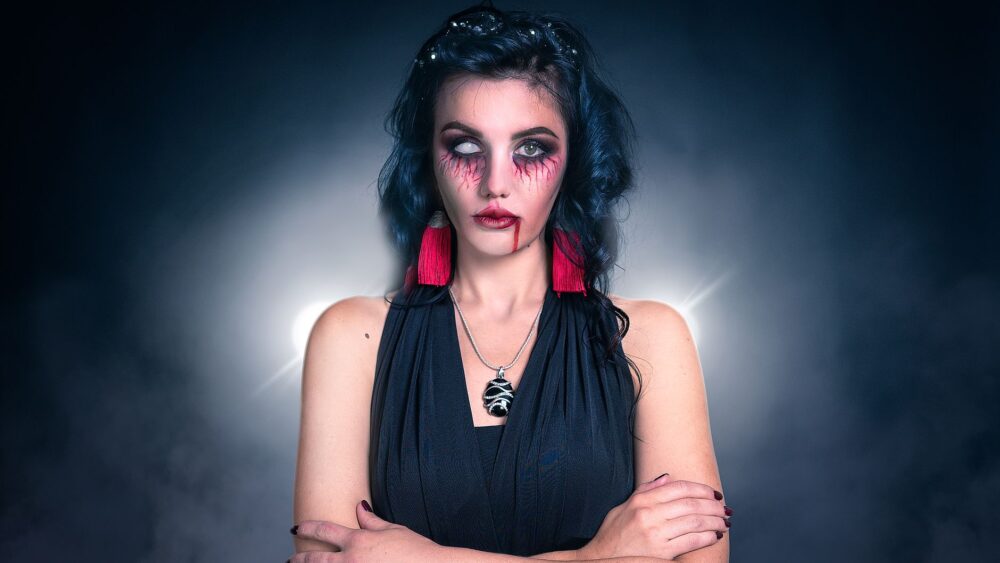
Vampire names carry a particular kind of gravity. Whether drawn from Eastern European folklore, Gothic literature, or prestige TV, the best ones feel ancient and inevitable, names that sound like they have been whispered in dark corridors for centuries. They tend to share certain qualities: a long vowel, a hard consonant, something vaguely foreign and aristocratic, or a softness that makes the danger feel more intimate.
This list pulls from every corner of vampire culture: the folklore creatures that predate Dracula by centuries, the literary villains who defined the genre, and the pop culture icons who reinvented it. All of them work as character names, and more than a few have made genuine moves into baby name territory. Here is the full collection, organized by where they come from and what kind of energy they bring.
The Originals: Folklore and Mythology Vampire Names
These names come from the oldest vampire traditions, long before the Gothic novel existed. They arrive from Slavic, Romanian, Greek, and South Asian sources, and they carry real folkloric weight.
Dracula
The name Vlad Dracula borrowed from history literally means “son of the dragon” in Romanian, from drac (dragon or devil). Bram Stoker took the name from the Wallachian prince Vlad III and turned it into the most recognizable vampire name in the world. It is too loaded to use as a baby name, but as a character name it is unbeatable.
Strigoi
In Romanian folklore, a strigoi is a troubled spirit or undead creature that rises to feed on the living. The word has roots in the Latin strixa screech owl associated with witchcraft. It has occasionally crossed into use as a given name in fiction and gaming communities.
Mara
A name with genuine cross-cultural vampire credentials. In Slavic folklore, the Mara is a night-demon or vampire spirit that sits on sleepers and drains their life force. The name is also used in Hebrew contexts meaning “bitter,” but its nightmare-creature association is ancient and well-documented. Mara is also a real given name used across many cultures, which makes it one of the most wearable names on this list.
Lamia
From Greek mythology, Lamia was a queen transformed into a child-devouring monster by Zeus’s jealous punishment. Over centuries she became a template for the vampiric female predator. John Keats used the name for his 1820 poem about a serpent-woman. Lamia is a real given name used in Arabic-speaking countries, where it means “dark-lipped” or “of dark beauty.”
Lilith
In Jewish folklore, Lilith is Adam’s first wife who refused submission and became a demon who preys on infants and men in the night. She is one of the oldest vampiric figures in recorded tradition. Lilith has become a genuinely popular baby name in recent years, climbing into the top 200 in the US, and it carries all of that dark mythological depth with it.
Empusa
A shape-shifting vampire-demon from Greek mythology, associated with Hecate, who seduced men and drank their blood. The name has a sharp, unusual sound and almost no modern usage, which makes it feel genuinely rare for character naming purposes.
Vrykolakas
The Greek folkloric vampire, a revenant that spreads plague and misfortune. The name itself is rarely used as a given name, but it surfaces in fiction and fantasy as a character name, particularly for ancient or monstrous vampire figures.
Moroi
In Romanian and Slavic tradition, a moroi is a type of vampire or ghost, sometimes the spirit of an unbaptized child. The word was popularized for modern audiences through Richelle Mead’s Vampire Academy series, where it refers to living vampires.
Upir
One of the oldest Slavic words for vampire, appearing in records as early as the 11th century. Upir is used as a character name in historical fiction and games set in Eastern European settings.
Nosferatu
Made famous by F.W. Murnau’s 1922 silent film, this name is now synonymous with the rat-like, plague-spreading vampire archetype. It may derive from an old Slavic or Romanian term related to disease. As a character name it is iconic; as a given name it exists in a few fictional contexts.
Gothic Literature Vampire Names
The 18th and 19th centuries gave vampire fiction its shape, and the names that emerged from that era still define the genre’s aristocratic, tragic register.
Varney
Sir Francis Varney is the villain of the 1847 penny dreadful Varney the Vampireone of the first long-form vampire narratives in English. The name has a gaunt, Victorian quality that makes it feel instantly period-appropriate.
Ruthven
Lord Ruthven appears in John Polidori’s 1819 story “The Vampyre,” the first modern vampire story in English. Polidori based the character on Lord Byron, and the name carries that Byronic, aristocratic darkness. It is a real Scottish surname used occasionally as a given name.
Carmilla
J. Sheridan Le Fanu’s 1872 novella gave us Carmilla, the female vampire who predates Dracula by two decades. The name has a romantic, flowing quality that makes it feel genuinely wearable, and it has attracted real interest from parents who want something Gothic and feminine without being obvious.
Mircalla
The original name of Le Fanu’s Carmilla, an anagram she uses to conceal her identity. Mircalla Karnstein is the full name, and the elaborate quality of it feels perfectly suited to an immortal aristocrat from the 17th century.
Clarimonde
From Theophile Gautier’s 1836 short story “La Morte Amoureuse,” Clarimonde is a beautiful vampire courtesan who feeds on a young priest. The name is French in origin and has an ornate, romantic quality that feels very much of its era.
Berenice
Edgar Allan Poe’s 1835 story “Berenice” features a protagonist obsessed with the teeth of his dying cousin, a story that blurs the line between vampirism and Gothic horror. Berenice is a real classical name, Greek in origin, meaning “she who brings victory,” used since antiquity.
Marcilla
Another alias used by Carmilla in Le Fanu’s novella, an anagram of Mircalla. The name has a softer sound than its counterparts and feels usable as a character name in its own right.
Ambrosio
From Matthew Lewis’s Gothic novel The Monk (1796), Ambrosio is a monk who falls into diabolical corruption. While not a vampire in the strict sense, the name is deeply embedded in the Gothic tradition and carries that decadent, fallen-angel quality that defines the genre.
Lestat
Anne Rice invented this name for her signature creation, the Vampire Lestat de Lioncourt, who first appeared in Interview with the Vampire (1976). The name feels French aristocratic without being a real French name, which is exactly the effect Rice intended. It has genuine usage as a given name among Rice devotees.
Armand
Rice’s immortal Armand, the ancient vampire who runs the Theatre des Vampires in Paris, has one of the most evocative names in her chronicles. Armand is a real French and Spanish given name, a form of Herman meaning “army man,” but in vampire culture it belongs entirely to Rice’s melancholy immortal.
Claudia
The child vampire in Rice’s Interview with the Vampiretrapped in a young girl’s body for eternity, is one of the most tragic figures in vampire fiction. Claudia is a real classical Roman name, feminine form of Claudius, and it carries both its ancient history and Rice’s devastating character simultaneously.
Louis
Louis de Pointe du Lac, Rice’s brooding, guilt-ridden narrator in Interview with the Vampiregave this classic French name a new layer of immortal melancholy. Louis is a name with centuries of royal history, and Rice’s use of it felt deliberately ironic and romantic.
Madeleine
A minor but memorable character in Rice’s chronicles, the mortal woman who is turned to care for Claudia. The name is French, a form of Magdalene, and it has that soft, romantic quality that fits the Parisian vampire world Rice created.
Maharet
One of Rice’s most ancient vampires, a twin who has survived since prehistoric times. The name feels genuinely archaic, with a Middle Eastern sound that suits a character of such extreme age.
Akasha
The queen of the damned in Rice’s mythology, the original vampire and ancient Egyptian ruler. Akasha is a Sanskrit word meaning “ether” or “sky,” used in Hindu cosmology. Rice borrowed it and turned it into one of the most powerful vampire names in fiction.
Classic Film and Television Vampire Names
Cinema and television gave vampire names a new kind of cultural reach, and the most memorable ones have shaped how we think about the archetype as much as any novel.
Orlok
Count Orlok is the vampire in Murnau’s Nosferatu (1922), a deliberately repulsive reinterpretation of Dracula. The name feels harsh and Eastern European in a way that suits the creature perfectly.
Barnabus
Barnabas Collins, the vampire at the center of the gothic soap opera Dark Shadows (1966-1971), brought vampire drama into American living rooms. The name Barnabas is genuinely ancient, of Aramaic origin meaning “son of consolation,” and it has a stately, melancholy quality that fits the character.
Selene
Kate Beckinsale’s vampire warrior in the Underworld franchise carries a name from Greek mythology: Selene was the goddess of the moon. The moon connection gives the name an obvious vampire resonance, and it has been climbing in baby name popularity for years independently of its vampire associations.
Viktor
The ancient vampire elder in the Underworld series, Viktor is a form of Victor with a Central European spelling that feels more imposing. It is a real given name used widely across Slavic and Germanic cultures.
Marcus
Another elder vampire in UnderworldMarcus carries the weight of its ancient Roman origins. It is one of the oldest Latin given names, associated with Mars, the god of war, and it has maintained steady use across many centuries and cultures.
Kain
Used in the video game series Legacy of Kainthis spelling variant of Cain carries the biblical resonance of the first murderer while looking slightly more aggressive on the page. It appears as a given name in various cultures.
Raziel
The angelic-turned-vampiric protagonist of the Legacy of Kain series. Raziel is a genuine Hebrew angelic name meaning “secret of God,” and it has been gaining ground as a baby name, particularly in communities that favor strong, unusual Hebrew names.
Blade
Marvel’s half-vampire, half-human vampire hunter, played by Wesley Snipes in the 1998 film, has a name that functions as both a word name and a genuine given name. It has been used as a given name in the US, particularly in the years following the film’s release.
Deacon
Deacon Frost, the ambitious young vampire villain in the original Blade film, gave this ecclesiastical name a sinister edge. Deacon has become genuinely fashionable as a baby name, which gives it a double life as both a trendy choice and a quietly dark one.
Quinn
Quinn is a character in the Blade series, and the name has deep Irish roots meaning “descendant of Conn,” where Conn means “chief.” Its gender-neutral quality and strong sound have made it popular in its own right.
Spike
William “Spike” Pratt, the bleach-blond British vampire from Buffy the Vampire Slayeris one of television’s most beloved vampire characters. Spike functions as a nickname, but it has been used as a given name, particularly for pets and in informal contexts.
Angel
The ensouled vampire from Buffy the Vampire Slayer and his own spin-off series, Angel (born Angelus, born Liam) is one of the most recognizable vampire names in television history. Angel is a genuine given name used across many cultures, and its dual nature as both celestial and sinister suits a vampire with a conscience perfectly.
Angelus
The name Angel takes on when his soul is removed, reverting to his murderous vampire self. Angelus is the Latin word for angel and has been used as a given name in Catholic tradition.
Drusilla
The mad vampire seer from BuffyDrusilla has one of the show’s most evocative names. It is a genuine Latin name, a diminutive of Drusus, used in the ancient Roman family. It feels simultaneously aristocratic and unhinged, which is exactly right.
Darla
The oldest of the Buffy vampire family, Darla is Angel’s sire and one of the show’s most complex figures. Darla is a genuine American given name that peaked in mid-century use but feels vintage-cool now.
Harmony
Harmony Kendall, the Valley Girl turned vampire in Buffygave this virtue name a comedic vampire association. Harmony is a real given name that has been in consistent use in English-speaking countries.
Xander
Not a vampire himself, but Xander Harris is so central to vampire culture through Buffy that the name belongs here. Xander is a short form of Alexander that has become a standalone given name in its own right, and it carries a modern, slightly edgy quality.
Modern Literary Vampire Names
The vampire novel had a major revival in the late 20th and early 21st centuries, and the names that emerged from that wave reflect a shift toward the romantic and the contemporary.
Edward
Edward Cullen from Stephenie Meyer’s Twilight series gave this classic Old English name (“rich guard”) an enormous boost in the late 2000s. Edward had been seen as stuffy and dated before Meyer’s series; the vampire version made it feel dangerous and romantic again.
Carlisle
The patriarch of the Cullen family in TwilightCarlisle is named after the English city in Cumbria. As a given name it has a distinguished, slightly unusual quality that suits a centuries-old doctor with impeccable manners.
Jasper
Jasper Hale of the Cullen family helped push this name back into fashion. Jasper is of Persian origin, the name of one of the Three Magi in Christian tradition, and it has become one of the more fashionable choices for boys in recent years.
Emmett
Emmett Cullen is the physically powerful member of the Cullen family. Emmett is an Old English name meaning “universal” or “whole,” and it has been on a consistent upward climb in popularity, fitting the broader trend toward vintage boy names.
Rosalie
Rosalie Hale, one of the Cullen vampires, has a name that is French in origin, a form of Rose. It has a romantic, old-fashioned quality and has been climbing in baby name popularity alongside other vintage floral names.
Esme
Esme Cullen, the maternal figure of the Cullen family, has one of the most fashionable names in the series. Esme is of French origin, possibly meaning “esteemed” or “loved,” and it has become a genuine favorite in English-speaking countries, particularly in the UK.
Alice
Alice Cullen, the visionary vampire with a pixie cut and a gift for seeing the future, is one of Meyer’s most beloved characters. Alice is a classic Old French and German name meaning “noble,” and it has been a top-100 staple in many English-speaking countries for years.
Rose
Used in various vampire narratives, Rose is the central character in Richelle Mead’s Vampire Academy series. It is one of the oldest floral names in the English tradition, simple and strong.
Lissa
Vasilisa “Lissa” Dragomir, the Moroi princess in Vampire Academycarries a diminutive of Vasilisa, the Russian feminine form of Basil, meaning “royal” or “kingly.” Lissa works as a standalone name with a soft, approachable quality.
Dimitri
Dimitri Belikov, the dhampir guardian in Vampire Academyhas a name that is the Greek and Russian form of Demetrius, meaning “follower of Demeter.” It has a strong, Slavic quality that fits the series’ Eastern European setting perfectly.
Christian
Christian Ozera, the brooding Moroi in Vampire Academyhas a name of obvious Latin-Christian origin. It is a classic given name used across many centuries and cultures, and its vampire association adds a layer of irony that the novels play with deliberately.
Jeaniene
Jeaniene Frost is the author of the Night Huntress vampire series, and the name has become associated with the vampire fiction community. It is a variant spelling of Jeannine, a French diminutive of Jean.
Cat
Catherine “Cat” Crawfield is the half-vampire heroine of Frost’s Night Huntress series. Cat as a given name is a short form of Catherine, from the Greek Aikaterine, and it has a sharp, no-nonsense quality that suits a vampire hunter.
Bones
Crispin “Bones” Russell, the vampire hero of Frost’s Night Huntress series, has a nickname that has crossed into given name use in some communities. Its directness and slightly dangerous quality make it memorable in the vampire fiction landscape.
Prestige TV and Recent Pop Culture Vampire Names
The prestige television era brought vampire stories a new level of seriousness and complexity, and the names that came with it reflect both that ambition and a broader cultural shift toward names that feel weighty without being obviously Gothic.
Bill
Bill Compton, the Civil War-era vampire in HBO’s True Bloodmade this most ordinary of American names feel unexpectedly resonant. The contrast between the name’s everyman quality and the character’s vampire nature was entirely deliberate.
Eric
Eric Northman, the Viking vampire sheriff in True Bloodcarries a name of Old Norse origin meaning “ever ruler.” Eric has been a solid top-100 name for decades, and the character gave it a cool, ancient edge.
Godric
The ancient vampire in True Blood who serves as Eric’s maker. Godric is an Old English name meaning “God’s power,” and it has a genuinely medieval quality that suits a character of extreme age. It is rarely used today, which makes it feel distinctive.
Pam
Pamela Swynford De Beaufort, Eric’s vampire progeny and business partner in True Bloodis one of television’s great vampire characters. Pam is a short form of Pamela, a name invented by Sir Philip Sidney in the 16th century, and the contrast between its cheerful sound and the character’s icy menace is part of what makes it so effective.
Tara
Tara Thornton, who becomes a vampire in later seasons of True Bloodhas a name of multiple origins: Irish (from the Hill of Tara), Sanskrit (meaning “star”), and the famous plantation in Gone with the Wind. It has been a popular given name in multiple cultures.
Jessica
Jessica Hamby, the young vampire in True Bloodcarries a name that Shakespeare may have invented for The Merchant of Venicepossibly from a Hebrew root. It was a top name in the 1980s and 1990s, and the character uses its wholesome associations against type.
Hoyt
Hoyt Fortenberry, the human love interest in True Bloodhas a name that is an English surname used as a given name, and it carries a distinctly Southern American quality that fits the show’s Louisiana setting.
Stefan
Stefan Salvatore, the moral, brooding vampire in The Vampire Diariescarries the Slavic form of Stephen, from the Greek Stephanos meaning “crown.” It has a sophisticated, European quality and has maintained steady use across many cultures.
Damon
Damon Salvatore, the charismatic, dangerous vampire in The Vampire Diarieshas a name of Greek origin associated with the mythological figure Damon, a symbol of loyal friendship. The name has been rising in popularity, partly driven by the show’s enormous audience.
Klaus
Klaus Mikaelson, the original hybrid vampire-werewolf in The Vampire Diaries and The Originalscarries a German short form of Nicholas meaning “victory of the people.” Klaus has a cold, precise quality that suits the character’s ruthlessness, and it has been gaining attention from parents interested in European names.
Elijah
Elijah Mikaelson, Klaus’s noble and conflicted brother, has a name of Hebrew origin meaning “my God is Yahweh.” Elijah has been one of the fastest-rising biblical names in recent years, consistently in the top 10 in the US, and the character’s dignified bearing suits it well.
Rebekah
Rebekah Mikaelson, the fierce original vampire sister, carries a Hebrew name meaning “to bind” or “to tie.” Rebekah is a variant spelling of Rebecca with a more archaic, biblical feel, which suits an original vampire perfectly.
Kol
Kol Mikaelson, the most volatile of the original vampire siblings, has a name that is a short form of Nicholas in some traditions and also a genuine given name in its own right in Scandinavian contexts.
Finn
Finn Mikaelson, the eldest and most morally conflicted original vampire, carries a name of Irish and Old Norse origin. Finn has become one of the most fashionable boy names in English-speaking countries, and the character adds a darker layer to its bright, friendly sound.
Hayley
Hayley Marshall, the werewolf-turned-hybrid in The Originalshas a name that is an English surname-name, a place name meaning “hay clearing.” It has been popular in English-speaking countries since the 1990s.
Freya
Freya Mikaelson, the powerful witch sister in The Originalscarries the name of the Norse goddess of love and war. Freya has been climbing sharply in baby name popularity across the US and UK, driven partly by the broader Norse mythology trend.
Niklaus
Klaus Mikaelson’s full name, Niklaus, is a German and Scandinavian form of Nicholas with an ancient, formal quality that suits the original hybrid’s medieval origins. It is a real given name used in Germanic and Scandinavian countries.
Aiden
Used in various vampire narratives including Being HumanAiden is an anglicized form of the Irish name Aodhan, derived from Aodh, the Celtic god of fire. It has been a consistently popular name in the US and UK for two decades.
Henry
Henry Fitzroy, the vampire in Tanya Huff’s Blood series, carries one of the most classic English names, of Germanic origin meaning “home ruler.” Henry’s association with English kings gives it an aristocratic quality that suits an immortal character.
Vicki
Vicki Nelson, the human detective who works alongside the vampire Henry in Huff’s series, has a name that is a short form of Victoria, from the Latin for “victory.” Its mid-century American quality contrasts nicely with the Gothic elements of the series.
Vampire Names From International Traditions
Vampire mythology exists in nearly every culture, and some of the most evocative names in this tradition come from outside the Western European mainstream.
Aswang
In Filipino folklore, the Aswang is a shape-shifting vampire creature that is one of the most feared supernatural beings in the tradition. The term functions as a name in Filipino horror fiction and has appeared as a character name in various media.
Pontianak
The vampiric female ghost of Malay and Indonesian folklore, a woman who died during childbirth and returns to prey on the living. Pontianak is used as a character name in Southeast Asian horror fiction and film, and the city of Pontianak in Indonesia takes its name from the creature.
Cihuateteo
In Aztec mythology, the Cihuateteo were the spirits of women who died in childbirth, transformed into vampire-like beings who stole children and drove men to madness. The name appears in academic and fictional contexts dealing with Mesoamerican mythology.
Langsuir
A vampiric creature from Malay folklore, similar to the Pontianak. The Langsuir is a woman who died in grief and became a long-haired, owl-like vampire. It appears as a character name in Southeast Asian vampire fiction.
Penanggalan
One of the most distinctive creatures in Malaysian folklore: a severed head that detaches and flies through the night with its trailing organs. The name appears in fantasy gaming and horror fiction as a character name for this type of vampire creature.
Jiangshi
The Chinese hopping vampire, a reanimated corpse that absorbs the life force of the living. The jiangshi is one of the most recognizable vampires outside the European tradition and has been the subject of a significant body of Hong Kong horror cinema. The name appears in gaming and fiction contexts.
Adze
From the Ewe people of Ghana and Togo, the Adze is a vampire creature that takes the form of a firefly. When captured in human form, it feeds on blood and spreads disease. The name has appeared in contemporary fantasy fiction as a character name.
Strix
The Latin and Ancient Greek word for a screech owl that was also believed to be a vampiric creature, drinking the blood of sleeping humans. Strix appears in Roman literature including Ovid and has been used as a character name in fantasy gaming. It is the root of the Romanian word strigoi.
Villain Names With Deep Vampire Credentials
Some names have become so thoroughly associated with vampiric villainy through repeated use across multiple works that they carry the archetype in their sound alone.
Vladimir
The name most obviously associated with Vlad the Impaler, the historical inspiration for Dracula. Vladimir is a Slavic name meaning “ruler of peace” or “great ruler,” and its association with both Russian autocracy and vampire mythology gives it a particular kind of dark authority. Vladimir Todd is also the teenage vampire protagonist of Heather Brewer’s popular young adult series.
Vlad
The short form of Vladimir or Vladislav, Vlad carries the entire Dracula mythology in four letters. Vlad is a real given name used in Romania, Russia, and other Slavic countries, and it is impossible to separate from its most famous bearer.
Lucian
The vampire-werewolf hybrid leader in the Underworld series, Lucian carries a Latin name meaning “light,” from Lucius. The irony of a name meaning light attached to a creature of darkness is one that vampire fiction has always exploited, and Lucian has been growing in popularity as a baby name for parents drawn to its Roman sound.
Aro
The leader of the Volturi vampire ruling class in TwilightAro has a name that feels ancient and minimal. It is a real given name used in some cultures, and its brevity gives it a cold, commanding quality.
Caius
Another Volturi leader in TwilightCaius is a genuine ancient Roman name, a variant of Gaius, one of the most common praenomina in Roman history. Its age and austerity suit an immortal vampire ruler.
Felix
The powerful Volturi guard in TwilightFelix is a Latin name meaning “happy” or “fortunate,” which the character is decidedly not. Felix has become a genuinely fashionable baby name in recent years, driven partly by its bright sound and partly by its vintage European quality.
Alec
The young Volturi guard in TwilightAlec is a short form of Alexander, from the Greek meaning “defender of men.” It has a clean, modern quality that contrasts with the ancient evil of the character.
Jane
Jane, Alec’s twin sister and one of the most terrifying of the Volturi, is one of Meyer’s most effective naming choices. The most ordinary of English names, a medieval short form of Johanna, attached to a creature who causes unbearable pain with a glance.
Heidi
The Volturi’s human-luring vampire in Twilight carries a German name, a short form of Adelheid meaning “noble kind.” The contrast between the name’s cheerful alpine associations and the character’s lethal function is sharp and deliberate.
Santiago
A Volturi guard in TwilightSantiago is the Spanish form of Saint James, from the Hebrew Yaakov. It is a widely used given name across Spanish-speaking cultures and carries both religious and cultural weight.
Renata
The Volturi’s personal shield in TwilightRenata is a Latin name meaning “reborn,” from renatus. The meaning has obvious vampire resonance, and the name is used in Italian, Spanish, Portuguese, and Eastern European cultures.
Names That Sound Like Vampires: The Aesthetic
These are names that have been adopted by vampire fiction because their sound, etymology, or cultural associations align perfectly with the vampire aesthetic, even if they began in entirely different contexts.
Vanya
A Russian diminutive of Ivan, which is itself a form of John. Vanya appears in vampire fiction and Gothic contexts because of its Slavic sound and the way it occupies a gender-fluid space that feels modern and ancient at the same time.
Soren
A Scandinavian name, the Danish and Norwegian form of Severin, from the Latin Severinus meaning “stern.” Soren appears in vampire fiction because of its Northern European sound and its association with the philosopher Kierkegaard, whose brooding existentialism suits the vampire temperament.
Mirela
A Romanian and South Slavic given name, a form of Miriam or a derivative of the root mir meaning “peace” or “world.” Its Romanian origin makes it a natural fit for vampire fiction set in Eastern Europe.
Irina
A Russian and Eastern European form of Irene, from the Greek Eirene meaning “peace.” Irina appears in Twilight as a Cullen ally and in other vampire fiction because of its Russian sound and elegant, cold quality.
Celia
A Latin name, a feminine form of the Roman family name Caelius, meaning “heaven” or “sky.” Celia appears in vampire fiction because of its combination of softness and antiquity, a name that sounds like it belongs to someone who has lived many centuries.
Serafina
An Italian and Spanish form of Seraphina, from the Hebrew seraphim, the highest order of angels. The angelic origin makes it a natural choice for vampire fiction that plays with the fallen-angel archetype, and it has been growing in popularity as a baby name.
Lucrezia
The Italian form of Lucretia, a Roman family name with uncertain origin. Lucrezia Borgia’s historical reputation for poison and intrigue has made this name a fixture in Gothic and vampire fiction, where it carries connotations of aristocratic danger.
Isadora
A Greek name meaning “gift of Isis,” combining Isis, the Egyptian goddess, with the Greek doron (gift). Isadora has an ornate, antiquated quality that fits a vampire aesthetic, and it has been gaining attention from parents who find Isadora more unusual than Isabella.
Theron
A Greek name meaning “hunter,” from the word ther (beast or wild animal). Theron appears in vampire fiction because its meaning suits both hunters and the hunted, and its Greek origin gives it an ancient quality.
Caelum
The Latin word for “sky” or “heaven,” used as a given name in fantasy contexts. It appears in vampire fiction as a name for ancient, otherworldly characters, and it has been used as a given name in some communities influenced by fantasy culture.
Radu
A Romanian given name of Slavic origin, meaning “happy” or “willing.” Radu cel Frumos (Radu the Handsome) was the historical younger brother of Vlad the Impaler, which gives this name an unimpeachable vampire credential. It appears in vampire fiction, including the long-running Subspecies film series.
Mircea
A Romanian given name, the name of several historical rulers of Wallachia including Mircea the Elder, grandfather of Vlad the Impaler. The name has deep roots in the region that gave us the Dracula legend and appears in vampire fiction set in that tradition.
How to Choose a Vampire Name
The first question to ask is what kind of vampire you are naming. The aristocratic, ancient vampire calls for something with genuine historical depth: a classical name, a Slavic original, something that sounds like it has been spoken for centuries. The romantic vampire wants something with flow and softness, a name that sounds like it belongs in a candlelit room. The monster wants something harsh and percussive, something with hard consonants and minimal vowels.
Sound matters enormously. The best vampire names tend to have a long vowel somewhere (Carmilla, Lestat, Darla, Selene), or they have a sudden stop that feels like a door closing (Vlad, Kol, Aro). Middle-of-the-road names work when the contrast is the point: Bill Compton, Jane Volturi. The ordinariness itself becomes menacing.
For baby names with vampire associations, the sweet spot is usually a name that works on its own merits but carries a Gothic layer for those who know where to look. You do not have to explain the reference to use the name, but it is there if you want it.
For character names, you have more freedom to go to the extremes: Mircalla, Maharet, Akasha, Godric, Clarimonde. These names announce what the character is before she opens her mouth. The choice between a name that signals and a name that conceals is one of the most interesting decisions in writing a vampire character, and this list gives you both options.
Vampire names have always been one of fiction’s most enjoyable playgrounds because the archetype rewards both the obvious and the unexpected. A name that sounds ancient and aristocratic tells one story. A name that sounds like someone’s cheerful neighbor tells another. Both can be terrifying.