
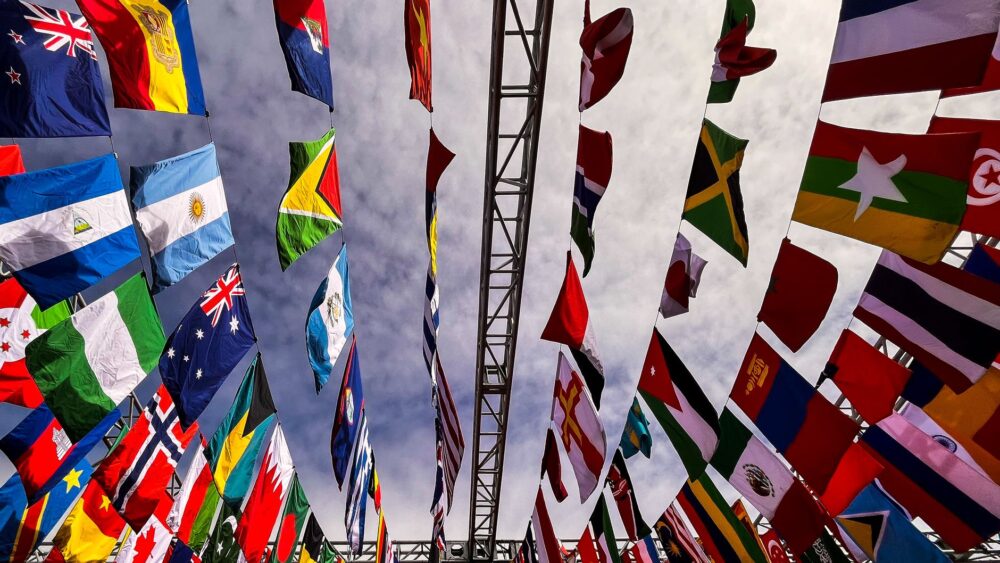
The world of international names is genuinely one of the most exciting places to look when you want something that feels both distinctive and deeply rooted. A name from another culture carries centuries of history, a specific sound, and a meaning that often translates beautifully into any language. These aren’t exotic for the sake of it, they’re beloved, well-used names in their home countries, each with a real story behind it.
The 100 names below span 30 countries across Europe, Asia, Africa, the Americas, and the Middle East. They’re organized by region so you can browse by the sound world that speaks to you.
Scandinavian and Nordic Names
Nordic names have a clean, elemental quality, wind, sea, stone, and the old Norse gods all show up in the roots. These are increasingly popular internationally, and for good reason.
Astrid (Swedish/Norwegian)
From Old Norse Ástríðrmeaning “divinely beautiful” or “god-strength.” It has been a royal name in Norway and Sweden for over a thousand years, and it carries exactly the quiet authority you’d expect from that pedigree.
Soren (Danish)
The Danish form of the Latin Severinusmeaning “stern” or “severe,” though in practice it feels anything but harsh. The philosopher Søren Kierkegaard gave it an intellectual edge that has made it a favorite among internationally minded parents for decades.
Freya (Norse/Swedish)
The name of the Norse goddess of love, fertility, and war, from Old Norse Freyjameaning “lady” or “noblewoman.” It has surged into the top names across the UK, Australia, and Scandinavia, yet still feels genuinely mythological rather than trendy.
Leif (Norwegian/Danish)
From Old Norse Leifrmeaning “heir” or “descendant.” Leif Erikson, the Norse explorer, is its most famous bearer, and the name still evokes that same sense of adventure and the open sea.
Sigrid (Norwegian/Swedish)
Combines Old Norse sigr (victory) and fríðr (beautiful, beloved), giving it the meaning “beautiful victory.” This one is criminally underused outside Scandinavia, it has real power.
Einar (Norwegian/Icelandic)
From Old Norse, meaning “one warrior” or “lone fighter,” from ein (one) and arr (warrior). Strong, short, and completely unambiguous in its energy.
French and French-Influenced Names
French names have shaped Western naming culture for centuries. These go beyond the familiar Isabelle and Claire to names that are beloved in France but still feel fresh internationally.
Solène (French)
From the Latin Sollemnismeaning “solemn” or “ceremonial,” though the French form has a lightness the Latin doesn’t suggest. It’s soft, feminine, and almost entirely unused outside France and French-speaking countries.
Théodore (French)
The French form of Theodore, from Greek meaning “gift of God.” The French pronunciation, tay-oh-DOR, gives it a different character entirely from the English version, and it’s a consistent top-ten name in France.
Maëlle (Breton/French)
From Breton, meaning “chief” or “prince.” It’s one of the most popular girls’ names in France but barely registers elsewhere, which makes it a genuinely exciting find for international name seekers.
Bastien (French)
The short form of Sébastien, ultimately from the Greek place name Sebastos meaning “venerable.” Bastien has the effortless cool of a French nickname that became a full given name in its own right.
Céleste (French/Italian)
From Latin caelestismeaning “heavenly” or “of the sky.” Used in both France and Italy, it has been quietly building momentum internationally as parents look for something ethereal without being invented.
Raphaël (French)
The French form of Raphael, from Hebrew meaning “God has healed.” It’s one of the archangel names that feels most alive and contemporary in its French form, regularly appearing in France’s top ten.
Italian Names
Italian names have a musicality built in, the vowel-heavy structure of the language means almost every name lands like a phrase from an opera. These are genuine Italian favorites.
Fiamma (Italian)
Means “flame” in Italian, used as a given name in Italy with real, uninterrupted tradition. It’s vivid, short, and completely striking.
Lorenzo (Italian/Spanish)
The Italian and Spanish form of Laurence, from the Latin place name Laurentum, associated with the laurel tree and by extension with honor and victory. It has been a cornerstone of Italian naming for centuries.
Chiara (Italian)
The Italian form of Clara, from Latin clarusmeaning “bright” or “clear.” Saint Chiara of Assisi gave it lasting spiritual weight in Italy, and the name has been traveling internationally with increasing speed.
Matteo (Italian)
The Italian form of Matthew, from Hebrew meaning “gift of God.” Matteo has crossed over convincingly into international use without losing its distinctly Italian warmth.
Elettra (Italian)
The Italian form of Electra, from Greek meaning “amber” or “shining.” It’s dramatic and mythological, yet genuinely used as an everyday name in Italy.
Luca (Italian)
From Latin Lucasmeaning “light” or associated with the region of Lucania. Luca has become one of the most successfully exported Italian names, landing comfortably in top rankings across Europe, Australia, and North America.
Spanish and Portuguese Names
Iberian names draw on Latin, Visigothic, Arabic, and indigenous roots, a layered history that produces names with remarkable depth and variety.
Ines (Spanish/Portuguese)
The Iberian form of Agnes, from Greek hagnosmeaning “pure” or “holy.” Inês de Castro is one of the most famous figures in Portuguese history, and the name carries that tragic, romantic weight without being heavy-handed.
Rodrigo (Spanish/Portuguese)
From Visigothic, meaning “famous ruler,” combining hrod (fame) and ric (ruler, power). It’s been a powerhouse name on the Iberian Peninsula since the medieval period and feels just as strong today.
Paloma (Spanish)
Means “dove” in Spanish, used as a given name with long tradition in Spain and Latin America. It’s peaceful, pretty, and carries no excess weight, just the image of a dove.
Mateus (Portuguese)
The Portuguese form of Matthew, from Hebrew meaning “gift of God.” Distinct enough from the English form to feel fresh, while immediately recognizable in its roots.
Consuelo (Spanish)
From Spanish, meaning “consolation” or “comfort,” with roots in the Catholic title Nuestra Señora del Consuelo. It’s one of those deeply devotional Spanish names that carries enormous warmth.
Vasco (Portuguese/Spanish)
From the Basque ethnic name, meaning “Basque person,” and ultimately connected to the Latin Vasconus. Explorer Vasco da Gama is its most famous bearer, and the name has a seafaring, adventurous resonance that feels earned.
German and Dutch Names
Germanic names are built from strong roots, wald (rule), brecht (bright), heim (home). These are names with real structural integrity.
Lieselotte (German)
A compound of Elisabeth and Charlotte, combining “God is my oath” and “free man” into one elaborate, deeply German name. It’s used primarily in Germany and the Netherlands, and it’s a genuine classic there.
Hendrik (Dutch/German)
The Dutch and Low German form of Henry, from Old Germanic meaning “ruler of the home.” It has a solidity that the English Henry doesn’t quite replicate.
Anneliese (German)
A compound of Anne (grace) and Liese (a short form of Elisabeth), used throughout German-speaking Europe. It feels old-fashioned in the best possible way, the kind of name that ages beautifully.
Klaus (German)
A short form of Nikolaus, the German form of Nicholas, from Greek meaning “victory of the people.” Solidly Germanic, deeply traditional, and more striking than its English equivalent.
Femke (Dutch)
A Dutch diminutive feminine name, a pet form of names beginning with frede- (peace). It’s one of those names that is completely ordinary in the Netherlands and completely fresh everywhere else.
Wolfram (German)
From Old Germanic, meaning “wolf raven,” combining wulf (wolf) and hraben (raven). It’s an ancient Germanic name that feels simultaneously fierce and literary, the medieval poet Wolfram von Eschenbach gave it lasting cultural cachet.
Eastern European Names
Slavic, Baltic, and Hungarian names draw on a naming tradition that is entirely distinct from the Western European mainstream, producing sounds and meanings that feel genuinely new to most English-speaking ears.
Milena (Czech/Serbian/Croatian)
From the Slavic root milmeaning “gracious,” “dear,” or “beloved.” It’s used across the Slavic world in various forms and has crossed over into Western Europe and Latin America with real ease.
Zoltan (Hungarian)
From Turkish sultanmeaning “ruler” or “king,” which entered Hungarian through early contact with Turkic peoples. It’s a quintessentially Hungarian name with an unmistakable sound.
Karolina (Polish/Czech/Swedish)
The Central and Eastern European form of Caroline, ultimately from the Germanic name Karl meaning “free man.” It’s the standard feminine form in Poland, Czechia, and Scandinavia, and it’s more graceful than its English counterpart.
Miroslav (Czech/Serbian/Croatian)
From Slavic roots meaning “peace” (mir) and “glory” (slav). A classic of the Slavic naming tradition, carried by athletes, politicians, and artists across the region.
Borbála (Hungarian)
The Hungarian form of Barbara, from Greek barbaros meaning “foreign.” It’s the kind of name that transforms completely in its new linguistic coat, nobody would guess the connection without being told.
Radovan (Serbian/Croatian/Czech)
From Slavic radmeaning “happy” or “willing,” combined with the suffix -van. It’s a warm, cheerful name with deep roots in the South Slavic and Czech naming traditions.
Agnieszka (Polish)
The Polish form of Agnes, from Greek hagnosmeaning “pure.” Its layered consonants make it one of the most distinctively Polish names in existence, a great example of how a single name can transform entirely across cultures.
Zuzanna (Polish/Hungarian)
The Polish and Hungarian form of Susanna, from Hebrew meaning “lily” or “rose.” It’s elegant, has genuine biblical roots, and the doubled-Z spelling gives it real visual interest.
Greek Names
Modern Greek names sit at the intersection of ancient mythology, Orthodox Christianity, and Byzantine history, a combination that produces names of unusual depth.
Nikoleta (Greek)
The Greek feminine form of Nicholas, from Greek meaning “victory of the people.” It’s used throughout Greece and Cyprus, and it has more personality than the standard Nicole.
Stavros (Greek)
From Greek stavrosmeaning “cross,” with strong connections to the Orthodox Christian tradition. It’s one of the most recognizably Greek names in existence.
Despina (Greek)
From Greek despoinameaning “mistress” or “lady,” a title of the Virgin Mary in the Orthodox tradition. It’s a name of genuine authority, widely used in Greece.
Alexandros (Greek)
The original Greek form of Alexander, from alexein (to defend) and aner (man), meaning “defender of men.” Using the full Greek form rather than the Latinized Alexander gives it a different, more classical weight.
Arabic and Middle Eastern Names
Arabic names are among the most meaning-rich in the world, the root-based structure of the Arabic language means every name is built from a precise semantic core, and the meanings are often breathtaking.
Nour (Arabic)
From Arabic nurmeaning “light.” It’s used across the Arabic-speaking world and beyond, in both masculine and feminine forms, and it’s one of those names whose meaning is so clear and beautiful it needs no further argument.
Tariq (Arabic)
From Arabic, meaning “he who knocks at the door” or “morning star,” with the secondary meaning linked to the star that appears to knock on the door of dawn. Tariq ibn Ziyad, the general who led the conquest of Iberia, is perhaps its most historically significant bearer.
Layla (Arabic)
From Arabic laylmeaning “night.” The love poetry of Qays and Layla is one of the great romantic traditions of Arabic literature, and the name has carried that association for over a thousand years.
Yasmin (Arabic/Persian)
From Arabic and Persian, meaning “jasmine flower.” It’s used across the Middle East, South Asia, and North Africa, and the botanical connection makes it one of the more universally understood names on this list.
Kareem (Arabic)
From Arabic karimmeaning “generous” or “noble.” It’s one of the 99 names of God in Islam in its superlative form Al-Karimwhich gives it deep religious significance alongside its everyday use.
Rania (Arabic)
From Arabic, meaning “gazing” or “looking with admiration.” Queen Rania of Jordan has given the name considerable international visibility without diminishing its genuine cultural roots.
Faris (Arabic)
From Arabic, meaning “knight” or “horseman.” It’s used across the Arab world and among Muslim communities globally, and it has a clean, strong sound that travels well.
Persian and Iranian Names
Persian names draw on one of the world’s great literary traditions, with roots in Zoroastrianism, classical poetry, and a language of extraordinary elegance.
Darius (Persian)
From Old Persian Dārayavahushmeaning “possessing goodness” or “he who holds firm to good.” Three Persian kings bore the name, and it has traveled into Latin, Greek, and eventually English while retaining its Persian identity.
Shirin (Persian)
From Persian, meaning “sweet” or “pleasant.” Shirin is one of the great heroines of Persian classical poetry, the beloved in Nizami’s epic Khosrow and Shirinand the name has never lost that romantic association.
Cyrus (Persian)
From Old Persian Kouroshpossibly meaning “sun” or “throne.” Cyrus the Great, founder of the Achaemenid Empire, is the name’s defining historical bearer, and it remains in use in Iran today as Kurosh.
Parisa (Persian)
From Persian, meaning “like a fairy” or “fairy-like.” It’s a gentle, poetic name used in Iran and among Persian-speaking communities worldwide.
South Asian Names
Names from India, Pakistan, Bangladesh, and Sri Lanka draw on Sanskrit, Arabic, Persian, Tamil, and numerous regional languages, producing an extraordinary diversity of sounds and meanings.
Arjun (Hindi/Sanskrit)
From Sanskrit, meaning “bright,” “shining,” or “silver-white.” Arjuna is one of the central heroes of the Mahabharata, which gives the name enormous cultural and spiritual weight in Hindu tradition.
Priya (Sanskrit/Hindi/Tamil)
From Sanskrit priyameaning “beloved” or “dear one.” It’s used across South Asia in multiple linguistic communities and has been traveling internationally for decades.
Kavya (Sanskrit/Kannada/Telugu)
From Sanskrit kavyameaning “poetry” or “a poem.” It’s a name that is entirely about language and beauty, used widely across South India and in the Indian diaspora.
Rohan (Sanskrit/Hindi)
From Sanskrit, meaning “ascending” or “growing.” It’s used in India and Sri Lanka, has entered Tolkien’s Middle-earth (Rohan is a kingdom in The Lord of the Rings), and sits very comfortably in English-speaking countries.
Ananya (Sanskrit)
From Sanskrit, meaning “unique,” “incomparable,” or “without equal.” It’s a confident name with clear meaning, widely used in India and among the South Asian diaspora.
Vikram (Sanskrit)
From Sanskrit, meaning “valor” or “stride”, specifically the stride of a hero. Emperor Vikramaditya is the name’s great historical anchor in Indian culture.
Divya (Sanskrit/Hindi)
From Sanskrit divyameaning “divine” or “heavenly.” Simple, direct, and widely used across Hindu communities in India and globally.
East Asian Names
Chinese, Japanese, and Korean names function differently from Western ones, they are often built from characters or syllables that carry individual meanings, so a single name can contain an entire sentence of intention.
Hana (Japanese)
In Japanese, most commonly written with the character for “flower,” though it can also mean “nose” or carry other meanings depending on the kanji chosen. It’s one of the most used girls’ names in Japan and has transferred smoothly to international use.
Ren (Japanese/Chinese)
In Japanese, written with the character for “lotus” or “love”; in Chinese, it can mean “benevolence” depending on the character. Short, strong, and genuinely used in both cultures as a given name.
Yuki (Japanese)
From Japanese, meaning “snow” or “happiness” depending on the kanji used. It’s used for both boys and girls in Japan, and it has a quiet, precise beauty that carries well in any language.
Kenji (Japanese)
From Japanese, combining characters that typically mean “strong” or “healthy” with “second son” or “govern.” It’s a solidly traditional Japanese masculine name with a long history of use.
Min-Jun (Korean)
One of the most popular masculine names in South Korea, combining min (clever, quick) and jun (talented, handsome). Korean compound names like this one carry precise, intentional meaning from each syllable.
Seo-Yeon (Korean)
A popular Korean feminine name combining seo (auspicious) and yeon (lotus, beautiful). It has been a top name for girls in South Korea for a sustained period.
Wei (Chinese)
A common Chinese given name meaning “greatness,” “power,” or “high,” depending on the character. It’s used for both men and women in China and Chinese-speaking communities worldwide.
Mei (Chinese/Japanese)
In Chinese, most commonly means “beautiful” or “plum blossom.” In Japanese it can mean “sprout.” It’s one of the most internationally recognized East Asian names and one of the most genuinely lovely.
African Names
African names span hundreds of languages and naming traditions. These names come from Swahili, Yoruba, Zulu, Amharic, and other traditions, each with its own distinct logic and beauty.
Amara (Igbo/Yoruba/Amharic)
In Igbo it means “grace”; in Amharic it carries the meaning “pleasant” or “eternally beautiful.” It’s one of those names that works across multiple African linguistic traditions and has also become popular internationally.
Kofi (Akan/Ghanaian)
From the Akan tradition of Ghana, meaning “born on Friday.” Akan day names are one of West Africa’s most distinctive naming traditions, and Kofi Annan, the former UN Secretary-General, is its most internationally recognized bearer.
Zuri (Swahili)
From Swahili, meaning “beautiful” or “good.” It’s used in East Africa and has been gaining ground internationally as parents discover its simplicity and warmth.
Amina (Arabic/Swahili/Hausa)
From Arabic, meaning “trustworthy” or “faithful.” It’s one of the most widely used names across the African continent, appearing in Arabic-speaking North Africa, Swahili-speaking East Africa, and Hausa-speaking West Africa. The mother of the Prophet Muhammad bore this name.
Kwame (Akan/Ghanaian)
From the Akan tradition, meaning “born on Saturday.” Kwame Nkrumah, Ghana’s first president, is its most historically significant bearer internationally.
Nia (Swahili/Welsh)
In Swahili, nia means “purpose” and is one of the seven principles of Kwanzaa. In Welsh it’s a form of Niamh, meaning “bright.” It’s a name with genuine roots in two entirely different traditions.
Tendai (Shona/Zimbabwean)
From Shona, meaning “be thankful” or “give thanks to God.” It’s used across Zimbabwe and the Shona-speaking diaspora, and it carries a powerful spiritual gratitude in its meaning.
Adaeze (Igbo)
From Igbo, meaning “daughter of a king” or “princess.” It’s a title-name in the traditional sense, conferring status and identity simultaneously.
Celtic and Irish Names
Irish and broader Celtic names are among the most phonetically surprising in the world, where the spelling rarely predicts the pronunciation. That gap between written and spoken form is part of their charm.
Caoimhe (Irish)
Pronounced “KEE-va” or “KWEE-va,” from Old Irish caomhmeaning “gentle,” “kind,” or “beautiful.” It’s one of the quintessential Irish girls’ names and remains in the top names in Ireland today.
Ciarán (Irish)
From Old Irish ciarmeaning “dark” or “black,” with the diminutive suffix making it “little dark one.” Saint Ciarán of Clonmacnoise was one of the twelve apostles of Ireland, giving the name deep historical roots.
Niamh (Irish)
Pronounced “NEEV,” from Old Irish meaning “bright” or “radiant.” In Irish mythology, Niamh of the Golden Hair was a goddess of the otherworld, and the name has carried that luminous quality ever since.
Tadhg (Irish)
Pronounced “TYE-g,” from Old Irish meaning “poet” or “philosopher.” It’s one of the most traditional Irish masculine names, with a long list of medieval kings and poets bearing it.
Eithne (Irish)
Pronounced “ETH-neh” or “EN-ya,” from Old Irish, possibly meaning “kernel” (as in the seed of a nut). It’s an ancient Irish name borne by multiple saints and mythological figures, and it’s the source of the anglicized form Enya.
Turkish and Central Asian Names
Turkish names draw on Turkic, Arabic, and Persian roots, while Central Asian names add Mongolian and Sogdian layers to the mix. The result is a naming tradition of considerable range.
Aylin (Turkish)
From Turkish, meaning “moon halo” or “surrounded by moonlight.” It’s one of the most popular girls’ names in Turkey and has a soft, celestial quality that works in almost any language.
Emre (Turkish)
From Turkish, meaning “friend” or “brother,” with roots in the Sufi tradition and the medieval Turkish poet Yunus Emre, one of the most important figures in Turkish literature.
Dilnoza (Uzbek)
From Persian-Uzbek, meaning “soul-pleasing” or “one who pleases the heart,” combining dil (heart, soul) and noza (pleasure, delight). It’s widely used in Uzbekistan and Tajikistan.
Altair (Arabic/Turkish)
From Arabic al-tairmeaning “the bird” or “the flying eagle,” the name of a bright star in the constellation Aquila. It’s used as a given name in Turkey and Arabic-speaking countries.
Hebrew and Israeli Names
Modern Israeli names blend biblical Hebrew with contemporary Israeli coinages, producing a naming culture that is both ancient and strikingly modern.
Liora (Hebrew)
From Hebrew, meaning “I have light” or “my light.” It’s a feminine name used in Israel that manages to feel both ancient and modern simultaneously.
Eitan (Hebrew)
From Hebrew, meaning “strong,” “firm,” or “enduring.” It’s the original Hebrew form behind the anglicized Ethan and is widely used in Israel today.
Talia (Hebrew)
From Hebrew talmeaning “dew of God” or “dew from heaven.” It’s used in Israel and in Jewish communities worldwide, and it has crossed over into mainstream international use with ease.
Noam (Hebrew)
From Hebrew, meaning “pleasantness,” “charm,” or “gentleness.” It’s used for both boys and girls in Israel and is one of the more accessible Hebrew names for international use.
Yael (Hebrew)
From Hebrew, meaning “mountain goat” or “ibex.” Jael in the Bible (the name is the same in Hebrew) was a warrior heroine, and the name carries that quiet strength in modern Israeli usage.
Latin American Names
Latin American names blend Spanish and Portuguese colonial naming with indigenous, African, and religious traditions, creating a distinctly regional flavor even when the root names are familiar.
Ximena (Spanish/Latin American)
The Spanish feminine form of Jimeno, from a medieval Spanish name of uncertain origin, possibly Basque. It’s one of the most popular girls’ names across Latin America and has been climbing in the United States as well.
Matías (Spanish/Latin American)
The Spanish form of Matthias, from Hebrew meaning “gift of God.” It’s been a consistent top name in Argentina, Chile, and other South American countries for years.
Valentina (Spanish/Italian/Latin American)
From Latin valensmeaning “strong” or “healthy.” It’s enormously popular across Latin America and Southern Europe, and it has been climbing steadily in English-speaking countries, a genuinely beautiful name riding a well-earned wave.
Santiago (Spanish)
The Spanish form of Saint James, from Latin Sanctus Iacobuswhich contracted over centuries into Santiago. It’s one of the great pilgrimage names in the Catholic tradition and one of the most beloved masculine names across the Spanish-speaking world.
Camila (Spanish/Portuguese/Latin American)
From Latin Camillusa name of Etruscan origin possibly meaning “attendant at a religious ceremony.” It’s a top-five name across multiple Latin American countries and has become a genuine international crossover success.
How to Choose an International Name for Your Child
The first thing to settle is whether you want a name that travels easily or one that stays rooted in its culture. Names like Luca, Priya, and Layla have already crossed over and will be recognized and pronounced correctly in most English-speaking contexts. Names like Tadhg, Agnieszka, or Wolfram will require a consistent pronunciation guide for new acquaintances. Neither approach is wrong, but knowing which you want will narrow the list quickly.
Check the meaning carefully, not just the sound. Many parents fall for a name phonetically and discover later that the meaning is less appealing. With international names specifically, the meanings are often the most spectacular thing about them, Shirin meaning “sweet,” Nour meaning “light,” Caoimhe meaning “gentle and kind.” Let the meaning be part of the decision, not an afterthought.
Think about the name in both languages. A name that sounds beautiful in its original language may create an unintended homophone or association in English or in your own language. Run it past a few people who speak both languages if you can. This matters more for some language families than others, but it’s always worth a quick check.
Finally, consider the full name together. International names often have a syllable count and stress pattern that differs from English names, which can create unexpected rhythms when paired with a surname. Say the full name out loud, fast and slow, and in different contexts. The name that works best is the one that feels natural coming out of your mouth, every single day.
The world of international names is genuinely vast, and this list only scratches the surface of what’s out there. But these 100 names represent something real: each one is a living name in its home culture, with roots worth knowing and a sound worth loving.