
Romanian last names are among the most historically layered surnames in Europe. They draw from ancient Dacian roots, Roman Latin colonization, Slavic neighbors, Ottoman-era borrowings, and the Orthodox Christian tradition that shaped Romanian identity for centuries. If you are researching your ancestry, building a fictional character with Romanian heritage, or simply fascinated by the culture, these names carry the weight of real history.
The naming patterns in Romania are distinctive: occupational names, nature names, patronymics ending in -escu or -eanuand place-based names that tie families to specific regions. Vlad the Impaler, the historical figure behind Dracula, lived in the 15th century, and many of the surnames below were already in use in that era. That context alone makes Romanian last names extraordinary.
The -escu Surnames: Romania’s Most Iconic Patronymic Form
The suffix -escu is the defining marker of Romanian surnames. It functions like the Latin -escu meaning “of” or “belonging to,” and it attaches to a father’s name or an ancestor’s name to create a family name. These surnames are immediately recognizable as Romanian anywhere in the world.
Ionescu
Derived from Ionthe Romanian form of John (from Hebrew Yohananmeaning “God is gracious”). Ionescu essentially means “son of Ion” and is one of the most common Romanian last names in existence. Playwright Eugene Ionesco, the absurdist theater giant, carried a variant spelling of this name.
Popescu
From pop or popămeaning “priest,” this surname means “son of the priest” and signals an ancestor who was a clergyman in the Orthodox tradition. It is one of the top surnames in Romania and appears throughout historical records from the medieval period onward.
Georgescu
Derived from Gheorghethe Romanian form of George, itself from Greek Georgios meaning “farmer” or “earth-worker.” A solidly classical Romanian surname carried by politicians, academics, and artists across several centuries.
Dumitrescu
From Dumitruthe Romanian form of Demetrius, rooted in Greek Demeterthe goddess of grain and harvest. The surname suggests descent from a man named Dumitru and has deep Orthodox resonance since Saint Demetrius is a major figure in the Eastern Church calendar.
Petrescu
From Petre or Petruthe Romanian forms of Peter, from Latin and Greek Petros meaning “rock” or “stone.” Petrescu is a classic and widespread Romanian surname, common across Wallachia and Moldavia.
Marinescu
Derived from Marinwhich traces to Latin marinus meaning “of the sea.” Marinescu is particularly common in southern Romania, near the Black Sea coast, where the maritime association felt natural.
Florescu
From Flore or Florearooted in Latin flos/floris meaning “flower.” Florescu is an elegant surname that connects directly to Romania’s Latin heritage. It was also the name of a notable Romanian noble family active during the Dracula era.
Andreescu
From Andreithe Romanian form of Andrew, from Greek Andreas meaning “manly” or “strong.” A solid patronymic surname with both Greek and Christian apostolic roots.
Manescu
Derived from Mane or Manua diminutive form of Emanuel (from Hebrew, meaning “God is with us”). Manescu is less common than Ionescu or Popescu but well-documented in Romanian records.
Niculescu
From Niculae or Nicolaethe Romanian form of Nicholas, from Greek Nikolaos meaning “victory of the people.” A prominent Romanian surname associated with several historical figures.
Costescu
Derived from Costea or Costinitself a Romanian diminutive of Constantin, the Latin name meaning “steadfast” or “constant.” A surname that echoes the enormous influence of Constantine the Great on Romanian Christian culture.
Radulescu
From Radua traditional Romanian masculine name of Slavic origin meaning “glad” or “happy.” Radulescu is a historically significant surname; members of the Radulescu family appear in Wallachian court records from the 15th and 16th centuries.
The -eanu Surnames: Regional Identity and Belonging
The suffix -eanu (sometimes written -anu) typically indicates geographic origin, meaning “one from” a particular place or region. These Romanian last names are effectively ancestral address markers, telling you where a family line came from.
Moldoveanu
Means “one from Moldavia,” the northeastern historical principality of Romania. Moldoveanu is also the name of the highest peak in the Carpathian Mountains, making it a name with both geographic and national resonance.
Ardeanu
From Ardealthe Romanian name for Transylvania. A surname marking Transylvanian origin, which connects directly to the region associated with vampire folklore and the historical Vlad Dracula.
Olteanu
From Olteniaa historical region in southwestern Romania along the Olt River. The Olt River name itself may derive from ancient Dacian or Thracian roots, making this surname one with genuinely pre-Roman echoes.
Vranceanu
From Vranceaa region in eastern Romania known for seismic activity and deep forest landscapes. A distinctive surname tied to a very specific corner of Romanian geography.
Munteneau
From Munteniathe historical region that includes Wallachia, the principality ruled by Vlad the Impaler. The root is muntemeaning “mountain,” from Latin mons. A surname that literally places a family in the heartland of Dracula’s Romania.
Bucovinean
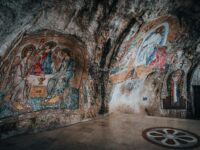
From Bucovinaa region historically shared between Romania and Ukraine, famous for its painted Orthodox monasteries. The name comes from the Slavic word for “beech forest,” and the surname marks descent from that culturally rich border region.
Dobrogeanu
From Dobrogeathe coastal region between the Danube and the Black Sea. This area was among the first parts of modern Romania to be Romanized under the Roman Empire, giving Dobrogeanu ancient Latin-era associations.
Nature and Landscape Surnames
Romania’s geography is dramatic: Carpathian peaks, the Danube Delta, dense forests, and open plains. It is no surprise that nature vocabulary fed directly into Romanian last names, producing surnames that feel grounded and earthy.
Pădureanu
From păduremeaning “forest,” with the -eanu suffix meaning “one from the forest.” A surname that evokes the deep Carpathian woodland that defined medieval Romanian life and remains central to Romanian identity.
Câmpeanu
From câmpmeaning “field” or “plain,” from Latin campus. Câmpeanu marks ancestry from the open plains of Wallachia or Moldavia, in contrast to mountain surnames.
Dealul
From dealmeaning “hill,” from Latin de + vallum. A topographic surname for families who lived on or near a hillside. Simple, direct, and genuinely old.
Lungu
From Romanian lungmeaning “long” or “tall,” derived from Latin longus. Originally a descriptive nickname for a tall ancestor, Lungu became a fixed hereditary surname across multiple Romanian regions.
Stancu
A diminutive form tied to Stanitself a short form of Stanislav (Slavic, meaning “one who achieves glory”), but also used as a standalone nature-adjacent personal name that became hereditary. Stancu is well-attested in Wallachian records.
Rosu
From Romanian roșumeaning “red,” from Latin russus. A color-based descriptive surname, likely referring to red hair or a ruddy complexion in an ancestor. One of Romania’s classic hereditary descriptors.
Albu
From Romanian albmeaning “white,” from Latin albus. A color surname parallel to Rosu, probably referring to fair coloring. Albu is a clean, short surname with a direct Latin etymology.
Negru
From Romanian negrumeaning “black,” from Latin niger. Like Albu and Rosu, Negru is a descriptive color surname. Its most famous historical echo is Radu Negru, a semi-legendary figure credited with founding Wallachia.
Voinea
From Romanian voinicmeaning “brave” or “strong young man,” with Slavic roots. A surname that reads as an ancestral honor title, the kind given to warriors and soldiers in medieval Wallachian and Moldavian courts.
Bradu
From Romanian bradmeaning “fir tree” or “spruce,” one of the defining trees of the Carpathians. Bradu is a tree name used as both a first name and a surname, rooted in the landscape of highland Romania.
Occupational Surnames
Like surnames across Europe, many Romanian last names record what an ancestor did for a living. These occupational names are often among the oldest traceable surnames, appearing in tax records, guild documents, and court registers from the 14th century onward.
Cojocaru
From cojoca type of sheepskin coat traditional to Romanian peasant culture. Cojocaru means “maker or seller of sheepskin coats,” a vital trade in the cold Carpathian winters. This is one of the most common occupational surnames in Romania.
Fieraru
From fiermeaning “iron,” from Latin ferrum. Fieraru means “blacksmith” or “ironworker,” a universal occupational surname type that in Romania takes a distinctly Latin-root form.
Croitoru
From croimeaning “to cut” (fabric), from which croitor means “tailor.” Croitoru is the hereditary form, meaning “the tailor’s family.” A clean occupational surname common in urban Romanian records.
Moraru
From moarămeaning “mill,” so Moraru means “miller.” The Latin root is mola. Millers were economically important in medieval Romanian villages, and Moraru appears frequently in historical documents.
Dascălu
From Greek didaskalos via Romanian dascălmeaning “teacher” or “cantor” in an Orthodox church context. Dascălu marks an ancestor who was either a schoolteacher or a liturgical singer, both respected village roles.
Popa
Directly from Romanian popămeaning “Orthodox priest.” Unlike Popescu (son of a priest), Popa itself designates the priest, suggesting the surname was assigned directly to a clergyman or his household. Extremely common across all Romanian regions.
Bucătaru
From bucătarmeaning “cook,” from a root related to the kitchen (bucătărie). Bucătaru marks an ancestor employed in a noble household or monastery kitchen, which in medieval Romania was a specialized and respected position.
Văcaru
From vacămeaning “cow,” so Văcaru means “cowherd.” An agricultural occupational surname common in the pastoral regions of Moldavia and Wallachia.
Călugăru
From călugărmeaning “monk,” from Greek kalogeros (“good elder”). Călugăru suggests an ancestor associated with a monastery, either a monk himself or a family settled near monastic land.
Dacian and Pre-Roman Root Surnames
The Dacians were the ancient people of the Carpathian region before Roman conquest in 106 AD. Their language left traces in Romanian vocabulary and, some scholars argue, in personal names that persisted through the Roman and medieval periods. These Romanian last names have the strongest claim to pre-Latin, indigenous roots.
Decebal
From the Dacian king Decebalus, whose name may mean “brave” or “powerful” in the Dacian language. Decebal is used as both a given name and a surname in Romania today, functioning as a direct national heritage marker. It is one of the few names that can genuinely be traced to the pre-Roman Dacian world.
Burebista
The name of the greatest Dacian king, who unified the Dacian tribes in the 1st century BC. Burebista is occasionally used as a surname in Romania, functioning as a deliberate heritage statement. The etymology is uncertain but Dacian in origin.
Zamolxe
From Zamolxisthe supreme deity of the Dacians. Used as a surname by Romanian families seeking to honor pre-Christian, pre-Roman Dacian spiritual identity. Rare, but real and documented in modern Romanian records.
Brebanu
Possibly connected to the ancient Dacian settlement name Brebi and the Romanian word brebmeaning “beaver,” which itself may be of Dacian origin. Brebanu is a regional surname from the Carpathian foothills.
Cotofan
From cotoafă or coțofanmeaning “magpie,” a word whose exact origin is debated but is considered by some linguists to be a Dacian substrate word. Cotofan is a genuine Romanian surname with possible pre-Latin roots.
Surnames From the Dracula Era: Medieval Wallachia and Transylvania
The 15th century, the era of Vlad III Dracula, produced a documented layer of Romanian surname history. These names appear in Wallachian and Transylvanian chronicles, land deeds, and correspondence from that period. They are not merely old-sounding; they are genuinely attested in the historical record around that time.
Dracula
From dracmeaning “dragon” or “devil,” via the Order of the Dragon (Ordinul Dragonului) to which Vlad II belonged, earning the epithet Dracul. His son Vlad III was called Draculameaning “son of Dracul.” Used as a surname in Romanian records and internationally recognized as the most famous Romanian surname in history.
Basarab
The dynastic surname of the ruling house of Wallachia from the 14th century. Basarab is possibly of Cuman or Turkic origin, meaning “lord” or “ruler,” absorbed into Romanian noble nomenclature. Vlad Dracula was of the Basarab line. Still used as a surname in Romania today.
Hunyadi
The surname of Iancu de Hunedoara (John Hunyadi), the great Transylvanian military commander and regent of Hungary who was both rival and ally to the Wallachian princes. Of Hungarian origin, Hunyadi is nonetheless deeply woven into Romanian medieval history and used as a surname in Romania.
Corvinus
The Latin surname of Matthias Corvinus, King of Hungary, who imprisoned Vlad Dracula for over a decade. Corvinus means “of the raven,” from Latin corvus. Used as a Romanian surname by families claiming connection to the Corvinus legacy.
Musat
The ruling dynasty of medieval Moldavia. Musat (also spelled Musatin) was the name of the family that produced several of Moldavia’s greatest rulers in the 14th and 15th centuries, including Stephen the Great. A genuine medieval Romanian dynastic surname.
Vladescu
From Vladthe Slavic name meaning “ruler” or “prince,” with the -escu patronymic suffix. Vladescu means “son of Vlad” and connects directly to the era when Vlad was a common Wallachian princely name. Historically attested and still in use.
Dănilă
A Romanian form derived from Daniel (Hebrew, “God is my judge”), used as both a given name and a hereditary surname in Moldavian records from the 15th century onward. Dănilă appears in chronicles from Stephen the Great’s court.
Bogdan
From Slavic bogdanmeaning “given by God.” Bogdan was a name of multiple Moldavian princes, and it became a hereditary surname across both Moldavia and Wallachia. A name sitting right at the intersection of Slavic influence and Romanian dynastic history.
Mircea
From a Slavic root related to “peace” or “world.” Mircea the Elder was the grandfather of Vlad Dracula and one of Wallachia’s greatest rulers. Mircea is used as both a given name and a surname in Romania, carrying explicit Wallachian royal lineage associations.
Brancoveanu
From Brâncovenia place name in Oltenia. Constantin Brâncoveanu was the Prince of Wallachia from 1688 to 1714, executed by the Ottomans for refusing to convert to Islam. His surname became one of Romania’s most revered, associated with both martyrdom and cultural patronage.
Slavic-Influenced Romanian Surnames
Romania shares long borders with Slavic nations, and centuries of cultural exchange left Slavic vocabulary embedded in Romanian. Many Romanian last names have Slavic etymological roots even though they are entirely Romanian in character and usage.
Stan
A short form of Slavic Stanislavmeaning “one who achieves glory.” Stan is used as both a first name and a standalone hereditary surname across Romania, particularly in Wallachia. Brief, strong, and historically well-documented.
Dobre
From Slavic dobrmeaning “good.” Dobre is a simple, positive-meaning surname that became widespread in Romanian-speaking regions influenced by South Slavic languages. Common in Oltenia and Muntenia.
Stoica
From a South Slavic root related to stojkoa diminutive meaning something like “steadfast one.” Stoica is a well-established Romanian surname with medieval attestations in Wallachian records, used by both noble families and commoners.
Vintilă
A Romanian name of Slavic origin, possibly related to a root meaning “wind” or derived from a personal name. Vintilă was used as a given name by Wallachian princes and became a hereditary surname. It appears in 15th-century court documents.
Neagu
From a Slavic-influenced Romanian personal name related to negru (black) or to the Slavic name Neagoe. Neagu is attested as both a given name and surname in medieval Wallachian records, including those from the Dracula era.
Dragomir
From Slavic drago (dear, precious) and mir (peace, world). A compound Slavic name that became thoroughly Romanian in use. Dragomir appears in chronicles of both Wallachia and Moldavia from the 14th century onward.
Voicu
A Romanian form of a Slavic name, possibly related to vojin meaning “warrior.” Voicu is attested as the name of Iancu de Hunedoara’s father, giving it direct 15th-century historical grounding. Used as both a given name and surname.
Radu
From Slavic roots meaning “glad” or “joyful.” Radu was an extremely common Wallachian princely name (several princes bore it, including Radu the Handsome, Vlad Dracula’s own brother) and it functions as a hereditary surname across Romania today.
Surnames From Ottoman-Era Contact
For roughly four centuries, the Romanian principalities paid tribute to the Ottoman Empire. That relationship left traces in Romanian vocabulary, culture, and some surnames, particularly in Wallachia and Moldavia where Ottoman administrative influence was strongest.
Turcescu
From turcmeaning “Turk,” with the patronymic -escu suffix. Turcescu likely designated a family with Ottoman Turkish ancestry or long contact with Turkish-speaking communities. A historically honest marker of the Ottoman era.
Tătaru
From tătarmeaning “Tatar,” referring to Tatar-speaking peoples from the steppes north of the Black Sea who frequently raided and interacted with the Romanian principalities. An ethnically descriptive surname that documents the turbulent medieval borderland.
Grecescu
From grecmeaning “Greek,” with the -escu suffix. Greek merchants, clergy, and Phanariot nobles were enormously influential in Romanian principalities, particularly from the 17th century. Grecescu marks families of Greek origin or Greek-speaking heritage.
Sârbu
From sârbmeaning “Serb.” A large Serbian refugee population settled in Wallachia and Oltenia during the 15th century, fleeing Ottoman expansion after the fall of Serbia. Sârbu is a historically grounded ethnic marker from that migration wave.
How to Choose a Romanian Last Name for Characters or Research
If you are building a fictional Romanian character, the suffix is your most powerful tool. An -escu ending reads as Wallachian or pan-Romanian. an -eanu ending places the character in a specific region. A single-word nature or color surname like Rosu or Albu feels older and more peasant-rooted. A dynastic name like Basarab or Brancoveanu signals nobility.
For genealogical research, Romanian last names became hereditary relatively late compared to Western Europe. Many families only adopted fixed surnames in the 18th and 19th centuries under Austro-Hungarian pressure in Transylvania or under Phanariote administrative reforms in Wallachia and Moldavia. So if your ancestor came from a Romanian village, their surname might be only six or seven generations old.
Spelling is another practical consideration. Romanian uses several characters with diacritics: the cedilla-s (ș), the cedilla-t (ț), the breve-a (ă), and the circumflex-a and circumflex-i (âî). Immigration records often stripped these, so Dănilă became Danila, Văcaru became Vacaru, and so on. If you are tracing family history, search both the diacritic and non-diacritic versions.
Finally, regional distribution matters. If your family came from Transylvania, expect Hungarian-influenced spellings and surname patterns alongside Romanian ones. Moldavian surnames often show heavier Slavic influence. Wallachian surnames, the ones most directly tied to the Dracula era, tend toward the classic -escu form and the Slavic-Romanian personal name base that characterized the medieval princely culture of that region.
Romanian last names are not just identifiers. They are compressed histories: of Roman colonization, Dacian survival, Slavic migration, Orthodox faith, Ottoman pressure, and the fierce local identity that kept Romanian culture intact through all of it. Whatever your reason for exploring them, you are reading centuries of survival in a few syllables.