

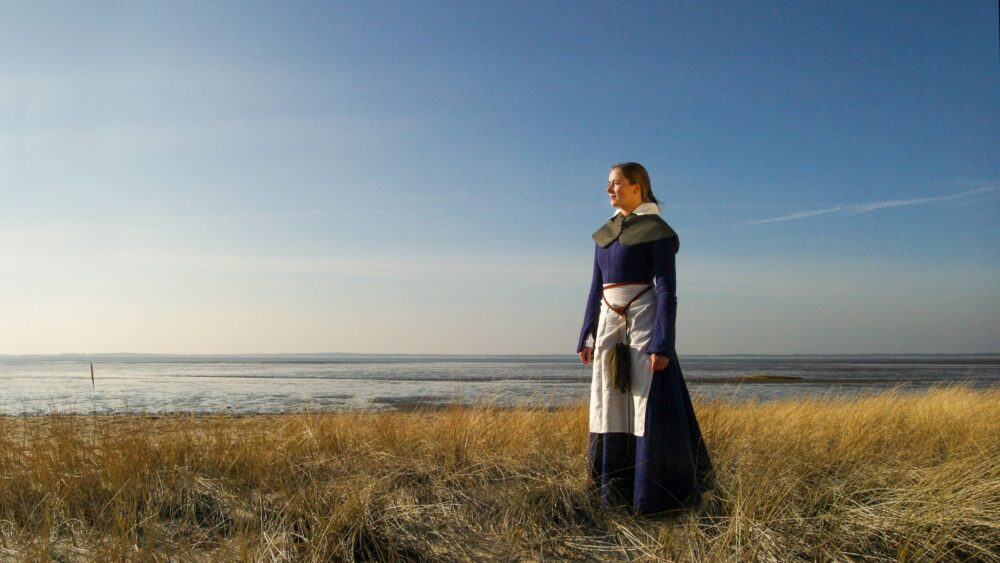
Pilgrim names carry something genuinely rare: the weight of a founding moment. The men and women who crossed on the Mayflower in 1620 and built Plymouth Colony brought with them a naming culture shaped by Puritan faith, English tradition, and a radical belief that names could reflect a life lived before God. The result is a collection of names that feel both ancient and oddly modern, some weathered into obscurity and others quietly circling back into fashion.
What counts as a pilgrim name? For this list, that means names actually used by the Mayflower passengers and their Plymouth Colony contemporaries, drawn from historical records, passenger lists, and colonial baptismal documents. These are real names carried by real people, not romanticized inventions. If you are drawn to colonial Americana, early American heritage, or simply names with serious historical backbone, this is the list for you.
Puritan Virtue Names for Girls
The Puritans had a distinctive naming tradition: abstract virtues turned into given names for daughters. These were not decorative choices. They were theological statements, naming a child after a quality her parents prayed she would embody.
Patience
One of the most documented Puritan virtue names, Patience was borne by Patience Brewster, daughter of Mayflower passenger William Brewster. It carries a quiet strength that feels surprisingly wearable today, far less fussy than many colonial-era choices.
Prudence
Prudence was a common Puritan choice, reflecting the valued quality of careful, God-guided judgment. It has a warm, slightly quirky charm that a certain kind of naming parent finds irresistible right now.
Mercy
Short, strong, and deeply theological, Mercy was widely used in colonial New England. It nods to one of the central attributes of God in Puritan theology, making it a name with genuine doctrinal weight behind it.
Charity
The Puritan use of Charity was rooted in the King James Bible’s translation of the Greek word agape, meaning love. It was a top-tier virtue name in Plymouth Colony circles, and it still has a gentle, old-fashioned warmth.
Grace
Grace was used in early colonial America as both a theological virtue name and a straightforward given name. It has never truly left the mainstream, making it one of the most enduring legacies of Puritan naming culture.
Constance
Constance Hopkins was an actual Mayflower passenger, one of the few women on the ship whose name is historically confirmed. The name means steadfastness, and the Puritans valued that quality deeply.
Temperance
Temperance was a genuine Puritan virtue name used in Plymouth Colony records. It is one of the more unusual entries on this list by modern standards, but it has been creeping back into use among parents who love bold, historical choices.
Remember
Remember Allerton was an actual Mayflower passenger, daughter of Isaac Allerton. This is one of the most striking examples of Puritan naming imagination: a word pressed into service as a name, carrying a devotional charge.
Desire
Desire Minter was another documented Mayflower passenger. The Puritans used Desire to express longing for God or for righteousness, giving a name that looks startlingly modern a firmly seventeenth-century pedigree.
Fear
Fear Brewster, daughter of Elder William Brewster, is documented in Plymouth Colony records. Fear of God was a positive concept in Puritan theology, meaning reverence and awe, which explains why this word was considered appropriate for a daughter’s name.
Humility
Humility Cooper was listed among the Mayflower passengers. Of all the Puritan virtue names, this one feels the most audacious to modern ears, which is precisely what makes it interesting to name historians.
Love
Love Brewster was a son of William Brewster, though Love was used for both boys and girls in this era. It is one of the simplest and most direct of the virtue names, and it reads as completely modern.
Resolved
Resolved White was born on the Mayflower itself, making this one of the most historically grounded names on the list. As a virtue name it expresses firm determination, and it has an unexpected cool-factor for modern parents willing to go bold.
Classic English Girls’ Names from Plymouth Colony
Beyond the virtue names, Pilgrim women and girls also carried traditional English given names rooted in medieval Christianity and Anglo-Saxon heritage. These names were the everyday backbone of colonial naming, passed down through generations.
Mary
Mary was the single most common name among women in Plymouth Colony, appearing constantly in church and civil records. It derives from the Hebrew Miriam and carries centuries of Christian significance. Its frequency in colonial records makes it quintessentially Pilgrim.
Elizabeth
Elizabeth was nearly as common as Mary in Plymouth Colony records. It comes from the Hebrew Elisheba, meaning my God is abundance or my God is an oath, and was borne by so many colonial women that it was practically a default choice.
Dorothy
Dorothy Bradford, wife of Governor William Bradford, drowned in Provincetown Harbor before the Pilgrims even reached Plymouth. Her name, from the Greek Dorothea meaning gift of God, is thus attached to one of the most poignant stories of the entire Mayflower voyage.
Priscilla
Priscilla Mullins is one of the most famous Mayflower passengers, later immortalized in Longfellow’s poem. Her name is Latin in origin, a diminutive of Prisca meaning ancient or venerable. It is arguably the most recognizable of all the pilgrim names in American popular culture.
Alice
Alice Southworth became the second wife of Governor William Bradford, and Alice was a well-used name throughout Plymouth Colony. It derives from the Old French form of the Germanic name Adalheidis, meaning noble kind.
Susanna
Susanna White was one of the Mayflower passengers and the mother of Peregrine White, the first English child born in New England. Her name comes from the Hebrew Shoshana, meaning lily or rose.
Rose
Rose Standish, wife of Captain Miles Standish, died during the first brutal winter at Plymouth. The name was in common English use long before it became a floral name, originally deriving from the Germanic element hrod meaning fame.
Eleanor
Eleanor Billington was a Mayflower passenger, and Eleanor was a standard English name of the era. It likely derives from the Occitan Aliénor, though its ultimate roots are debated. It has a genuine colonial American presence in the records.
Anne
Anne was ubiquitous in early colonial New England, appearing in Plymouth and Massachusetts Bay Colony records alike. It is the English form of the Hebrew Hannah, meaning grace or favor.
Sarah
Sarah was a staple Hebrew name in Puritan communities, drawn directly from the Old Testament. It means princess or noblewoman in Hebrew, and its biblical directness made it a natural choice for families who named children with scripture in mind.
Martha
Martha was a popular New Testament name in Plymouth Colony, used steadily throughout the seventeenth century. It comes from the Aramaic meaning lady or mistress, and carries a grounded, practical quality that suited the Puritan worldview.
Hannah
Hannah appears frequently in Plymouth Colony birth records from the mid-seventeenth century onward. The Old Testament Hannah, mother of Samuel, was a powerful figure in Puritan devotional life, which drove the name’s popularity.
Abigail
Abigail was a significant biblical name for the Puritans, meaning my father is joy in Hebrew. It was used consistently in Plymouth Colony and the surrounding colonial communities, and it has enjoyed a strong modern revival.
Rebecca
Rebecca, from the Hebrew Rivqah, was a classic Puritan choice drawn from the story of the matriarch in Genesis. It appears regularly in colonial New England records and has a fluid, appealing sound that has kept it in use for four centuries.
Classic English Boys’ Names from Plymouth Colony
The men of the Mayflower carried solidly English names, many with deep biblical roots. These were names meant to anchor a boy to scripture, to English heritage, or to both at once.
William
William Bradford, the colony’s longtime governor, and William Brewster, the ruling elder, are the two most towering figures in Plymouth Colony history. The name is Germanic in origin, from Wilhelm meaning will-helmet or resolute protector, and was simply the dominant English male name of the era.
John
John was as common among Plymouth Colony men as Mary was among women. From the Hebrew Yohanan meaning God is gracious, it was the go-to biblical name for boys across all of colonial New England.
Edward
Edward Winslow was one of the most prominent Mayflower passengers and a key diplomat in the colony’s early dealings with the Wampanoag. The name is Old English, from Eadweard meaning rich-guard or wealthy guardian.
Samuel
Samuel was a major Puritan name, drawn from the Old Testament prophet whose name means heard by God or name of God in Hebrew. It was used heavily in Plymouth Colony from the second generation onward.
Thomas
Thomas was one of the most common names in Plymouth Colony records, carried by passengers including Thomas Rogers and Thomas Tinker. It comes from the Aramaic Toma meaning twin, and its apostolic association gave it a natural appeal for devout Puritan families.
Richard
Richard Warren was a Mayflower passenger whose descendants became extraordinarily numerous in colonial New England. The name is Germanic, from Ricohard meaning powerful ruler, and was a standard English choice throughout the seventeenth century.
Francis
Francis Cooke and Francis Billington were both Mayflower passengers, giving this name a strong Plymouth Colony presence. It derives from the Latin Franciscus, meaning Frenchman, and was a common English male name of the Tudor and Stuart eras.
Stephen
Stephen Hopkins was one of the most experienced travelers on the Mayflower, having previously survived a shipwreck in Bermuda. His name comes from the Greek Stephanos meaning crown or wreath, and was used steadily throughout the colonial period.
Isaac
Isaac Allerton was a prominent Mayflower passenger and early merchant of the colony. The name comes from the Hebrew Yitzhak meaning he laughs, a reference to the biblical story of his conception. It was a strong Puritan choice because of its direct Old Testament roots.
Miles
Miles Standish was the military captain of Plymouth Colony, making this one of the most recognizable pilgrim names in American history. The name’s origin is debated but likely Germanic, and it was in solid English use by the Tudor period.
Peter
Peter Browne was a Mayflower passenger, and Peter was a natural apostolic name for Puritan families who drew heavily on the New Testament for naming inspiration. It derives from the Greek Petros meaning rock or stone.
Joseph
Joseph was a favorite Old Testament name in Puritan communities, honoring the patriarch whose story of faithfulness and providence resonated deeply with the Pilgrims’ own sense of mission. It comes from the Hebrew Yosef meaning he will add.
Nathaniel
Nathaniel was used in Plymouth Colony and neighboring colonial communities, drawn from the apostle whose Hebrew name means God has given. It carries a bookish, serious quality that suited the Puritan intellectual tradition.
Benjamin
Benjamin is Hebrew, meaning son of the right hand, drawn from the youngest son of Jacob in Genesis. It was a consistent Puritan choice and became increasingly popular as the colonial period progressed.
James
James Chilton was the oldest Mayflower passenger, and James was a staple English name of the period. It is the English form of the Late Latin Jacomus, itself derived from the Hebrew Jacob meaning supplanter.
Robert
Robert was a workhorse English name in the Mayflower era, of Germanic origin meaning bright fame. It appears regularly in Plymouth Colony records without being attached to any single defining figure.
Henry
Henry Samson was a Mayflower passenger, a young man who became one of the long-lived survivors of the first generation. The name is Germanic, from Heimrich meaning home ruler, and was a thoroughly standard English choice of the period.
Distinctive Puritan and Biblical Boys’ Names
The Puritans also reached into less familiar parts of the Bible for boys’ names, producing a set of choices that are historically authentic and genuinely unusual by modern standards.
Gideon
Gideon was used in colonial New England, drawn from the Old Testament judge whose name means great destroyer or feller of trees in Hebrew. It has a strong, slightly fierce quality that feels very much in line with Puritan naming values.
Ezra
Ezra was an Old Testament name the Puritans favored, honoring the scribe and priest who helped restore Jewish law after the Babylonian exile. In Hebrew it means help. It has been climbing steadily in modern usage.
Caleb
Caleb appears in Plymouth Colony records and was a significant name in colonial New England generally. It comes from the Hebrew Kalev, meaning whole-hearted or faithful, and the biblical Caleb was one of only two scouts bold enough to trust God’s promise. The Puritans loved that story.
Elias
Elias is the Greek and Latin form of Elijah, meaning my God is Yahweh in Hebrew. It was used in colonial New England as an alternative to the more familiar Elijah, giving it a slightly more formal, scholarly tone.
Josiah
Josiah was a popular Old Testament name among the Puritans, honoring the reforming King of Judah whose name means Yahweh supports. It carries genuine colonial American weight and has returned strongly to modern baby name charts.
Peregrine
Peregrine White was the first English child born in New England, delivered aboard the Mayflower in Provincetown Harbor in November 1620. His name comes from the Latin peregrinus meaning pilgrim or traveler, which makes it arguably the most perfectly chosen name in American colonial history.
Wrestling
Wrestling Brewster was the son of Elder William Brewster, named for wrestling with God in the manner of the patriarch Jacob. This is one of the most striking examples of Puritan naming creativity, and it is a genuinely documented historical name.
Eleazar
Eleazar was used in colonial New England, drawn from the Hebrew meaning God has helped. It was the name of Aaron’s son and successor in the Old Testament, which gave it a priestly dignity the Puritans respected.
Ebenezer
Ebenezer appears in later Plymouth Colony and Massachusetts Bay Colony records, from the Hebrew meaning stone of help. It is now so thoroughly associated with Dickens that its colonial roots are often forgotten, but it was a serious Puritan devotional choice.
Increase
Increase Mather, the influential Puritan minister, bears one of the most characteristically Puritan names in early American history. It was used as a given name expressing the hope that God would increase his blessings upon a child and family.
Thankful
Thankful was used as a given name in Plymouth Colony and surrounding communities for both boys and girls, expressing gratitude to God. It sits alongside Remember and Resolved as one of the most distinctively Puritan naming choices on this list.
How to Choose a Pilgrim Name for a Modern Child
The most wearable pilgrim names today fall into two camps: those that have been in gentle continuous use (Grace, Hannah, Samuel, Caleb) and those that feel newly discovered because they sat dormant for a century or two (Temperance, Mercy, Peregrine, Josiah). The first group slots easily into a school classroom; the second will get comments but will not be incomprehensible. Both are valid approaches.
Think carefully about the virtue names before committing. Patience, Mercy, and Charity work well in part because they are short and have recognizable modern sounds. Remember, Fear, and Wrestling are historically authentic and genuinely fascinating, but they ask more of a child. There is a real difference between a name that is unusual and a name that requires constant explanation. Only you know which side of that line your family is comfortable with.
Biblical names from the Plymouth Colony tradition, like Abigail, Samuel, Nathaniel, and Josiah, are the easiest bridge between historical authenticity and modern usability. They have genuine Pilgrim-era pedigree and they also just work as names in 2026. If you want the connection to early American history without the weight of something like Increase or Resolved, the biblical names are your best entry point.
Finally, consider the story behind the name. Plymouth Colony produced some of the most documented early American naming stories: Constance Hopkins on the Mayflower, Peregrine White born before the ship even landed, Priscilla Mullins who married John Alden. Knowing whose name you are carrying forward is part of what makes a historical name feel alive rather than merely old.
Pilgrim names are not a costume. They are a genuine thread connecting 2026 to 1620, and the best ones carry that weight with grace. Whether you choose a virtue name, a biblical standard, or one of the more unusual colonial choices, you are reaching back to a moment when naming a child was considered one of the most serious acts a parent could perform.