

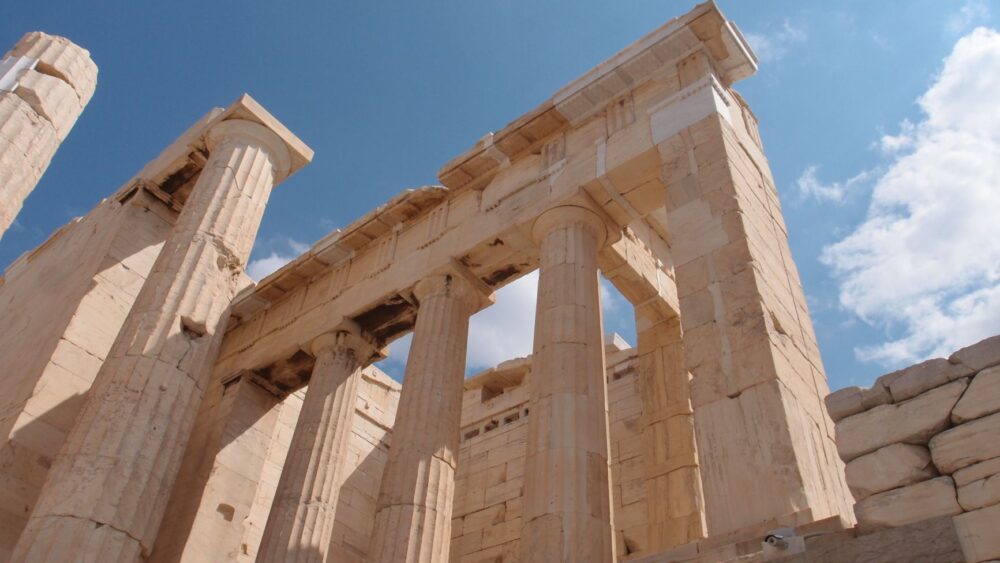
Greek names carry the weight of civilization. They come loaded with mythology, philosophy, and the kind of resonant meaning that makes a name feel like a destiny rather than just a label. Whether a name belonged to a god, a hero, a philosopher, or an ordinary Athenian citizen, Greek names have a way of sounding both ancient and completely alive today.
This list draws from classical Greek mythology, ancient history, and the everyday name pool of ancient Greece. Every entry here is a genuine given name with a real etymology. Some are already trending in nurseries worldwide; others are criminally underused and waiting for a revival.
Gods and Goddesses of Olympus
The twelve Olympians and their divine kin gave the world some of the most powerful names in any language. Several have crossed into mainstream use; others remain boldly distinctive.
Apollo
The god of the sun, music, and prophecy carries a name whose exact etymology is debated, but the most widely accepted root connects to Greek apellameaning “assembly” or possibly to a pre-Greek origin meaning “strength.” Apollo is a top-tier mythological name that somehow still feels fresh and strong.
Artemis
The goddess of the hunt and the moon, Artemis may derive from the Greek artemesmeaning “safe” or “uninjured.” It has a fierce, huntress energy that is drawing serious attention from parents looking for something beyond Diana.
Athena
Goddess of wisdom and warfare, Athena’s etymology is genuinely ancient and likely pre-Greek, possibly connected to a lost language of the Aegean. The name itself is one of the strongest on any list of Greek names, and it has been climbing steadily in English-speaking countries for two decades.
Hermes
The messenger god’s name is thought to derive from hermaa type of stone cairn used as a boundary marker, suggesting the idea of the traveler’s guide. Hermes is bold and mythological without being overused.
Hera
Queen of the gods, Hera’s name may be related to the Greek word for “hero” or possibly to horameaning “season” or “year.” Short, strong, and regal, it is one of the more wearable Olympian names for a girl.
Ares
The god of war takes his name from a root connected to “ruin” or “bane,” possibly related to the Greek are. Ares is stark and powerful, and it has been quietly gaining ground as a boys’ name with serious edge.
Hestia
Goddess of the hearth and home, Hestia comes from the Greek word for “hearth” or “fireplace,” hestia. It is warm, grounded, and deeply underused given how well it wears.
Demeter
The goddess of the harvest, Demeter’s name is thought to combine de (an older word for “earth”) and meter (“mother”), making her quite literally “Earth Mother.” It has a grand, ancient feel that suits a child who will carry it with confidence.
Persephone
Queen of the Underworld and daughter of Demeter, Persephone’s name is thought to derive from Greek roots meaning “to destroy” and “murder,” though her story is one of duality and renewal. Long and dramatic, it offers the natural nickname Percy or Seph.
Selene
The goddess of the moon, Selene comes directly from the Greek selenemeaning “moon.” It is one of the most elegant lunar names in any language, softer than Diana and more distinctly Greek than Luna.
Eos
The goddess of dawn, Eos comes from the Greek word for “dawn” itself. Tiny and luminous, it works beautifully as both a given name and a middle name.
Helios
The god of the sun, Helios derives directly from the Greek helios“sun.” It is bright, mythological, and genuinely striking as a given name.
Nyx
The goddess and personification of night, Nyx comes from the Greek word for “night.” Short, dark, and unforgettable, it is one of the most arresting single-syllable Greek names in existence.
Iris
Goddess of the rainbow and divine messenger, Iris comes from the Greek word for “rainbow.” It has been a quiet but consistent presence in English-speaking countries and is currently enjoying a strong revival.
Nike
The goddess of victory, Nike derives from the Greek nikemeaning “victory.” The sportswear association is real, but the name predates it by a few thousand years, and it carries genuine power.
Tyche
The goddess of fortune and prosperity, Tyche comes from the Greek tychemeaning “fortune” or “luck.” Rarely used today, it is a distinctive choice with a lovely sound.
Hecate
The goddess of magic and crossroads, Hecate is thought to derive from the Greek hekatosmeaning “far-reaching” or “far-off.” It is mysterious and powerful, and its witchy associations make it a bold but legitimate choice.
Heroes and Heroines of Greek Myth
The heroes of Greek mythology carried names that meant something from birth. These are the names of people who slew monsters, sailed impossible seas, and argued with gods.
Perseus
The hero who slew Medusa, Perseus is thought to derive from a root meaning “to destroy” or “to sack.” It has a strong, classical feel and the natural nickname Percy makes it accessible.
Theseus
The founder-hero of Athens, Theseus likely derives from the Greek tithemimeaning “to place” or “to set,” suggesting the idea of someone who establishes or ordains. It is a grand, heroic choice.
Achilles
The greatest warrior of the Trojan War, Achilles is thought to derive from the Greek achos (“grief”) and laos (“people”), suggesting “grief of the people.” The name has an unmistakable grandeur that few can rival.
Hector
The noble Trojan prince and warrior, Hector comes from the Greek hektormeaning “to hold” or “to restrain,” suggesting a steadfast defender. It is a solid, classic name that has never fully gone out of style.
Odysseus
The hero of Homer’s OdysseyOdysseus is thought to derive from a root connected to “wrath” or “pain,” though some link it to a root meaning “to hate” or “to be hated.” It is one of the most mythologically loaded names on any list.
Jason
Leader of the Argonauts and seeker of the Golden Fleece, Jason comes from the Greek iaomaimeaning “to heal.” It became enormously popular in the twentieth century and remains a recognizable classic.
Orion
The great hunter of myth and one of the sky’s most recognizable constellations, Orion’s name is of uncertain origin but is closely tied to the Greek word for “boundary” or possibly to a pre-Greek root. It is one of the most appealing mythological names currently in wide use.
Leander
The hero of the myth of Hero and Leander, this name derives from the Greek leon (“lion”) and aner (“man”), meaning “lion-man.” It is handsome, slightly romantic, and genuinely underused.
Castor
One of the divine twins known as the Dioscuri, Castor comes from a Greek root meaning “beaver” or possibly connected to a root meaning “to shine.” It is ancient, mythological, and surprisingly wearable.
Pollux
The immortal twin of Castor, Pollux derives from the Greek Polydeukesmeaning “very sweet” or “much sweetness.” As the Roman form of Polydeuces, it has a strong, punchy sound that works well today.
Bellerophon
The hero who rode Pegasus, Bellerophon’s name is thought to mean “slayer of Belleros,” a reference to a slain antagonist in his myth. Long and epic, it is a daring choice, but Bel or Bell makes it wearable.
Atalanta
The swift-footed huntress heroine of Greek myth, Atalanta derives from the Greek atalantosmeaning “equal in weight” or “balanced.” It is athletic, strong, and genuinely beautiful.
Andromeda
The princess rescued by Perseus, Andromeda derives from the Greek aner (“man”) and medomai (“to think of” or “to rule over”), suggesting “ruler of men.” It is one of the most glamorous long mythological names available.
Penelope
The faithful wife of Odysseus, Penelope’s name is thought to come from the Greek pene (“thread” or “weft”) and ops (“face” or “eye”), though the exact meaning is uncertain. It is a genuinely beloved name with a strong track record in both classical literature and modern nurseries.
Cassandra
The Trojan prophetess cursed never to be believed, Cassandra derives from the Greek kassandrapossibly meaning “she who entangles men” or connected to roots meaning “to shine” and “man.” It is a name with weight, history, and a haunting quality.
Medea
The sorceress of Colchis and wife of Jason, Medea derives from the Greek medomaimeaning “to think” or “to plan.” The name has a dark reputation from myth, but as a standalone it is striking and unusual.
Circe
The enchantress of Homer’s OdysseyCirce is thought to derive from the Greek kirkosmeaning “circle” or “hawk.” It is one of the coolest mythological names in current literary circulation.
Calypso
The nymph who kept Odysseus on her island for seven years, Calypso derives from the Greek kalyptomeaning “to conceal” or “to cover.” It is musical, rhythmic, and full of personality.
Helen
Helen of Troy, whose beauty launched a thousand ships, bears a name likely derived from the Greek helenemeaning “torch” or “moon.” It is one of the most enduring Greek names in the Western tradition.
Ariadne
The Cretan princess who gave Theseus the thread to navigate the labyrinth, Ariadne derives from the Greek ari (“very”) and adnos (“holy”), meaning “most holy.” It is a deeply beautiful name with strong mythological roots.
Electra
Daughter of Agamemnon and a key figure in Greek tragedy, Electra derives from the Greek elektronmeaning “amber” or “shining.” It is charged, dramatic, and distinctive.
Daphne
The nymph transformed into a laurel tree, Daphne comes directly from the Greek word for “laurel.” It is fresh, botanical, and has been charming parents for generations.
Io
The mortal priestess transformed into a heifer by Zeus, Io’s name is of uncertain but ancient Greek origin. As a two-letter name it is strikingly minimal and beautiful.
Europa
The Phoenician princess carried off by Zeus, Europa is thought to derive from the Greek eurys (“wide”) and ops (“face” or “eye”), meaning “wide-eyed” or “broad-faced.” It has a grand, continental feel.
Leda
The Spartan queen visited by Zeus in the form of a swan, Leda may derive from the Lycian word for “woman” or “lady.” Short, elegant, and mythologically rich.
Niobe
The tragic queen who boasted of her children and was punished by Apollo and Artemis, Niobe’s name is thought to derive from a pre-Greek root. It is rare, haunting, and beautifully unusual.
Names from Ancient Greek History and Philosophy
Not every great Greek name comes from myth. The philosophers, politicians, scientists, and poets of ancient Greece left behind names just as resonant.
Socrates
The founder of Western philosophy bears a name from the Greek sos (“safe”) and kratos (“power”), meaning “safe power” or “unharmed power.” It is rarely used today outside of Greece, which makes it a genuinely bold choice.
Plato
The philosopher’s name comes from the Greek platosmeaning “broad” or “wide-shouldered,” a nickname he reportedly received for his physique. It is short, strong, and unmistakably intellectual.
Aristotle
The philosopher’s name derives from the Greek aristos (“best”) and telos (“purpose” or “end”), meaning “best purpose.” Aristotle Onassis made it recognizable in the modern era.
Pericles
The great Athenian statesman’s name derives from the Greek peri (“around”) and kleos (“glory”), meaning “surrounded by glory.” It is grand and rare.
Leonidas
The Spartan king who led the famous three hundred at Thermopylae, Leonidas derives from the Greek leon (“lion”), meaning “son of a lion” or “lion-like.” It is one of the most powerful historical Greek names and is quietly gaining use today.
Lysander
The Spartan admiral and general, Lysander derives from the Greek lysis (“release” or “liberation”) and aner (“man”), meaning “liberator of men.” Shakespeare borrowed it for A Midsummer Night’s Dreamgiving it a romantic layer.
Themistocles
The Athenian statesman who defeated the Persian fleet at Salamis, Themistocles derives from the Greek themis (“law” or “justice”) and kleos (“glory”), meaning “glory of the law.” It is long and weighty, but Themis alone is a beautiful short form.
Alcibiades
The controversial Athenian general and politician, Alcibiades derives from the Greek alkibiadesfrom alke (“strength”) and bios (“life”), meaning “strong life.” A daring, eccentric choice.
Xenophon
The soldier and historian, Xenophon derives from the Greek xenos (“stranger” or “foreigner”) and phone (“voice” or “sound”), meaning “foreign voice.” Unusual and intellectual.
Herodotus
The father of history, Herodotus derives from the Greek heros and dosismeaning “gift of the hero.” An audacious name for a child with a long future ahead.
Pythagoras
The mathematician and philosopher, Pythagoras derives from the Greek Pythia (the Oracle of Delphi) and agora (“market” or “assembly”), roughly meaning “he who was announced by the Pythia.” Rare and striking.
Thales
One of the Seven Sages of Greece and the first Western philosopher, Thales derives from a root related to “to flourish” or “to bloom.” Short and ancient, it is a quiet gem.
Anaxagoras
The pre-Socratic philosopher who first proposed the concept of nous (mind), Anaxagoras derives from the Greek anax (“ruler” or “lord”) and agora (“assembly”), meaning “lord of the assembly.” Long, rare, and unforgettable.
Solon
The Athenian lawgiver and poet, Solon’s name is related to the Greek word for “wisdom” or possibly a personal name form of solos. Short, strong, and historically resonant.
Themis
The goddess of divine law and order, Themis derives from the Greek themismeaning “law,” “justice,” or “divine order.” It is elegant, meaningful, and works beautifully as a given name.
Hypatia
The brilliant Alexandrian mathematician and philosopher, Hypatia derives from the Greek hypatosmeaning “highest” or “supreme.” It is one of the most intellectually charged women’s names in history, and it is almost entirely unused today.
Aspasia
The influential companion of Pericles and one of the most educated women of ancient Athens, Aspasia derives from the Greek aspazomaimeaning “to welcome” or “to embrace.” Warm, unusual, and historically significant.
Sappho
The great lyric poet of ancient Lesbos, Sappho’s name is of uncertain etymology, possibly connected to a root meaning “sapphire” or a pre-Greek personal name. It carries an unmistakable literary weight.
Names Meaning Virtue, Beauty, or Glory
Ancient Greeks were direct about what they wanted their children to embody. Many classical Greek names are essentially declarations of hope, quality, or character.
Alexander
From the Greek alexein (“to defend”) and aner (“man”), meaning “defender of men.” Alexander the Great ensured this name would never be forgotten, and it remains a global powerhouse.
Nikodemos
From the Greek nike (“victory”) and demos (“people”), meaning “victory of the people.” The anglicized Nicodemus appears in the New Testament. the Greek form is rarer and more striking.
Kallistrate
From the Greek kallos (“beauty”) and stratos (“army”), meaning “beautiful army.” A genuine ancient Greek feminine name that is about as rare as it gets today.
Euphemia
From the Greek eu (“good,” “well”) and pheme (“speech”), meaning “well-spoken” or “of good repute.” It was common in early Christian use and has a lovely, old-world softness.
Eudoxia
From the Greek eu (“good”) and doxa (“glory” or “opinion”), meaning “of good repute” or “good glory.” Several Byzantine empresses bore this name, and it has a grand, underused elegance.
Kalliope
The muse of epic poetry, Kalliope derives from the Greek kallos (“beauty”) and ops (“voice”), meaning “beautiful voice.” The anglicized Calliope is gaining real momentum in modern nurseries.
Euanthes
From the Greek eu (“good”) and anthos (“flower”), meaning “in full bloom” or “beautifully flowering.” A rare and lovely ancient Greek name.
Aristides
The great Athenian general known as “the Just,” Aristides derives from aristos (“best”) and gives the meaning “son of the best.” It is historically rich and rarely used outside Greece.
Callista
From the Greek kallistosthe superlative of kalos (“beautiful”), meaning “most beautiful.” It is warm, feminine, and has been used as a given name since antiquity.
Sophronia
From the Greek sophrosynemeaning “self-control,” “prudence,” or “sound-mindedness.” It was a genuine ancient Greek name and carries one of the most admired qualities in classical Greek ethics.
Philonoe
From the Greek philos (“loving” or “friend”) and noos (“mind”), meaning “loving mind.” A real ancient Greek name that appears in mythology as a daughter of Tyndareus.
Euthalia
From the Greek eu (“good”) and thallein (“to bloom”), meaning “in good bloom” or “flourishing.” Rare, beautiful, and genuinely classical.
Nymph and Nature Names from Greek Myth
The Greeks populated their natural world with divine beings, and the names of nymphs, nature spirits, and personifications are some of the most lyrical in the tradition.
Naiad
The Naiads were freshwater nymphs, and the name derives from the Greek naeinmeaning “to flow.” As a given name it is extremely rare, which makes it all the more striking.
Thetis
The sea nymph and mother of Achilles, Thetis derives from the Greek tithemimeaning “to place” or “to set,” or possibly from an older root meaning “the disposer.” It is elegant and mythologically significant.
Galatea
The sea nymph beloved by the Cyclops Polyphemus, Galatea derives from the Greek galameaning “milk,” suggesting a milky-white complexion. It is one of the most beautiful nymph names and is startlingly rare in use.
Nereid
The Nereids were the fifty sea-nymph daughters of Nereus, and the name derives from the Greek Nereusgod of the sea. As a given name it is rare and oceanic.
Chloris
The goddess of flowers and spring, Chloris derives from the Greek chlorosmeaning “pale green” or “fresh.” It is the Greek counterpart to the Roman Flora and is a genuine ancient given name.
Aura
The goddess of the breeze and fresh air, Aura derives from the Greek word for “breeze” or “breath of air.” It has crossed fully into modern use and has a luminous, airy quality.
Phoebe
A Titaness associated with the moon and prophetic wisdom, Phoebe derives from the Greek phoibosmeaning “bright” or “radiant.” It is one of the most wearable mythological names in current use.
Rhea
The Titaness mother of the Olympian gods, Rhea’s name may derive from the Greek rheomeaning “to flow,” or from an older root connected to earth. It is short, soft, and quietly gaining popularity.
Theia
The Titaness of sight and the shining light of the sky, Theia derives from the Greek theiameaning “divine” or “goddess.” It is minimal, beautiful, and genuinely ancient.
Metis
The Titaness of wisdom and cunning, first wife of Zeus, Metis derives from the Greek metismeaning “wisdom,” “skill,” or “counsel.” It is one of the most intellectually charged short names in the Greek tradition.
How to Choose a Greek Name
The first thing to consider is how the name will live in everyday life. A name like Achilles or Persephone is spectacular on paper and carries immense mythological weight, but you want to make sure the person bearing it can say it confidently, spell it without exhaustion, and hear it called out without embarrassment. Think about the full name: how does it sit next to your surname? A three-syllable Greek name often needs a short surname to balance it, while a short Greek name like Nyx or Eos can anchor almost any last name.
Pay attention to meaning and story. Greek names are rarely neutral. They come attached to myths, to histories, to philosophical traditions. Choosing Cassandra means choosing a story about prophecy and disbelief. choosing Leonidas means choosing a story about courage and sacrifice. This is not a warning, it is an invitation. If you know the story and love it, lean into it. The meaning behind a name is part of what makes it feel intentional rather than accidental.
Consider the nickname question honestly. Long Greek names like Andromeda, Persephone, and Alcibiades come with built-in nickname options (Andi, Percy, Alci), and many parents find that the full name is used ceremonially while the nickname does the daily work. Short Greek names like Eos, Io, and Nyx need no shortening, which is part of their appeal. There is no wrong answer, but knowing how the name will be used day to day helps you make a choice you will all live happily with.
Finally, do not be afraid of the unfamiliar. Many of the best Greek names on this list are genuinely rare in English-speaking countries, and that rarity is a feature. Hypatia, Thales, Galatea, Sophronia — these names have thousands of years of history behind them and almost no current competition. A child who grows up as the only Thales or Galatea in every room they enter will own that name completely.
Greek names have outlasted the civilization that created them by over two millennia. They carry stories, philosophies, and meanings that still feel relevant because the human experiences they describe — love, war, wisdom, grief, beauty, transformation — have never stopped being relevant. Whatever draws you to this tradition, there is a Greek name here that will carry your child well.