

Netflix just added another banger to their already mind-boggling roster for 2026 that too in the spy-thriller genre. Not to mention, a female protagonist will always be a clincher for me. So, buckle up, let’s take a trip down the iconicity of this show that remains relevant even today.
Why Killing Eve Landed Like a Bomb
A bomb that impressed us and maybe threatened other shows in this genre.
Killing Eve premiered in 2018, and it felt like someone had finally made a spy show for people who didn’t care about spy shows; basically it was ahead of its time. It wasn’t about geopolitics or tradecraft. It was about two women who couldn’t stop thinking about each other: one a bored desk agent, the other a glamorous assassin.
And no, we don’t have to choose between them.
The show understood that obsession is sexier than duty, and chaos is more interesting than order. Now that it’s on Netflix, a whole new audience gets to discover why it broke television.
Villanelle: The Anti-Hero We Didn’t Deserve
Before Killing Eve, female assassins in pop culture were either cold robots or tragic victims, there was no in between. Villanelle was neither. She was funny, petulant, vain, and deeply childish, but also notably, the most dangerous person in every room.
She killed because she was good at it, and she was good at it because she enjoyed it. The show never tried to redeem her or explain her away. It just let her be. That refusal to moralize her was revolutionary.
Eve: The Bored Woman Who Wanted More
Eve Polastri wasn’t a typical protagonist either. She wasn’t a super-spy or a genius detective. She was a woman who took a desk job at MI5 because it seemed interesting, and then spent her days bored out of her mind. In hindsight, she’s pretty similar to all of us.
Her obsession with Villanelle wasn’t professional, it was personal. Villanelle represented everything Eve wasn’t allowed to be: free, violent, unapologetic. Eve didn’t want to catch Villanelle. She wanted to be her.
Now that’s a plot we don’t come across often.
Clothes As Armor
Villanelle’s wardrobe became a character in itself. The pink tulle Molly Goddard puff-sleeve dress that spawned a thousand thinkpieces. The tailored suits, the vintage hats, the clown costume. Every outfit was a statement: “I am not like you. I am not playing by your rules.”
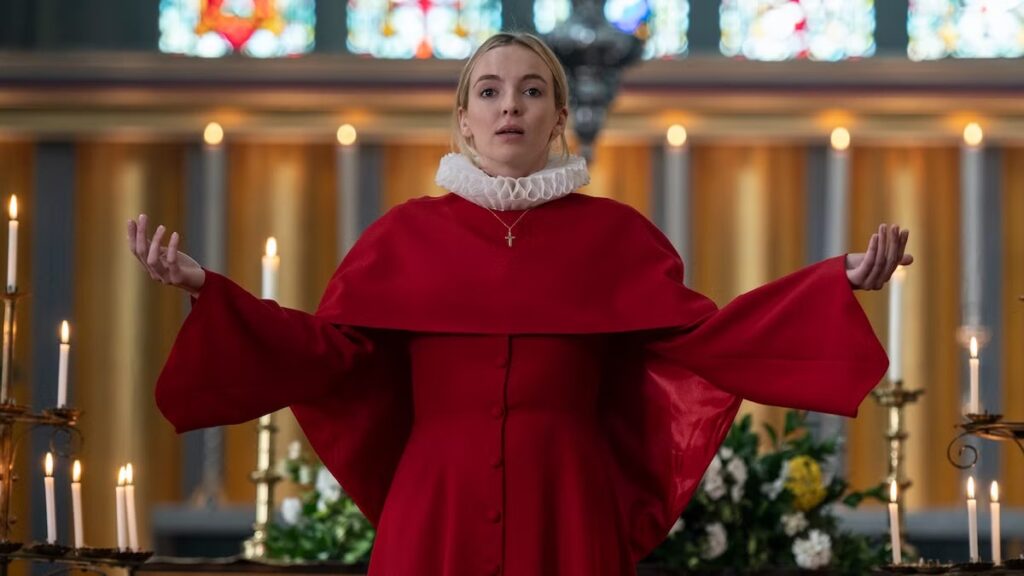
The show understood that for women, fashion is never just fashion, it’s a weapon, a shield, a way of saying things you can’t say out loud. As I always say, “Fashion is power.”
The Love Story That Wasn’t Supposed to Work
But I mean it’s a love story, so how can we not like it, right?
At its heart, Killing Eve was a love story between two people who were terrible for each other. They lied, manipulated, stabbed each other quite literally. And yet, you and I rooted for them. Because the show understood something true: love doesn’t have to be healthy to be real. Yes, take notes.
Eve and Villanelle saw each other clearly, without illusions, and chose each other anyway, despite the odds. That rawness is why fans stayed invested through four seasons of chaos, and why love is love, no matter the good or bad. Of course it’s your choice if you wish to stay in that love or not.
And for Eve and Villanelle, I wished the former.
The Finale And Why We’re Still Fighting About It
Most hit shows’ finales choose a subjective ending, splitting the audience’s opinion in different directions, just like this one.
The series ended with Villanelle dying in the Thames, and Eve screaming alone on a boat. Right, that’s not a very happy ending.
Some fans loved it. Others felt betrayed. But everyone agreed on one thing: it was unforgettable, and stayed longer than the time it took the show to land on Netflix.

The finale refused to give audiences a neat, happy ending because Killing Eve was never that kind of show. It was messy, painful, and beautiful: just like the relationship it was about. Basically, it was human.
Years later, people are still arguing about it. That’s the mark of a show that mattered and stays relevant to this day.
Is the Netflix transfer actually special? Streaming there means Killing Eve gets a second life. A generation that missed it the first time can now binge it. They’ll fall in love with Villanelle’s chaos and Eve’s hunger. And they’ll realize that even years later, no show has quite captured the same energy.