

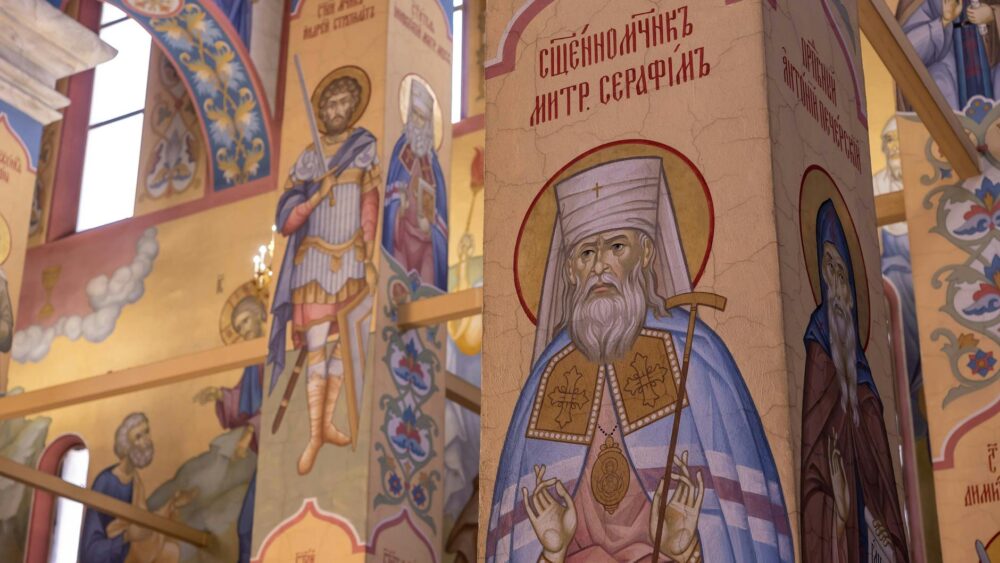
Saint names carry something most baby names simply don’t: centuries of story, martyrdom, miracles, and meaning baked right into the syllables. Whether you’re choosing a name for a Catholic baptism, an Orthodox christening, or simply want a name with serious spiritual weight and a real human legacy behind it, the canon of saints is one of the richest naming traditions in the world.
The list below covers saints from across traditions, eras, and languages, from the universally beloved to the beautifully obscure. Every name here belongs to a real, historically recognized saint, and every meaning is genuine. These are names that have been carried through cathedrals, whispered in prayers, and handed down through generations for a reason.
Classic Saint Names for Boys
These are the names that built the canon, venerated for centuries, globally recognized, and still deeply wearable today.
Peter
From the Greek Petrosmeaning “rock” or “stone.” Saint Peter was the first pope and one of Christ’s closest apostles, making this name one of the most foundational in Christian history. It’s straightforward, strong, and carries immense quiet authority.
Paul
From the Latin Paulusmeaning “small” or “humble.” Saint Paul’s letters form the backbone of the New Testament, and his dramatic conversion story gives this name an almost electric backstory. Short, punchy, and endlessly solid.
John
From the Hebrew Yochananmeaning “God is gracious.” The name of the beloved apostle, the Baptist, and the author of Revelation, no single name in Christianity has been carried by more saints. Its simplicity is the whole point.
James
The English form of Iacobusitself from the Hebrew Yaakovmeaning “supplanter” or “one who follows.” Saint James the Greater was one of the Twelve, and the Camino de Santiago (the Way of Saint James) still draws millions of pilgrims annually. A name with serious pilgrimage energy.
Andrew
From the Greek Andreasmeaning “manly” or “strong.” Saint Andrew, patron of Scotland, Russia, and Greece, was the first of the apostles called by Christ. The saltire cross on the Scottish flag is his symbol, giving this name genuine national gravitas.
Matthew
From the Hebrew Mattityahumeaning “gift of God.” Saint Matthew, the tax collector turned evangelist, wrote the first Gospel. It’s a name that has stayed in steady use for centuries without ever feeling tired.
Thomas
From the Aramaic Tomameaning “twin.” Saint Thomas the Apostle is famous for his honest doubt, which makes him surprisingly relatable. Saint Thomas Aquinas added a towering intellectual legacy to the name. It ages beautifully.
Mark
From the Latin Marcuslikely derived from Mars, the Roman god of war, though long associated with Saint Mark the Evangelist who authored the Gospel of Mark. Clean, direct, and carries the weight of one of the four Gospels.
Luke
From the Greek Loukasmeaning “from Lucania” or “light-giving.” Saint Luke was a physician and the author of both the third Gospel and the Acts of the Apostles, making him the patron saint of doctors and artists. Warm, modern-sounding, and deeply rooted.
Stephen
From the Greek Stephanosmeaning “crown” or “garland.” Saint Stephen was the first Christian martyr, stoned to death for his faith. The crown meaning gives this name a regal undertone that its history more than earns.
Nicholas
From the Greek Nikolaosmeaning “victory of the people.” Saint Nicholas of Myra was a fourth-century bishop whose generosity toward children became the foundation of the Santa Claus tradition. One of the most beloved saints across Eastern and Western Christianity alike.
Sebastian
From the Greek Sebastianosmeaning “venerable” or “from Sebastia.” Saint Sebastian was a Roman soldier martyred by arrows for his Christian faith. The name has a sleek, almost modern sound that belies its ancient roots.
Lawrence
From the Latin Laurentiusmeaning “from Laurentum” or associated with the laurel wreath of honor. Saint Lawrence was a deacon martyred in Rome in 258 AD, famous for his extraordinary courage. The name feels both classical and quietly distinguished.
Vincent
From the Latin Vincentiusmeaning “conquering.” Saint Vincent de Paul devoted his life to serving the poor in 17th-century France, founding the Vincentians and inspiring the Society of Saint Vincent de Paul. A name with real humanitarian weight.
Francis
From the Latin Franciscusmeaning “Frenchman” or “free man.” Saint Francis of Assisi is arguably the most beloved saint in Catholic history, known for his radical poverty, love of animals, and the Canticle of the Sun. The name carries extraordinary warmth.
Classic Saint Names for Girls
These names have been carried by women of extraordinary faith, intellect, and courage across two millennia. They’re classics for good reason.
Mary
From the Hebrew Miriamwith debated meanings including “beloved,” “bitter,” and “sea of sorrow.” As the mother of Jesus, Mary is the most venerated saint in Christian history and her name has topped naming charts for most of Western history. Its simplicity is its power.
Catherine
From the Greek Aikaterinelikely related to katharosmeaning “pure.” Saint Catherine of Alexandria was a philosopher-martyr of the early church, and Saint Catherine of Siena was a Doctor of the Church who corresponded with popes. A name with serious intellectual lineage.
Teresa
Possibly from the Greek therizomeaning “to harvest,” or from the island of Thera. Saint Teresa of Avila was a 16th-century mystic, reformer, and Doctor of the Church. Saint Therese of Lisieux gave us the “Little Way.” Both Teresas are forces of nature.
Clare
From the Latin Clarameaning “bright” or “clear.” Saint Clare of Assisi founded the Order of Poor Ladies alongside Francis of Assisi, choosing radical poverty with fierce joy. The name is crisp, luminous, and feels quietly modern.
Agnes
From the Greek hagnosmeaning “pure” or “chaste,” reinforced by its resemblance to the Latin agnus (lamb). Saint Agnes was a young Roman martyr whose feast day falls on January 21st. The name has a cool, almost severe elegance that’s coming back into fashion.
Lucy
From the Latin Luxmeaning “light.” Saint Lucy of Syracuse was a third-century martyr who became the patron of the blind and those with eye conditions, celebrated on December 13th. Sweet, bright, and completely wearable today.
Cecilia
Of uncertain origin, possibly from the Latin family name Caeciliusrelated to “blind.” Saint Cecilia is the patron saint of music and musicians, and her name has a melodic quality that makes it feel almost perfectly named. It’s gaining ground on current charts.
Monica
Possibly from the Latin moneremeaning “to advise,” or of North African origin. Saint Monica is beloved for her decades of persistent prayer for her wayward son, who became Saint Augustine of Hippo. A name that carries extraordinary maternal devotion.
Agatha
From the Greek agathosmeaning “good.” Saint Agatha of Sicily was a third-century martyr and is the patron of breast cancer patients, nurses, and bell-founders. The name has a vintage crispness that feels very current in 2026.
Bridget
From the Irish Brighidpossibly meaning “exalted one” or “strength.” Saint Brigid of Kildare is one of Ireland’s three patron saints, a fifth-century abbess whose feast day, February 1st, aligns with the ancient festival of Imbolc. Fiercely Irish and deeply beloved.
Dorothy
From the Greek Dorotheameaning “gift of God” (the reverse of Theodora). Saint Dorothy of Caesarea was a fourth-century martyr. Despite its mid-century American associations, Dorothy is a genuine saint name with ancient Greek roots.
Helena
From the Greek Helenepossibly meaning “torch” or “bright.” Saint Helena was the mother of Emperor Constantine and is credited with finding the True Cross during a pilgrimage to Jerusalem in the fourth century. A name with genuine imperial and spiritual authority.
Veronica
Likely a Latinization of the Greek Berenikemeaning “she who brings victory,” though long associated with the Latin vera iconmeaning “true image.” Veronica wiped Christ’s face on the road to Calvary, and her name carries that act of compassion in its very syllables.
Felicity
From the Latin felicitasmeaning “happiness” or “good fortune.” Saints Perpetua and Felicity were martyred together in Carthage in 203 AD, and their account is one of the earliest and most moving martyr narratives. The name feels joyful and strong simultaneously.
Strong Biblical Saint Names
These names belong to saints who are also major figures in Scripture, giving them both canonical recognition and deep biblical resonance.
Joseph
From the Hebrew Yosefmeaning “God will add” or “God increases.” Saint Joseph, foster father of Jesus, is the patron of workers, families, and a peaceful death. His name has a quiet, steady quality that suits every era.
Elizabeth
From the Hebrew Elishebameaning “my God is an oath” or “my God is abundance.” Saint Elizabeth, the mother of John the Baptist, is celebrated for her faith and her famous greeting of Mary. One of the most enduringly popular saint names in Western history.
Michael
From the Hebrew Mikha’elmeaning “who is like God?” Saint Michael the Archangel is the warrior angel, patron of soldiers, police, and the sick. The rhetorical force of that meaning has made it one of the most popular names in the world for decades.
Gabriel
From the Hebrew Gavri’elmeaning “God is my strength.” The archangel Gabriel announced the births of both John the Baptist and Jesus, making him the patron of messengers and communications. A name that feels both ancient and genuinely contemporary.
Raphael
From the Hebrew Refa’elmeaning “God heals.” The archangel Raphael appears in the Book of Tobit as a healer and guide, and is the patron saint of doctors, travelers, and the blind. It has a warmth and musicality that makes it stand out beautifully.
Anna
From the Hebrew Hannahmeaning “grace” or “favor.” Saint Anna (or Anne) is venerated as the mother of the Virgin Mary, making her Jesus’s grandmother. The name is short, graceful, and has been in continuous use across virtually every Christian culture.
Martha
From the Aramaic Martameaning “lady” or “mistress.” Saint Martha of Bethany is the patron of servants, cooks, and hospitality workers. Her direct, practical faith is a counterpoint to contemplative spirituality, and her name carries that honest, grounded energy.
Joachim
From the Hebrew Yoyaqimmeaning “raised by God.” Saint Joachim is venerated as the father of the Virgin Mary, making him a patriarch of the Holy Family. It’s rarely used in the English-speaking world, which makes it genuinely distinctive.
Barnabas
From the Aramaic, meaning “son of encouragement.” Saint Barnabas was a companion of Saint Paul and an early missionary whose generosity and encouragement were legendary in the early church. A bold, underused choice with a beautiful meaning.
Susanna
From the Hebrew Shoshannahmeaning “lily” or “rose.” Saint Susanna was an early Roman martyr, and Susanna appears in the deuterocanonical Book of Daniel as a woman of integrity. Soft-sounding but with a strong story behind it.
Early Church and Martyr Saint Names
The first centuries of Christianity produced saints of staggering courage. These names carry that fire.
Ignatius
Likely from the Latin Ignismeaning “fire.” Saint Ignatius of Antioch was a second-century bishop who wrote extraordinary letters on his way to martyrdom in Rome. Saint Ignatius of Loyola founded the Jesuits. Two giants, one name.
Clement
From the Latin clemensmeaning “merciful” or “gentle.” Saint Clement I was one of the earliest popes, and his first-century letter to the Corinthians is among the oldest Christian documents outside the New Testament. A name that sounds both warm and authoritative.
Polycarp
From the Greek polykarpiosmeaning “much fruit.” Saint Polycarp of Smyrna was a second-century bishop and martyr who reportedly knew the apostle John personally. His name is unusual in English, but it has a wonderfully ancient, rooted quality.
Justin
From the Latin Justusmeaning “just” or “righteous.” Saint Justin Martyr was a second-century philosopher who became the first great Christian apologist, defending the faith with intellectual rigor before his execution. The name feels current while carrying ancient weight.
Perpetua
From the Latin perpetuusmeaning “everlasting” or “continuous.” Saint Perpetua was a young Carthaginian noblewoman who kept a diary of her imprisonment before her martyrdom in 203 AD, one of the earliest writings by a Christian woman. Rare, resonant, and deeply meaningful.
Cyprian
From the Latin Cyprianusmeaning “from Cyprus.” Saint Cyprian of Carthage was a third-century bishop and martyr who wrote prolifically on the unity of the church. Unusual enough to feel distinctive without being invented.
Irenaeus
From the Greek eirenemeaning “peace.” Saint Irenaeus of Lyon was a second-century bishop who wrote against Gnosticism and helped define early Christian orthodoxy. A deeply meaningful name for families with a love of early church history.
Anastasia
From the Greek anastasismeaning “resurrection.” Saint Anastasia was a fourth-century martyr whose feast day falls on Christmas Day in the Roman Rite. The name’s meaning is theologically profound, and it sounds beautiful in any language.
Prisca
From the Latin priscusmeaning “ancient” or “venerable.” Saint Prisca (or Priscilla) was an early Christian woman mentioned by Paul in his letters, and a Roman martyr bears the name as well. One of the oldest female saint names in use.
Fabian
From the Latin Fabianusrelated to the family name Fabius, likely from fabameaning “bean.” Saint Fabian was a third-century pope chosen by a dove landing on his head, one of the more charming origin stories in papal history. The name is cool, underused, and has a great story.
Medieval and Monastic Saint Names
The medieval church produced an extraordinary range of saints, from warrior-scholars to gentle mystics. These names carry that era’s depth.
Benedict
From the Latin benedictusmeaning “blessed.” Saint Benedict of Nursia wrote the Rule of Benedict in the sixth century, shaping Western monasticism and, through the monasteries, preserving much of classical learning. A name that literally means “blessed” and has the legacy to back it up.
Bernard
From the Germanic Bernhardmeaning “brave as a bear.” Saint Bernard of Clairvaux was a 12th-century mystic, reformer, and Doctor of the Church whose influence on medieval theology was immense. Saint Bernard of Menthon gave his name to the famous Alpine rescue dogs. A name with real range.
Dominic
From the Latin Dominicusmeaning “of the Lord” or “belonging to God.” Saint Dominic founded the Order of Preachers (the Dominicans) in the 13th century, creating one of the great intellectual and preaching orders of the church. A name that sounds contemporary but is thoroughly medieval.
Anthony
From the Latin Antoniusof uncertain further origin, possibly Etruscan. Saint Anthony of Padua is the patron of lost things and one of the most popular saints in Catholic devotion. Saint Anthony the Great is considered the father of monasticism. Two foundational saints, one enduring name.
Bonaventure
From the Latin bona venturameaning “good fortune” or “good future.” Saint Bonaventure was a 13th-century Franciscan theologian and Cardinal who wrote a famous biography of Saint Francis. The name is unusual but carries extraordinary Franciscan warmth.
Hildegard
From the Germanic hild (battle) and gard (enclosure), meaning “battle enclosure” or “stronghold.” Saint Hildegard of Bingen was a 12th-century abbess, composer, mystic, naturalist, and Doctor of the Church. If you want a name that does everything, this is it.
Scholastica
From the Latin scholasticusmeaning “scholar” or “learned.” Saint Scholastica was the twin sister of Saint Benedict and the founder of female Benedictine monasticism. An extraordinary choice for a family with Benedictine connections or a love of scholarship.
Gertrude
From the Germanic ger (spear) and trud (strength), meaning “spear strength.” Saint Gertrude the Great was a 13th-century mystic and Doctor of the Church, one of the earliest promoters of devotion to the Sacred Heart. The name has a sturdy, vintage charm that’s quietly returning.
Albert
From the Germanic Adalbertmeaning “noble and bright.” Saint Albert the Great (Albertus Magnus) was a 13th-century Dominican polymath and Doctor of the Church, the teacher of Thomas Aquinas. A name with one of the greatest intellectual legacies in the entire calendar.
Hugh
From the Germanic Hugomeaning “mind” or “spirit.” Saint Hugh of Lincoln was a 12th-century Carthusian bishop known for his defense of Jews against persecution and his fierce independence from royal pressure. A short, strong name with a genuinely heroic story.
Celtic and British Isles Saint Names
The saints of Ireland, Scotland, Wales, and England gave the church some of its most distinctive names, rooted in Celtic languages and island landscapes.
Brendan
From the Irish Bréanainnpossibly from the Welsh breenhinmeaning “prince.” Saint Brendan the Navigator was a sixth-century Irish monk who, according to legend, sailed across the Atlantic centuries before Columbus. A name that carries the Atlantic wind in it.
Columba
From the Latin columbameaning “dove.” Saint Columba of Iona was a sixth-century Irish monk who founded the monastery on Iona and evangelized Scotland. The name is both serene and historically significant.
Columbanus
Also from the Latin columba. Saint Columbanus was an Irish monk who founded influential monasteries across Gaul and northern Italy, carrying Irish Christianity to the European continent. A more expansive form of Columba with its own distinct legacy.
Cuthbert
From the Old English Cuth (known, famous) and beorht (bright), meaning “famous brightness.” Saint Cuthbert of Lindisfarne was a seventh-century bishop beloved across Northumbria, and the elaborate illuminations of the Lindisfarne Gospels were made in his honor. A deeply English name with quiet beauty.
Aidan
From the Irish Aodhána diminutive of Aodhmeaning “little fire.” Saint Aidan of Lindisfarne was an Irish monk who founded a monastery on the island of Lindisfarne and evangelized Northumbria with remarkable gentleness. One of the most wearable Celtic saint names in modern use.
David
From the Hebrew Dawidmeaning “beloved.” Saint David is the patron of Wales, a sixth-century monk and bishop who founded monasteries and is venerated on March 1st. The name’s biblical depth and Welsh national identity make it a layered, powerful choice.
Winifred
From the Welsh Gwenfrewimeaning “blessed reconciliation” or “white stream.” Saint Winifred is the patron of North Wales, and her holy well at Holywell has been a pilgrimage site since the seventh century. A gorgeous, underused Welsh saint name.
Kevin
From the Irish Caoimhínmeaning “gentle birth” or “handsome by birth.” Saint Kevin of Glendalough was a sixth-century Irish hermit-monk who founded the great monastic city of Glendalough in County Wicklow. The name’s modern ubiquity in Ireland and beyond began entirely with this saint.
Ita
From the Old Irish, meaning “thirst” (for holiness). Saint Ita of Killeedy was a sixth-century Irish abbess sometimes called the “foster-mother of the saints of Ireland” for the number of young monks she educated. Short, strong, and very rare outside Ireland.
Ninian
Of uncertain origin, possibly from a Celtic root. Saint Ninian was a fifth-century bishop who evangelized the Picts of Scotland before Columba arrived. Rare and distinctive, with deep Scottish roots.
Eastern and Orthodox Saint Names
The Eastern churches have their own magnificent tradition of saints, many with names that feel both exotic and deeply rooted in early Christianity.
Basil
From the Greek basileusmeaning “king.” Saint Basil the Great was a fourth-century bishop and Doctor of the Church who shaped Eastern monasticism and Christian theology. In the Orthodox tradition, he is one of the Three Holy Hierarchs. A regal name with tremendous stature.
Gregory
From the Greek gregoriosmeaning “watchful” or “alert.” Saint Gregory the Great was a sixth-century pope who sent Augustine to England and gave his name to Gregorian chant. Saint Gregory of Nazianzus was one of the great theologians of the East. A name that belongs to both traditions equally.
Chrysostom
From the Greek chrysostomosmeaning “golden-mouthed.” Saint John Chrysostom was a fourth-century Archbishop of Constantinople renowned for his extraordinary preaching and his writings on Scripture. Rarely used as a given name, but used, and unforgettable when it is.
Athanasius
From the Greek athanasiosmeaning “immortal.” Saint Athanasius of Alexandria spent much of his life in exile for defending the full divinity of Christ against Arianism. The phrase “Athanasius contra mundum” (Athanasius against the world) is one of the most famous in church history. A bold, meaningful name for families who know their theology.
Cyril
From the Greek Kyrilloslikely from kyriosmeaning “lord.” Saints Cyril and Methodius were ninth-century brothers who evangelized the Slavic peoples and created the Glagolitic alphabet (precursor to Cyrillic). Cyril gave his name to an entire writing system used by hundreds of millions of people.
Methodius
From the Greek methodosmeaning “method” or “pursuit of knowledge.” The partner of Cyril in the evangelization of the Slavs, Methodius was an archbishop and linguist whose work shaped Slavic Christianity permanently. An unusual name with an extraordinary legacy.
Xenia
From the Greek xenosmeaning “foreigner” or “hospitality.” Saint Xenia of Petersburg was an 18th-century Russian holy fool (yurodivaya) who gave away all her possessions after her husband’s death and wandered the streets of St. Petersburg. She remains one of the most beloved saints of the Russian Orthodox Church.
Macrina
Feminine form of Macrinusfrom the Greek makrosmeaning “long” or “large.” Saint Macrina the Elder was the grandmother of Saints Basil the Great and Gregory of Nyssa; Saint Macrina the Younger was their sister and a monastic leader. A name from one of the most remarkable theological families in church history.
Ephrem
From the Hebrew Efrayimmeaning “fruitful.” Saint Ephrem the Syrian was a fourth-century deacon, poet, and theologian whose hymns are still sung in Syriac churches today. He is a Doctor of the Church and one of the greatest poets of early Christianity. A beautiful, underused name.
Seraphim
From the Hebrew seraphimmeaning “burning ones” (the fiery angels of Isaiah 6). Saint Seraphim of Sarov was an 18th-century Russian monk and mystic, one of the most beloved saints of the Orthodox world. Rarely used in English, but striking and deeply spiritual when it is.
Renaissance, Reformation Era, and Early Modern Saints
The 16th and 17th centuries produced a wave of canonized figures whose names are well-known but whose saintly connections are often forgotten.
Xavier
From the Basque place name Etxaberrimeaning “new house.” Saint Francis Xavier was a co-founder of the Jesuits and one of the greatest missionaries in history, evangelizing India, Japan, and Southeast Asia. The name has a sharp, modern sound that disguises how ancient its roots are.
Philip
From the Greek Philipposmeaning “lover of horses.” Saint Philip Neri was a 16th-century Roman priest known for his extraordinary joy and humor, founding the Oratorians. Saint Philip the Apostle adds biblical depth. A name that has been cheerfully in use for two thousand years.
Carlo
Italian form of Charles, from the Germanic Karlmeaning “free man.” Saint Carlo Borromeo was a 16th-century Archbishop of Milan and Cardinal who led the Counter-Reformation and cared personally for plague victims. Carlo Acutis, beatified in 2020, has made this name newly resonant for a new generation.
Aloysius
A Latinized form of Luigi (Louis), ultimately from the Germanic Chlodovechmeaning “famous warrior.” Saint Aloysius Gonzaga was a 16th-century Jesuit scholastic who died nursing plague victims at age 23. He is the patron of youth and Catholic students. An unusual name with a moving story.
Margaret
From the Greek margaritesmeaning “pearl.” Saint Margaret of Antioch was a widely venerated early martyr, and Saint Margaret of Scotland was an 11th-century queen and reformer. A name that has been in the top tiers of usage for centuries and carries extraordinary depth.
Rose
From the Latin rosathe flower. Saint Rose of Lima was the first person born in the Americas to be canonized, a 17th-century Dominican tertiary who endured extraordinary austerities. The name is simple, beautiful, and carries the first American saint.
Jane
English feminine form of John, from the Hebrew Yochananmeaning “God is gracious.” Saint Jane Frances de Chantal was a 17th-century French widow who, alongside Saint Francis de Sales, founded the Order of the Visitation. A quiet name with a rich Salesian legacy.
Modern and 19th-20th Century Saints
The church has canonized a remarkable range of figures from the modern era, many with names that feel immediately familiar.
Pius
From the Latin piusmeaning “pious” or “devout.” Several popes named Pius have been canonized or beatified, including Saint Pius X (Giuseppe Sarto), who promoted early first communion and died as World War I broke out. A name that wears its meaning on its sleeve.
Therese
French form of Teresa (see above). Saint Therese of Lisieux, the “Little Flower,” died at 24 and became one of the most popular saints of the modern era, declared a Doctor of the Church in 1997. Her autobiography, Story of a Soulremains a devotional classic.
Maximilian
From the Latin Maximilianusa combination of Maximus (greatest) and Aemilianus (rival). Saint Maximilian Kolbe was a Polish Franciscan priest who volunteered to die in place of a stranger at Auschwitz in 1941. A name that carries one of the most moving acts of self-sacrifice in modern history.
Edith
From the Old English Eadgythmeaning “blessed war” or “prosperous in war.” Saint Edith Stein (Teresa Benedicta of the Cross) was a Jewish philosopher who converted to Catholicism, became a Carmelite nun, and died at Auschwitz. A name that bridges Jewish and Christian traditions with extraordinary depth.
Gianna
Italian diminutive of Giovanna (Joan), ultimately from the Hebrew Yochananmeaning “God is gracious.” Saint Gianna Beretta Molla was a 20th-century Italian physician and mother who sacrificed her life to save her unborn child. She was canonized in 2004 and is now the patron of mothers, physicians, and unborn children.
Oscar
From the Old Norse Ásgeirr or the Old English Osgarmeaning “God’s spear” or “divine spear.” Blessed Oscar Romero was the Archbishop of San Salvador martyred in 1980 while celebrating Mass, canonized by Pope Francis in 2018. A modern martyr’s name that also happens to be thoroughly contemporary.
Josephine
Feminine form of Joseph, from the Hebrew Yosefmeaning “God will add.” Saint Josephine Bakhita was a Sudanese-born woman who was enslaved as a child, found freedom through Christianity, became a Canossian sister, and was canonized in 2000. A name with one of the most extraordinary life stories in the entire calendar.
Damien
From the Greek Damianospossibly from damaomeaning “to tame.” Saint Damien of Molokai was a Belgian priest who ministered to the leprosy colony on Moloka’i, Hawaii, ultimately contracting and dying of the disease himself. He was canonized in 2009. A name with genuine heroic weight.
Rare and Distinctive Saint Names Worth Knowing
These names are genuinely uncommon in English-speaking countries, but every one belongs to a real and venerated saint. For parents who want something singular with deep roots, start here.
Zephyrinus
From the Greek zephyrosthe west wind. Saint Zephyrinus was a second-century pope and martyr. Almost never used as a given name in English, which makes it genuinely extraordinary, and the nickname Zeph is immediately wearable.
Caius
From the Latin Gaiusof uncertain meaning, possibly “rejoice.” Saint Caius was a third-century pope and martyr. Short, ancient, and strikingly unusual in modern use.
Eusebius
From the Greek eusebesmeaning “pious” or “devout.” Saint Eusebius of Vercelli was a fourth-century bishop who defended the Nicene Creed. Unusual in English but carries an unmistakable early church character.
Thecla
From the Greek Theokleiameaning “glory of God.” Saint Thecla was a first-century disciple of Saint Paul, enormously popular in the early church and one of the earliest female saints. Rare today, but historically significant and genuinely beautiful.
Adaeze
From the Igbo language of Nigeria, meaning “daughter of the king.” Blessed Adaeze Okeke (also known as Cyprian Michael Iwene Tansi’s community member) is one of several modern African blessed whose names deserve wider recognition. A name that brings an African Catholic tradition into the conversation.
Cabrini
A surname-origin name from the Italian Cabrini. Saint Frances Xavier Cabrini was the first American citizen to be canonized, an Italian immigrant who founded schools, hospitals, and orphanages across the Americas. While used primarily as a surname in honor, it has been given as a first name, and it’s a compelling one.
Isidore
From the Greek Isidorosmeaning “gift of Isis” (the Egyptian goddess), though the name was thoroughly Christianized early on. Saint Isidore the Farmer was a 12th-century Spanish agricultural worker whose simple, devout life was canonized. Saint Isidore of Seville was one of the great encyclopedists of the early Middle Ages and is the patron of the internet.
Geneviève
From the Germanic Genovefaof uncertain meaning, possibly “tribe woman” or “woman of the race.” Saint Geneviève is the patron of Paris, a fifth-century Gallic woman who reportedly saved the city from Attila the Hun through her prayers. The name has enormous French elegance and a remarkable story.
Firminus
From the Latin firmusmeaning “firm” or “steadfast.” Saint Firminus (or Fermin) is the patron of Pamplona, Spain, and his feast day on July 7th is the occasion for the famous Running of the Bulls. A distinctive name with a lively legacy.
Zita
Possibly from the Italian dialect word for “little girl” or “maiden,” or from the Germanic Sitha. Saint Zita of Lucca was a 13th-century Italian domestic servant known for her charity and is the patron of servants and domestic workers. Short, sharp, and virtually unused in English, which makes it quietly striking.
How to Choose the Right Saint Name
The first question worth asking is not “which name sounds best?” but “which saint’s story do I want to pass on?” A name like Maximilian or Josephine carries a specific narrative of courage, sacrifice, or transformation that becomes part of a child’s identity. When a name comes with a patron saint, it comes with a feast day, a story, and a model for life. That is genuinely different from most naming traditions, and it is worth taking seriously.
Sound and meaning should work together. A name like Benedict or Cecilia has both a beautiful meaning and a sound that moves well in English. A name like Zephyrinus or Columbanus has extraordinary historical depth but may require a nickname strategy (Zeph, Colm) for everyday life. Neither approach is wrong, but it is worth thinking through honestly before the birth certificate is signed.
Consider the baptismal tradition you are working within. In Catholic practice, a child is traditionally given a saint’s name at baptism, and that saint becomes a patron and protector. In Orthodox practice, a name day (the feast of one’s patron saint) is often celebrated as warmly as a birthday. If your family practices one of these traditions, choosing a saint whose feast day falls in a meaningful season, or whose patronage connects to your family’s vocation or heritage, adds a layer of intentionality that makes the name genuinely yours.
Finally, do not be afraid of the unusual ones. Names like Thecla, Macrina, Aidan, Ephrem, and Winifred are all genuinely rare in English-speaking countries right now, which means your child will almost certainly be the only one in their class. But every one of them belongs to a saint of remarkable character, and every one of them has centuries of use behind it. Rarity and rootedness are not opposites in saint names. They often go hand in hand.
Whatever name you choose, you are giving a child more than a sound. You are giving them a companion for life, a story to grow into, and a name that has been spoken in prayer for longer than most nations have existed. That is a genuinely extraordinary thing to hand to someone on the first day of their life.