

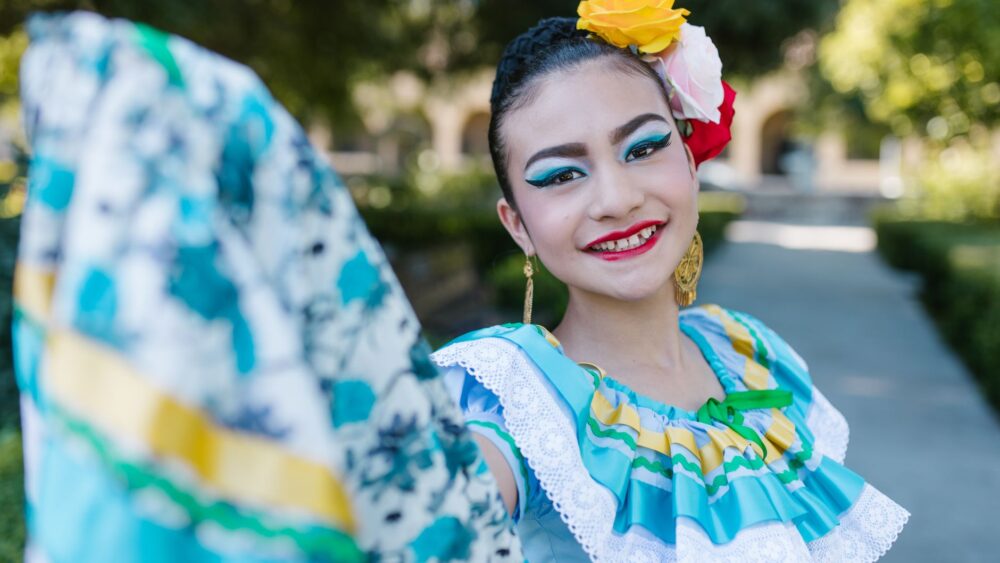
Hispanic girl names draw from one of the most musically rich naming traditions in the world, blending Latin roots, Catholic devotion, indigenous languages, and Arabic influences carried into Spain centuries ago. The result is a collection of names that feel both deeply rooted and effortlessly alive, names that carry history without feeling heavy.
This list covers a wide range of hispanic girl names, from the beloved classics you’ll hear at every family gathering to rarer gems that deserve far more attention. Each one is a real name with a real story behind it.
Classic Spanish Names Every Generation Has Loved
These are the names that have anchored Hispanic families for centuries, passed from grandmother to granddaughter with quiet pride.
Isabella
The Spanish and Italian form of Elizabeth, from the Hebrew Elisheba, meaning “my God is an oath” or “my God is abundance.” Isabella has been a queen’s name across Spain and Latin America for generations, and it remains one of the most widely used hispanic girl names globally.
Catalina
The Spanish form of Katherine, from the Greek Aikaterine, whose meaning is debated but often associated with “pure.” Catalina has a warm, sun-drenched sound that feels both aristocratic and accessible.
Carmen
From the Latin carmen, meaning “song” or “poem,” though it also became associated with Our Lady of Mount Carmel. Carmen is confidently Spanish in sound and has never gone out of style in the Hispanic world.
Dolores
From the Spanish title Nuestra Señora de los Dolores, “Our Lady of Sorrows,” rooted in the Latin dolor, meaning “pain” or “grief.” Despite its weighty meaning, Dolores is a name of real warmth and strength, associated with countless beloved abuelas.
Consuelo
From the Spanish word for “consolation,” tied to the Marian title Nuestra Señora del Consuelo. Consuelo has a stately, almost literary quality that makes it stand out among traditional Hispanic names.
Pilar
Honoring the Virgin of El Pilar, the patroness of Zaragoza, from the Spanish word pilar meaning “pillar” or “column.” It’s a name of quiet strength, widely used in Spain and among Spanish-heritage families throughout Latin America.
Rosario
From the Spanish word for “rosary,” itself from the Latin rosarium meaning “rose garden.” Rosario is a deeply Catholic name that carries the warmth of devotion and the beauty of the rose in a single word.
Mercedes
From the Spanish title Nuestra Señora de las Mercedes, “Our Lady of Mercies,” rooted in the Latin merces meaning “mercy” or “reward.” Mercedes has a sophisticated, slightly grand quality that makes it feel both spiritual and worldly.
Esperanza
From the Spanish word esperanza, meaning “hope,” itself from the Latin sperare. This is one of the most beloved virtue names in the Hispanic tradition, and its lyrical four syllables make it impossible to forget.
Soledad
From the Spanish word for “solitude,” tied to the Marian title Nuestra Señora de la Soledad. Soledad has a contemplative beauty that sets it apart, a name for someone who carries depth.
Beloved Marian and Religious Names
Catholic devotion has shaped Hispanic naming culture more than almost any other force. Many of the most iconic names in this tradition honor the Virgin Mary through her many titles.
Guadalupe
From the Arabic wadi al-lubb, meaning “river of black stones,” the name of the famous Mexican shrine of the Virgin. Guadalupe is one of the most significant names in all of Latin American culture, frequently shortened to Lupita.
Remedios
From the Spanish word for “remedies,” honoring Nuestra Señora de los Remedios. Remedios has a rare, slightly old-world feel that is starting to attract attention again as distinctive vintage names come back into fashion.
Amparo
From the Spanish amparo, meaning “protection” or “shelter,” honoring the Virgin under that title. Amparo is widely used in Spain and Venezuela especially, and its meaning is genuinely beautiful.
Concepción
Honoring the Immaculate Conception, from the Latin conceptio. Often shortened to the affectionate nickname Conchita or Concha. Concepción is one of those grand traditional names that feels ripe for a comeback.
Asunción
From the Spanish word for “assumption,” honoring the Assumption of the Virgin Mary, from the Latin assumptio. A deeply traditional name still in use across Spain and parts of Latin America.
Milagros
From the Spanish word milagros, meaning “miracles,” honoring Nuestra Señora de los Milagros. The name carries an almost irresistible sense of wonder and faith.
Inmaculada
From the Spanish for “immaculate,” honoring the Immaculate Conception, rooted in the Latin immaculatus meaning “spotless.” Inmaculada is a formal, solemn name that shortens beautifully to Inma.
Visitación
Honoring the Visitation of the Virgin Mary, from the Latin visitatio meaning “a visit.” Rare and deeply traditional, Visitación is a name with genuine historical roots in the Spanish Catholic naming canon.
Nature-Inspired Hispanic Girl Names
The natural world runs through Hispanic naming culture in beautiful ways, with flowers, light, stars, and the sea all lending their imagery to given names.
Rocío
From the Spanish rocío, meaning “dew” or “dewdrops,” also a Marian title. Rocío is especially beloved in Andalusia and throughout Latin America, soft and fresh-sounding with genuine depth behind it.
Estrella
From the Spanish estrella, meaning “star,” from the Latin stella. It’s a luminous name with a long history in the Hispanic world, simpler and more direct than the similar Estelita.
Aurora
From the Latin aurora, the Roman goddess of the dawn, meaning “dawn” or “daybreak.” Aurora has become a global phenomenon in recent years, but it has deep roots in Hispanic naming tradition long before its current wave of popularity.
Paloma
From the Spanish paloma, meaning “dove,” from the Latin palumba. Paloma is one of the most beautiful and distinctive hispanic girl names, serene and graceful with a lovely sound.
Violeta
The Spanish form of Violet, from the Latin viola meaning “violet flower.” Violeta has a romantic, slightly melancholy quality that has made it a literary and musical favorite across Latin America.
Nieves
From the Spanish nieves, meaning “snows,” honoring Nuestra Señora de las Nieves, Our Lady of the Snows. Nieves is crisp and cool-sounding, a name that feels both natural and spiritual.
Celeste
From the Latin caelestis, meaning “heavenly” or “of the sky.” Celeste is used widely across the Spanish-speaking world and carries a quiet, airy elegance that never feels overdone.
Marisol
A compound of the Spanish mar (sea) and sol (sun), meaning “sea and sun.” Marisol is a genuinely Spanish creation, bright and warm, and one of the most joyful-sounding names on this list.
Azucena
From the Arabic as-susana, meaning “white lily” or “lily flower.” Azucena is used as a given name across Spain and Latin America, and its Arabic heritage is a reminder of how deeply Moorish influence shaped the Spanish language and its naming culture.
Perla
From the Spanish perla, meaning “pearl,” from the Latin perla. A sweet, luminous name that has been used as a given name in Hispanic communities for generations.
Names with Arabic and Moorish Roots
Centuries of Moorish presence in Spain left a lasting mark on Spanish vocabulary, place names, and given names. Several beloved Hispanic names trace directly back to Arabic origins.
Zahara
From the Arabic zahara, meaning “to shine” or “flower.” Zahara is used as a given name in both Arabic-speaking countries and across the Spanish-speaking world, where it carries a luminous, slightly exotic beauty.
Araceli
From the Latin ara caeli, meaning “altar of the sky” or “heavenly altar,” the name of a church in Rome that became associated with the Virgin Mary in Spain. Araceli is one of those names that sounds almost invented but has centuries of real use behind it.
Almudena
From the Arabic al-mudayna, meaning “the small city” or “the citadel,” the name of the patroness of Madrid. Almudena is distinctly Spanish, carrying the history of both Islamic and Christian Spain in one name.
Fátima
From the Arabic fatima, meaning “one who abstains” or “one who weans,” the name of the Prophet Muhammad’s daughter, which entered Hispanic culture through the famous Marian apparition at Fatima, Portugal. Fátima is widely used across both Muslim and Catholic communities in the Spanish-speaking world.
Names from Indigenous and Pre-Columbian Traditions
Latin America’s naming culture isn’t only European. Indigenous languages, particularly Nahuatl, Quechua, and Maya, have contributed names that are now firmly part of the Hispanic naming tradition.
Citlali
From the Nahuatl citlalli, meaning “star.” Citlali (also spelled Citlaly) is one of the most popular indigenous-origin names in Mexico today, a genuine Nahuatl name that has found wide mainstream use.
Xóchitl
From the Nahuatl xochitl, meaning “flower.” Xóchitl is a name with deep roots in Aztec culture and is widely used in Mexico, where it carries both cultural pride and undeniable beauty.
Itzel
Believed to derive from a Maya root, associated with the Maya moon goddess Ixchel, meaning something close to “rainbow lady” or “goddess of the moon and weaving.” Itzel is popular in Mexico and Central America and has a lovely, rhythmic sound.
Quilla
From the Quechua word for “moon,” used in the Andean tradition to refer to the moon goddess. Quilla is used as a given name in Peru, Bolivia, and Ecuador, short and striking with a mythological resonance.
Ixchel
The name of the Maya goddess of the moon, medicine, and weaving, whose name is thought to mean “rainbow” or “she of the rainbow.” Ixchel is used as a given name in Mexico and Central America and carries significant cultural and spiritual weight.
Coatlicue
From the Nahuatl, meaning “she of the serpent skirt,” the name of the Aztec earth goddess. While rare as a given name, Coatlicue is used in some Mexican families as a name of deep indigenous pride.
Anacaona
From the Taino language, meaning “golden flower.” Anacaona was the name of a revered Taino queen of Hispaniola, and her name is used as a given name in the Dominican Republic and Haiti as a tribute to indigenous heritage.
Popular Contemporary Hispanic Girl Names
These are the names that are thriving right now across Latin America and in Hispanic communities in the United States, names that feel current without chasing trends.
Valentina
From the Latin Valentinus, meaning “strong” or “healthy,” from valens. Valentina is one of the most popular hispanic girl names of the current generation, adored for its romantic sound and its association with strength.
Sofia
From the Greek sophia, meaning “wisdom.” Sofia (the Spanish spelling) has been a dominant name across Latin America for two decades and shows no signs of slowing down.
Camila
Possibly from the Latin camillus, referring to a young ceremonial attendant, though its exact origin is debated. Camila is consistently among the most popular names in Mexico, Colombia, Chile, and the United States Hispanic community.
Valeria
From the Latin Valerius, meaning “to be strong” or “to be healthy,” from valere. Valeria is a top-chart name across multiple Latin American countries and carries a confident, feminine energy.
Luciana
From the Latin Lucianus, related to lux meaning “light.” Luciana is a beautifully flowing name that has surged in popularity across Argentina, Brazil, and the broader Hispanic world.
Renata
From the Latin renatus, meaning “reborn” or “born again.” Renata has a sleek, sophisticated quality that makes it feel both modern and deeply rooted, and it’s widely used across Mexico and South America.
Daniela
The feminine form of Daniel, from the Hebrew meaning “God is my judge.” Daniela is a perennial favorite across Latin America, warm and familiar without feeling overused.
Mariana
A combination of Maria and Ana, or alternatively from the Latin Marianus. Mariana has been a staple in Hispanic naming for centuries and continues to feel fresh and lovely in every generation.
Gabriela
The feminine form of Gabriel, from the Hebrew meaning “God is my strength.” Gabriela is one of those names that simply sounds like it belongs in the Spanish-speaking world, strong and musical in equal measure.
Alejandra
The Spanish feminine form of Alexander, from the Greek Alexandros meaning “defender of men.” Alejandra has a commanding elegance that makes it one of the great classic hispanic girl names.
Rarer and Underused Hispanic Girl Names Worth Discovering
These names are genuinely used in the Spanish-speaking world but don’t get nearly the attention they deserve outside of it. Any one of them would be a distinctive, meaningful choice.
Inés
The Spanish form of Agnes, from the Greek hagnos meaning “pure” or “holy.” Inés is quietly sophisticated, widely loved in Spain and Argentina, and criminally underused in English-speaking contexts.
Lourdes
From the French Pyrenean town of Lourdes, site of the famous Marian apparition, whose place name has a pre-Roman Basque origin. Lourdes has been used as a given name in Spanish-speaking communities since the 19th century.
Solange
From the Latin solemnis, meaning “solemn” or “religious,” a name with French origins that has been adopted warmly into the Hispanic naming tradition, particularly in Brazil and among French-influenced Caribbean communities.
Xiomara
The Spanish adaptation of the Germanic Guiomar, from the elements wig meaning “battle” and mari meaning “famous.” Xiomara is bold, striking, and distinctly Hispanic in feel, and it has been gaining significant attention in recent years.
Yolanda
From the Medieval Latin Yolanda, likely a Latinization of the Old French Yolande, itself from the Germanic Violante. Yolanda has been a trusted name in Hispanic communities for generations, warm and classic without being overexposed.
Natividad
From the Spanish word for “nativity,” honoring the birth of Christ or the Virgin Mary, from the Latin nativitas. Natividad is a deeply traditional name that shortens to the sweet nickname Nati.
Encarnación
From the Spanish encarnación, meaning “incarnation,” honoring the Incarnation of Christ, from the Latin incarnatio. Encarnación is a grand, old-world name still in genuine use in Spain, often shortened to Encar or Encarna.
Montserrat
From the Catalan mountain name meaning “serrated mountain,” the site of the famous Black Madonna shrine in Catalonia. Montserrat is used as a given name across Spain and Latin America, bold and distinctive with a powerful cultural resonance.
Serafina
From the Hebrew seraphim, meaning “fiery ones,” the name for the highest order of angels. Serafina is rare as a given name but genuinely used in Hispanic communities, and its angelic meaning and musical sound make it a deeply appealing choice.
How to Choose a Hispanic Girl Name That Feels Right
Sound matters enormously in Spanish-origin names. Many of the most beautiful hispanic girl names are three or four syllables long, and they work rhythmically in a way that shorter names sometimes don’t capture. Say the full name out loud with the surname before you commit. A name like Valentina García flows differently than Valentina O’Brien, and both can work beautifully if you’ve tested the rhythm.
Think about the nickname culture. Spanish naming tradition is rich with diminutives and affectionate shortenings: Guadalupe becomes Lupita, Concepción becomes Conchita, Dolores becomes Lola. If the full name feels too formal for daily use, make sure you love the nickname as much as the formal version, because that’s often what sticks.
Consider what the name carries. Names like Esperanza, Milagros, and Amparo carry meanings that are genuinely significant, and in many Hispanic families, naming a child after a virtue or a Marian title is a deliberate act of faith and hope. If that lineage matters to you, lean into it. If you’re drawn to an indigenous-origin name like Citlali or Xóchitl, it’s worth understanding its cultural roots so you can pass that story on.
Finally, don’t be afraid of the less common choices. Names like Xiomara, Pilar, and Montserrat are rare enough to feel distinctive but rooted enough to feel real. The names that get passed over are often the ones with the most character.
Hispanic girl names are among the most expressive in the world, carrying centuries of faith, culture, and beauty in their syllables. Whatever you choose from this list, you’re choosing a name with genuine depth behind it.