

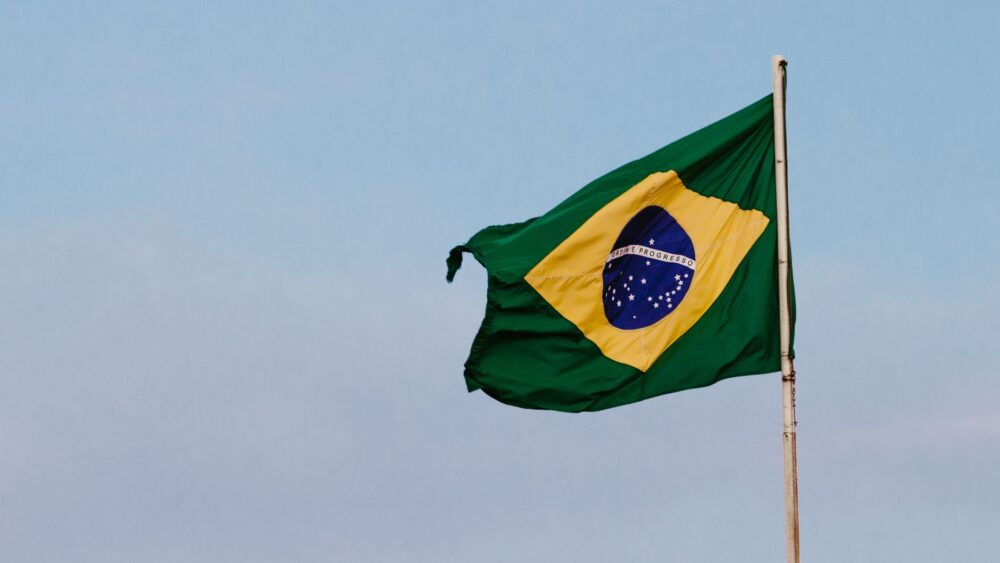
Brazilian last names are one of the most fascinating naming systems in the world, built from centuries of collision and fusion between Portuguese colonizers, West and Central African peoples brought through the slave trade, and dozens of Indigenous nations whose languages still echo in everyday surnames. The result is a surname landscape unlike anywhere else: you can find a family named Silva living next door to a family named Tupinambá, and both names carry deep roots in Brazilian soil.
This list covers genuine Brazilian last names across their three major origin streams, plus the Catholic and nature-based surnames that Portuguese naming culture layered on top. Each entry explains where the name actually comes from and what it means, because knowing the story behind a surname makes it far more than just a label.
Portuguese-Origin Surnames: The Colonial Foundation
Portuguese surnames form the statistical backbone of Brazilian last names. Many arrived directly from Portugal during colonization and spread across the country through the Catholic Church’s baptismal records, land grants, and administrative naming of enslaved people. These names tend to be occupational, locational, or descriptive in origin.
Silva
From the Latin silva, meaning forest or woodland. Silva is the single most common surname in Brazil and one of the most common in the entire Portuguese-speaking world. It was frequently assigned to enslaved people and free mixed-race Brazilians during the colonial period, which partly explains its extraordinary reach across all social classes.
Santos
Meaning “saints” in Portuguese, derived from the Latin sanctus. Santos was often given to people baptized near the Feast of All Saints, and it became one of the most widespread surnames throughout Brazil. It carries an unmistakably Catholic character.
Oliveira
From the Portuguese word for olive tree, oliveira, itself from Latin olivarius. This is a locational surname, originally referring to someone who lived near an olive grove. It consistently ranks among the top three surnames in Brazil.
Souza
A locational surname from the town of Sousa in northern Portugal, derived from the Latin saxa, meaning rocks or stones. Souza (also spelled Sousa) is one of the most recognizable Brazilian last names internationally, carried by figures across Brazilian music, sport, and politics.
Rodrigues
A patronymic meaning “son of Rodrigo,” where Rodrigo itself comes from the Germanic elements hrod (fame) and ric (power or ruler). Rodrigues entered Brazil with the earliest Portuguese settlers and has never left the top tier of common surnames.
Ferreira
An occupational and locational surname meaning “iron mine” or “ironworks,” from the Latin ferraria. Blacksmiths and people living near iron-working areas carried this name, and it traveled to Brazil in large numbers during the colonial era.
Alves
A patronymic derived from the medieval given name Álvaro, which comes from the Germanic Alfher, combining elements meaning “elf” and “army.” Alves is consistently a top-ten surname in Brazil.
Pereira
From the Portuguese word for pear tree, pereira, a locational surname for someone living near such a tree. Like Oliveira and Carvalho, it belongs to the beloved Portuguese tradition of tree-based surnames.
Lima
A locational surname from the Lima River in northern Portugal, whose name likely comes from a pre-Roman root meaning calm or slime. Lima is widespread across Brazil and found at every level of society.
Carvalho
From the Portuguese word for oak tree, carvalho, from the Latin carvallus. Like Pereira and Oliveira, this is a tree-based surname that arrived with Portuguese settlers and became deeply embedded in Brazilian naming culture.
Costa
Meaning “coast” or “hillside” in Portuguese, from the Latin costa, rib or side. Costa was a geographical surname for people living along a coast or slope, and it is one of the most common surnames across all Portuguese-speaking countries.
Gomes
A patronymic from the medieval given name Gomes (Gomesano), itself from the Germanic Guma, meaning man. Gomes is a distinctly Iberian surname that settled firmly into the Brazilian top twenty.
Martins
A patronymic from the given name Martim or Martinho, the Portuguese form of Martin, which comes from the Latin Martinus, meaning “of Mars.” The medieval cult of Saint Martin of Tours made this name enormously popular, and the surname followed.
Araújo
A locational surname from a place name in Galicia (northwestern Iberia), likely from a pre-Roman root related to water or a river valley. Araújo is one of the most distinctively Brazilian-sounding surnames, even though its roots are Galician-Portuguese.
Melo
From a place name in Portugal, possibly derived from the Latin mellum or from a pre-Roman root. Melo is a clean, short surname that has remained common in Brazil for centuries.
Barbosa
From the Portuguese word barba (beard) combined with the suffix -osa, originally referring to a thorny or overgrown place, or sometimes to a bearded man. Barbosa is a well-established Brazilian surname with deep colonial roots.
Cardoso
A locational surname from places named Cardoso in Portugal, derived from cardo, the Latin word for thistle. It arrived early in Brazil and has remained a recognizable surname across all regions.
Teixeira
From the Portuguese word for yew tree, teixo, making this another tree-based locational surname. Teixeira is common throughout Brazil and shares the same arboreal naming logic as Oliveira and Carvalho.
Monteiro
An occupational surname from the Portuguese monteiro, a royal huntsman or gamekeeper, from monte (mountain, hill, or forest). Monteiro carried a degree of prestige in medieval Portugal before spreading widely in Brazil.
Nunes
A patronymic from the medieval given name Nuno, of disputed origin but possibly from the Gothic Nunno or a Latin ecclesiastical root. Nunes is one of the most recognizably Portuguese-Brazilian surnames.
Pinto
From the Portuguese adjective pinto, meaning spotted or painted, originally a nickname for someone with a distinctive appearance. Pinto is common throughout Brazil and also found in significant numbers in the Portuguese diaspora worldwide.
Moreira
From the Portuguese word for mulberry tree or moorland, moreira, a locational surname for someone living near such terrain. Moreira is another of Brazil’s enduring tree-and-landscape surnames.
Correia
From the Portuguese word correia, meaning leather strap or belt, originally an occupational surname for a leather worker or belt maker. Correia arrived in Brazil early and has remained in consistent use.
Dias
A patronymic from the given name Diogo (the Portuguese form of Diego and James), itself from the Hebrew Ya’aqov. The surname Dias is famous partly because of explorer Bartolomeu Dias, who rounded the Cape of Good Hope in 1488.
Freitas
From the Portuguese plural of freita, meaning cleared or broken land, from the Latin fracta. Freitas is a locational surname referring to someone living on newly cleared farmland, and it is widely distributed across Brazil.
Azevedo
From the Portuguese word for holly tree, azevinho, with the place-name form Azevedo referring to a grove of hollies. It is another tree-based surname in the great tradition of Portuguese arboreal naming, and a recognizable name in Brazilian literature and public life.
Cunha
From the Portuguese word cunha, meaning wedge, originally either occupational (a maker of wedges) or locational (a wedge-shaped piece of land). Cunha is a short, strong surname that has remained common in Brazil for centuries.
Cavalcante
From the Italian cavalcante, meaning horseman or rider, from cavalcare, to ride. This surname entered Portugal through medieval Italian contact and established itself firmly in northeastern Brazil in particular.
Figueiredo
From the Portuguese word for fig tree, figueira, making this another locational tree-based surname. Figueiredo has a formal, slightly aristocratic feel in Brazil and is associated with several prominent historical figures.
Rezende
A locational surname from a place name in Portugal, possibly derived from a pre-Roman root. Rezende is particularly associated with Minas Gerais and central Brazil, where it spread during the colonial gold rush period.
African-Origin Surnames: The Yoruba, Bantu, and Beyond
Millions of Africans were brought to Brazil from West and Central Africa between the sixteenth and nineteenth centuries, primarily from regions corresponding to modern Nigeria, Benin, Angola, Congo, and Mozambique. After abolition in 1888, many Afro-Brazilian families chose or were assigned surnames that reflected their African heritage, their place of origin, or the Candomble religious tradition. These surnames are a living record of that history.
Ogundimu
A Yoruba surname combining Ogun (the orisha of iron, war, and labor) with dimu (to hold or possess). Ogundimu means something close to “Ogun is with me” and is carried by Afro-Brazilian families with Yoruba roots, particularly in Bahia.
Alakija
A Yoruba surname meaning “one who wears the crown” or “one who is close to royalty,” from ala (cloth or crown) and kija (to wear or be near). Alakija is found among Afro-Brazilian families of Lagos-Yoruba descent.
Bamgbose
A Yoruba surname meaning “do not demean the orisha” or “do not speak ill of Ogun,” from bam (do not) and gbose (insult or demean). This surname is present in Bahia’s Afro-Brazilian community with deep Yoruba-Nigerian roots.
Sowzer
A Brazilianized surname carried by Afro-Brazilian families in Bahia, derived from a Yoruba name that underwent phonological adaptation during the colonial period. It reflects the complex process by which African names were transcribed into Portuguese colonial records.
Cardim
While this surname has multiple possible origins, one documented branch traces to Afro-Brazilian families in Bahia and Pernambuco who adopted it during or after the slavery period. It exemplifies how post-abolition naming in Brazil blended African identity with Portuguese phonology.
Cambinda
Derived from Cabinda, a region of Central Africa (modern Angola), this locational surname was carried by enslaved people brought from that area and later passed to their descendants as a surname marking geographic origin. Cambinda and its variants appear in records from Rio de Janeiro and Bahia.
Angola
Used as a surname by Afro-Brazilian families whose ancestors came from the Angolan region, particularly among practitioners of Capoeira Angola and Candomble de Angola. The name itself comes from the Mbundu title Ngola, meaning king or ruler.
Ketu
From the Yoruba city of Ketu (in modern Benin), a major center of Yoruba culture whose people were brought to Bahia in significant numbers. Ketu is used as a surname by Afro-Brazilian families and is also the name of the dominant liturgical tradition in Bahian Candomble.
Jeje
From the Yoruba-derived term for the Fon and Ewe peoples of Dahomey (modern Benin), “Jeje” became both an ethnic identifier and a surname in Bahia. It is attached to one of the three main Candomble traditions and is carried as a surname by some Afro-Brazilian families.
Moçambique
A locational surname used by Afro-Brazilian families whose ancestors came from Mozambique in southeastern Africa. Like Angola and Ketu, it functions as an origin surname that preserves geographic memory across generations.
Badaro
A surname of Yoruba or Hausa origin found in Bahia, carried by Afro-Brazilian families with West African roots. The Badaro neighborhood in Salvador, Bahia, takes its name from a family that bore this surname.
Ifá
From the Yoruba religious and divination system Ifa, associated with the orisha Orunmila. As a surname it is carried by Afro-Brazilian families in Bahia with a strong connection to traditional Yoruba religious practice.
Xangô
From the Yoruba orisha Shango, the deity of thunder, lightning, and justice, whose name in Brazilian Portuguese is rendered Xango. Xango is used as a surname by some Afro-Brazilian families in Bahia and Pernambuco, and it also names the Candomble tradition dominant in Pernambuco.
Omolu
From the Yoruba orisha Omolu (also known as Obaluaiye), the deity of earth, disease, and healing. As a surname it is carried by some Afro-Brazilian families in Bahia with deep Candomble roots.
Indigenous-Origin Surnames: Tupi, Guarani, and Other Nations
Brazil’s Indigenous nations numbered in the hundreds before European contact, speaking languages from the Tupi-Guarani family and many others. Tupi and Nheengatu (a Tupi-based trade language) had the widest influence on Brazilian Portuguese, and many Indigenous surnames in use today come from these languages. These names often describe landscapes, animals, or spiritual concepts.
Tupinambá
From the name of the Tupinambá people, one of the major Tupi-speaking nations of coastal Brazil encountered by the Portuguese. The name is thought to combine Tupi elements meaning “ancestors” or “the ancient ones,” and it is carried today as a surname by Indigenous and mixed-heritage Brazilians as a marker of cultural identity.
Guarani
The name of one of the largest Indigenous linguistic and cultural groups in South America, spanning Brazil, Paraguay, Argentina, and Bolivia. The etymology is debated, with some sources suggesting it means “warriors” in the Guarani language. It is used as a surname by Indigenous families and by those reclaiming Guarani heritage.
Potiguara
From the Tupi potig (shrimp) and uara (eater or people of), meaning “shrimp eaters,” the name of a Tupi people from the northeast coast of Brazil. Potiguara is used as a surname by members and descendants of this nation, particularly in Paraiba state.
Xavante
The name of the Xavante (A’uwe) people of the Mato Grosso plateau, whose own name for themselves, A’uwe, means “people” in their language. Xavante as a surname is used by members of this nation and by Brazilians of Xavante descent.
Kayapo
The name given by outsiders to the Mebengokre people of the Xingu and Araguaia regions, possibly from a Tupi term meaning “those who resemble monkeys” (a name the people themselves reject). As a surname, Kayapo appears in records of Indigenous and mixed-heritage Brazilians from Para and Mato Grosso.
Juruna
From the name of the Juruna (Yudjá) people of the Xingu River, meaning “black mouth” in their language, referring to the body paint they traditionally used. Juruna became widely known as a Brazilian surname through Mario Juruna, the first Indigenous person elected to Brazil’s federal congress, in 1982.
Pataxo
The name of the Pataxo people of southern Bahia and northern Minas Gerais, whose territory was the site of Pedro Alvares Cabral’s first landing in 1500. Pataxo is used as a surname by members of this nation today.
Munduruku
The name of the Munduruku people of the Tapajos River basin in Para and Amazonas, meaning “red ants” in a neighboring language. Munduruku is carried as a surname by Indigenous activists and community members, and became internationally known through Indigenous rights leader Sonia Munduruku.
Yanomami
The name of the Yanomami people of the Amazonian highlands on the Brazil-Venezuela border, meaning “human beings” or “people” in the Yanomami language. It is used as a surname by members of this nation in legal and administrative contexts.
Krenak
The name of the Krenak people of the Doce River valley in Minas Gerais, used as a surname by members of this nation. It became prominent through Ailton Krenak, the renowned Indigenous philosopher and environmental activist, who carries it as his surname.
Tukano
From the Tukano people of the upper Rio Negro in Amazonas, one of the major linguistic groups of the Northwest Amazon. Tukano is used as a surname by members of this nation and related peoples in the Vaupés region.
Sateré
From the Satere-Mawe people of the lower Amazon, whose name means “caterpillar people” or “warrior ants” in their language. Satere is used as a surname by members of this nation in Amazonas and Para states.
Apurinã
The name of the Apurina people of the Purus River in Amazonas, an Arawakan-speaking nation. Apurina is used as a surname by members of this group in legal and community contexts.
Terena
From the Terena people of Mato Grosso do Sul, an Arawakan nation whose name is used by community members as a surname. The Terena are one of the most numerous Indigenous peoples in central-western Brazil.
Fulni-o
The name of the Fulni-o people of Pernambuco, the only Indigenous group in northeastern Brazil to have maintained their original language, Yatê, in daily use. Fulni-o is used as a surname by members of this nation.
Religious and Nature-Based Surnames: Catholic Brazil’s Naming Tradition
The Catholic Church shaped Brazilian naming on a massive scale. Surnames derived from saints’ days, religious feasts, and sacred concepts were assigned at baptism, especially to enslaved people and orphans who had no family surname. Alongside these, nature-based surnames reflecting the Brazilian landscape became common across all communities.
Conceição
From the Portuguese word for “conception,” specifically referring to the Immaculate Conception of the Virgin Mary. Conceição was one of the most commonly assigned surnames to enslaved people baptized on or near the Feast of the Immaculate Conception (December 8) and remains deeply embedded in Afro-Brazilian families.
Nascimento
Meaning “birth” or “nativity” in Portuguese, from the Latin nascimentum. Nascimento was assigned to children born near Christmas or the Feast of the Nativity and is one of the most recognizable Brazilian surnames globally, partly because of Pelé, born Edson Arantes do Nascimento.
Assunção
From the Portuguese word for “assumption,” referring to the Assumption of the Virgin Mary (August 15). Like Conceição and Nascimento, this was a feast-day surname assigned frequently during the colonial period.
Batista
From the title of Saint John the Baptist, from the Greek baptistes, meaning one who baptizes. Batista is found across all regions of Brazil and carries unmistakably Catholic roots.
Evangelista
From the Portuguese word for evangelist, referring to the four Gospel writers. Evangelista was assigned at baptism and is found throughout Brazil, particularly in communities with strong Franciscan missionary histories.
Espírito Santo
Meaning “Holy Spirit” in Portuguese, this surname was given to people baptized on Pentecost Sunday and to foundlings left at churches on that feast day. It is also the name of a Brazilian state, which reinforces its visibility as a surname.
Cruz
From the Portuguese word for cross, cruz, from the Latin crux. Cruz was a common surname assigned at baptism and is found across all of Latin America as one of the most enduring Catholic surnames.
Anjos
Meaning “angels” in Portuguese, from the Latin angelus. Anjos was assigned at baptism near the Feast of the Guardian Angels and remains a distinctly Brazilian surname with a strong Catholic character.
Sacramento
From the Portuguese word for “sacrament,” referring to the Blessed Sacrament. Sacramento was assigned as a surname through the Irmandade do Santissimo Sacramento (Brotherhood of the Holy Sacrament), which had a significant role in the religious life of enslaved Africans in Brazil.
Trindade
Meaning “Trinity” in Portuguese, from the Latin trinitas. Trindade was assigned to people baptized on Trinity Sunday and is found throughout Brazil.
Rosário
From the Portuguese word for rosary, rosario, referring to Our Lady of the Rosary. The Irmandade de Nossa Senhora do Rosario was one of the most important Black Catholic brotherhoods in colonial Brazil, and Rosario became a common surname for their members and descendants.
Serrano
From the Portuguese and Spanish word serrano, meaning “of the mountains” or “highland dweller,” from serra (mountain range). Serrano is a geographical surname common in Brazil, particularly in areas with prominent highland terrain.
Ribeiro
From the Portuguese word ribeiro, meaning stream or small river, from the Latin riparius. Ribeiro is a locational surname for someone living beside a stream and is one of the most common surnames in all of Brazil.
Campos
From the Portuguese word for fields, campos, from the Latin campus. Campos is a geographical surname referring to open grassland or farmland and is common throughout Brazil.
Serra
From the Portuguese word for mountain range or sierra, from the Latin serra (saw, referring to the jagged profile of a mountain ridge). Serra is a clean, strong geographical surname found across all Brazilian states.
Pires
A patronymic from the medieval given name Pero (an older Portuguese form of Pedro/Peter), making Pires equivalent to “son of Pero.” It is one of the oldest Portuguese surnames and has been in continuous use in Brazil since the earliest colonial period.
Macedo
A locational surname from a place name in Portugal, derived from the Latin macedum or from macedo, referring to a place with apple trees. Macedo is a well-established Brazilian surname with strong colonial roots.
Vieira
From the Portuguese word for scallop shell, vieira, originally a surname for someone living near a scallop-rich coast or a pilgrim who had traveled the Camino de Santiago (pilgrims carried scallop shells). Vieira is famous in Brazil partly because of the Jesuit priest and writer Antonio Vieira (1608-1697), one of the most important figures in Brazilian literary history.
Compound and Hyphenated Brazilian Surnames
Brazilian naming law has historically allowed children to carry surnames from both parents, leading to a rich tradition of compound surnames. These are real, functioning Brazilian last names formed by combining two family names, and they are increasingly common as Brazil’s naming culture evolves.
Silva Santos
One of the most common compound surnames in Brazil, combining the country’s two most frequent individual surnames. Silva Santos appears across all regions and social classes and is a straightforward example of how Brazilian compound naming works.
Almeida Prado
A compound surname combining Almeida (from a place name in Portugal, possibly from the Arabic al-maida, the table) and Prado (from the Portuguese word for meadow, from Latin pratum). Almeida Prado has a distinctly upper-class Paulista sound in Brazil.
Fonseca Dias
A compound combining Fonseca (from the Portuguese fonte seca, meaning dry spring or fountain) and Dias (the patronymic from Diogo, discussed above). Fonseca Dias is a well-established compound found particularly in Rio de Janeiro and Minas Gerais.
Soares Machado
Combining Soares (a patronymic from Soeiro, from the Germanic Suarius) and Machado (from the Portuguese word for axe, machado, an occupational surname for an axe-maker or woodcutter). Soares Machado is a recognizable compound surname in Brazil.
Carvalho Lima
A compound joining two of the most common tree-and-river surnames in the Portuguese tradition. Carvalho Lima has a melodic, well-balanced quality and is found widely across central and southeastern Brazil.
How to Think About Brazilian Last Names
If you are researching your own Brazilian ancestry, the surname you carry is a clue to which wave of history your family passed through. A name like Conceição or Nascimento often signals that an ancestor was enslaved and baptized into the Catholic Church. A name like Tupinambá or Krenak points directly to Indigenous heritage. A name like Ferreira or Teixeira traces the Portuguese colonial migration.
Many Afro-Brazilian families carry Portuguese surnames not by choice but because surnames were assigned by enslavers and colonial administrators. After abolition in 1888, some families adopted new surnames that reflected their African or Afro-Brazilian identity, which is why Candomble-connected surnames and African place-name surnames are particularly significant: they represent an act of naming on one’s own terms.
If you are choosing a Brazilian surname for a character or exploring family genealogy, pay attention to the regional dimension. Northeastern Brazil (Bahia, Pernambuco, Maranhão) has the deepest concentration of Yoruba and Fon-derived surnames. The Amazon basin carries the greatest density of Indigenous surnames. São Paulo and Rio de Janeiro reflect the full mix, with older aristocratic Portuguese compound surnames sitting alongside newer immigrant surnames from Italy, Germany, Japan, and Syria-Lebanon that arrived in the nineteenth and twentieth centuries.
The beauty of Brazilian last names is precisely this layering. A single family tree can hold a Portuguese tree-surname, an African religious surname, and an Indigenous nation name across three generations. That is not a contradiction; it is the story of Brazil itself.