

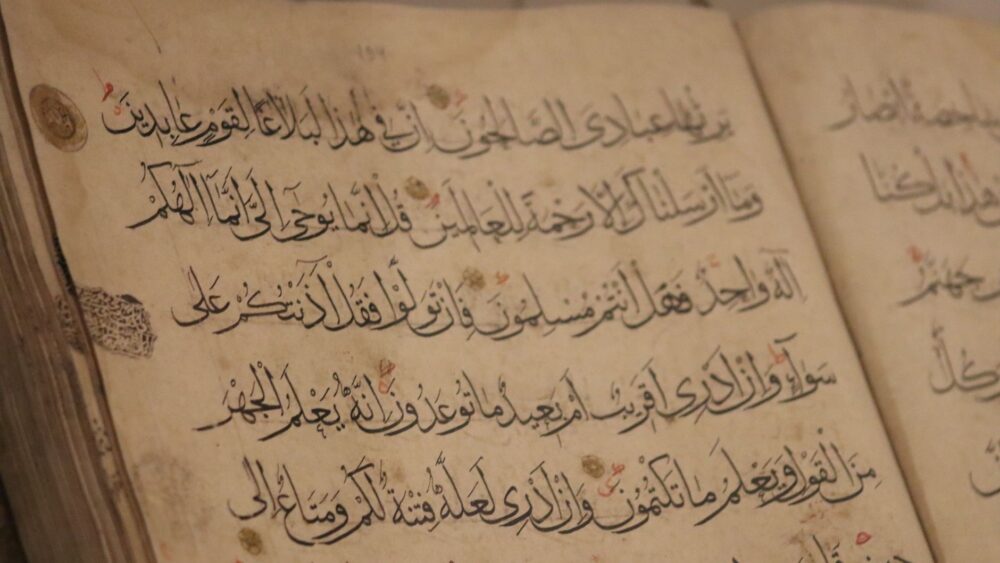
Aramaic names carry something most names simply don’t: a direct thread to one of the oldest continuously spoken languages in human history. Aramaic was the everyday tongue of the ancient Near East for over a thousand years, the language Jesus spoke, the language of large portions of the Hebrew Bible and the Babylonian Talmud, and the mother tongue of countless communities across Syria, Mesopotamia, and Persia. When you choose an Aramaic name, you’re reaching back to a living linguistic tradition that still has native speakers today.
The Aramaic names on this list are drawn from that heritage: names with roots in the Aramaic language itself, names that entered Jewish, Christian, and Syriac tradition through Aramaic texts, and names still used today by Assyrian, Syriac, and Aramaic-speaking communities around the world. They range from the deeply familiar to the beautifully obscure, and every one of them has a story worth knowing.
Biblical Aramaic Names with Deep Religious Roots
Some of the most recognizable names in Western religious tradition come directly from Aramaic or were transmitted through it. These names appear in Scripture, carry centuries of devotional weight, and remain in use across Christian, Jewish, and Muslim communities.
Thomas
From the Aramaic Tomameaning “twin.” Thomas is one of the Twelve Apostles in the New Testament, and his name is purely Aramaic in origin, not Greek or Hebrew. It has been a top-100 staple across English-speaking countries for centuries and shows no sign of fading.
Martha
Directly from Aramaic Martameaning “lady” or “mistress of the house.” Martha of Bethany is one of the most vivid characters in the Gospels, and her name is a rare example of an Aramaic word used as a proper name with no Hebrew equivalent standing behind it. It feels homespun and strong at the same time.
Tabitha
From Aramaic Tabithameaning “gazelle.” The name appears in the Acts of the Apostles, where it is explicitly paired with its Greek translation, Dorcas. Tabitha has been quietly climbing back into favor after decades of feeling dated, and its meaning and origin make it one of the most authentically rooted Aramaic names a parent could choose.
Cephas
The Aramaic name Jesus gave to Simon Peter, from Kephameaning “rock” or “stone.” Paul uses Cephas throughout his letters rather than the Greek form Peter, which gives the name a particularly ancient, unmediated feel. It is rare as a given name today, which makes it all the more striking.
Bartholomew
A compound Aramaic name: Bar (son of) and Talmai (furrows, or possibly a personal name meaning “abounding in furrows”). Bartholomew is one of the Twelve Apostles and the name is one of the longer, more formal biblical names still in occasional use, with nicknames Bart and Tolly giving it room to breathe.
Thaddaeus
Likely from Aramaic Thaddaiwith a possible meaning of “heart” or “breast,” though the exact etymology is debated among scholars. Thaddaeus is another apostolic name, closely associated with Judas Thaddaeus, and it carries a dignified rarity that puts it in the same category as Cornelius or Bartholomew: impressive, underused, ready for revival.
Talitha
From Aramaic Talithameaning “little girl” or “young woman.” The word appears verbatim in the Gospel of Mark when Jesus raises a child from the dead: Talitha cumimeaning “little girl, arise.” As a given name it is rare but genuine, used in Syriac Christian communities and occasionally in the West for its haunting scriptural resonance.
Aramaic Names Common in Assyrian and Syriac Communities
The Assyrian and Syriac Christian communities are the most direct inheritors of living Aramaic tradition. Their naming practices preserve Aramaic vocabulary and roots that never passed through Greek or Latin, making these names among the most linguistically pure Aramaic names still in use.
Sargon
An ancient Assyrian royal name meaning “the king is legitimate” or “true king,” used by Assyrian emperors and still alive in the Assyrian diaspora today. Sargon has real historical gravitas and a strong, confident sound that works well in English-speaking contexts.
Ashur
The name of the chief Assyrian deity and the ancient capital city, used as a given name in Assyrian communities for generations. Ashur carries a deep national and cultural identity for Assyrian Christians and has a clean, two-syllable sound that travels well.
Nimrod
A name of debated but ancient Semitic origin, used in Aramaic-speaking communities and appearing in Genesis as a mighty hunter. It is still a common given name in Israel and among some Assyrian families, even though its English-language associations have become complicated. In its original context, it is a name of power and renown.
Rabi
From Aramaic meaning “my great one” or “my teacher.” Rabi is a genuine given name used in Assyrian and Syriac communities, carrying the same root as the Hebrew title Rabbi. It has a warm, personal quality that makes it feel both significant and approachable.
Ninos
The Assyrian and Syriac form of Nineveh’s legendary founder, used as a given name for boys in Assyrian communities. Ninos connects directly to the ancient Assyrian capital and carries a strong sense of cultural heritage and pride.
Shmuel
The Aramaic and Hebrew form of Samuel, meaning “God has heard.” Shmuel is the form used in Aramaic-influenced Jewish tradition and remains common in Orthodox Jewish communities and among Aramaic-speaking Jews from Syria and Iraq. It has a grounded, traditional feel.
Miriam
While the root is disputed, Miriam is the Aramaic and Hebrew form of the name we know in English as Mary, and it was transmitted through Aramaic texts and tradition. It is the oldest form of one of the most-used names in Western history, and wearing it feels like going back to the source.
Binyamin
The Aramaic and Hebrew form of Benjamin, meaning “son of the right hand” or “son of the south.” Binyamin is the form used in Jewish communities with Aramaic liturgical traditions, and it has a weightiness that the English Benjamin, lovely as it is, slightly softens.
Marta
The original Aramaic form of Martha, meaning “lady” or “mistress.” Marta is used as a given name in Syriac Christian communities, in Spain and Latin America, and across Eastern Europe, making it one of the more internationally versatile Aramaic names on this list.
Yonatan
The Aramaic and Hebrew form of Jonathan, meaning “God has given.” Yonatan is used in Israeli and Jewish diaspora communities and has a clean, modern feel without sacrificing any of its ancient depth.
Aramaic Names Meaning Strength and Nobility
Aramaic has a rich vocabulary for power, leadership, and high standing. These names carry meanings that speak to strength of character, royal lineage, or divine favor, and they have been given to sons and daughters across millennia for exactly that reason.
Malka
From Aramaic and Hebrew malkameaning “queen.” Malka is a genuine given name used in Jewish and some Syriac communities, direct and regal without being overwrought. It is criminally underused outside its home communities.
Melech
From Aramaic and Hebrew melechmeaning “king.” Melech appears in the Hebrew Bible as a given name and is still used, primarily in Orthodox Jewish communities. It is spare and powerful.
Abba
From Aramaic meaning “father.” Abba was used as a given name in ancient Jewish tradition and appears in the Talmud as the name of several rabbis. It carries deep intimacy, since it was the word Jesus used to address God in prayer, and it remains a genuine personal name in some Jewish communities today.
Rabba
From Aramaic meaning “great one” or “the great.” Rabba is used as a given name in some Jewish and Assyrian communities and appears in the Talmud as a name borne by prominent sages. It is rare but entirely genuine.
Dina
From Aramaic and Hebrew, meaning “judged” or “vindicated.” Dina is the Aramaic-influenced spelling of Dinah, the daughter of Jacob in Genesis, and it is used across Jewish, Christian, and secular communities. It has a clean simplicity that makes it feel both ancient and completely current.
Aramaic Names for Girls with Beautiful Meanings
Girls’ names from Aramaic tradition range from the tenderly descriptive to the quietly powerful. These names have been carried by real women across centuries of Aramaic-speaking history, in synagogues, churches, and homes from Antioch to Baghdad.
Shoshana
The Aramaic and Hebrew form of Susan or Susanna, meaning “lily” or “rose.” Shoshana is the original form of a name that has spread around the world in dozens of variants, and wearing the Aramaic root form feels both grounded and distinctive.
Yael
From Hebrew and Aramaic tradition, meaning “mountain goat” or, more poetically, “to ascend.” Yael is the name of a celebrated heroine in the Book of Judges and has become a popular given name in Israel and increasingly in the broader Jewish diaspora. It has a spare, strong beauty.
Rivka
The Aramaic and Hebrew form of Rebecca, meaning “to bind” or “snare,” implying captivating beauty. Rivka is the form used in Jewish communities shaped by Aramaic tradition and has a warmth and directness that the English Rebecca, wonderful as it is, slightly dilutes.
Leah
From Aramaic and Hebrew, with a meaning most scholars connect to “weary” or possibly “wild cow,” though the emotional resonance of the name as Jacob’s first wife gives it a depth far beyond its literal root. Leah has never really gone out of style and is currently riding a strong wave of renewed popularity.
Hanna
The Aramaic form of Hannah, meaning “grace” or “favor.” Hanna is used across Syriac Christian, Assyrian, and Jewish communities and is one of those names that manages to feel both ancient and completely fresh. The single-n spelling is the Aramaic-closer form.
Maryam
The Aramaic and Arabic form of Mary or Miriam, carried through Syriac Christian tradition and shared across Christian and Muslim communities in the Middle East. Maryam is the form used in the Quran and in Syriac liturgy alike, and it has a lyrical quality that the English Mary, for all its beauty, doesn’t quite replicate.
Sarona
A name used in Syriac and Aramaic-speaking Christian communities, connected to the Sharon plain of ancient Israel. Sarona is genuinely rare outside its home communities and carries a gentle, geographic beauty.
Toma
The Aramaic root form of Thomas, meaning “twin,” used as a feminine given name in some Syriac and Assyrian communities. Toma is understated, easy to carry, and tied directly to one of the most purely Aramaic words in the New Testament.
Aramaic Names Rooted in the Talmudic Tradition
The Babylonian Talmud was composed largely in Aramaic, and many of the rabbis named within it bore Aramaic names or names shaped by Aramaic usage. These names come directly from that world of scholarship and legal debate, and they have a serious, learned character that is entirely their own.
Rava
From Aramaic meaning “great.” Rava is one of the most prominent sages of the Babylonian Talmud and his name, used as a given name, carries that scholarly legacy directly. It is rare in modern use but entirely real.
Abaye
An Aramaic name borne by one of the great Talmudic sages, with a meaning connected to “my father.” Abaye and Rava are often paired in Talmudic discussion, and Abaye is used as a given name in some traditional Jewish communities today.
Nachman
From Aramaic and Hebrew, meaning “comforter.” Nachman is a genuine given name in Ashkenazi Jewish tradition, made famous by Rabbi Nachman of Breslov, and it carries warmth and consolation in its very sound.
Pinchas
The Aramaic and Hebrew form of Phinehas, a name of complex origin used continuously in Jewish tradition. Pinchas is a real given name in Orthodox Jewish communities, with a directness and history that make it quietly compelling.
Zeira
From Aramaic meaning “small” or “the small one.” Rabbi Zeira is a significant figure in both the Jerusalem and Babylonian Talmud, and Zeira is used as a given name in some traditional communities. It has an unexpected softness for a name from such a serious context.
Aramaic Names Still in Active Use Today
Aramaic is not a dead language. Neo-Aramaic dialects are spoken by Assyrian, Syriac, and Mandaean communities in Iraq, Syria, Iran, and in diaspora communities across Sweden, Australia, Germany, and the United States. These names are alive in those communities right now.
Soran
A name used in modern Assyrian and Kurdish communities in the Aramaic-speaking region, meaning “brave” or connected to a geographic name in northern Iraq. Soran is genuinely current and has a clean, modern sound.
Lishana
From Aramaic lishanameaning “language” or “tongue,” used as a given name in some Syriac communities. It is an unusual and deeply meaningful choice, essentially naming a child after the very gift of language.
Ninwe
The Aramaic form of Nineveh, used as a feminine given name in Assyrian communities as an expression of cultural and national identity. Ninwe is beautiful, rare outside its community, and carries the weight of one of the ancient world’s greatest cities.
Younan
The Aramaic and Syriac form of Jonah, meaning “dove.” Younan is a common surname and given name in Syriac Christian families and has a gentle, lyrical quality that the English Jonah shares but doesn’t quite replicate.
Shimon
The Aramaic and Hebrew form of Simon, meaning “he has heard.” Shimon is used in Jewish and Syriac Christian communities, carried by everyone from Talmudic sages to Israeli presidents, and it remains a strong, grounded choice.
Nahrin
From Aramaic meaning “two rivers” or “rivers,” connected to the ancient name Aram Naharaim, the region between the Tigris and Euphrates. Nahrin is used as a given name in Assyrian communities and is one of those names that carries an entire geography inside it.
Addai
The name of the apostle said to have brought Christianity to Edessa, used in Syriac Christian tradition. Addai is rare but genuine, and it carries one of the most significant stories in early Eastern Christian history.
How to Choose an Aramaic Name
The first thing to consider is connection. Aramaic names come from several overlapping traditions: Jewish, Assyrian Christian, Syriac Christian, and Mandaean. Some names are deeply embedded in one community and carry a cultural weight that deserves acknowledgment. If you’re choosing a name like Ashur or Ninwe primarily for its sound, it’s worth knowing the community pride those names represent.
Think about how the name travels. Many Aramaic names have already made the journey into English and other languages through Biblical or Talmudic tradition: Thomas, Martha, Tabitha, and Leah are Aramaic names that carry no explanation required. Others, like Zeira, Addai, or Lishana, are genuinely rare and will need introducing. Neither is better, but they create different experiences for the person wearing the name.
Pay attention to the spelling. Many Aramaic names have multiple transliterations into the Latin alphabet, and the version you choose will shape how the name is read and pronounced. Maryam and Miriam, Hanna and Hannah, Rivka and Rebecca: the closer-to-Aramaic spelling signals intentionality and gives the name a slightly more distinctive profile in a contemporary context.
Finally, consider the meaning. Aramaic names tend to have meanings that are either beautifully concrete (Tabitha: gazelle; Talitha: little girl; Nahrin: two rivers) or deeply relational (Abba: father. Nachman: comforter. Cephas: rock). Those meanings were chosen deliberately by the communities that used them, and understanding what you’re passing on is part of the gift.
Aramaic names reward curiosity. They connect a child to one of the ancient world’s great lingua francas, to the languages of scripture and scholarship, and to living communities that have carried this linguistic tradition across two thousand years of history. That is a remarkable inheritance to build a name around.