

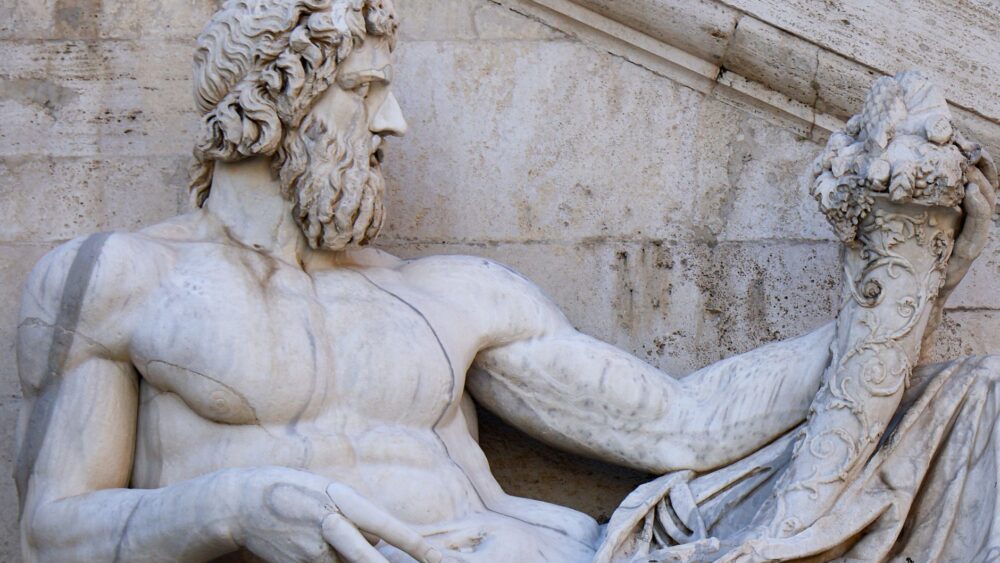
Ancient god names carry something ordinary names simply don’t: centuries of myth, ritual, and storytelling baked directly into the syllables. Whether you’re naming a baby, a character, or a pet, borrowing from the divine pantheons of Greece, Rome, Egypt, Norse, Hindu, Mesopotamian, and Celtic traditions gives you names with genuine weight and history behind them.
This list pulls real deity names from world mythology, names that real people actually use, with meanings and origins you can trust. Some are well-known; others are criminally underused.
Greek God Names
Greek mythology is the most widely tapped source for ancient god names in the English-speaking world, and for good reason. These names are bold, recognizable, and carry vivid stories behind them.
Apollo
The Greek god of the sun, music, poetry, and prophecy. The name’s exact etymology is debated, but it may derive from a pre-Greek root meaning “to destroy” or relate to the Greek word for “assembly.” Apollo has made a real comeback as a baby name in recent years, shedding its too-grand reputation.
Ares
The Greek god of war, whose name may derive from the ancient Greek word for “bane” or “ruin.” Short, sharp, and undeniably strong, Ares is increasingly used as a given name for boys.
Hermes
The messenger god, patron of travelers, thieves, and commerce. His name likely derives from the Greek word hermareferring to a stone boundary marker. Hermes feels unexpectedly fresh as a baby name today.
Zeus
The king of the Olympian gods, whose name comes from the Proto-Indo-European root dyeusmeaning “sky” or “shine.” It’s the same root that gives us the Latin deus (god). Bold and one-syllable, Zeus is a genuine name option that’s gaining ground.
Dionysus
The god of wine, fertility, and ecstatic ritual. His name combines Dios (of Zeus) and Nysathe legendary mountain where he was raised. It’s long and theatrical, which is exactly why it works for certain personalities.
Hephaestus
The craftsman god of fire and the forge. His name has uncertain etymology, possibly pre-Greek in origin. Hephaestus is a mouthful, but the nickname Heph or Hephi makes it livable.
Poseidon
God of the sea, earthquakes, and horses. The name likely derives from a Greek root meaning “husband of the earth” or “lord of waters.” Poseidon is rare as a given name but not unheard of.
Hades
Ruler of the Greek underworld, whose name means “the unseen” from the Greek a-idein. Despite the dark associations, Hades is increasingly used as a bold, unconventional name.
Helios
The personification of the sun in Greek mythology, from the Greek helios meaning “sun.” Helios has a warm, luminous quality that makes it genuinely appealing as a modern name.
Morpheus
The god of dreams, from the Greek morphe meaning “form” or “shape,” since he shaped the dreams of mortals. Morpheus is recognized widely today and carries real poetic beauty.
Eros
The god of love and desire, whose name derives from the Greek word for “desire” or “longing.” Short and striking, Eros is used as a given name in several European countries.
Hyperion
A Titan god of light and the heavens, whose name means “the one above” from Greek hyper (above) and ion (going). Hyperion is grand and unusual, a real find for mythology lovers.
Kronos
The Titan ruler of time and the harvest, father of Zeus. His name may derive from the Greek krainein (to rule) or chronos (time), though the two are technically distinct figures. Used occasionally as a given name, particularly in Greek communities.
Proteus
An early sea god capable of changing shape at will; his name gives us the English word “protean.” From the Greek protosmeaning “first.” Rare as a given name but authentic.
Nereus
The old man of the sea in Greek mythology, a benevolent sea god. His name likely derives from the Greek nerosmeaning “water” or “flowing.” Nereus is used as a given name in Greece today.
Roman God Names
Roman deity names often parallel their Greek counterparts but carry a distinctly different energy: more martial, more civic, more grounded. Many are in active use as given names today.
Mars
The Roman god of war, and one of the most usable ancient god names today. His name’s origin is uncertain, possibly Etruscan or Italic in origin. Mars is a one-syllable powerhouse that sits perfectly in the current naming landscape.
Mercury
The Roman messenger god, patron of commerce and travelers, equivalent to Hermes. His name derives from the Latin merxmeaning “merchandise” or “trade.” Mercury is bold and vintage at the same time.
Neptune
The Roman god of the sea, whose name may derive from a Proto-Indo-European root related to moisture or dampness. Neptune has a retro-cool quality as a name.
Vulcan
The Roman god of fire and the forge, equivalent to Hephaestus. His name’s origin is debated, possibly Etruscan. Vulcan is strong and unexpected as a given name.
Saturn
The Roman god of agriculture and time, whose name may derive from the Latin satus (sowing). Saturn is one of those mythological names that feels both ancient and strangely modern.
Janus
The Roman god of beginnings, doorways, and transitions, depicted with two faces. His name derives from the Latin januameaning “gate” or “doorway,” and is the source of the month January. Janus is a genuinely beautiful name with real depth of meaning.
Pluto
The Roman god of the underworld and wealth, whose name derives from the Greek ploutosmeaning “wealth” or “riches.” Despite the planet demotion controversy, Pluto has character as a name.
Bacchus
The Roman god of wine and festivity, equivalent to Dionysus. His name may derive from the Greek bakchosa cry used in ritual worship. Bacchus is theatrical and vivid.
Juno
The queen of the Roman gods and goddess of marriage and childbirth. Her name derives from the Latin iuven (youth) or is linked to the Proto-Indo-European root for “vital force.” Juno is a top pick right now as a baby name for girls.
Minerva
The Roman goddess of wisdom, arts, and warfare, equivalent to Athena. Her name derives from the Latin mens (mind) or from an Etruscan root. Minerva is having a genuine revival and feels both intellectual and warm.
Flora
The Roman goddess of flowers and spring. Her name derives directly from the Latin flos (flower). Flora is a top-100 name in several European countries and climbing steadily in the US.
Aurora
The Roman goddess of the dawn, whose name derives from the Latin aurorameaning “dawn.” Aurora has quietly become a powerhouse in the modern naming world, sitting comfortably in top-50 territory.
Luna
The Roman goddess of the moon, from the Latin luna (moon). Luna has exploded in popularity over the past decade and is now a global top-20 name in many countries.
Sol
The Roman personification of the sun, from the Latin sol (sun). Sol is crisp, unisex-friendly, and rising fast as a given name.
Faunus
The Roman god of the forest, plains, and animals, equivalent to the Greek Pan. His name relates to the Latin favere (to be favorable). Faunus is rare but genuine.
Quirinus
An early Roman god associated with the Sabine people, later identified with the deified Romulus. His name may derive from the Sabine word for “spear.” Quirinus is unusual but historically real as a given name in Roman tradition.
Norse God Names
Norse mythology has surged in popular culture over the past two decades, and its deity names have followed. These names hit differently: stark, elemental, and Northern.
Thor
The Norse god of thunder, whose name derives from the Proto-Germanic Thunarazmeaning “thunder.” Thor is a genuine Scandinavian given name with centuries of use behind it, not just a Marvel invention.
Odin
The Allfather of Norse mythology, god of wisdom, war, and poetry. His name derives from the Old Norse Oðinnrelated to óðr meaning “fury” or “inspiration.” Odin is now a mainstream baby name in Scandinavian countries and rising fast in the US.
Loki
The trickster god of Norse mythology, whose name’s origin is debated but may relate to Old Norse words for “knot” or “tangle.” Loki is a genuine Scandinavian given name that’s had an enormous pop culture boost.
Baldur
The beloved Norse god of light and purity, whose name derives from the Old Norse baldrmeaning “bold” or “brave.” Baldur is a traditional Icelandic and Scandinavian given name still in use.
Tyr
The Norse god of justice and law, whose name derives from the Proto-Germanic Tiwazmeaning “god.” His name is the etymological source of Tuesday. Short and ancient, Tyr is used as a given name in Scandinavia.
Freyr
The Norse god of fertility, sunshine, and fair weather, whose name means “lord” in Old Norse. Freyr is used as a given name in Iceland and Norway.
Vidar
A Norse god known for his silence and strength, son of Odin. His name derives from Old Norse elements meaning “wide” and “warrior.” Vidar is a living Scandinavian given name.
Bragi
The Norse god of poetry and eloquence. His name may derive from the Old Norse bragrmeaning “poetry” or “the best.” Bragi is used as a given name in Iceland.
Njord
The Norse god of the sea, wind, and fishing. His name derives from the Proto-Germanic Nerþuzrelated to concepts of strength and water. Njord is a traditional Scandinavian given name.
Ullr
The Norse god of archery and winter, whose name derives from the Proto-Germanic root meaning “glory” or “magnificent.” Ullr is a rare but authentic Scandinavian given name.
Heimdall
The watchman of the Norse gods, guardian of the Bifrost bridge. His name’s etymology may relate to Old Norse words meaning “world” and “brightness.” Heimdall is unusual as a given name but genuine in Icelandic tradition.
Egyptian God Names
Egyptian deity names feel ancient in a way that’s almost otherworldly, because they are. These names come from one of the oldest named pantheons in human history, and several of them translate beautifully into modern given names.
Osiris
The Egyptian god of the afterlife, resurrection, and fertility. The origin of his name is debated, but one theory connects it to an ancient Egyptian phrase meaning “powerful one.” Osiris is rare but used as a given name, particularly in communities with Egyptian heritage.
Horus
The falcon-headed sky god of ancient Egypt, whose name derives from the ancient Egyptian Ḥrmeaning “the distant one” or “the sky.” Horus is a striking, usable name with tremendous mythological resonance.
Anubis
The jackal-headed god of embalming and the dead, whose name derives from the ancient Egyptian Inpwpossibly meaning “royal child.” Anubis is bold and increasingly seen as a given name.
Thoth
The Egyptian god of wisdom, writing, and the moon, whose name derives from the ancient Egyptian Ḏḥwtypossibly linked to the ibis bird. Thoth is rare as a given name but authentic.
Seth
The Egyptian god of chaos, storms, and the desert, whose name derives from the ancient Egyptian Stẖ. Seth is also a well-known Hebrew name meaning “appointed,” making this one of the most cross-cultural names on the list.
Ra
The Egyptian sun god and king of the gods, whose name simply means “sun” in ancient Egyptian. Ra is short, strong, and used as a given name in various cultures.
Ptah
The Egyptian god of craftsmen, architects, and creation, whose name’s meaning is uncertain but may relate to “opening” or “sculpting.” Ptah is rare as a given name but historically genuine.
Khnum
The ram-headed Egyptian god of the source of the Nile and creator of human bodies, whose name means “to unite” or “to join.” Rare as a modern given name but real in communities with deep Egyptian heritage.
Sobek
The crocodile god of the Nile, military power, and fertility in Egyptian mythology. His name derives from the ancient Egyptian word for “crocodile.” Sobek is used occasionally as a given name.
Min
One of the oldest Egyptian gods, associated with fertility and the harvest. His name is simply Min in ancient Egyptian, with uncertain deeper etymology. Min is also used as a given name independently in several Asian cultures.
Hindu God Names
Sanskrit-rooted Hindu deity names are among the most widely used ancient god names in the world today, because they never stopped being used as given names in South Asian communities. These are living names with ancient roots.
Indra
The king of the Hindu gods and god of lightning, storms, and rain, whose name derives from the Sanskrit indu (drop) or possibly from a root meaning “powerful.” Indra is a common given name across South Asia for both boys and girls.
Vishnu
The Hindu god of preservation and cosmic order, whose name derives from the Sanskrit root vishmeaning “to pervade” or “to enter.” Vishnu is widely used as a given name in Hindu communities.
Shiva
The Hindu god of destruction and transformation, one of the principal deities of Hinduism. His name derives from the Sanskrit shivameaning “auspicious” or “kind.” Shiva is one of the most common given names in India.
Brahma
The Hindu god of creation, whose name derives from the Sanskrit brahmanmeaning “the absolute” or “universal spirit.” Brahma is used as a given name in several South Asian communities.
Agni
The Hindu god of fire, whose name comes directly from the Sanskrit agnimeaning “fire,” and shares its root with the Latin ignis. Agni is used as a given name in India and Nepal.
Varuna
The ancient Vedic god of water, sky, and cosmic law, whose name may derive from the Sanskrit root var (to cover or encompass). Varuna is used as a given name across South Asia.
Surya
The Hindu sun god, whose name derives directly from the Sanskrit suryameaning “sun.” Surya is a popular given name in India, used for both boys and girls.
Yama
The Hindu god of death and the underworld, whose name derives from the Sanskrit yammeaning “to restrain” or “to bind.” Yama is used as a given name in Nepal, India, and Tibet.
Kama
The Hindu god of love and desire, equivalent in role to Eros or Cupid. His name derives from the Sanskrit kamameaning “desire” or “love.” Kama is used as a given name in several South Asian communities.
Rudra
An early Vedic deity of storms and the hunt, closely associated with Shiva. His name derives from the Sanskrit root meaning “to cry” or “the howler.” Rudra is a common given name in India today.
Kubera
The Hindu god of wealth and the lord of the yaksha spirits. His name derives from the Sanskrit kubjameaning “deformed” (a reference to his legendary appearance), though the name today simply evokes divine prosperity. Used as a given name in South Asia.
Vayu
The Hindu god of wind, whose name derives from the Sanskrit vameaning “to blow.” Vayu is used as a given name in India and Nepal.
Mesopotamian God Names
Sumerian and Akkadian deity names are among the oldest named gods in human history. Several have crossed into use as given names, particularly in Middle Eastern communities.
Enlil
The Sumerian god of wind, air, and storms, and one of the most powerful gods in the Mesopotamian pantheon. His name means “lord of the wind” in Sumerian. Enlil is used as a given name in communities with Mesopotamian heritage.
Enki
The Sumerian god of wisdom, water, and creation, one of the most important Sumerian deities. His name means “lord of the earth” in Sumerian. Enki is used as a given name particularly in Iraq and among diaspora communities.
Nanna
The Sumerian god of the moon, whose name means “illuminer” in Sumerian. Nanna is also a Scandinavian given name with separate origins, making it a genuine cross-cultural option.
Utu
The Sumerian god of the sun and justice, equivalent to the Akkadian Shamash. His name means “sun” in Sumerian. Utu is used as a given name in communities with Mesopotamian heritage.
Marduk
The chief god of Babylon, whose name derives from the Akkadian Amar-Utumeaning “bull calf of the sun god.” Marduk is rare as a given name but genuine and historically significant.
Anu
The Sumerian and Akkadian god of the sky and king of the gods, whose name simply means “sky” or “heaven” in Sumerian. Anu is also a common given name in South Asia and among Scandinavian and Finnish communities.
Adad
The Akkadian and Assyrian god of storms and rain, equivalent to the Sumerian Ishkur. His name may derive from a Semitic root meaning “father.” Adad is used as a given name in some Middle Eastern communities.
Celtic and Gaelic God Names
Celtic mythology spans Irish, Welsh, Gaulish, and Brythonic traditions, and its deity names are some of the most melodic and distinctive in world mythology. Many are in active use today, particularly in Ireland and Wales.
Lugh
The Irish god of the sun, craftsmanship, and skill, one of the most important figures in Irish mythology. His name may derive from a Proto-Celtic root meaning “light” or “brightness.” Lugh is a living Irish given name.
Dagda
The father god of Irish mythology, associated with abundance, agriculture, and wisdom. His name means “the good god” in Old Irish. Dagda is rare as a given name but used.
Nuada
The first king of the Irish Tuatha De Danann, god of healing and sovereignty. His name may derive from a Proto-Celtic root meaning “to acquire” or “to catch.” Nuada is used occasionally as an Irish given name.
Cernunnos
The Gaulish god of wild things, fertility, and the underworld, typically depicted with antlers. His name means “the horned one” in Gaulish. Cernunnos is rare but used as a given name in neopagan communities.
Manannan
The Irish god of the sea and the otherworld, whose name derives from the Isle of Man (Manainn). Manannan is a genuine Irish given name with a long history.
Belenus
A Gaulish solar deity whose name likely derives from a Proto-Celtic root meaning “bright” or “shining.” Belenus is rare as a modern given name but documented in historical records.
Gwydion
A magician-god from Welsh mythology, associated with trickery and storytelling. His name may derive from a Proto-Celtic root meaning “born of trees” or “knowledge.” Gwydion is used as a Welsh given name.
Lleu
A major figure in Welsh mythology, equivalent to the Irish Lugh. His name also derives from a Proto-Celtic root for “light.” Lleu is used as a Welsh given name.
Arawn
The king of Annwn (the Welsh otherworld), a god of death and the hunt. His name may relate to an Old Welsh root meaning “silver tongue.” Arawn is used occasionally as a Welsh given name.
Japanese and Shinto God Names
Shinto deity names from Japanese mythology carry a very different sonic quality from European god names, but several have crossed into use as given names in Japan and beyond.
Raijin
The Japanese god of lightning, thunder, and storms, whose name combines the characters for “thunder” (rai) and “god” (jin). Raijin is used as a given name in Japan.
Fujin
The Japanese god of wind, whose name combines the characters for “wind” (fu) and “god” (jin). Fujin is used as a given name in Japan.
Susanoo
The Shinto god of storms and the sea, brother of Amaterasu. His name derives from Japanese elements meaning “impetuous male” or references to wind and storms. Susanoo is used occasionally as a given name in Japan.
Izanagi
One of the creator gods of Japanese mythology, whose name means “he who invites” in Old Japanese. Izanagi is a rare but genuine Japanese given name.
Takemikazuchi
The Shinto god of lightning and swords, whose name means “brave-thunder” in Japanese. The name is long for everyday use, but Takemi is used as a shortened given name in Japan.
Aztec and Mayan God Names
Mesoamerican deity names are among the most dramatic and complex in world mythology. Several are used as given names in Mexico and Central America today, carrying indigenous heritage proudly.
Quetzalcoatl
The feathered serpent god of the Aztecs, whose name means “feathered serpent” in Nahuatl, from quetzal (a bird) and coatl (serpent). Quetzalcoatl is used as a given name in Mexico, often shortened to Quetzal.
Tlaloc
The Aztec god of rain, water, and earthly fertility, whose name derives from the Nahuatl tlalli (earth) and oc (surface of). Tlaloc is used as a given name in Mexico.
Huitzilopochtli
The Aztec god of the sun and war, whose name means “hummingbird of the south” in Nahuatl. Used occasionally as a given name in Mexico, often shortened.
Tezcatlipoca
The Aztec god of the night sky, sorcery, and fate, whose name means “smoking mirror” in Nahuatl. Used as a given name in Mexico, particularly among families with strong indigenous heritage.
Itzamna
The supreme deity of the Maya, god of creation, writing, and the heavens, whose name may mean “lizard house” in Mayan. Itzamna is used as a given name in Mayan communities in Mexico and Guatemala.
Kukulkan
The Mayan feathered serpent deity, equivalent to the Aztec Quetzalcoatl. His name means “feathered serpent” in Yucatec Mayan. Kukulkan is used as a given name in Mayan communities.
Chaac
The Mayan god of rain and lightning, equivalent to the Aztec Tlaloc. His name is of uncertain etymology but deeply rooted in Mayan tradition. Chaac is used as a given name in Mayan communities.
Slavic God Names
Slavic mythology is one of the most underexplored sources for ancient god names in the Western naming world, which makes these names feel genuinely distinctive right now.
Perun
The Slavic god of thunder and lightning, equivalent to Thor or Zeus. His name derives from the Proto-Slavic perumeaning “to strike.” Perun is used as a given name in Russia, Serbia, and Bulgaria.
Veles
The Slavic god of the underworld, cattle, and magic, the great rival of Perun. His name may derive from a Proto-Slavic root meaning “to rule” or “the dead.” Veles is used occasionally as a given name in Slavic countries.
Svarog
The Slavic god of fire and the celestial forge, from the Proto-Slavic svarmeaning “bright” or “clear sky.” Svarog is rare but used as a given name in Russia and Ukraine.
Dazbog
The Slavic god of the sun and prosperity, whose name means “giving god” in Proto-Slavic, from dati (to give) and bog (god). Dazbog is used as a given name in some Slavic communities.
Stribog
The ancient Slavic god of winds and air, whose name may mean “the spreading god” or “god of the cold wind.” Stribog is rare as a given name but documented in historical Eastern Slavic records.
How to Choose an Ancient God Name
The first thing to consider is wearability. Some ancient god names translate directly into modern everyday use, Thor, Lugh, Mars, Aurora, and these will cause your child no problems at roll call. Others, Huitzilopochtli or Takemikazuchi, are more like heritage statements and may work best in communities where the cultural connection is direct and meaningful.
Think about the stories attached to the name, not just the sound. Loki is a great name phonetically, but if you know the mythology, you’re handing your child the trickster’s legacy. Hades sounds dramatic and cool, but it means “the unseen,” which is either poetic or ominous depending on your perspective. Go in with your eyes open.
Pay attention to cultural context. Using a name from a tradition that is your own, or one you have a genuine connection to, carries a different weight than cherry-picking something exotic-sounding. That said, mythology is a shared human inheritance, and most of these names have been crossing cultural lines for centuries.
Finally, consider the nickname situation. Long divine names almost always need a short form for daily life. Hephaestus becomes Heph. Quetzalcoatl becomes Quetzal. Dionysus becomes Dion. Make sure you love the short version as much as the full name, because that’s what will get used at the playground.
Ancient god names are having a real moment, and it’s not hard to see why. They carry stories that are thousands of years old, meanings that go deeper than most modern invented names, and a sense of weight that’s genuinely hard to manufacture. Whether you want something familiar like Apollo or Luna, or something rare like Njord or Gwydion, this list is a starting point, not a ceiling.