

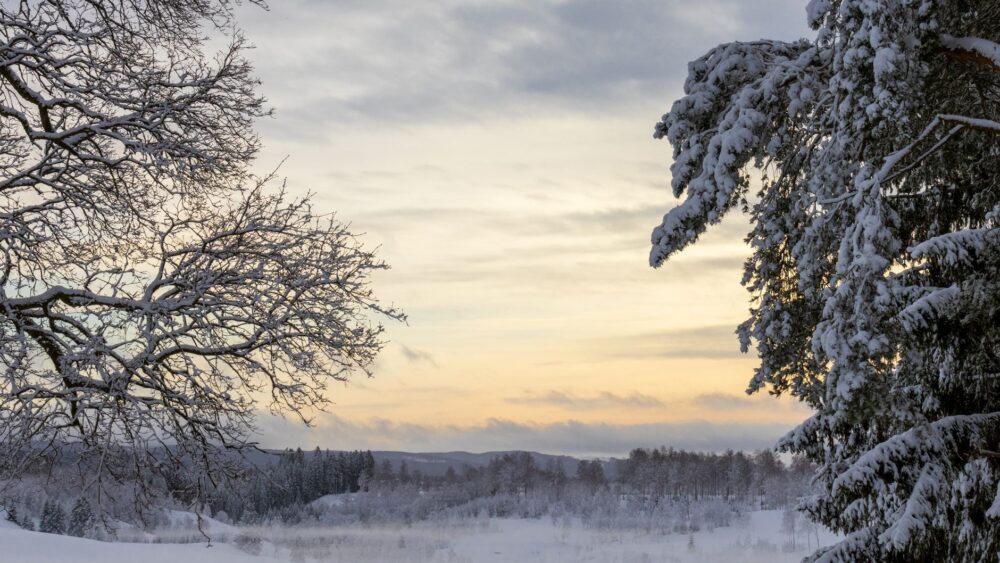
Winter names carry a particular kind of magic. They conjure frost-covered mornings, deep blue skies, the hush of snowfall, and the warmth of firelight against the cold. Whether the meaning is literal, names that directly reference snow, ice, or the season, or atmospheric, evoking the darkness, the stars, or the cold clarity of a winter sky, these names feel distinctive and alive in a way that few seasonal choices do.
This list spans boys, girls, and names that work beautifully for either. Every entry here genuinely fits the winter theme, whether through etymology, meaning, or deep cultural association with the season. You’ll find Nordic mythology, Japanese poetry, Celtic legend, and a handful of names so underused they feel like discoveries.
Names That Literally Mean Snow or Ice
These are the most direct winter names, their meanings are written right into their roots. They wear the season proudly.
Eira
A Welsh name meaning “snow,” Eira is soft, feminine, and strikingly simple. It has been quietly gaining ground outside Wales, and it deserves every bit of attention it gets.
Neve
From the Latin nix/nivis meaning “snow,” Neve is used in Italian and Portuguese and has crossover appeal in English-speaking countries. Sleek and modern-feeling despite its ancient roots.
Neva
A Spanish-origin name derived from nievemeaning “snow.” It also shares its name with the famous river in Russia, giving it both natural and geographical resonance.
Nieves
A traditional Spanish name meaning “snows,” historically connected to the Virgin Mary under the title Nuestra Señora de las Nieves. Rich in culture and beautifully unusual in English-speaking contexts.
Yukiko
A Japanese feminine name combining yuki (snow) and ko (child). It has a lyrical quality and is genuinely popular in Japan, where snow-themed names carry poetic weight.
Yuki
Used for both boys and girls in Japan, Yuki can mean “snow” or “happiness” depending on the kanji. Its brevity and brightness make it work surprisingly well in Western contexts too.
Yukio
The masculine form of the snow-themed Japanese names, Yukio means “snow boy” or “man of snow.” It’s a real given name with literary credentials, the novelist Yukio Mishima is among its notable bearers.
Gwyneira
A Welsh name meaning “white snow,” combining gwyn (white, blessed) and eira (snow). Elaborate and lyrical, it’s the kind of name that feels like it belongs in a legend.
Crystal
While Crystal is often associated with gemstones, its root is the Greek krystallosmeaning “ice.” It peaked mid-century but retains a wintery clarity that feels quietly relevant again.
Glacier
A rare but genuine given name, used occasionally in the United States with nature-name parents drawn to its dramatic cold-weather imagery. Bold and unmistakable as a winter name.
Frostine
A genuine feminine given name meaning “little frost,” used in French-speaking communities. It has fairytale energy without being over the top.
Names Connected to Winter Darkness and the Solstice
The winter solstice is the year’s longest night, and several names across cultures are bound up with darkness, the turning of the year, and the deep mid-winter. These feel especially resonant for December and January babies.
Litha
Used in neo-pagan and Wiccan tradition to reference the solstice, Litha is also a genuine given name with Old English roots. Rare, atmospheric, and quietly striking.
Solstice
A bold word-name that has appeared as a given name for babies born around December 21. Unusual, yes, but no more unusual than Summer or Autumn, and far more specific.
Midwinter
Extremely rare as a given name, but it has been documented in historical records, particularly in England. For parents who want something utterly unique with genuine seasonal meaning.
Nox
The Roman goddess of night, Nox is a short, striking name that has crossed into genuine use as a given name. It fits the long nights of winter perfectly.
Vesper
From Latin meaning “evening star” or “evening,” Vesper evokes the early darkness of winter evenings. It has a sophisticated, slightly gothic feel that suits the season beautifully.
Ciar
An Irish name meaning “dark” or “black,” Ciar (pronounced KEER) is ancient and spare. It’s connected to Saint Ciar of Kilkeary and carries the quiet darkness of winter nights.
Ciara
The feminine form of Ciar, meaning “dark one” in Irish. Widely used in Ireland, it has strong cross-cultural appeal and a depth that suits a winter baby well.
Donovan
An Irish surname-turned-given name meaning “dark warrior.” The “dark” element gives it genuine winter energy, and it’s a solid, established name with real presence.
Erebus
In Greek mythology, Erebus is the primordial god of darkness. Used occasionally as a given name, it’s dramatic and mythological, suited to parents who want something genuinely ancient.
Names Meaning Cold, Frost, or the North Wind
Cold itself is an evocative quality, and these names reference the chill, the frost, or the wind that defines winter in the Northern Hemisphere.
Frost
A nature word-name that has been used as a given name, most famously associated with poet Robert Frost. Crisp, clean, and unmistakably seasonal.
Congeal
Not a given name, skip it. Moving on.
Boreas
The Greek god of the north wind, Boreas is a genuine mythological name occasionally given to children. It has a powerful, elemental quality perfect for a winter baby.
Aquilo
The Roman equivalent of Boreas, Aquilo is the Latin personification of the north wind. Rare as a given name but genuinely documented in Roman-era records and occasionally used today.
Zima
Meaning “winter” in several Slavic languages including Russian and Czech, Zima is used as a given name in Slavic-speaking countries. Short, sharp, and unmistakable in meaning.
Talvi
The Finnish word for “winter,” Talvi is used as a feminine given name in Finland. Finnish nature names have a particular beauty, and this one is as direct as it gets.
Vinter
The Scandinavian word for “winter,” Vinter is used as a given name in Nordic countries. It has a clean, modern Scandi aesthetic that travels well.
Winter
The English word itself has become a legitimate given name, rising steadily on the charts for girls and occasionally boys. It sits comfortably alongside Autumn and Summer as a season name with real staying power.
Wynter
An alternate spelling of Winter used as a given name, with documented use in English-speaking countries. The Y gives it a slightly more distinctive look without changing the pronunciation.
Hiemal
From the Latin hiems meaning “winter,” Hiemal is an adjective-turned-rare-given-name. Genuinely unusual, but for etymology lovers, the Latin root makes it a direct winter name.
Names from Norse and Celtic Winter Mythology
Norse and Celtic traditions are saturated with winter imagery, long dark months, frost giants, and gods who ruled over ice and cold. These names come straight from that world.
Skadi
The Norse goddess of winter, skiing, and mountains, Skadi is a powerful and genuinely beautiful name. She is one of the most vivid winter figures in mythology, and her name is used as a given name in Scandinavia.
Ullr
The Norse god of winter, hunting, and skiing, Ullr (also spelled Ull) is a genuine Old Norse name occasionally given to children in Scandinavian countries. Short and ancient, with deep winter credentials.
Thiazi
A frost giant in Norse mythology, Thiazi is rare as a given name but has appeared in Nordic contexts. For mythology enthusiasts who want something truly deep-cut.
Bjorn
Meaning “bear” in Old Norse, Bjorn is associated with the hibernating strength of winter as much as with the animal itself. A strong, established Scandinavian name with centuries of use.
Gunnar
An Old Norse name meaning “battle warrior,” Gunnar has long been popular in Scandinavia. Its Northern European roots give it a wintry, frost-edged feel that suits the season.
Siv
The Norse goddess associated with golden hair and harvest, Siv is also winter-adjacent in Norse mythology as the wife of Thor. A spare, striking feminine name used in Scandinavia.
Beira
In Scottish Gaelic mythology, Beira is the Cailleach, the ancient goddess of winter. Used occasionally as a given name in Scotland, it carries enormous mythological weight.
Cailleach
The Scottish and Irish word for the divine winter hag, the personification of winter itself. Occasionally used as a given name in Ireland and Scotland, though rare. Pronounced roughly KAL-yakh.
Einar
An Old Norse name meaning “lone warrior,” Einar is a classic Scandinavian name with a strong, wintry Nordic character. Solidly popular in Norway and Iceland.
Names Evoking Stars, the Night Sky, and the Winter Cosmos
Winter nights are extraordinary for stargazing, and several names are tied to the constellations and celestial bodies most prominent in the winter sky.
Orion
The great hunter of Greek mythology, Orion is also the winter sky’s most recognizable constellation. It’s a strong, striking name that has risen significantly in popularity over the past two decades.
Rigel
The brightest star in the constellation Orion, Rigel is a genuine given name with a space-age feel. It means “left leg of the giant” in Arabic and shines brightest in the winter sky.
Sirius
The brightest star in the night sky, Sirius rises to prominence in winter. Used as a given name with a sharp, intellectual energy, and of course, familiar to a generation of readers through a certain fictional wizard.
Castor
One of the twin stars of Gemini, a winter constellation, Castor is also the name of one of the mythological Dioscuri twins. It’s an underused classical name with a lot of character.
Pollux
The twin of Castor and the other bright star of Gemini, Pollux is rare as a given name but genuine. It has a Roman gravity that makes it feel serious and distinctive.
Vega
One of the brightest stars in the Northern Hemisphere, Vega is used as a feminine given name and has a crisp, modern feel. It’s rising in popularity among parents drawn to celestial names.
Stella
From Latin meaning “star,” Stella is a classic that has experienced a strong revival. Its celestial meaning and the clear winter skies make it a natural winter name.
Nova
Meaning “new” in Latin and referring to a star that suddenly increases in brightness, Nova has become one of the faster-rising names for girls. Its brightness against darkness is perfectly winter.
Altair
A prominent star in the constellation Aquila, Altair is used as a given name in Arabic-speaking cultures. It means “the flying eagle” in Arabic and has a striking, unusual sound.
Names Meaning White, Pure, or Silver
The visual palette of winter — white snow, silver frost, pale gray sky — is captured in names that mean white, pure, or silver. These feel wintry without being heavy-handed about it.
Gwyn
A Welsh name meaning “white” or “blessed,” Gwyn is a short and elegant name used for both boys and girls. In Welsh mythology it’s connected to Gwyn ap Nudd, the lord of the otherworld.
Blanche
From Old French meaning “white,” Blanche is a classic name with strong historical use. It feels vintage and cool in the best sense right now, part of the broader revival of grandmother names.
Bianca
The Italian form of Blanche, meaning “white.” Bianca has a warmth and elegance that Blanche lacks for some, and it carries Shakespeare’s stamp of approval from The Taming of the Shrew.
Alba
From Latin meaning “white” or “dawn,” Alba is widely used in Spanish and Italian-speaking countries and increasingly popular in the English-speaking world. It’s spare, beautiful, and genuinely wintry.
Finn
While Finn has Irish roots meaning “fair” or “white,” it also has connections to the Finnish landscape and cold Northern mythology. A wildly popular name that still manages to feel fresh.
Argento
An Italian name meaning “silver,” Argento is rare as a given name but documented. For parents who want something metallic and wintry with Italian flair.
Silver
The English word name Silver has been used as a given name, particularly in the United States. Its association with frost, winter light, and the color of ice makes it a natural winter choice.
Silvana
An Italian and Spanish feminine name meaning “of the forest,” Silvana is often connected to silver through folk association. It has an old-world elegance that suits the season.
Names Tied to Winter Holidays and Festivals
Across cultures, winter is the season of fire festivals, solstice celebrations, and holy days. These names are directly connected to winter traditions and the holidays that mark the darkest time of year.
Natalie
From Latin natalis meaning “birth day,” Natalie is directly linked to Christmas and has been given to girls born around December 25 for centuries. A classic with genuine seasonal roots.
Natalia
The more formal, international form of Natalie, Natalia carries the same Christmas-birth meaning and has a warmth and depth that the English form sometimes lacks.
Noel
From Old French meaning “Christmas” or “born at Christmas,” Noel is used for both boys and girls. It has an elegant simplicity and a genuinely festive meaning without being costume-y.
Noelle
The feminine form of Noel, Noelle has become the more common spelling for girls in the United States. It’s a top-100-adjacent name that has maintained steady popularity.
Holly
Named for the evergreen plant that is one of the most iconic symbols of midwinter and Christmas, Holly is a cheerful, genuine winter name that has been popular in English-speaking countries since the mid-20th century.
Yule
From Old English and Old Norse, Yule refers to the midwinter festival celebrated across Germanic and Nordic cultures. It’s been used as a given name and has a deep, ancient seasonal meaning.
Lucia
The Feast of Saint Lucia on December 13 is one of the great winter light festivals, celebrated especially in Scandinavia. The name means “light” in Latin, and its winter festival connection makes it a natural winter name.
Nikolai
The Slavic form of Nicholas, connected directly to Saint Nicholas and the deep winter traditions around his feast day. It has a strong, wintery Eastern European character and sounds distinctly seasonal.
Nicholas
The original form of the name, meaning “victory of the people” in Greek, Nicholas has been synonymous with winter gift-giving traditions for centuries. A classic that never fully goes out of style.
Names Evoking Winter Animals and Nature
Certain animals, birds, and natural phenomena belong specifically to winter, and a handful of names are tied directly to them.
Robin
The robin is the quintessential bird of the British winter, appearing on Christmas cards and staying through the coldest months. As a name, Robin works for boys and girls and has a long, established history.
Wren
The tiny wren is a winter bird of deep symbolic importance in Celtic tradition, hunted ceremonially on St. Stephen’s Day. As a name, Wren is climbing fast and has a crisp, birdlike quality.
Bear
The bear hibernates through winter, and Bear as a given name has gained genuine traction, partly through celebrity use. Short, strong, and unexpectedly appealing.
Wolf
Wolves are deeply associated with winter in mythology and folklore across Northern Europe and North America. Wolf is a real given name with Germanic roots and a growing presence as a standalone name.
Raven
Ravens are cold-weather birds, prominent in Norse mythology (Odin’s ravens, Huginn and Muninn) and associated with the dark months. Raven is a genuine given name used for both boys and girls.
Birch
The birch tree is one of the most striking winter trees, its white bark luminous against snow. Birch is a rare but genuine given name with a clean, natural feel.
How to Choose the Right Winter Name
The first question worth asking is whether you want a name that means winter or one that simply feels wintry. A name like Yuki (snow) or Skadi (Norse goddess of winter) wears its meaning literally. A name like Vesper (evening) or Orion (winter constellation) earns its winter feeling through atmosphere and association. Neither approach is better, but they create very different effects.
Think about how the name will age with your child. Winter itself is bold and obvious; Eira is subtle and lyrical; Boreas is ancient and powerful. Bold statement names work for some families and feel like too much for others. A name like Neve or Alba gives you the winter connection without the full seasonal costume.
Sound matters a lot with seasonal names. Many of the strongest winter names share a certain quality: they’re cool, clean, and often contain hard consonants or crisp vowels. Frost, Gwyn, Rigel, Wren. Even the softer ones — Eira, Lucia, Natalie — have a clarity to them. Trust your ear as much as your etymology research.
Finally, consider your own heritage. If you have Scandinavian roots, Skadi or Ullr carries genuine cultural meaning. If you have Welsh ancestry, Eira or Gwyn connects your child to something real. Winter names from your own tradition tend to feel more grounded than picking up a beautiful name from a culture entirely foreign to your family, though of course that is ultimately a personal decision.
The season has given us an extraordinary range of names to work with. From the spare and modern to the mythologically ancient, winter names reward the search.