
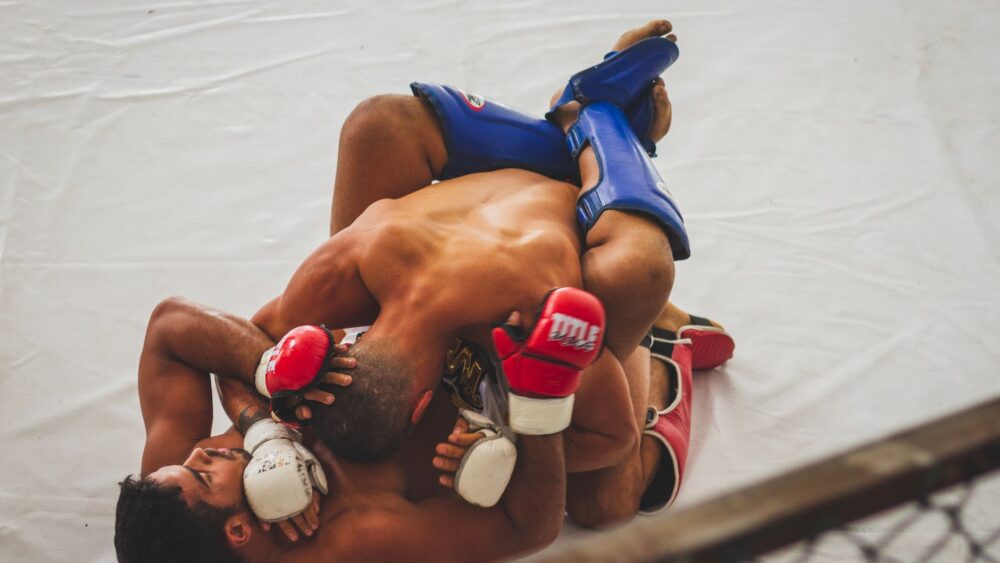
Fighting names carry something primal in them: the idea that a name can announce strength, courage, and the will to prevail before a word is spoken. Parents drawn to this category aren’t necessarily hoping their son will pick up a sword, but they do want a name with backbone, one that sounds like it belongs to someone who doesn’t back down.
The names below come from a wide range of languages and traditions, but they share a common thread. Most mean warrior, fighter, protector, or conqueror in their root languages. A handful carry the spirit of battle through legendary associations or historical legacy. Every entry is a real given name with a genuine connection to strength and combat.
Classic Warrior Names from Europe
These are the names that built the warrior-name tradition in Western culture, carried by kings, knights, and generals across centuries of European history.
William
From the Old Germanic Willahelm, meaning “resolute protector” or “will-helmet,” with helmet here referring to a soldier’s protective armor. It is one of the most enduring fighting names in English history, borne by conquerors and warriors from William the Conqueror onward. Surprisingly fresh again after years of feeling like a grandfather name.
Harold
Old Norse and Old English origins combine here to produce “army ruler” or “leader of armies.” King Harold II was the last Anglo-Saxon king of England, famously falling at the Battle of Hastings in 1066. It has a gruff, underused quality right now that makes it feel genuinely strong rather than trendy.
Roland
From Old High German Hrodland, meaning “famous land” or, in some interpretations, “famous warrior.” Roland is the legendary Frankish paladin of Charlemagne’s court, the hero of the medieval epic The Song of Roland. It has the rare combination of literary gravitas and real warrior credentials.
Gunnar
Straight from Old Norse, meaning “bold warrior” or “battle warrior,” from gunnr (battle/war) and arr (warrior). A cornerstone of Viking naming tradition and a top name in Scandinavia today. Clean, punchy, and impossible to misread.
Aldric
Old Germanic, from ald (old, experienced) and ric (ruler/power), giving the sense of a powerful, seasoned leader. It is rare in the English-speaking world, which makes it one of the more compelling fighting names for parents who want something genuinely uncommon. The nickname Ric keeps it wearable day to day.
Bernard
From Old High German Bernhard, meaning “bold as a bear” or “bear-strong.” Bears were the warrior animal of the Germanic world, and names built on bern (bear) carried a specific connotation of ferocious courage. Saint Bernard aside, this one has a tough, warm quality that is criminally underused right now.
Gerard
Old Germanic, from ger (spear) and hard (brave, strong), meaning “brave spearman.” It was carried into England by the Normans and was a common name among medieval knights. Quieter than Gerard’s flashier cousin Garrett, but the etymology is equally fierce.
Howard
Likely from Old Norse Havardr, meaning “high guardian” or “heart-brave,” though some scholars trace it to a Germanic form meaning “sword guardian.” It sat in mid-century obscurity for decades, but the meaning and the sound are strong enough to support a comeback.
Viking and Norse Fighting Names
Norse naming culture was built almost entirely around warrior identity. These names come directly from the Old Norse tradition and carry meanings that are unapologetically about battle.
Bjorn
Simply “bear” in Old Norse, and in the Norse warrior tradition, that meant ferocity, power, and fearlessness in battle. Bjorn Ironside, the legendary Viking chieftain, is perhaps the most famous historical bearer. It is sharp, immediately recognizable, and deeply rooted.
Leif
Old Norse for “heir” or “descendant,” but its cultural weight comes from Leif Erikson, the Norse explorer who reached North America centuries before Columbus. It carries the spirit of bold, uncharted adventure that is inseparable from the Viking warrior tradition.
Ulf
Old Norse for “wolf,” one of the primary warrior symbols of the Norse world. Wolf names in Old Norse culture were directly tied to warrior identity, particularly the berserker tradition. Short, fierce, and almost never heard in the English-speaking world.
Sigurd
From Old Norse Sigurdr, meaning “victory guardian” or “victorious protector,” from sigr (victory) and vardr (guardian). Sigurd is the great hero of Norse mythology, the dragonslayer whose story runs through the Volsunga Saga. It has the feel of a name that belongs to someone with a destiny.
Ragnar
Old Norse, from regin (counsel, power) and arr (warrior), meaning “powerful warrior” or “warrior of the gods.” Ragnar Lothbrok is one of the most famous figures in Viking legend, and the name shot into mainstream consciousness through the television series Vikings. Still distinct enough to feel bold rather than trendy.
Torsten
Old Norse, from Thor (the god of thunder and war) and steinn (stone), meaning “Thor’s stone” or “stone of Thor.” The Thor element links it directly to the Norse god of battle, making this one of the most layered fighting names in the tradition. Uncommon in English-speaking countries and all the more striking for it.
Ivar
Old Norse, from yr (yew/bow) and arr (warrior), meaning “bow warrior” or “archer warrior.” Ivar the Boneless, the legendary Viking commander, made this name synonymous with tactical brilliance and ruthless battlefield skill. The short, hard sound of it works beautifully in any language.
Halvard
Old Norse, from halr (rock, flat stone) and vardr (guardian), meaning “rock guardian” or “guardian of the flat stone.” It is the name of the patron saint of Oslo, a figure associated with defending the innocent. Rare outside Scandinavia and genuinely powerful.
Celtic and Gaelic Warrior Names
The Celtic and Gaelic traditions produced some of the most muscular warrior names in the record, drawn from a culture where battle skill was the highest virtue a man could possess.
Brian
From the Old Irish Bran or a Celtic root possibly meaning “high” or “noble,” but its warrior identity comes from Brian Boru, the High King of Ireland who defeated the Vikings at the Battle of Clontarf in 1014. One of the foundational fighting names in Irish culture. Familiar but never weak.
Cormac
Old Irish, meaning “charioteer” or “son of the chariot,” from corb (chariot) and mac (son). In early Irish culture, the chariot was the vehicle of warriors and kings. Cormac mac Airt is one of the legendary High Kings of Ireland. This name is underused outside Ireland and has real presence.
Fergus
From Old Irish Fergus, meaning “man of vigor” or “strong man,” from fer (man) and gus (vigor, strength). Fergus mac Roich is a towering warrior figure in the Ulster Cycle of Irish mythology. It is friendly and approachable without sacrificing any of its toughness.
Conall
Old Irish, from con (hound) and all (strong, mighty), meaning “strong as a wolf” or “mighty hound.” In Celtic warrior culture, the wolf-hound comparison was the highest fighting compliment. Conall Cernach is one of the great warriors of the Ulster Cycle. Rare outside Ireland and genuinely striking.
Donal
From Old Irish Domhnall, meaning “ruler of the world” or “world-mighty,” from dubno (world) and val (rule, might). It was one of the most common names among Irish kings and chieftains. More grounded and less expected than its anglicized form Donald.
Brennan
From the Irish surname and given name tradition, derived from Braonain, meaning “descendant of Braon,” with braon meaning “drop” but historically used to convey sadness in battle or the grief of loss in war. It has become a solid given name in its own right, with a strong, clean sound that works well in any context.
Caius
Latin and Celtic overlap here: a Roman given name used widely in Celtic Britain, meaning “rejoice” in Latin but deeply embedded in the warrior culture of Roman-era Britain. Caius is one of the Knights of the Round Table. It has an ancient authority that makes it one of the more underrated fighting names available.
Niall
Old Irish, from a root meaning “champion” or “cloud” depending on the scholar, but historically the name of Niall of the Nine Hostages, the semi-legendary High King of Ireland and one of the most celebrated warriors in Irish tradition. Pronounced “Nyle,” it is compact and commanding.
Greek and Roman Fighting Names
Classical antiquity produced a deep catalog of names tied to war, victory, and heroic combat. Many of these have been in continuous use for over two thousand years.
Alexander
From the Greek Alexandros, meaning “defender of men” or “protector of the people,” from alexein (to defend) and aner (man). Alexander the Great made this one of history’s defining fighting names. It remains a top-tier choice precisely because the meaning and the legacy are both enormous.
Leonidas
Greek, meaning “son of the lion,” from leon (lion). King Leonidas of Sparta led the famous last stand at Thermopylae, cementing this name in the warrior hall of fame for all time. It is long and theatrical, but it earns every syllable.
Hector
From the Greek Hektor, meaning “to hold” or “holding fast,” from a root suggesting the one who holds the line. Hector of Troy is the most honorable warrior in the Iliad, a fighter who protects his city and family to the last. This is a fighting name with genuine moral weight behind it.
Ajax
The Latinized form of the Greek Aias, likely from a root meaning “earth” or possibly “eagle.” Ajax the Great was the strongest warrior among the Greeks at Troy, famous for his immovable defense. Short, striking, and completely underused as a given name.
Marcus
Latin, derived from Mars, the Roman god of war, making this one of the most direct fighting names in the Latin tradition. Marcus Aurelius, Marcus Agrippa, Marcus Crassus: the name runs through Roman military history like a thread. Still widely used, still genuinely strong.
Victor
Latin, meaning simply “conqueror” or “winner,” from vincere (to conquer). It was a popular name among early Roman soldiers and later among early Christians who saw victory over death as a central theme. Clean, direct, and impossible to misread.
Maximus
Latin superlative meaning “the greatest,” from magnus (great). It was used as both a given name and an honorific title for Roman generals and emperors. Bold and slightly theatrical, but backed by two thousand years of genuine use.
Castor
From Greek, one of the twin Dioscuri, the divine patron brothers of soldiers and sailors. The meaning is debated but often connected to a word for “beaver” or “to shine.” As a warrior name it carries the weight of the entire Greek tradition of divine protection in battle. Rarely used today and all the more interesting for it.
Germanic and Anglo-Saxon Fighting Names
Old Germanic and Anglo-Saxon names are perhaps the richest source of fighting names in the Western tradition. They are built from compound roots where almost every element has a martial meaning.
Everett
From Old High German Eberhard, meaning “brave as a boar.” The boar was the Germanic warrior animal par excellence, and names built on eber carried the same fierce connotation as bear names. Everett is the smoothed English form, and it is currently one of the more fashionable fighting names without most parents realizing the etymology.
Richard
From Old High German Ricohard, meaning “powerful ruler” or “strong king,” from ric (power/ruler) and hard (strong, brave). Richard I of England, known as Richard the Lionheart, is probably the most famous warrior to carry this name. Solid, classic, and impossible to argue with.
Edmund
Old English, from ead (wealth, fortune) and mund (protector), meaning “wealthy protector” or “guardian of prosperity.” It was the name of several Anglo-Saxon kings who died defending their kingdoms. Steady and slightly literary, it wears its warrior identity quietly.
Oswald
Old English, from os (god) and weald (rule/power), meaning “divine ruler” or “god’s power.” Saint Oswald was a warrior-king of Northumbria who died in battle. It has an old-world severity that is quietly compelling.
Reinhard
Old High German, from regin (counsel, power) and hard (brave, strong), meaning “strong counsel” or “powerfully brave.” It is the source of the English name Reynard and has a direct, unflinching Germanic quality. Rarely used in the English-speaking world and very striking for it.
Helmut
From Old High German, meaning “brave helmet” or “protected courage,” from helm (helmet) and mut (courage, spirit). The helmet in Germanic culture was not just armor but a symbol of warrior status and identity. Unusual in English-speaking countries and carries real etymological weight.
Hebrew and Biblical Fighting Names
The Hebrew Bible is full of warriors, judges, and kings whose names carry the weight of divine strength and battlefield courage.
Gideon
Hebrew, meaning “great warrior” or “one who cuts down,” from a root suggesting felling or hewing. Gideon in the Book of Judges led a small band of Israelites to defeat a vastly superior Midianite army. It is one of the most literally apt fighting names in the Hebrew tradition, and it is genuinely fashionable right now.
David
Hebrew, meaning “beloved,” but David’s warrior credentials are unmatched in the biblical text: he killed Goliath, commanded armies, and united Israel by force of arms. The gap between the gentle meaning and the fierce biography makes this one of the most interesting fighting names on the list.
Samson
Hebrew, from shemesh (sun), meaning “sun” or “of the sun.” Samson was the archetypal warrior-judge of the Israelites, whose physical strength was supernatural. The name carries that legendary toughness directly into the modern era.
Caleb
Hebrew, meaning “dog” or “faithful,” but Caleb in Numbers was one of only two Israelite spies brave enough to recommend taking Canaan by force. His name became synonymous with courageous conviction in the face of overwhelming odds. Currently riding high in the charts, and for good reason.
Phineas
Hebrew, possibly from an Egyptian root or from a Hebrew form meaning “the Nubian,” but in the biblical narrative Phineas was a zealous warrior-priest known for decisive action in battle. Unusual, historical, and carrying a warrior’s directness in the text.
Abner
Hebrew, meaning “father of light” or “father is a lamp,” but Abner son of Ner was the commander of King Saul’s army, one of the great military figures of the early Israelite monarchy. The meaning is gentle; the biography is anything but.
Joab
Hebrew, meaning “Yahweh is father,” but Joab was the relentless, brilliant military commander of King David’s armies, perhaps the most effective battlefield general in the entire Hebrew Bible. Uncommon today, sharp in sound, and carries extraordinary warrior credentials.
Names Meaning Victory, Conqueror, or Champion
Some fighting names work not because they mean “warrior” directly, but because they mean what a warrior is fighting for: victory, supremacy, and triumph.
Nicholas
From the Greek Nikolaos, meaning “victory of the people,” from nike (victory) and laos (people). The Nike root is the same one that gave us the winged goddess of victory. Familiar to the point of feeling safe, but the warrior etymology is genuine.
Vincent
From the Latin Vincentius, derived from vincere, meaning “to conquer.” It shares its root with Victor and carries the same conquering energy in a softer, more wearable package. Strong without being loud.
Everard
Old High German, the full form behind Everett, meaning “brave as a wild boar.” Where Everett is polished and modern, Everard has a heavier, medieval feel that some parents will find more compelling.
Nike
Greek, the name of the goddess of victory, from a root meaning “victory.” Used as a given name in Greek-speaking communities. Uncommon in the English-speaking world as a given name, but genuine and striking.
Nigel
Derived from the medieval Latin Nigellus, a form of Neil, traced back to the Old Irish meaning “champion.” It carries the champion meaning through an interesting historical detour and has a crisp, clean sound.
Names from Warrior Cultures Around the World
The fighting-names tradition is not limited to Europe and the ancient Mediterranean. Warrior-naming cultures exist across the globe, and some of their names translate beautifully into English-language use.
Kato
In the Munyankole language of Uganda, Kato means “second of twins,” but in Japanese the surname Kato means “add wisteria” and has been used as a given name. In a broader context, the Roman family name Cato means “wise” or “shrewd,” and Cato the Younger was a fierce opponent who died rather than submit. Used as a given name in multiple traditions with genuine warrior associations through the Roman line.
Khalid
Arabic, meaning “eternal” or “immortal.” Khalid ibn al-Walid was one of the greatest military commanders in early Islamic history, undefeated in over a hundred battles. The name carries that legacy of invincibility directly. Widely used across the Arab world and increasingly familiar in the West.
Tariq
Arabic, meaning “he who knocks at the door” or “morning star,” from a root suggesting the night visitor. Tariq ibn Ziyad was the Berber commander who led the Islamic conquest of the Iberian Peninsula. The name has a mysterious, powerful quality that suits the fighting-names category well.
Vijay
Sanskrit, meaning “victory” or “conquest,” from the same vi-ji root that runs through Sanskrit warrior literature. Vijay is one of the epithets of Arjuna, the great archer-warrior of the Mahabharata. Widely used across South Asia and recognizable globally.
Arjun
Sanskrit, meaning “bright” or “silver,” but Arjun (Arjuna) is the central warrior-hero of the Mahabharata, the greatest archer of his age. The name carries the weight of one of the world’s oldest and most detailed warrior narratives. Common across India and increasingly used in diaspora communities worldwide.
Eito
Japanese given name, one common writing of which means “great” and “soar” or “flight,” with strong associations with strength and ambition in Japanese naming culture. Used as a genuine given name in Japan with positive, powerful connotations.
Emeka
An Igbo name from Nigeria, a short form of Chukwuemeka, meaning “God has done great things.” In Igbo culture, names tied to divine greatness carried warrior-prestige. Emeka Ojukwu, the military and political leader of Biafra, is perhaps the most famous modern bearer.
Bold and Battle-Ready Modern Picks
These are names with warrior meanings or associations that feel at home in a contemporary naming landscape, neither archaic nor trendy for the sake of it.
Griffith
From the Welsh Gruffudd, meaning “strong lord” or “lord with a strong grip,” from cryf (strong) and udd (lord, prince). It is the source of the surname Griffin and carries a Welsh warrior dignity. Rare as a given name today and completely distinctive.
Alistair
The Scottish Gaelic form of Alexander, meaning “defender of men.” It carries all the warrior weight of Alexander with a Celtic edge and a more unusual sound. Popular in Scotland, rare in the United States, and one of the better fighting names for parents who want something with classical credentials but less familiar sound.
Evander
From the Greek Evandros, meaning “good man” or “strong man,” from eu (good) and aner (man). In Roman mythology, Evander was a Greek hero who founded a city on the Palatine Hill before Rome existed. Boxer Evander Holyfield made it a name associated with athletic fighting excellence. One of the most compelling options in the modern fighting-names conversation.
Caspian
From the Caspian Sea, likely derived from the ancient Cas people who lived on its shores. Prince Caspian of C.S. Lewis’s Narnia series is a warrior-king archetype, and the name has taken on a strong, adventurous identity in contemporary usage. Fashionable, but the warrior association is genuine.
Leander
From the Greek Leandros, meaning “lion-man,” from leon (lion) and aner (man). The lion compound with aner is one of the oldest Greek formulas for warrior strength. Romantic and brave in equal measure, currently underused and worth serious consideration.
Theron
Greek, meaning “hunter,” from ther (wild beast) and the suffix suggesting one who pursues. Hunters in the ancient Greek world were the model for warriors in peacetime: skilled, patient, and lethal. Uncommon and sharp.
Draven
A modern given name that emerged in the late twentieth century, likely influenced by the film The Crow and its character Eric Draven. It has no ancient etymology, but it has been in genuine use as a given name for over three decades. It sounds like a fighting name, and it has been adopted by parents for exactly that reason.
Zale
From the Greek zale, meaning “sea-strength” or “power of the sea.” The sea in ancient Greek culture was not gentle: it was the arena of naval warfare and the proving ground of heroes. Short, unusual, and genuinely powerful.
How to Choose the Right Fighting Name for Your Son
The first question worth asking is what kind of strength you want the name to project. A name like Leonidas or Maximus is theatrical and bold, announcing itself loudly in every room. A name like Edmund or Niall carries its warrior identity quietly, letting the etymology do the work without the name feeling like a declaration. Both approaches are valid, but they produce very different results in daily life.
Think about the last name. Fighting names with hard consonants, particularly names ending in a stopped consonant like Hector, Ajax, or Ivar, tend to work best with surnames that start with a vowel or a soft consonant. A name like Ragnar or Gunnar before a surname that also ends in a strong consonant can feel heavy. Read the full name out loud a dozen times before committing.
Consider the nickname question honestly. A boy named Leonidas will almost certainly go by Leo for the first twenty years of his life. If you love Leo but want something grander on the birth certificate, Leonidas is a brilliant solution. If you actually want the full name used, choose something shorter: Hector, Ivar, Marcus, and Niall are all full names in daily practice, not just formal ones.
Finally, decide whether the meaning needs to be visible or can be invisible. Names like Victor and Vincent wear their conquering meaning on the surface. Names like Harold, Edmund, and Cormac carry the same warrior weight in their etymology, but nobody at the playground will know it unless you tell them. For some parents, the private knowledge of a powerful meaning is enough. For others, the name needs to sound the part immediately. Know which camp you are in before you fall in love with a name that belongs to the other one.
The right fighting name is the one that feels true to your son before you have even met him, backed by real meaning and built to carry him through every phase of his life. The list above gives you a wide range to work with, from the ancient and mythological to the bold and contemporary, and every one of them has genuine fighting credentials.