

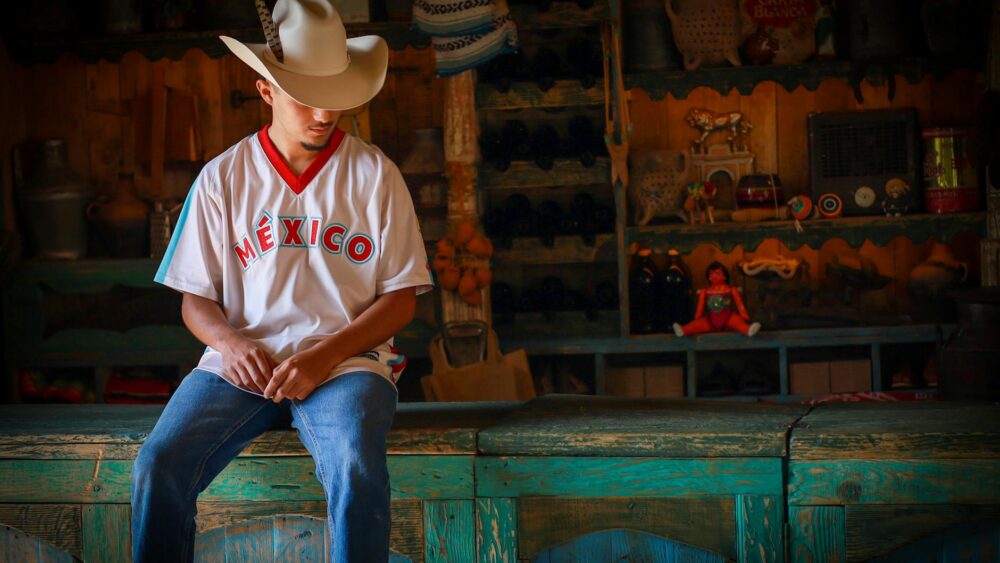
Hispanic last names carry centuries of history in a single word. From the rolling hills of Andalusia to the highlands of Mexico and the coastlines of Colombia, these surnames traveled with explorers, settlers, and families across generations, picking up meaning and identity along the way. Whether you are researching your own roots, building a character, or simply curious about the surnames you encounter every day, understanding where hispanic last names come from is one of the most satisfying rabbit holes in all of naming culture.
Most Spanish-language surnames fall into a handful of origin categories: they describe the landscape, honor a saint, reflect a trade or physical trait, or simply mark whose son or daughter you were. The double-surname tradition common across Latin America and Spain means these names have been combined, layered, and passed down in ways that English-speaking cultures rarely do. The entries below are grouped by that origin type, so you can see the patterns and connections that make each name genuinely interesting.
Patronymic Hispanic Last Names (Son Of…)
The largest single category of hispanic last names comes from patronymics: a father’s given name transformed into a family name, usually by adding the suffix -ez, -iz, or -oz, which roughly meant “son of” in medieval Castilian. These are the bedrock surnames of the Spanish-speaking world.
García
The most common surname in both Spain and Mexico, García likely derives from a pre-Roman Basque name, possibly meaning “young” or “bear.” Its Basque roots make it one of the oldest surnames in the Iberian Peninsula, and its frequency today is a testament to how widely it spread during the Reconquista and colonial eras.
González
Son of Gonzalo, which itself comes from the Visigothic name Gundisalvus, built from the elements meaning “war” and “elf” or “genius.” González is one of the top surnames across Spain, Mexico, and most of Latin America.
Rodríguez
Son of Rodrigo, from the Germanic Hrodric, meaning “famous power.” This is one of the most widespread surnames in the Spanish-speaking world, ranking in the top three in several countries.
López
Son of Lope, the medieval Spanish form of the Latin Lupus, meaning “wolf.” The wolf had strong symbolic resonance in medieval Iberian culture, making Lope a popular given name whose legacy survives in millions of López households.
Martínez
Son of Martín, which traces back to the Latin Martinus and ultimately to Mars, the Roman god of war. Saint Martín de Tours was enormously popular in medieval Spain, which explains how this surname became so common.
Hernández
Son of Hernando or Fernando, from the Visigothic elements meaning “journey” and “brave” or “ready.” The name Fernando was popular among Spanish royalty, which helped Hernández spread throughout the colonies.
Pérez
Son of Pedro, the Spanish form of Peter, from the Greek Petros meaning “rock” or “stone.” Saint Peter’s importance to the Catholic Church made Pedro one of the most common given names in medieval Spain, and Pérez followed naturally.
Sánchez
Son of Sancho, from the Latin Sanctius, meaning “holy” or “sacred.” Several medieval Iberian kings bore the name Sancho, which cemented the patronymic in everyday use.
Ramírez
Son of Ramiro, from the Visigothic elements meaning “counsel” and “army.” Ramiro was a popular royal name in the kingdoms of Asturias and Aragon, giving Ramírez deep historical roots.
Torres
Technically a place-based name meaning “towers,” but it also functions as a patronymic in some family lines. It refers to someone from a place marked by towers or castle turrets, and it is one of the most recognizable hispanic last names in the Americas.
Jiménez
Son of Jimeno, a name of debated origin, possibly pre-Roman Basque or related to the Hebrew Simeon. The Jiménez family was prominent in the medieval Navarrese and Aragonese royal courts.
Álvarez
Son of Álvaro, from the Visigothic Alwar, meaning “elf army” or “army of all.” Álvarez is particularly common in northern Spain and in Latin American countries with strong Galician and Asturian immigration.
Díaz
Son of Diego, the Spanish form of James, which traces back through the Late Latin Didacus to the Greek Didache, meaning “teaching.” Rodrigo Díaz de Vivar, known as El Cid, is perhaps the most famous bearer of this patronymic lineage.
Ruiz
Son of Ruy or Rodrigo, a variant of Rodríguez in its patronymic form. Ruiz is especially common in Andalusia and spread widely to the Americas through Andalusian settlers.
Morales
From the Latin Morus, referring to the mulberry tree, but also used as a patronymic in some traditions. It was often a topographic name for someone living near mulberry groves, and it is now one of the most recognizable surnames in Central America and Mexico.
Vázquez
Son of Vasco, a name of Basque origin meaning “crow” or referring to a person from the Basque country. Vázquez is especially prominent in Galicia and among families of Galician descent in Argentina and Uruguay.
Domínguez
Son of Domingo, the Spanish form of Dominic, from the Latin Dominicus meaning “of the Lord.” The popularity of Saint Dominic, founder of the Dominican Order, made Domingo a widespread given name in medieval Spain.
Núñez
Son of Nuño, a medieval Iberian name of uncertain origin, possibly Visigothic. Nuño was a common name among the Castilian nobility, and Núñez appears frequently in the genealogies of conquistadors and colonial officials.
Castillo
Meaning “castle,” Castillo is both a topographic and patronymic surname, used for families living near or associated with a castle. It is one of the most iconic hispanic last names in both Spain and Latin America.
Reyes
Meaning “kings,” from the Latin Reges. This surname was often given to families connected to royal estates or to those born around the Feast of the Epiphany (Día de Reyes). It is extremely common across Mexico, Puerto Rico, and the Dominican Republic.
Topographic Hispanic Last Names (From the Land)
Many hispanic last names describe the landscape where an ancestor lived: a river, a mountain, a valley, a forest. These names are vivid geography lessons compressed into a single word.
Rivera
From the Latin Riparia, meaning “riverbank” or “stream.” Someone with this surname had an ancestor who lived near a body of water, and today it is one of the most common topographic surnames across Latin America.
Flores
Meaning “flowers,” from the Latin Flores. This surname could indicate an ancestor who lived near a flowering meadow or worked with flowers, and it is one of the most cheerful and visually evocative hispanic last names.
Vargas
From a pre-Roman Iberian word, possibly meaning “slopes” or “low, muddy ground.” Vargas is common throughout Latin America and in Spain’s southern regions.
Rojas
Meaning “red” or “red things,” likely referring to red-soiled land or possibly a red-roofed settlement. Rojas is particularly common in Colombia, Venezuela, and Chile.
Campos
Meaning “fields” or “countryside,” from the Latin Campus. This surname identified families who lived on or worked open farmland, and it appears frequently in Brazil (as Campos) and throughout Spanish-speaking Latin America.
Vega
From the pre-Roman Iberian word for “meadow” or “fertile plain.” Vega is one of the most geographic of all hispanic last names, immediately evoking the lush lowlands of Iberia and the Americas.
Fuentes
Meaning “springs” or “fountains,” from the Latin Fontes. An ancestor bearing this name likely lived near a natural spring or water source, a precious landmark in any landscape.
Montoya
From the Spanish Monte (mountain) combined with a locative suffix, meaning roughly “place of the mountain.” It is particularly associated with Colombia and the Basque Country.
Ríos
Meaning “rivers,” from the Latin Rivus. Like Rivera, this is a water-based topographic name, and it is widely distributed across Spain, Mexico, and Central America.
Serrano
Meaning “of the mountains” or “mountain dweller,” from the Latin Serranus, related to Serra (a mountain range or saw-toothed ridge). Serrano is common in Spain and throughout Latin America.
Prado
Meaning “meadow” or “prairie,” from the Latin Pratum. The famous Museo del Prado in Madrid takes its name from the meadow on which it was built, giving a sense of how anchored this word is in Iberian geography.
Delgado
Meaning “thin” or “slender,” from the Latin Delicatus. While this is technically a descriptive surname, it often took on topographic associations with narrow valleys or passes, and it is widely used across Spain and Latin America.
Aguilar
From the Latin Aquila, meaning “eagle,” referring to a place where eagles nested or were commonly seen. Aguilar is both a topographic and a symbolic surname, common in Spain and Mexico.
Navarro
Meaning “from Navarre,” referring to the historic kingdom in northern Spain and southern France. This surname marks descent from or association with Navarre, and it is one of the clearest regional identity surnames in the Spanish-speaking world.
Cordero
Meaning “lamb,” from the Latin Cordarius. This could refer to a shepherd of lambs or to someone living near a pasture, and it carries a gentle, pastoral quality that makes it one of the more evocative hispanic last names.
Arias
Of uncertain but likely pre-Roman Iberian origin, possibly related to a place name or tribal designation. Arias is especially common in Galicia, Asturias, and among families of those regional origins in Argentina and Cuba.
Cisneros
From Cisne, the Spanish word for “swan,” combined with a locative suffix meaning “place of swans.” Cardinal Francisco Jiménez de Cisneros, the powerful Archbishop of Toledo, is one of history’s most prominent bearers of this name.
Medina
From the Arabic Medina, meaning “city” or “town.” This surname entered Spanish through the centuries of Moorish presence in Iberia and marks one of the clearest Arabic influences on hispanic last names.
Herrera
From the Latin Ferraria, meaning “iron mine” or “iron-working place.” Herrera identified families living near a forge or iron works, making it an occupational-topographic hybrid.
Cabrera
From the Latin Capra, meaning “goat,” combined with a locative suffix to mean “place of goats.” Cabrera is common in Spain and Cuba in particular.
Occupational Hispanic Last Names (What Your Ancestor Did)
Across medieval Iberia, a person’s trade often became their family name. These occupational hispanic last names are a direct record of what people did for a living centuries ago.
Guerrero
Meaning “warrior” or “fighter,” from the Late Latin Werra (war). Guerrero was often given to soldiers or families with a martial reputation, and it is one of the most immediately recognizable occupational surnames in Latin America.
Herrero
Meaning “blacksmith,” from the Latin Ferrarius. This is one of the clearest trade surnames in the Spanish language, identifying an ancestor who worked iron.
Molina
Meaning “mill” or “miller,” from the Latin Molina. Families living near or operating a mill often took this surname, and it is common throughout Spain and Latin America.
Pastor
Meaning “shepherd,” from the Latin Pastor. This surname is both occupational and deeply religious in resonance, connecting to the Christian image of the Good Shepherd.
Cazador
Meaning “hunter,” from the Latin Captatore. This occupational surname is less common than some others on this list, making it one of the more distinctive hispanic last names.
Escribano
Meaning “scribe” or “notary,” from the Latin Scribanus. In medieval Spain, the escribano was an important legal official, and families who held this role often passed the name down.
Caballero
Meaning “knight” or “gentleman on horseback,” from the Latin Caballarius. This surname carried significant social prestige in medieval Iberian society, marking equestrian rank or noble association.
Tejada
From the Latin Tegula, related to roof tiles, meaning a place where tiles were made or a tiled building. Tejada is an occupational-topographic hybrid common in Castile and parts of Latin America.
Molinero
A variant of Molina, meaning “miller” more directly, from the Latin Molinarius. While less common than Molina, it is a genuine surname found across Spain and Latin America.
Mercado
Meaning “market” or “marketplace,” from the Latin Mercatus. This surname identified families who worked in or lived near a market, and it is particularly common in Mexico and the Philippines (through Spanish colonial influence).
Cardenas
From the Latin Cardenas, related to the thistle plant or to the purple color of thistle flowers. It is a topographic-occupational name associated with places where thistles grew or were harvested for dyeing.
Montero
Meaning “mountain ranger” or “royal huntsman,” from the Latin Montarius. The montero was the official who managed royal hunting grounds, giving this surname a distinctly noble occupational flavor.
Alcántara
From the Arabic Al-Qantara, meaning “the bridge.” This surname came into Spanish through the Moorish occupation and identifies families connected to a bridge or the town of Alcántara in Extremadura.
Descriptive and Appearance-Based Hispanic Last Names
Some hispanic last names describe what an ancestor looked like: their coloring, their build, their most memorable physical trait. These are among the most personal and vivid of all surname types.
Blanco
Meaning “white” or “fair,” from the Germanic Blank. This color-based surname referred to someone with light hair or pale skin and is common across Spain and Latin America.
Moreno
Meaning “dark” or “brown-skinned,” from the Latin Maurus (Moor). Moreno is one of the most common appearance-based hispanic last names and carries a warm, sun-touched connotation.
Negro
Meaning “black,” from the Latin Niger. This surname referred to someone with very dark hair or complexion and is found across Spain, Italy, and Latin America, though its usage and reception vary by region and context.
Rubio
Meaning “blond” or “red-haired,” from the Latin Rubeus. This is one of the clearest appearance-based surnames, marking a family line where a notably fair or auburn-haired ancestor stood out.
Calvo
Meaning “bald,” from the Latin Calvus. Medieval Europeans had no hesitation about naming families after their most visible traits, and Calvo is a perfectly straightforward example of that directness.
Prieto
Meaning “dark” or “tight-pressed,” from the Latin Pressus. In practice, Prieto was used similarly to Moreno, describing someone with darker coloring, and it is particularly common in Mexico.
Gordo
Meaning “fat” or “stout,” from the Latin Gurdus. Medieval naming was nothing if not honest, and Gordo is one of the more bluntly descriptive hispanic last names still in use today.
Bueno
Meaning “good” or “kind,” from the Latin Bonus. This character-based descriptive surname was a compliment turned into a family identity, common in Spain and throughout Latin America.
Gallardo
Meaning “gallant,” “brave,” or “elegant,” from the Old French Galliard. Gallardo was a complimentary descriptor for someone with a fine bearing or courageous reputation.
Valiente
Meaning “brave” or “valiant,” from the Latin Valens. Like Gallardo, this surname grew from a character trait so strongly associated with an ancestor that it became the family’s identity.
Religious and Devotional Hispanic Last Names
The Catholic faith is woven deeply into the fabric of hispanic last names. Many surnames grew directly from religious devotion, feast days, and the names of saints and sacred places.
de la Cruz
Meaning “of the Cross,” one of the most common compound devotional surnames in the Spanish-speaking world. It was often given to children born on or near the Feast of the Holy Cross.
Santos
Meaning “saints,” from the Latin Sanctus. This surname was frequently given to children born on All Saints’ Day (November 1) and is common across Spain, Latin America, and the Philippines.
Ramos
Meaning “branches” or “palms,” from the Latin Ramus. This surname is strongly associated with Palm Sunday (Domingo de Ramos) and was often given to children born around Easter.
Navidad
Meaning “Christmas,” from the Latin Nativitas. This devotional surname was given to families or individuals with a strong connection to the Christmas feast, and it remains one of the most recognizable religious hispanic last names.
Trinidad
Meaning “Trinity,” from the Latin Trinitas. This deeply theological surname reflects the Catholic devotion to the Holy Trinity and is found across Spain, Latin America, and the Caribbean.
Espíritu
Meaning “spirit,” from the Latin Spiritus, most often used in the full form Espíritu Santo (Holy Spirit). This devotional surname is particularly common in the Philippines and among Filipino-Hispanic communities.
Inocencio
From the Latin Innocentius, meaning “innocent.” This surname is connected to the Feast of the Holy Innocents (December 28) and was given to children born around that date.
Ángel
Meaning “angel,” from the Greek Angelos, meaning “messenger.” This surname reflects the deep Catholic reverence for angels and is used across the Spanish-speaking world both as a given name and a family name.
Rosario
Meaning “rosary” or “rose garden,” from the Latin Rosarium. Devotion to Our Lady of the Rosary made this one of the most beloved religious surnames and given names in Latin American Catholic culture.
Concepción
From the Latin Conceptio, referring to the Immaculate Conception of the Virgin Mary. This deeply Marian surname is common across Spain and Latin America, particularly in communities with strong Franciscan influence.
Asunción
Meaning “Assumption,” referring to the Assumption of the Virgin Mary into heaven. Like Concepción, this is a Marian devotional surname that marks families with deep ties to the liturgical calendar.
Noble and Aristocratic Hispanic Last Names
Some hispanic last names carry the weight of noble lineage, royal courts, and the great houses of Iberia. These names traveled to the Americas with the conquistadors and colonial elite, and many remain prestigious to this day.
de Mendoza
One of the most powerful noble houses of medieval Castile, the Mendoza family took their name from a village in the Basque Country, possibly meaning “cold mountain.” The family produced cardinals, viceroys, and one of Spain’s greatest poets, Íñigo López de Mendoza, the Marqués de Santillana.
de Velasco
From a Basque place name, possibly meaning “crow” or related to the Basque word for “raven.” The Velasco family were Constables of Castile for generations, one of the most powerful noble offices in medieval Spain.
de Guzmán
Possibly from a Germanic origin meaning “good man,” or from a place name in León. The Guzmán family produced some of Spain’s most notorious figures, including Alonso Pérez de Guzmán, known as Guzmán el Bueno.
Pacheco
Of debated origin, possibly from the Portuguese Pacheco, which may derive from a pre-Roman Iberian root. The Pacheco family were prominent nobles in both Portugal and Spain, and the name traveled widely to Latin America.
Pizarro
Of uncertain origin, possibly from a Basque or pre-Roman root. Francisco Pizarro, the conquistador of the Inca Empire, is the most famous bearer, making this one of the most historically charged hispanic last names.
Cortés
Meaning “courteous” or “of the court,” from the Latin Cohors. Hernán Cortés, the conquistador of the Aztec Empire, made this one of the most recognized and contested surnames in all of Latin American history.
de Alvarado
From a place name meaning “white” or “bleached,” possibly referring to a whitewashed settlement. Pedro de Alvarado was one of Cortés’s most prominent lieutenants and later the conqueror of much of Central America.
de Soto
Meaning “from the grove” or “from the thicket,” from the Latin Saltus. Hernando de Soto led one of the earliest European expeditions into the interior of North America, cementing this name in the history of exploration.
Enríquez
Son of Enrique, the Spanish form of Henry, from the Germanic Heimrich meaning “home ruler.” The Enríquez family were among the most powerful noble houses of Castile, serving as admirals of Castile for generations.
de Carvajal
From a place name meaning “thicket of oak trees,” from the Latin Quercus. The Carvajal family was prominent in both Spain and colonial Latin America, with members serving as bishops, lawyers, and military commanders.
Arabic and Moorish-Influenced Hispanic Last Names
Nearly eight centuries of Moorish rule left a permanent mark on the Spanish language and on hispanic last names. These surnames are among the most direct evidence of that cultural exchange.
Alcázar
From the Arabic Al-Qasr, meaning “the palace” or “the fortress.” The famous Alcázar of Seville is the most recognizable landmark bearing this name, and the surname identifies families connected to or living near such a fortified palace.
Alfaraz
From the Arabic Al-Faras, meaning “the horse.” This surname reflects the importance of horsemanship in both Arabic and Iberian culture during the medieval period.
Almendáriz
From the Arabic Al-Lawz, meaning “the almond,” combined with a Basque or Navarrese locative suffix. This hybrid surname is a perfect example of the linguistic blending that produced many unique hispanic last names.
Guadalupe
From the Arabic Wadi Al-Lubb, meaning “river of black stones” or “hidden river,” referring to the Guadalupe River in Extremadura. The apparition of the Virgin of Guadalupe made this one of the most spiritually charged surnames and place names in the Spanish-speaking world.
Almodóvar
From the Arabic Al-Mudawwar, meaning “the round” or “the circular.” This surname is associated with several towns in Andalusia and is known internationally through the filmmaker Pedro Almodóvar.
Alarcón
From the Arabic Al-Arqam, possibly meaning “the snake” or referring to a place name. Alarcón is associated with a fortified town in Cuenca, Spain, and the playwright Juan Ruiz de Alarcón is among its most famous bearers.
Almanza
From the Arabic Al-Mansur, meaning “the victorious.” Al-Mansur was the title of the powerful Umayyad regent Almanzor, and the name entered Spanish surnames through towns and estates associated with his campaigns.
Alcaide
From the Arabic Al-Qaid, meaning “the commander” or “the governor.” An alcaide was the governor of a fortress or castle in medieval Iberia, making this an occupational-Arabic hybrid surname.
Regional and Indigenous-Influenced Hispanic Last Names
As Spanish spread across the Americas, it absorbed names and words from the indigenous languages it encountered. Some hispanic last names carry Nahuatl, Quechua, Mayan, or other indigenous roots, marking the deep cultural mixing of the colonial and post-colonial periods.
Cuauhtémoc
From the Nahuatl language, meaning “descending eagle” or “one who has descended like an eagle.” This was the name of the last Aztec emperor, and it has been used as both a given name and a family name in Mexico since the 19th century revival of indigenous heritage.
Quispe
From the Quechua language, meaning “free” or “crystal.” Quispe is one of the most common surnames in Peru and Bolivia, carried by millions of families of Andean descent.
Mamani
From Quechua, meaning “hawk” or “falcon.” Like Quispe, Mamani is one of the most widespread surnames in the Andean regions of Bolivia, Peru, and northern Argentina.
Chávez
From the Portuguese Chaves, which derives from the Latin Clavem, meaning “keys.” Though it has a European root, the name took on a distinctly Latin American identity, most notably through the labor leader César Chávez and the Venezuelan president Hugo Chávez.
Yupanqui
From Quechua, meaning “he who has honored his ancestors” or “accountant of distinguished deeds.” Several Inca emperors bore this name, and it continues as a family name in Andean communities, most famously carried by the Argentine folk musician Atahualpa Yupanqui.
Tlacotempa
From Nahuatl, meaning “place of the walled enclosure.” This topographic surname survives in Mexican communities with deep indigenous roots and is one of the clearer examples of a fully Nahuatl-origin family name still in use.
Moctezuma
From Nahuatl, meaning “he who frowns like a lord” or “angry lord.” The name of the famous Aztec emperor Moctezuma II, this surname has been carried by his descendants and by Mexican families honoring indigenous heritage.
Cocom
A Mayan surname meaning “listener” or “one who hears,” associated with the ruling lineage of the Mayan city of Mayapán. Cocom remains in use among Mayan communities in the Yucatán Peninsula.
Compound and Hyphenated Hispanic Last Names
The Spanish double-surname tradition has produced a rich tradition of compound names, and some family names were compound from the very beginning. These multi-part hispanic last names are among the most elegant and historically layered in the language.
Villarreal
Meaning “royal town” or “royal villa,” from the Spanish Villa (town) and Real (royal). This compound topographic surname identifies families connected to a royal settlement or crown estate.
Villanueva
Meaning “new town,” from Villa (town) and Nueva (new). This surname is common across Spain and Latin America and reflects the medieval practice of founding new settlements and naming their inhabitants accordingly.
Villalobos
Meaning “town of wolves,” from Villa (town) and Lobos (wolves). This evocative compound surname likely referred to a settlement near a wolf-inhabited forest and is common in Spain and Mexico.
Bienvenido
Meaning “welcome,” from Bien (well) and Venido (come). This warm compound surname was often given as a devotional or celebratory name to children whose birth was particularly joyful or long-awaited.
Salvatierra
Meaning “save the earth” or “holy land,” from Salva (save/holy) and Tierra (earth/land). This deeply resonant compound surname was associated with several towns in Spain and Latin America.
Santamaría
Meaning “Holy Mary,” a devotional compound surname combining Santa (holy/saint) and María. This surname is one of the most explicitly Marian hispanic last names and is found across the entire Spanish-speaking world.
Valderrama
Meaning “valley of branches” or “valley of boughs,” from Valle (valley) and Rama (branch). This topographic compound surname is particularly associated with Andalusia and Colombia.
Castellanos
Meaning “of Castile” or “Castilian,” from the Latin Castellanus. This regional identity surname marked families who came from or identified with the Kingdom of Castile, and it is widely distributed across Latin America.
Maldonado
Meaning “badly given” or “ill-fated gift,” from Mal (bad) and Donado (given). The origin of this unusual compound is debated: some say it was ironic, some say it referred to a child given up or ill-treated. It is one of the more mysterious and memorable hispanic last names.
Bienvenida
The feminine form of Bienvenido, meaning “welcome.” Used historically as both a given name and a surname, Bienvenida appears in medieval Spanish records and remains in use in some families.
How to Explore and Understand Your Own Hispanic Last Name
If you carry one of these surnames or want to understand one in your family tree, the most useful first step is identifying which category it belongs to: patronymic, topographic, occupational, descriptive, religious, or indigenous. That one classification usually tells you the era and region where the name first solidified as a family identifier.
For patronymic names ending in -ez, -iz, or -oz, the next step is finding the original given name at the root. González comes from Gonzalo, Rodríguez from Rodrigo, Jiménez from Jimeno. Once you have that root name, you can often trace it back to Visigothic, Latin, Basque, or Arabic origins, which tells you something about your ancestor’s cultural world.
For topographic and regional names, old Spanish and Latin American maps are invaluable. A name like Vega or Serrano points to a specific kind of landscape, and finding where that landscape type was common in your family’s known region can narrow down the ancestral hometown considerably. Church records in Spain and Latin America, many of which have been digitized, are the gold standard for tracing when a particular surname first appears in a family line.
For indigenous surnames, the linguistic roots matter enormously. Nahuatl, Quechua, Mayan, and other indigenous language dictionaries are now widely available, and scholars like those at the Instituto Nacional de Antropología e Historia in Mexico have done significant work documenting how these names entered the written record. A Quechua surname like Quispe or Mamani connects you directly to the Andean world before European contact, and that connection is worth understanding on its own terms, not just as a Spanish colonial artifact.
Above all, resist the urge to Hispanicize or simplify a name whose origins you do not yet fully understand. Many hispanic last names carry multiple layers: a Basque root filtered through Castilian spelling conventions and then modified by colonial-era scribes in Mexico or Peru. That complexity is not a problem to solve. It is the story itself.
Hispanic last names are some of the most historically dense, linguistically varied, and culturally revealing surnames anywhere in the world. Each one is a compressed biography of an ancestor and a window into the centuries of conquest, faith, migration, and cultural fusion that shaped the Spanish-speaking world. Learning to read them is one of the most rewarding things a person interested in names, history, or identity can do.