

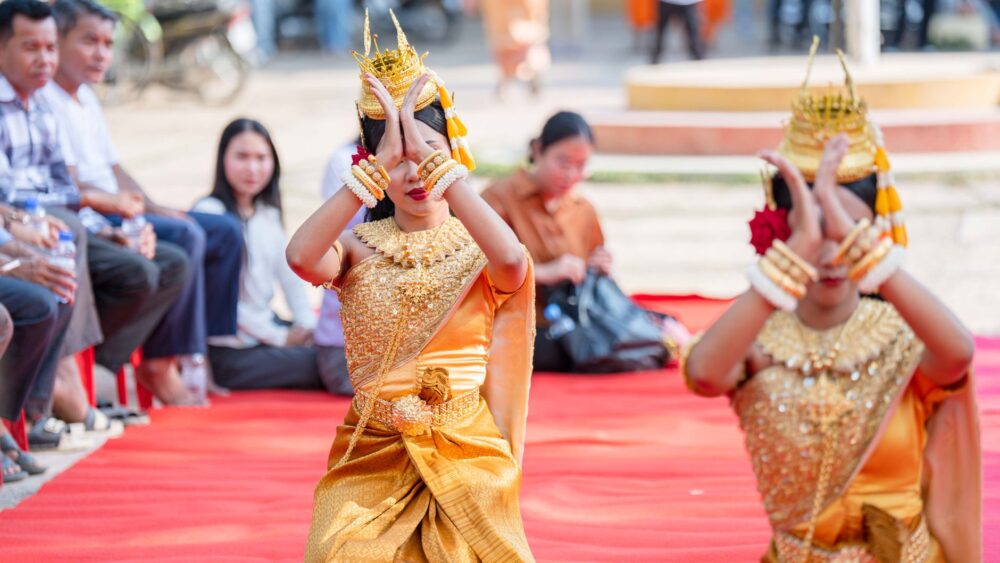
Cambodian last names carry centuries of history inside them. Most Khmer surnames reflect nature, nobility, Sanskrit-influenced religious tradition, or the values a family wanted to pass down through generations. If you are researching your own heritage, building a fictional Cambodian character, or simply curious about how names work in Khmer culture, this guide to Cambodian last names offers real context alongside each entry.
One important cultural note: in Cambodia, the family name traditionally comes first, before the given name. So “Sok Dara” means the person’s surname is Sok and their personal name is Dara. Many Cambodians reverse the order when writing in Western contexts, which can cause confusion. Keep that in mind as you read.
Royal and Noble Surnames
Several Cambodian last names are tied directly to the royal family or the aristocratic class that surrounded the Khmer court. These names often incorporate Sanskrit-derived titles and elements signaling power, light, or divine favor.
Norodom
The most recognizable royal surname in Cambodia, carried by King Norodom Sihamoni and his predecessors. It derives from Sanskrit elements meaning “gift of the god Indra” or more broadly “gift of the gods.” Few surnames in Southeast Asia carry as much historical weight.
Sihanouk
A branch name of the royal family, famously borne by King Norodom Sihanouk. The name blends Sanskrit influences and has become almost synonymous with modern Cambodian political history. It is rare outside the royal line.
Yukanthor
A royal Cambodian surname from the late 19th and early 20th centuries, derived from Sanskrit, roughly meaning “the one who brings happiness” or “bringer of joy.” Prince Yukanthor was notable for his early advocacy of Cambodian rights under French colonial rule.
Sisowath
Another branch of the Cambodian royal family, with King Sisowath reigning in the early 20th century. The name has Sanskrit roots and is associated with the royal palace lineage. It remains a marker of direct descent from Khmer royalty.
Nature-Inspired Cambodian Surnames
Many Khmer surnames draw from the natural world, reflecting the deep connection between Cambodian life and the landscape of rice fields, rivers, forests, and sky. These are among the most poetic cambodian last names in common use.
Sok
One of the most common Cambodian surnames, meaning “happiness” or “peace.” It is sometimes linked to the Pali word sukha, meaning comfort and well-being. Short, strong, and widely recognized across Southeast Asia.
Chan
Derived from Pali and Sanskrit, Chan means “moon.” It is one of the most widespread Cambodian last names and is shared with related cultures across the region. The moon carries strong symbolic weight in Khmer cosmology and literature.
Dara
From Sanskrit, meaning “star.” Dara is used both as a surname and a given name in Cambodia, crossing gender lines with ease. It has a soft, luminous quality that has kept it popular for generations.
Meas
Meaning “gold” in Khmer, Meas is a surname that signals wealth, value, and brightness. It is deeply embedded in everyday Cambodian naming culture and frequently appears in compound names and place names throughout the country.
Keo
Meaning “glass” or “crystal,” and by extension “precious gem,” Keo is a common Khmer surname with a sparkling, clear quality. It implies something rare and beautiful, and it remains a staple of Cambodian last names today.
Pich
Pich means “diamond” in Khmer. Like Meas and Keo, it belongs to a family of gem and precious-material surnames that signal value and brilliance. It is short, direct, and unmistakably Cambodian.
Pov
Meaning “flower” in Khmer, Pov is a delicate and widely used surname. It reflects the importance of floral imagery in Khmer art, textiles, and temple carvings. You will find it across Cambodia in both family and given-name positions.
Bopha
From Pali and Sanskrit, Bopha means “flower” or “blossom.” It is slightly more formal in register than Pov and appears frequently in both surnames and given names for women. The jasmine flower, a national symbol, is often associated with this name.
Vireak
Meaning “hero” or “brave,” with Sanskrit roots, Vireak is used as both a surname and a given name. It carries strong, positive connotations and is a popular choice in families that want a name reflecting courage and honor.
Prum
Derived from the Sanskrit word for Brahma, the creator deity. Prum as a Cambodian surname reflects the deep Hindu-Brahmanical influence on Khmer culture before Theravada Buddhism became dominant. It is dignified and carries ancient resonance.
Chea
Meaning “healthy” or “well” in Khmer, Chea is one of the most common cambodian last names. It expresses a simple, sincere wish for good health and longevity, values that sit at the heart of Cambodian family life.
Vong
Vong means “lineage” or “family line” in Khmer, making it a surname that is literally about the concept of a surname. It is widely used and carries a grounded, ancestral weight.
Khlok
A Khmer nature surname referring to a type of local tree. Surnames derived from trees and plants appear throughout Cambodia, grounding families in the landscape where they lived.
Khiev
Meaning “blue-green” or the color of young leaves, Khiev is a vivid, nature-connected surname. The color it describes is associated with freshness, growth, and the lush green of Cambodia’s rice paddies.
Sanskrit and Pali-Origin Surnames
Khmer culture absorbed Sanskrit and Pali deeply through centuries of Hindu and Buddhist influence. Many cambodian last names are essentially Khmer pronunciations of Sanskrit or Pali words that traveled through religious texts, court language, and temple ritual.
Rath
From Sanskrit ratha, meaning “chariot” or “vehicle,” and by extension, “glory” or “noble conveyance.” Rath is a common Cambodian surname with a regal, classical feel rooted in ancient court culture.
Vann
Derived from the Sanskrit word for “forest” or “color,” Vann is one of the most recognizable Cambodian last names internationally, partly through prominent bearers in the diaspora. It is versatile and has crossover appeal.
Sovan
From Sanskrit suvarna, meaning “golden” or “of good color.” Sovan is a widely used Cambodian name in both the surname and given-name positions. Its golden meaning places it alongside Meas in the cluster of names celebrating light and value.
Sambath
From Pali and Sanskrit, meaning “wealth” or “prosperity.” Sambath is a well-established Cambodian surname expressing the hope for material and spiritual abundance. It is particularly common in central and southern Cambodia.
Rithy
From Sanskrit, meaning “power” or “miraculous power.” Rithy is used as both a surname and a personal name and carries an energetic, forward-moving quality. It is especially popular among Cambodian men.
Sophea
From Sanskrit sophia via Pali, meaning “wisdom.” Sophea appears frequently in both the surname and given-name positions. It has a gentle, intellectual quality and is widely used by Cambodian women in particular.
Samath
Derived from Pali, meaning “calm” or “tranquility,” closely related to the Buddhist concept of samatha meditation. A surname that carries deep spiritual meaning within Theravada Buddhist culture.
Bunna
From Pali punna, meaning “merit” or “good karma.” Bunna is a very Cambodian name, reflecting the centrality of Buddhist merit-making in daily life and family values. It is warm, common, and deeply felt.
Deth
From Sanskrit, related to “giving” or “gift.” Deth is a straightforward Cambodian surname that appears across the country and in diaspora communities worldwide. It is short and strong.
Heng
Meaning “lucky” or “fortunate” in Khmer, with some connection to Chinese-influenced naming traditions through centuries of trade and migration. Heng is one of the most recognizable Cambodian last names and carries a universally positive meaning.
Nhem
A Khmer-origin surname meaning “name” or associated with the concept of reputation and identity. It is distinctively Cambodian and not easily confused with names from neighboring cultures.
Phan
Meaning “to create” or “to give birth to,” from Khmer roots. Phan is a common Cambodian surname with a productive, generative meaning that fits naturally into a culture that values lineage and continuity.
Kang
A Cambodian surname with both Khmer and Chinese-Cambodian roots, meaning “strong” or “firm.” The significant Sino-Khmer community in Cambodia has contributed several surnames that blend both traditions, and Kang is one of the most visible.
Ly
A short, widely used Cambodian surname that carries Chinese-Cambodian origins, related to the character meaning “reason” or “principle.” It is extremely common in the Cambodian diaspora and appears in records across France, the United States, and Australia.
Lim
Another Sino-Khmer surname, related to the Chinese family name meaning “forest” or “grove.” Lim is a staple of Cambodian last names in both Cambodia and diaspora communities, reflecting the country’s long history of Sino-Khmer intermarriage.
Chhun
From Khmer, meaning “a type of sacred tree” or associated with blessings and prosperity. Chhun is a distinctively Cambodian surname that is immediately recognizable by its double-h spelling in romanization.
Chum
A Khmer surname meaning “group” or “cluster,” suggesting community and belonging. It is a grounded, practical name that appears frequently in rural and urban Cambodia alike.
Kong
Meaning “merit” or related to the concept of a ruler’s power, Kong is used across Cambodia and has both Khmer and Sino-Khmer usage. It is strong, short, and deeply rooted in the region.
Oum
A distinctively Cambodian surname, Oum means “aunt” or carries a sense of nurturing, elder-feminine respect. It is associated with warmth and family structure. Oum Dara and similar compound names are common.
Seng
From Pali sinha, meaning “lion.” Seng is a powerful surname with Buddhist and Sanskrit roots and is used widely across Cambodian and Sino-Khmer communities. The lion is a symbol of royalty and courage in Khmer iconography.
Chorn
A Khmer surname meaning “to win” or “victorious.” Chorn carries an energetic, triumphant quality and is a common name in Cambodia, often given to families with a history of resilience.
Soth
From Pali, meaning “pure” or “clean.” Soth is a simple, dignified Cambodian surname with strong Buddhist overtones. Purity of heart and action is a core Theravada value, and this name reflects it directly.
Touch
Meaning “small” in Khmer, Touch is a common surname that was sometimes given affectionately to distinguish a younger branch of a family or a smaller son. It has a gentle, informal character.
Nget
A Khmer surname meaning “to be shining” or “bright.” Nget is used across Cambodia and reflects the Khmer fondness for light and luminosity in naming.
Mean
Meaning “to have” or “prosperous” in Khmer. Mean is a common surname expressing the desire for sufficiency and material well-being. It is practical and grounded, a name about having enough.
Ros
A Cambodian surname meaning “dew” in Khmer. Ros has a fresh, natural quality and is particularly associated with the cool morning hours and the renewal they bring. It is a common surname in both Cambodia and the diaspora.
Sam
Short and Khmer, Sam means “even,” “equal,” or “calm.” It appears frequently as both a surname and a given-name element in compound names. Its brevity makes it one of the most internationally recognizable Cambodian last names.
Nop
From Khmer, meaning “to bow” or “respectful.” Nop reflects the deeply hierarchical and respectful culture of Cambodia, where showing deference to elders and authority is a core social value.
Tep
From Pali and Sanskrit deva, meaning “god” or “divine being.” Tep is a striking surname that places the bearer in a conceptual relationship with the divine. It is common in Cambodia and often appears in compound names like Tep Vong.
Hing
A Sino-Khmer surname related to the concept of prosperity and flourishing. Hing is part of the Chinese-Cambodian naming tradition that has shaped the country’s surname landscape for several centuries.
Khun
From Sanskrit and used across Southeast Asia, Khun means “merit” or “virtue.” In Cambodia it carries strong Buddhist resonance and is used as a surname across the country.
Peng
A Sino-Khmer surname meaning “to grow” or “to expand.” Peng reflects Chinese-Cambodian naming culture and is widely used in the urban Cambodian community, particularly in Phnom Penh.
Ny
A short Khmer surname, Ny is derived from a Pali root meaning “wisdom” or “knowledge.” Its extreme brevity makes it distinctive and it is immediately recognizable as Cambodian in diaspora contexts.
Tan
A Sino-Khmer surname widely used across Cambodia, meaning “altar” or “to extend” in Chinese. Tan is one of the most common surnames in the Cambodian Chinese community and has spread broadly through intermarriage.
Kuy
A surname associated with the Kuy people, one of Cambodia’s indigenous ethnic minorities. It serves as both an ethnic identifier and a family name and carries deep roots in the northeastern highlands of Cambodia.
Thong
From Khmer, meaning “gold” or “golden,” related in meaning to Meas and Sovan. Thong is a common surname across Cambodia and neighboring countries where Theravada Buddhist culture predominates.
Phon
Meaning “fruit” or “result” in Khmer, reflecting the Buddhist concept of the fruits of one’s actions and merit. Phon is a common Cambodian surname with a quietly philosophical meaning.
Loeung
A Khmer surname meaning “to rise” or “to ascend.” Loeung carries aspirational energy and is used across Cambodia as both a surname and an element in compound personal names.
Yem
A distinctively Cambodian surname meaning “to be cool” or “to be refreshing,” associated with the relief of cool water or shade. It has a gentle, soothing quality and is used across the country.
Surnames Reflecting Virtue and Character
A meaningful cluster of Cambodian last names expresses moral qualities directly: honesty, kindness, courage, or loyalty. These names were often chosen to set an expectation for how a family would conduct itself.
Chhay
Meaning “victory” in Khmer, Chhay is an upbeat, triumphant surname. The double-h is characteristic of Khmer romanization and immediately signals Cambodian origin to anyone familiar with the language.
Bun
From Pali, meaning “merit” or “good deed.” Bun is one of the most fundamentally Buddhist surnames in Cambodia, expressing the core Theravada value of accumulating merit through right action. It appears in dozens of compound names.
Thou
Meaning “to endure” or “patient” in Khmer, Thou is a surname associated with resilience and steadiness. These qualities have obvious resonance for a people who have survived some of the most difficult decades of any nation in the 20th century.
Mony
From Sanskrit mani, meaning “jewel” or “gem.” Mony is widely used as both a surname and a personal name in Cambodia and carries the same sparkling, precious quality as Keo and Pich.
Sary
A Khmer surname meaning “bright” or “clear.” Sary has a clean, simple sound and is commonly used across Cambodia. Its meaning of brightness and clarity connects it to the light-themed cluster of Cambodian surnames.
How to Choose or Use a Cambodian Last Name
If you are Cambodian or of Cambodian heritage and researching your family name, start with phonetic variants. Cambodian surnames were often romanized inconsistently during the French colonial period and again when families fled to Western countries in the 1970s and 1980s. The same family name might be spelled Sok, Souk, or Souc depending on who recorded it and when. Cross-referencing variants will often reveal common roots.
For writers building Cambodian characters, the most important thing to get right is the name order. Put the surname first when writing in a Cambodian context, and consider using one of the Sanskrit or Pali-derived surnames if your character is from an educated or aristocratic background, or a shorter Khmer-root surname if your character comes from a rural or working-class family. Both are authentic; the choice carries social meaning.
For parents of Cambodian heritage choosing a surname-inspired given name, names like Dara, Sophea, Mony, and Sovan all function beautifully as first names in Western contexts while remaining unmistakably Cambodian. They are short enough to be pronounceable in English and meaningful enough to carry genuine cultural weight.
Finally, be aware that many Cambodian surnames were disrupted during the Khmer Rouge period from 1975 to 1979, when family records were destroyed and people were forced to abandon their names. Many Cambodian families today have surnames that were reconstructed or simplified after 1979. This history is part of the name, too, and worth knowing.
Cambodian last names are a living archive: of Sanskrit scholarship, Buddhist devotion, natural beauty, and survival. Knowing what a name means is the first step toward understanding the family that carries it.