

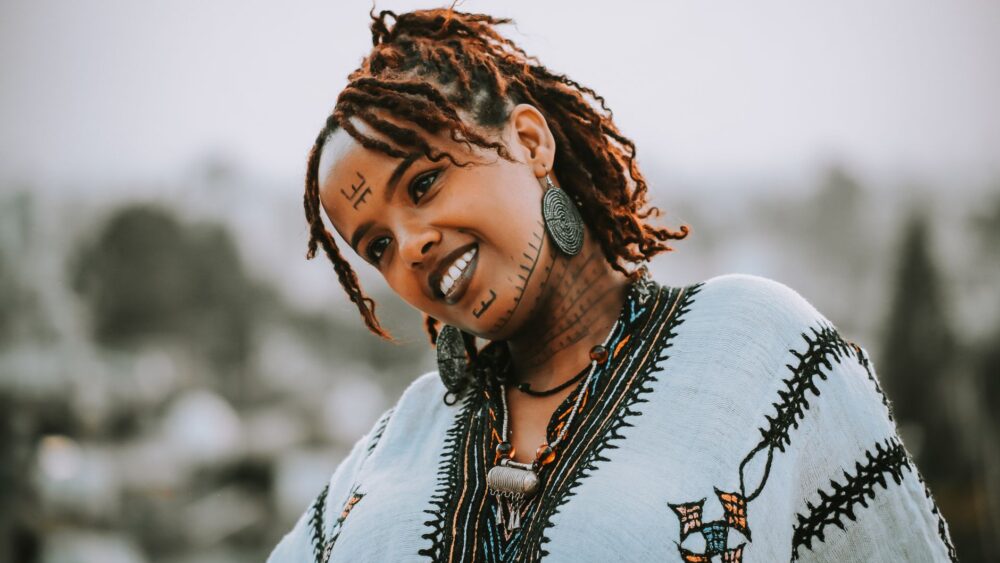
Ethiopian names are among the most linguistically layered and culturally resonant in the world. Drawn from Amharic, Tigrinya, Oromo, Somali, and older classical languages like Ge’ez, they carry full sentences as names, blessings, declarations of faith, statements about identity and family. A single name might mean “God has given me a gift I did not deserve” or “she arrived at the right time.” That depth is the whole point.
Whether you have Ethiopian roots or are simply drawn to names with genuine weight and story, this list covers the real landscape of Ethiopian names across regions, religions, and eras. Every entry here is a name real people carry.
Ethiopian Boy Names Rooted in Faith
Religion is woven into Ethiopian naming culture in a way that is hard to overstate. The Ethiopian Orthodox Church is one of the oldest Christian traditions on earth, and Islam has deep roots in the region as well. Many of the most beloved Ethiopian names for boys are direct expressions of devotion.
Dawit
The Ethiopian form of David, from the Hebrew meaning “beloved.” Dawit is one of the most enduring names in Ethiopia, carried by kings and commoners alike. It has a grounded, classic feel without feeling stiff.
Yohannes
The Amharic and Tigrinya form of John, ultimately from the Hebrew Yohanan meaning “God is gracious.” Several Ethiopian emperors bore this name, and it remains a top choice for boys across the country.
Mikael
The Ethiopian form of Michael, meaning “who is like God?” in Hebrew. The archangel Michael holds special significance in Ethiopian Orthodox tradition, making this name feel both sacred and strong.
Girum
An Amharic name meaning “be amazed” or “marvel.” It carries a sense of wonder, often used as a way of expressing that the child’s arrival inspired awe.
Haile
From Ge’ez, meaning “power” or “might.” It is most famously part of the name Haile Selassie, the last emperor of Ethiopia. As a standalone given name, it carries tremendous dignity.
Tesfaye
An Amharic name meaning “my hope.” Tesfa means hope, and the suffix -ye makes it personal and possessive. It is one of the most warmly used names in Ethiopian culture.
Bekele
From Amharic, meaning “he has grown” or “he has sprouted.” There is something quietly hopeful about this name, a parent watching a child come into the world and flourish.
Mulugeta
An Amharic name meaning “master of kings” or “king of kings,” a title with deep roots in Ethiopian royal and religious tradition. Bold and historically significant.
Tewodros
The Ethiopian form of Theodore, from the Greek meaning “gift of God.” Emperor Tewodros II, who ruled in the nineteenth century, gave this name a powerful historical resonance in Ethiopia.
Berihun
An Amharic name meaning “be light for us” or “illuminate us,” from the root bere meaning light. It is a name given with the wish that a child will bring clarity and guidance to those around him.
Abebe
From Amharic, meaning “flower” or “he has bloomed.” Abebe Bikila, the legendary Ethiopian marathon runner who won gold at the 1960 Olympics, made this name known worldwide.
Mekdes
From Ge’ez, meaning “holy place” or “sanctuary.” Though it crosses gender lines in practice, it is used for boys in some families and carries a deeply sacred connotation tied to the Ethiopian Orthodox tradition.
Yared
The Ethiopian form of Jared, with roots in Hebrew meaning “descent.” Saint Yared is a towering figure in Ethiopian Orthodox Christianity, credited with creating the country’s sacred choral music tradition. The name carries enormous cultural pride.
Ermias
The Ethiopian form of Jeremiah, from Hebrew meaning “God will uplift.” It has a musical, flowing sound that works well in both Amharic and English-speaking contexts.
Biruk
An Amharic and Tigrinya name meaning “blessed.” Simple, strong, and direct. This is a name that says exactly what a parent means when they look at their newborn.
Henok
The Ethiopian form of Enoch, from Hebrew meaning “dedicated” or “trained.” The Book of Enoch is a significant text in the Ethiopian Orthodox canon, giving this name particular scriptural weight.
Natnael
The Ethiopian form of Nathaniel, meaning “God has given” in Hebrew. It has an elegant, full sound and is widely used across Ethiopia’s Christian communities.
Selemon
The Ethiopian form of Solomon, meaning “peace” from Hebrew shalom. King Solomon holds a unique place in Ethiopian mythology through the legend of the Queen of Sheba, so this name carries royal and sacred meaning simultaneously.
Ezra
Used across Ethiopian Jewish (Beta Israel) and Christian communities, from Hebrew meaning “help.” Short, strong, and internationally recognizable while still carrying genuine Ethiopian usage.
Amanuel
The Ethiopian form of Emmanuel, meaning “God is with us” in Hebrew. It is a name of deep comfort and faith, widely used in both Christian and broader Ethiopian contexts.
Ethiopian Girl Names Rooted in Faith and Blessing
Ethiopian girl names are often outright declarations of love, gratitude, or spiritual meaning. Many come from Amharic root words combined with possessive or directional suffixes that make the name feel personal and addressed to the child herself.
Tigist
From Amharic, meaning “patience” or “endurance.” It is a virtue name in the truest sense, given to girls with the hope that they will carry grace through difficulty. One of the most beloved girl names in Ethiopia.
Meklit
An Amharic name meaning “she who is favored” or “the chosen one.” It has a soft, lyrical sound and is widely used across Ethiopian Christian communities.
Hiwot
From Amharic, meaning “life.” Straightforward and profound. Giving a child a name that simply means life is one of the most loving things a parent can do.
Selam
From Ge’ez and Amharic, meaning “peace.” It is used for both boys and girls, but predominantly for girls. Simple, beautiful, and universally understood across Ethiopia’s many languages.
Miriam
Used widely in Ethiopian Jewish (Beta Israel) and Christian communities, with Hebrew roots. The Ethiopian form carries the same ancient resonance as everywhere else, but with a distinctly Ethiopian cultural history behind it.
Selamawit
An expanded form of Selam, meaning “she is peace” or “belonging to peace.” The -awit suffix is a feminine marker in Amharic that adds warmth and specificity. A full, graceful name.
Tizita
An Amharic name meaning “memory” or “remembrance.” Tizita is also the name of a beloved Ethiopian musical scale and song tradition, which gives this name an artistic, deeply cultural dimension.
Almaz
From Amharic, meaning “diamond.” It is used as a name for girls across Ethiopia and among Ethiopian diaspora communities. Strong, clear, and beautiful.
Fikirte
From the Amharic word fikir meaning “love,” with the suffix -te making it a feminine given name. It essentially means “she is love” or “my love.” Warm and deeply personal.
Yeshi
A popular Amharic girl’s name, often understood as a short form meaning “for a thousand” or used as a stand-alone name with a sense of abundance and blessing. Widely used across generations.
Blen
A Tigrinya name meaning “she has surpassed” or “beyond.” It is used in Eritrean and northern Ethiopian communities and has a clean, modern feel while being genuinely traditional.
Liya
The Ethiopian form of Leah, from Hebrew meaning “weary” in its original etymology, though in Ethiopian usage it is associated simply with beauty and grace. It is among the most popular girl names in Ethiopia today.
Kedist
From Ge’ez, meaning “holy” or “sacred.” It is the feminine form of the concept of holiness in the Ethiopian Orthodox tradition. A name given with reverence.
Rahel
The Ethiopian form of Rachel, from Hebrew meaning “ewe” or “gentle one.” It is widely used in both Christian and Jewish Ethiopian communities and has a soft, flowing sound.
Wubet
An Amharic name meaning “beauty.” Direct, confident, and commonly given as a wish for the girl’s inner and outer grace. Still very much in active use.
Bethlehem
Used as a given name for girls in Ethiopian Christian families, referencing the birthplace of Jesus. It is a genuinely common given name in Ethiopia in a way it is not in most other cultures.
Nardos
From Amharic, the name of a fragrant plant used in incense and religious ritual. It carries a sense of sweetness and sacredness and is a beloved girl’s name in Ethiopia.
Tsion
The Ethiopian form of Zion, meaning “highest point” or “holy mountain.” In Ethiopian Orthodox tradition, the Church of Our Lady Mary of Zion in Aksum is the most sacred site in the country. This name carries extraordinary spiritual weight.
Azeb
From the Ge’ez and Amharic word for “south,” but used as a name in honor of the Queen of Sheba, who is called Makeda or Azeb in Ethiopian tradition. A name with royal mythological roots.
Feven
A Tigrinya name widely used in northern Ethiopia and Eritrea. Its meaning is associated with being a gift or blessing. It has a bright, two-syllable sound that travels well.
Ethiopian Names Meaning Hope, Light, and Goodness
A significant cluster of Ethiopian names across all regions centers on light, goodness, and hope. These are names given as explicit wishes for the child’s character and the family’s future.
Berhane
From Ge’ez and Amharic, meaning “my light” or “light of mine.” The -e suffix makes it possessive. It is used for both boys and girls and is one of the most poetic names in the Ethiopian tradition.
Nura
From Arabic meaning “light,” widely used among Ethiopian Muslims. It is warm, short, and carries that same luminous quality as its Hebrew and Ge’ez counterparts.
Alem
From Amharic and Ge’ez, meaning “world” or “universe.” It is used for both boys and girls, sometimes in compounds like Alemayehu. A name of expansive, generous meaning.
Alemayehu
A full Amharic name meaning “I have seen the world.” It was famously the name of the young Ethiopian prince taken to England in 1868 after the Battle of Magdala. Historically significant and deeply lyrical.
Kibrom
A Tigrinya name meaning “his glory” or “glory of God.” Strong and declarative, widely used in Tigrinya-speaking communities.
Habtom
A Tigrinya name meaning “wealth is his” or “he has riches.” In Ethiopian naming culture, wealth in names often refers to blessings and family rather than material goods.
Tesfa
The Amharic root word for “hope,” used both as a standalone given name and as a building block in compound names. Clean, strong, and full of forward-looking energy.
Nigist
From Amharic, meaning “queen.” A direct, proud name for a girl. It is the feminine counterpart to Negus (king) and carries a sense of regal confidence.
Negest
A variant form of Nigist, also meaning “queen” in Amharic. Used in some regions as a distinct given name.
Zewdu
An Amharic name meaning “his crown” or “the crown.” Regal and distinctive, it has a historical resonance in Ethiopian imperial culture.
Aster
From the Amharic and Ge’ez word for “star.” It is one of the most popular girl names in Ethiopia and has the bonus of being immediately recognizable internationally while remaining genuinely Ethiopian.
Kokeb
Also meaning “star,” from Ge’ez. It is used more in traditional and rural contexts while Aster tends toward urban settings. Both are genuine and beautiful.
Beza
From Amharic, meaning “redeemed” or “atonement.” A name with deep theological roots in Ethiopian Orthodox Christianity, given with a sense of grace and gratitude.
Ethiopian Names from the Oromo Tradition
Oromo is the most widely spoken language in Ethiopia, and Oromo naming traditions have their own distinct character. Many Oromo names relate to nature, circumstance of birth, or qualities the parents hope to see in the child.
Chaltu
An Oromo girl’s name meaning “good” or “nice.” It is one of the most commonly used traditional Oromo names and has a gentle, pleasant sound.
Iftu
From Oromo, meaning “light” or “brightness.” A short, luminous name for a girl, widely used in Oromo communities.
Diriba
An Oromo name used for boys, relating to the concept of surpassing or going beyond. It carries a sense of ambition and achievement.
Gammada
From Oromo, meaning “happy” or “joyful.” A name given to a child whose arrival brought great happiness to the family.
Toltu
An Oromo girl’s name meaning “beautiful” or “good.” It has a warm, rounded sound and is a classic within Oromo naming culture.
Girma
From Amharic and also used in Oromo communities, meaning “majesty” or “greatness.” It is a strong, well-established name across multiple Ethiopian ethnic groups.
Daba
An Oromo name meaning “morning mist” or “the blessing that comes at dawn.” It has a quiet, atmospheric quality that is distinctly beautiful.
Caaltu
An Oromo name for girls, a variant of Chaltu, meaning “good” or “virtuous.” The double-a spelling reflects Oromo orthography.
Hirut
An Oromo and Amharic name for girls meaning “life” or “existence.” It overlaps in meaning with Hiwot but comes from a different root. Quietly powerful.
Nuguse
From Amharic meaning “his king” or relating to royalty, used in Oromo and Amhara communities. A name with genuine historical usage across Ethiopia.
Ethiopian Names from the Tigrinya Tradition
Tigrinya is spoken in the Tigray region of Ethiopia and across Eritrea. Tigrinya names often have a directness and a classical Ge’ez influence that gives them a strong, anchored quality.
Abrham
The Tigrinya form of Abraham, from Hebrew meaning “father of many.” Widely used in Tigrinya-speaking Christian communities, where the patriarch Abraham holds deep religious significance.
Winta
A Tigrinya girl’s name meaning “desired” or “wished for.” It is a name that says the child was longed for and welcomed. One of the most used Tigrinya names for girls.
Senait
A Tigrinya name meaning “good” or “goodness.” Warm, simple, and widely used. It has the same direct virtue-naming quality found across Ethiopian naming traditions.
Haben
A Tigrinya name meaning “pride” or “pride of the family.” It carries a quiet confidence and is used for girls in both Ethiopian and Eritrean Tigrinya-speaking communities.
Teame
A Tigrinya name for boys meaning “twin.” In cultures where twins carry special significance, this name is given to mark the fact of twinhood itself.
Tsegay
A Tigrinya name meaning “my grace” or “grace is mine.” The possessive suffix -ay is characteristic of Tigrinya. Used for both boys and girls.
Yonas
The Tigrinya and Amharic form of Jonah, from Hebrew meaning “dove.” It is a well-used name across Ethiopian Christian communities, with a gentle and timeless quality.
Lidya
The Ethiopian form of Lydia, from the Greek place name. It is widely used across Ethiopia and carries a soft, classic elegance.
Freweini
A Tigrinya name meaning “fruit of grace” or “fruit of goodness.” It is a full, formal name with a lot of beauty in its sound. Often shortened to Frewe in everyday use.
Hagos
A Tigrinya name meaning “joy” or “happiness.” Widely used for boys, it is one of the most joyful-sounding names in the Tigrinya tradition.
Ethiopian Names with Nature and World Meanings
Beyond faith and virtue, Ethiopian names also draw on the natural world and the broader cosmos. These names tend to feel expansive and poetic.
Abay
The Amharic name for the Blue Nile river, one of the great natural wonders of Ethiopia. Giving a child this name connects them to the landscape itself.
Walia
Named for the Walia ibex, a rare mountain animal found only in the Ethiopian highlands. It is used as a given name and carries a sense of highland pride and uniqueness.
Zema
From Ge’ez, meaning “song” or “melody.” In the Ethiopian Orthodox tradition, sacred music (zema) is a form of prayer. A beautiful name for a child born into a musical or deeply religious family.
Saba
The name of the ancient kingdom and its queen, the Queen of Sheba. In Ethiopian tradition she is called Makeda or associated with Saba. Used as a given name for girls with a sense of ancient, regal heritage.
Makeda
The traditional Ethiopian name for the Queen of Sheba. It is one of the most historically resonant girl names in all of Ethiopian culture, and it has a commanding, beautiful sound.
Abyssinia
Used occasionally as a given name for girls, drawn from the historical name for the Ethiopian empire. It is rare but genuine, carrying an enormous sense of cultural identity and pride.
Genet
From Amharic, meaning “paradise” or “garden of Eden.” One of the most beloved girl names in Ethiopia. It is warm, hopeful, and deeply rooted in both religious and everyday culture.
Eden
Used as a given name in Ethiopia, particularly in Christian families, meaning “paradise” from Hebrew. It sits at the intersection of biblical and natural meaning and is widely used for girls.
Tiblets
An Amharic name meaning “gift” or “offering.” It carries a sense of the child as a divine gift and is used across Ethiopian communities.
Ethiopian Muslim Names Widely Used in Ethiopia
Ethiopia has a significant Muslim population, particularly in the Afar, Somali, and Harari regions as well as among many Oromo communities. Many Ethiopian Muslim names are Arabic in origin but have been used in Ethiopia for centuries and are thoroughly part of the country’s naming culture.
Omar
From Arabic, meaning “flourishing” or “long-lived.” Widely used among Ethiopian Muslims and has a strong, clean sound that crosses cultural boundaries easily.
Fatima
From Arabic, meaning “one who abstains” or “weaned.” One of the most beloved names in Islamic tradition, widely used in Ethiopia’s Muslim communities.
Ibrahim
The Arabic and Islamic form of Abraham, meaning “father of many.” Deeply used in Ethiopian Muslim communities across regions.
Amina
From Arabic, meaning “trustworthy” or “faithful.” A classic across the Muslim world and genuinely popular in Ethiopian Muslim communities.
Hassan
From Arabic, meaning “good” or “handsome.” Widely used in Ethiopia’s eastern and southeastern regions among Muslim families.
Zainab
From Arabic, the name of a fragrant tree and also of significant women in early Islamic history. Used in Ethiopian Muslim communities and has a graceful, full sound.
Idris
From Arabic, meaning “interpreter” or “studious.” Used in Ethiopian Muslim communities and also carries a connection to the prophet Idris in Islamic tradition.
Maryam
The Arabic and Amharic form of Mary or Miriam. Remarkably, this name is used by both Ethiopian Christians and Muslims, making it one of the most genuinely cross-cultural names in the country.
Bilal
From Arabic, meaning “moist” or “refreshing water,” but more importantly the name of Bilal ibn Rabah, the first muezzin in Islam. Widely used among Ethiopian Muslim boys.
Khadija
From Arabic, meaning “premature child” in etymology but culturally associated entirely with Khadijah, the first wife of the Prophet Muhammad. A name of great honor in Ethiopian Muslim families.
Compound and Sentence-Form Ethiopian Names
One of the most distinctive features of Ethiopian naming culture is the compound name, where a full phrase or sentence becomes the child’s name. These are worth understanding because they represent something rare in the global naming landscape.
Hailegiorgis
Meaning “power of Saint George,” combining Haile (power) with Giorgis (George). Saint George is one of the most venerated saints in Ethiopian Orthodoxy. A name that is both a declaration of faith and a request for protection.
Weldemariam
Meaning “son of Mary,” combining Welde (son of) with Mariam (Mary). This naming pattern, using Welde for boys, is one of the most traditional in Ethiopian Orthodox culture.
Gebremichael
Meaning “servant of Michael,” from Gebre (servant) and Michael. The Gebre- prefix is a classic way of expressing devotion to a particular saint or divine figure in Ethiopian Orthodox tradition.
Gebremedhin
Meaning “servant of the mediator,” combining Gebre (servant) with Medhin (mediator, a name for Christ). A deeply devotional compound name.
Teklehaimanot
The name of one of Ethiopia’s most revered saints, meaning “plant of faith” or “seedling of faith” from Tekle (plant, seedling) and Haimanot (faith). Giving a child this name is an act of profound religious reverence.
Mebrahtu
A Tigrinya compound name meaning “his light” or “light is his,” from Mebrhat (light) with the possessive suffix. Used across Tigrinya-speaking communities.
Gebreyesus
Meaning “servant of Jesus,” from Gebre (servant) and Yesus (Jesus). One of the most direct expressions of Christian faith in the Ethiopian naming tradition.
Weldegiorgis
Meaning “son of Saint George,” the female-facing counterpart to Hailegiorgis in its devotion to the same beloved saint. Used for boys in the Welde (son of) naming pattern.
Short, Modern Ethiopian Names Gaining Popularity in the Diaspora
Among Ethiopian diaspora communities in the United States, Europe, and elsewhere, there is a noticeable pattern of choosing shorter Ethiopian names that travel well across languages while still carrying genuine Ethiopian identity.
Luel
From Amharic and Tigrinya, meaning “prince” or “my prince.” Short, strong, and uncommon outside Ethiopian communities, which gives it a distinctive quality.
Nati
A short form of Natnael used as a standalone name, meaning “God has given.” Easy to pronounce in any language while remaining clearly Ethiopian.
Ruta
The Ethiopian form of Ruth, from Hebrew meaning “companion” or “friend.” It is widely used in Ethiopia and has a clean, three-letter simplicity that works everywhere.
Saron
The Ethiopian form of Sharon, from Hebrew referring to the fertile plain. Used as a girl’s name in Ethiopia with a soft, lovely sound.
Abel
Used in Ethiopian Christian families as a given name for boys, from the Hebrew biblical name. It crosses cultural contexts effortlessly while having genuine Ethiopian usage.
Lensa
An Oromo name meaning “lens” or metaphorically “one who sees clearly.” It has a modern, almost architectural feel while being a genuinely used Ethiopian name.
Sura
An Oromo name for girls, meaning “picture” or “image.” Short, visual, and quietly striking.
Kiya
An Oromo name for girls, short and bright, meaning “forgiveness.” It has a contemporary sound that sits comfortably in diaspora contexts while remaining rooted in Oromo culture.
Meti
A short Amharic name meaning “come” or used as a term of endearment. It has a warm, intimate quality and is used as a standalone given name.
Bini
A shortened form of Binyam (the Ethiopian form of Benjamin, meaning “son of my right hand”), used as a standalone name in diaspora communities. Friendly, accessible, and genuinely Ethiopian.
How to Choose an Ethiopian Name
The first thing to understand is that Ethiopian names are often not separable from their meaning. Unlike many Western naming traditions where a name is chosen for sound or family honor alone, Ethiopian names are frequently chosen because the sentence or word they contain is exactly what the parent wants to say. Start there: what do you want to declare about this child’s arrival?
Consider the language of origin. Ethiopia is a country of dozens of languages and ethnic groups, and a name from the Tigrinya tradition will carry different regional and cultural associations than one from Oromo or Amharic. If you have roots in a specific region, leaning into that linguistic tradition honors those roots more precisely than choosing a generically “Ethiopian-sounding” name.
Think about how the name will function across languages. If your child will grow up in a diaspora community, a name like Aster or Liya or Abel will move through English-speaking spaces easily, while Teklehaimanot or Gebreyesus carries enormous cultural depth but will require more explanation and patience in non-Ethiopian settings. Neither choice is wrong. It is a question of what kind of cultural work you want the name to do.
Finally, pay attention to the suffix patterns. Many Ethiopian names include possessive suffixes like -ye (mine), -tu (hers), -hu (his), or -ay (my, in Tigrinya) that change the name’s meaning slightly. Tesfaye means “my hope,” while Tesfa is just “hope.” Choosing the fuller form often makes the name feel more like a direct address to the child, which is part of what makes Ethiopian names so emotionally resonant.
Ethiopian names reward research. The more you understand what a name actually says, the more meaningful the choice becomes.