

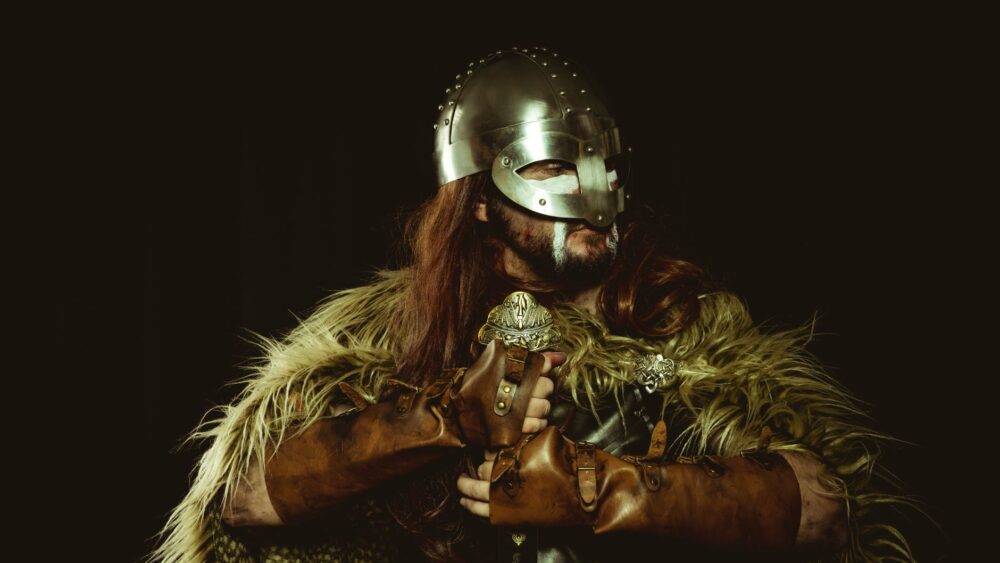
Saxon names carry something raw and grounded that most modern baby names simply don’t. These are names forged in the early medieval world of England and northern Germany, built from Old English and Old Saxon word-elements that described warriors, rulers, gods, and the natural world. If you’re drawn to names with real historical weight behind them, Anglo-Saxon history is one of the richest places to look.
The Anglo-Saxons ruled England from roughly the fifth century until the Norman Conquest of 1066, and the names they left behind range from thundering two-element warrior names to soft, lyrical feminine forms. Some have survived nearly unchanged into modern English; others vanished for centuries and are only now being rediscovered by parents who want something genuinely old rather than merely old-sounding.
Classic Anglo-Saxon Warrior Names for Boys
The backbone of the Saxon naming tradition for men was the dithematic name: two meaningful Old English elements fused together. These names were built to sound powerful, and they still do.
Aldric
From Old English eald (old, wise) and ric (ruler, power). A name that positions its bearer as a wise leader from birth, and one that feels far fresher today than it did in the Victorian era when old Germanic names were briefly fashionable again.
Aethelred
Composed of aethel (noble) and raed (counsel). Aethelred II, known to history as “the Unready” (a mistranslation of a nickname meaning “poorly counseled”), was King of England from 978 to 1013. The name itself means something closer to “noble counsel” — a far more flattering description than his reputation suggests.
Beornwulf
From beorn (warrior, man) and wulf (wolf). King of Mercia in the early ninth century, Beornwulf is one of the more striking two-element Saxon names, and the wolf element gives it an edge that feels surprisingly current.
Cynric
Built from cynn (kin, family, race) and ric (power, ruler). An early West Saxon king bore this name, and it sits in that appealing space between fully recognizable and genuinely unusual.
Eadric
From ead (wealth, fortune, happiness) and ric (ruler). Eadric Streona, an infamous Anglo-Saxon nobleman, gave this name a complicated historical reputation, but stripped of that context it’s a fine, strong name with a pleasingly archaic feel.
Godwin
From god (god) and wine (friend). Earl Godwin of Wessex, father of King Harold II, made this one of the most politically significant names in late Anglo-Saxon England. It’s also one of the few Saxon names that survived into modern use as both a given name and a surname.
Leofric
Composed of leof (dear, beloved) and ric (ruler, power). Leofric, Earl of Mercia and husband of the legendary Lady Godiva, wore this name in the eleventh century. It has a warm sound for a warrior name, and the leof element gives it genuine tenderness.
Osric
From os (a divine name element, possibly related to the Norse Aesir gods) and ric (ruler). Several early Anglo-Saxon kings and princes bore this name, and it has a clean, almost modern ring that makes it surprisingly wearable today.
Wulfric
Built from wulf (wolf) and ric (ruler, power). Wulfric Spot was a famous Anglo-Saxon nobleman and monastic founder of the late tenth century. The wolf element was enormously popular in Saxon naming, and this combination is one of its most compelling results.
Aelfric
From aelf (elf, supernatural being) and ric (ruler). Aelfric of Eynsham was one of the greatest prose writers of the Anglo-Saxon period. The elf element in Old English names didn’t carry the diminutive fairy-tale connotation it has today — it was associated with otherworldly power and beauty.
Herewulf
From here (army, host) and wulf (wolf). A less commonly cited Saxon name that is nonetheless attested in the historical record. The army-wolf combination is about as direct a warrior name as the Anglo-Saxon tradition produced.
Anglo-Saxon Kings’ Names
The royal houses of Saxon England produced names that became famous across medieval Europe. Several of these were so prestigious that they reshaped naming culture well beyond the British Isles.
Alfred
From aelf (elf) and raed (counsel). Alfred the Great, King of Wessex from 871 to 899, is one of the most celebrated figures in English history, and his name became one of the great prestige names of the Victorian era. It’s been drifting back toward fashionable in recent years after a long mid-century slump.
Athelstan
From aethel (noble) and stan (stone). Athelstan, grandson of Alfred the Great, became the first King of all England in the early tenth century. The name has a magnificent, weighty sound, and a hit television series has brought it to a new generation of parents.
Edgar
From ead (wealth, fortune) and gar (spear). Edgar the Peaceful was King of England from 959 to 975 and presided over a golden age of Anglo-Saxon culture. Edgar has never fully left use, and today it sits in a sweet spot — historically substantial, but not overexposed.
Edmund
From ead (wealth, prosperity) and mund (protection). Saint Edmund, King of East Anglia, was martyred by Viking invaders in 869 and became one of the patron saints of England. Edmund has been a reliable English classic ever since, carried by kings, saints, and literary characters alike.
Edward
From ead (wealth, fortune) and weard (guardian, protector). Edward the Confessor, the last great Anglo-Saxon king before the Conquest, made this name so prestigious that successive Norman and Plantagenet kings adopted it. It remains one of the most enduringly used English names of all time.
Harold
From Old English here (army) and weald (power, ruler), though influenced also by Old Norse Haraldr. Harold II was the last Anglo-Saxon King of England, killed at the Battle of Hastings in 1066. The name carries a certain melancholy grandeur because of that history, which only makes it more interesting.
Oswald
From os (divine power) and weald (power, rule). Saint Oswald, the seventh-century King of Northumbria, was one of the most venerated royal saints of early England. The name has a slightly owlish, professorial quality in modern ears, but that’s part of its charm.
Ethelbert
From aethel (noble) and beorht (bright, famous). Ethelbert of Kent was the first English king to convert to Christianity, famously receiving Saint Augustine in 597. This is one of the more challenging Saxon names to revive, but the nickname Bert gives it a practical foothold.
Saxon Names for Girls
Feminine Saxon names are criminally underused in the current naming landscape. While boys’ names from this period have seen a modest revival, the women’s names are still largely untapped — which means a parent who chooses one today gets genuine rarity alongside genuine history.
Aelfflaed
From aelf (elf) and flaed (beauty). Several important Anglo-Saxon women bore this name, including a daughter of Alfred the Great. The spelling is challenging, but the sound — roughly “ALF-flad” — is distinctive and striking.
Aethelflaed
From aethel (noble) and flaed (beauty). Aethelflaed, Lady of the Mercians, was the daughter of Alfred the Great and one of the most powerful rulers of tenth-century England. She led armies, built fortified towns, and governed a kingdom — and she has one of the great names of the entire Anglo-Saxon period.
Eadgyth
From ead (wealth, fortune) and gyth (war, strife). The modern form Edith descends directly from this Saxon original. Eadgyth, daughter of King Edward the Elder, became Holy Roman Empress in the tenth century — one of the most remarkable careers of any Anglo-Saxon noblewoman.
Edith
The Latinized and modernized form of Eadgyth, above. Saint Edith of Wilton, an illegitimate daughter of King Edgar, was venerated widely in medieval England. Edith has had a strong revival in recent years, particularly in Britain, where it has climbed back into genuine mainstream use.
Elswith
From aelf (elf) and swith (strong). Ealhswith was the wife of Alfred the Great and Queen of Wessex. The slightly modernized spelling Elswith is more approachable while keeping the Saxon character intact.
Godgifu
From god (god) and gifu (gift). This is the original Saxon form of the name we know as Godiva — yes, that Lady Godiva. The legendary noblewoman who allegedly rode naked through Coventry bore this name in its Old English form, and it has a warm, generous meaning underneath the dramatic legend.
Hilda
From Old English and Old High German hild (battle, war). Saint Hilda of Whitby, the seventh-century abbess who hosted the famous Synod of Whitby in 664, is one of the towering figures of early English Christianity. Hilda has made a quiet but definite comeback as parents rediscover strong, short vintage names.
Mildrith
From mild (gentle, mild) and thrith (strength). Saint Mildrith was an eighth-century abbess and one of the most popular saints of pre-Conquest Kent. This is a genuine rarity today, but it has a sound that sits surprisingly close to familiar names like Mildred and Judith.
Wulfrun
From wulf (wolf) and run (secret, rune). A noblewoman named Wulfrun founded a minster at Wolverhampton in the late tenth century. The wolf element appeared in women’s names just as readily as in men’s, and Wulfrun shows how striking the result could be.
Aelswith
A variant spelling of the same name as Elswith above, from aelf and swith. Listed separately here only because the Aelf- prefix spelling appears distinctly in historical records and gives the name a notably different visual character.
Saxon Saint Names
The Anglo-Saxon church produced an extraordinary number of local saints, and their names are among the most historically grounded Saxon names available. Many of these were common names that gained lasting prestige through association with a venerated figure.
Bede
The Venerable Bede, the eighth-century monk and historian of Northumbria, bore a name whose exact etymology is debated — it may connect to an Old English root meaning “prayer.” Bede wrote the Ecclesiastical History of the English People, one of the foundational texts of English history, and his name is short, distinctive, and quietly magnificent.
Boniface
From Latin bonum (good) and fatum (fate, fortune) — technically a Latin name, but Saint Boniface, the apostle to the Germans, was born Wynfrith in Saxon England around 675 and is one of the great figures of the Saxon church. The Latin name he took became the famous one, and it’s usable in ways his original birth name is not.
Cuthbert
From Old English cuth (known, famous) and beorht (bright). Saint Cuthbert of Lindisfarne was the most beloved saint of northern England for centuries, and his cult shaped the cultural identity of the Anglo-Saxon north. Cuthbert is eccentric by current standards, but the nickname Cuth or Bert makes it livable.
Dunstan
From dun (dark, hill) and stan (stone). Saint Dunstan, Archbishop of Canterbury in the tenth century, was one of the most influential churchmen of the entire Anglo-Saxon period. The name has a solid, grounded sound and the -stan ending is fashionable in other contexts right now.
Wilfrid
From wil (will, desire) and frith (peace). Saint Wilfrid of York was a major figure in the seventh-century English church who argued successfully for Roman over Celtic Christian practice at the Synod of Whitby. Wilfrid is seeing real interest in Britain as parents look for alternatives to the more familiar Wilfred.
Swithun
From swith (strong) and possibly hun (bear cub, young warrior). Saint Swithun was Bishop of Winchester in the ninth century and became the subject of the famous weather legend (rain on Saint Swithun’s Day means forty days of rain to follow). An unusual choice today, but with a genuine story attached.
Short and Accessible Saxon Names
Not every Saxon name requires a pronunciation guide. Several of the most authentic Old English names are short, easy to spell, and immediately wearable in the modern world.
Wynn
From Old English wynn, meaning joy or delight. Wynn was also the name of the runic letter representing the “w” sound in Old English. It works beautifully as either a given name or a middle name, and its brevity and warmth make it one of the most immediately appealing Saxon names for modern use.
Bram
A short form of the Old English name Branthram or related forms, though Bram is attested as a given name in its own right in Anglo-Saxon and medieval Germanic contexts. It’s direct, strong, and has none of the difficulty that comes with longer Saxon names.
Eada
A short form derived from the ead element (wealth, prosperity, happiness) that appears as a standalone name in Old English records. Simple, feminine, and quietly lovely.
Golde
From Old English gold, used as a given name in Anglo-Saxon England. It’s one of the most direct of all Saxon names — straightforward in meaning, short in form, and with a warmth that translates easily into modern naming.
Halig
From Old English halig (holy, sacred). Used as a given name in the Anglo-Saxon period, Halig has a soft, approachable sound that sits close to modern names like Halle or Hailey while carrying genuine Old English heritage.
Saxon Place-Name-Inspired Given Names
The Saxons named the English landscape, and some of those place-name elements have crossed over into use as given names with deep roots in the Old English naming tradition.
Ashwin
While Ashwin is also an Indian name of Sanskrit origin, it exists independently in Old English contexts from aesc (ash tree) and wine (friend). The Anglo-Saxon ash tree was a sacred and martial symbol — the ash-wood spear was the warrior’s weapon of choice — and this name reflects that.
Leofwin
From leof (beloved, dear) and wine (friend). Leofwin Godwinson was a brother of King Harold II and died alongside him at Hastings. It’s a warm name despite its martial history, and Lewin has been used as a simplified modern form.
Ethelwin
From aethel (noble) and wine (friend). Several Anglo-Saxon bishops and noblemen bore this name. The wine (friend) element appears across dozens of Saxon names and gives this one an unexpected gentleness.
How to Choose a Saxon Name
The single most important thing to get right with Saxon names is pronunciation. Names like Aethelflaed and Eadgyth are historically magnificent but genuinely difficult for modern speakers — and if you love them, you should be prepared to explain and repeat them. If ease of use matters to you, names like Edith, Alfred, Edgar, Hilda, Edmund, and Dunstan give you the same Anglo-Saxon heritage with zero friction in daily life.
Think about the elements rather than just the names themselves. Old English naming was a building-block system: ead (prosperity), aethel (noble), wulf (wolf), ric (ruler), wine (friend), beorht (bright), mund (protection). Once you understand what the pieces mean, a name like Eadmund or Leofric stops feeling like a foreign word and starts feeling like a statement of intent.
Saxon names pair exceptionally well with simple, modern middle names. A grounded, historical first name like Athelstan or Wulfric lands more comfortably on a modern child when it’s followed by something clean and current — James, Rose, Mae, Cole. The contrast works in the name’s favor, letting the Saxon weight breathe rather than stacking complexity on complexity.
Finally, consider the saint and royal associations. Many Saxon names carry a story that gives a child something to grow into — the warrior scholarship of Alfred, the governing genius of Aethelflaed, the scholarly life of Bede. A name with a real person behind it is a name with depth, and the Anglo-Saxon tradition has more real people behind its names than almost any other naming heritage in English history.
Saxon names are having a quiet but genuine moment, driven by historical drama on television, a broader appetite for names that feel old rather than merely vintage, and a real hunger for names that no one else in the class will share. The names here are the real thing — not invented, not borrowed, not merely old-sounding, but genuinely rooted in the world that made England.