

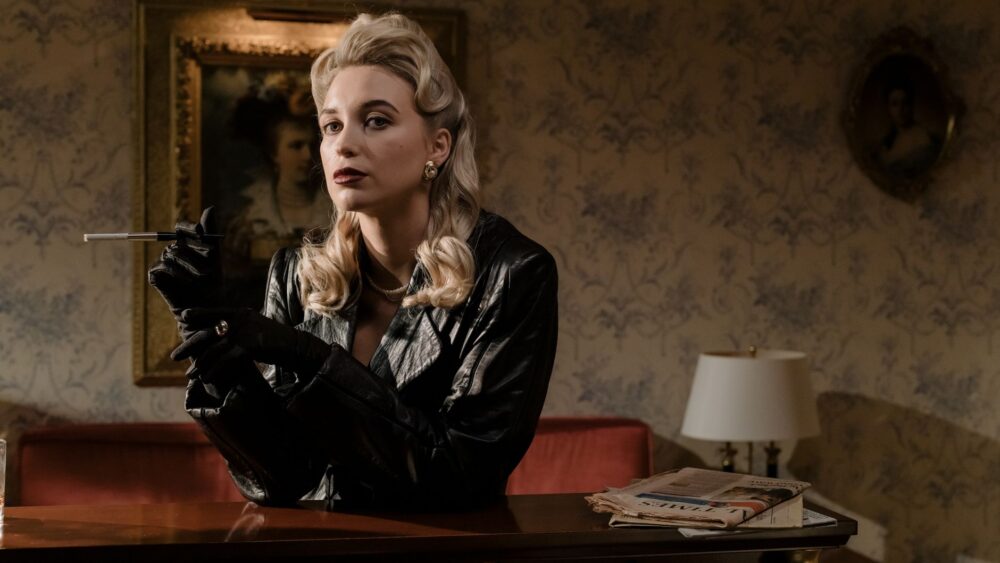
Agatha Christie character names are a masterclass in naming craft. Christie had an extraordinary instinct for names that felt both completely of their era and somehow larger than life, names that carried personality before the character even opened their mouth. From Belgian detectives with magnificent mustaches to sharp-eyed spinsters in English villages, her casts are filled with names worth stealing for a baby, a pet, or a fictional creation of your own.
This list gathers the most memorable, most distinctive, and most nameable names from Christie’s novels and stories, organized by type and feel. Each one is a real name with real history, used by real people, and each one carries a little of the Christie magic with it.
The Detectives: Names That Command a Room
Christie’s sleuths have names that announce themselves. These are names with presence.
Hercule
The French form of Hercules, worn by the incomparable Hercule Poirot across more than thirty novels and fifty short stories. It is an audacious name for a small, meticulous man, and that contrast is entirely deliberate. As a baby name it is genuinely bold and genuinely rare in the English-speaking world.
Ariadne
Christie’s fictional crime writer Ariadne Oliver is one of her most beloved recurring characters, a barely-disguised self-portrait who appears in several Poirot novels. The name itself is ancient Greek, borne by the Cretan princess who helped Theseus navigate the labyrinth. It has been climbing quietly in recent years and feels both mythological and surprisingly wearable.
Jane
Miss Jane Marple, Christie’s other great detective, carries the plainest possible name with enormous authority. Jane is Old French and ultimately Hebrew in origin, a feminine form of John meaning “God is gracious.” Its very ordinariness is the point: Marple’s genius lies in being perpetually underestimated.
Harley
Mr. Harley Quin is one of Christie’s most mysterious recurring characters, a supernatural-tinged figure who appears in The Mysterious Mr. Quin. The name comes from an English surname and place name, and it has genuine modern appeal as a given name for boys and girls alike.
Parker
Parker Pyne is a retired statistician turned amateur problem-solver, the star of Parker Pyne Investigates. A surname-as-first-name with solid English roots, Parker has become a confident modern choice, particularly for boys, with the Christie connection adding a dash of vintage intrigue.
Victims and Villains: Names With an Edge
Christie’s victims and her villains often have names that are a little sharper, a little more theatrical. These are the names that stick in the memory long after the plot has faded.
Roger
Roger Ackroyd, the murder victim at the center of Christie’s most controversial novel, The Murder of Roger Ackroydgave his name to one of the most shocking plot twists in detective fiction history. Roger is a Germanic name meaning “famous spear,” and it has that solid, dependable English-country-house quality that Christie deployed so brilliantly.
Linnet
Linnet Ridgeway is the glamorous, wealthy victim in Death on the Nile. A linnet is a small European finch, and the name was used as a given name in the early twentieth century with gentle nature-name charm. It is genuinely rare now and would make a striking choice.
Arlena
Arlena Marshall is the theatrical and beautiful murder victim in Evil Under the Sun. The name is a variant of Arlene, with uncertain but likely Celtic roots. Christie used it to signal glamour and a certain dangerous quality.
Cora
Cora Lansquenet is the inconveniently perceptive sister in After the Funeral whose single blunt observation sets the whole plot in motion. Cora is a short, punchy name of Greek origin, related to Kore, meaning “maiden.” It has been enjoying a steady comeback and wears the Christie association well.
Rosamund
Rosamund Darnley is a key figure in Evil Under the Sunand the name also appears across Christie’s wider work. It is a Germanic name meaning “horse protection,” though it was long associated with the Latin rosa mundi“rose of the world.” Romantic, slightly medieval, and criminally underused today.
Simon
Simon Doyle in Death on the Nile is central to one of Christie’s most intricate plots. Simon is a Hebrew name meaning “he has heard,” carried by an apostle and by centuries of real people. Christie used it for characters with a surface charm that masks something more complicated.
Vera
Vera Claythorne is the protagonist of And Then There Were NoneChristie’s best-selling novel. Vera is a Latin name meaning “truth” or a Slavic name meaning “faith,” and it has a clean, steely quality that suits one of Christie’s most psychologically complex characters perfectly. It is back in fashion and deserves every bit of its revival.
Suspects and Supporting Cast: The Country House Crowd
Christie’s country houses, vicarages, and village lanes are populated with an endlessly inventive cast of supporting names. These are the people gathered in the drawing room when the detective arrives.
Hastings
Captain Arthur Hastings is Poirot’s loyal, often-bewildered companion, the Watson to his Holmes. Hastings is an English place name and surname used as a given name, and it has that particular British aristocratic-casualness that makes surname names feel effortless. A bold and stylish first-name choice today.
Japp
Inspector Japp is Poirot’s Scotland Yard counterpart across many stories, a decent, slightly plodding detective who consistently underestimates his Belgian colleague. Japp is a Dutch and Flemish form of Jacob, meaning “supplanter.” Unusual as a first name but genuinely real.
Evelyn
Evelyn is scattered across Christie’s work in various forms, reflecting its peak popularity in the first half of the twentieth century. It derives from the Norman French surname Aveline and sits beautifully in the current revival of vintage names. Both masculine and feminine in Christie’s era, it is mostly used for girls today.
George
George is Poirot’s unflappable manservant in the later novels, the epitome of English discretion. The name is Greek in origin, meaning “farmer” or “earth-worker,” and it has the same dependable solidity Christie gave to so many of her supporting characters. George is solidly back in fashion for boys.
Lavinia
Lavinia appears in Christie’s work as a type: the faded, genteel, slightly vague woman who knows far more than she lets on. It is a Latin name of uncertain meaning, borne by a figure in Virgil’s Aeneidand it has a beautiful, slightly dusty grandeur that is ripe for revival.
Clarence
Clarence is the kind of name Christie deployed for bumbling or ineffectual male characters, carrying the weight of its Victorian heyday. It derives from the English Duchy of Clarence and was extremely fashionable in the late nineteenth century. It has a retro-eccentric charm that is genuinely endearing now.
Meredith
Meredith Blake appears in Five Little Pigsa quiet, thoughtful figure caught up in a decades-old murder. The name is Welsh in origin, meaning “great ruler,” and it moves easily between masculine and feminine use. Christie used it to suggest an earnest, slightly bookish personality.
Superintendent
Not a first name, but worth noting: Christie’s police characters often carry surnames used as given names in the modern style, like Battle. Superintendent Battle appears in several novels and his surname-as-name has a brisk, no-nonsense energy that suits the current trend for strong, single-syllable names.
Elspeth
Elspeth McGillicuddy is the friend whose train-window sighting of a murder sets off 4.50 from Paddington. Elspeth is the Scottish form of Elizabeth, meaning “my God is an oath,” and it has that wonderful combination of being entirely familiar in origin and quite rare in practice. A sleeper pick for parents who want something distinctive but deeply rooted.
Norma
Norma Restarick is at the center of Third Girlone of Christie’s more psychologically modern novels. The name is Latin in origin and was hugely popular in the early twentieth century. It has the retro warmth of other mid-century names currently climbing back into fashion.
Henrietta
Henrietta Savernake is the sculptor heroine of The Hollowone of Christie’s most fully realized female characters. The name is the French feminine form of Henry, meaning “home ruler,” and it has the confident, slightly aristocratic bearing of a name that has never really gone out of style in Britain.
Hugo
Hugo appears in several Christie stories as a name for well-bred, slightly weak-willed young men. It is the Latinized form of a Germanic name meaning “mind” or “spirit,” and it has become one of the most fashionable names for boys in the English-speaking world. The Christie connection adds a vintage layer to a very current choice.
Elinor
Elinor Carlisle is the central figure of Sad Cypressaccused of poisoning a rival. The name is a medieval English form of Eleanor, itself of uncertain but possibly Old French or Old Provencal origin. It has a slightly quieter, more bookish feel than Eleanor and is genuinely underused.
Midge
Midge Hardcastle in The Hollow is one of Christie’s most sympathetic characters, a working woman navigating a world of wealthy friends. Midge is a nickname form of Margaret and was used as a given name in its own right in the early-to-mid twentieth century. Quirky, warm, and completely distinctive today.
Despard
Major Despard is a suspect in Cards on the Tablea soldier type with a strong moral core. Despard is a surname of Norman French origin used as a given name, carrying a slightly swashbuckling quality. Rare but real, and genuinely striking.
Miss Marple’s Village: St. Mary Mead Names
St. Mary Mead, Christie’s fictional English village, is populated with names that feel rooted in English county life. These are names with soil on their boots.
Griselda
Griselda Clement is the young, cheerful wife of the vicar in the Miss Marple novels. The name is Germanic in origin, meaning roughly “grey battle” or “dark battle,” and it carries medieval literary weight through the patient Griselda of Boccaccio and Chaucer. It is extremely rare in practice and would be a remarkable choice today.
Leonard
Leonard Clement is the vicar himself, a gentle, slightly vague presence in the Miss Marple stories. Leonard is a Germanic name meaning “brave lion,” solid and traditional without being flashy. It has been quietly creeping back into use after decades of neglect.
Dolly
Dolly Bantry, Lady Bantry, is Miss Marple’s closest friend and confidante, a wonderfully practical and unsentimental woman. Dolly is a diminutive of Dorothy, meaning “gift of God,” and was used as an independent given name through much of the twentieth century. Sweet without being saccharine.
Arthur
Colonel Arthur Bantry is Dolly’s husband, a blustering but fundamentally decent English gentleman. Arthur is a name of uncertain origin, possibly Celtic, and it sits at the heart of English legendary tradition. It has had a massive revival and is a top-tier choice for boys right now.
Lucius
Lucius Pinnegar appears in Christie’s village fiction as a type: the slightly pompous local notable. Lucius is a Roman given name meaning “light,” and it has the classical weight of names like Julius and Marcus that are currently fashionable. A bold, underused option.
Names From the Golden Age Thrillers
Christie wrote beyond the cozy village and the country house. Her thrillers and more exotic adventures introduced a different set of names, more international, more high-stakes.
Tuppence
Tuppence Beresford, born Prudence Cowley, is one of Christie’s most spirited heroines, starring alongside her husband Tommy in a series of adventure novels. Tuppence is a British nickname meaning “two pennies,” used as a given name in the novels and entirely charming. Prudence, her formal name, is a Latin virtue name that is genuinely back in conversation.
Tommy
Thomas “Tommy” Beresford is Tuppence’s partner in adventure and marriage. Tommy is the familiar form of Thomas, an Aramaic name meaning “twin.” It was the quintessential boyish English nickname of the early twentieth century and has a breezy, likable energy that works as well now as it did then.
Countess
Not a name itself, but Christie gave several titled characters first names worth noting: Rossakoff, the Countess Vera Rossakoff, is one of Poirot’s most memorable characters, a flamboyant Russian emigre who appears in multiple stories. Her given name Vera is listed above, but Rossakoff as a surname-name has an undeniable theatrical quality.
Victoria
Victoria Jones is the resourceful, impulsive heroine of They Came to Baghdadone of Christie’s most entertaining adventure novels. Victoria is a Latin name meaning “victory,” famously associated with the British queen, and it remains a strong, classic choice with excellent nickname options including Vicky, Toria, and Vita.
Hilary
Hilary Craven is the protagonist of Destination Unknowna woman with nothing to lose who agrees to a dangerous undercover mission. Hilary derives from the Latin hilarismeaning “cheerful,” and was used for both men and women through much of the twentieth century. It has a quiet, capable quality that suits its Christie bearer well.
Race
Colonel Race is a recurring character in Christie’s more espionage-flavored novels, appearing in The Man in the Brown SuitCards on the Tableand Death on the Nile. Race is an English surname used as a given name, brisk and distinctive, with the one-syllable authority of names like Blaise or Chase.
Names From Christie’s Standalone Novels and Plays
Christie’s standalone novels and plays, including her famous theatrical works, introduced some of her most vivid names.
Agatha
It would be wrong not to include the author’s own name. Agatha is Greek in origin, from agathosmeaning “good.” It was the name of an early Christian martyr and remained in steady use through the medieval period before fading. It is now one of the most compelling vintage revivals available, rare enough to be distinctive but grounded enough to wear easily.
Clarissa
Clarissa Hailsham-Brown is the heroine of Christie’s play Spider’s Weban endearing woman who accidentally gets caught up in a real murder while play-acting at detective fiction. Clarissa is a Latinate elaboration of Clara, meaning “bright” or “clear,” and it has the elegant length of names like Arabella and Cordelia that are so fashionable right now.
Carla
Carla Lemarchant, later revealed as Carlotta, is the young woman at the heart of Five Little Pigs who hires Poirot to clear her dead mother’s name. Carla is a feminine form of Carl or Charles, meaning “free man,” and it has a crisp, Continental quality that wears well in any decade.
Sebastian
Sebastian is the kind of name Christie reached for when she wanted a character to seem romantic, artistic, or slightly untrustworthy. Sebastian is a Latin name derived from a Greek place name meaning “from Sebastia,” and it has become one of the most consistently fashionable names for boys over the past two decades. The Christie association gives it an extra layer of literary intrigue.
How to Choose an Agatha Christie Inspired Name
The reason Agatha Christie character names work so well as naming inspiration is that Christie was herself a brilliant namer. She matched names to personality with the instinct of a poet, and she drew from a very specific well: the English-speaking world of the 1920s through 1960s, with its particular mix of classical education, imperial confidence, and country house propriety.
If you want to borrow from that well, think about era first. The names that feel most alive from Christie’s pages are the ones that were mainstream in her time but have since had enough distance to feel fresh: Vera, Cora, Arthur, Hugo, and Clarissa all fit this pattern. They were common enough in 1930 to feel plausible, but rare enough now to feel chosen.
Think about register, too. Christie was deliberate about social signals in naming. Her aristocrats and old-money characters got names like Rosamund, Henrietta, and Lavinia. Her practical, middle-class characters got names like Jane, Roger, and Leonard. If you love the Christie world, think about which corner of it you are drawing from.
Finally, do not overlook the nicknames. Christie was wonderful at the gap between formal name and nickname: Tuppence for Prudence, Dolly for Dorothy, Midge for Margaret. If you love a nickname but want a more formal name on the birth certificate, Christie’s world is full of elegant solutions. The formal name anchors the child; the nickname gives them room to breathe.
Christie wrote sixty-six detective novels and fourteen short story collections, and she named hundreds of characters across that span. The names on this list are just the beginning of what her pages have to offer.