

Some slang ages into normal speech. Some turns into pure time capsule. Hippie slang did both. A few phrases still sound light and easy, and a few now sound like they should arrive in a van painted with suns and daisies.
That is part of why this topic is more interesting than it first looks. “Hippie slang” was never just random cute language. A lot of it came out of the 1960s counterculture, anti-war protest culture, communal living, psychedelic culture, and music scenes that were trying very hard not to sound like the square world around them. Some of it still has charm. Some of it absolutely belongs in costume jewelry and nowhere else.
1. Groovy
Pronunciation: GROO-vee
Meaning: cool, excellent, enjoyable
This is the headline word whether people like it or not. If a slang list says hippie, readers expect groovy to show up. It is upbeat, musical, and a little impossible to say now without at least a trace of self-awareness. Still, it earned its place.
2. Far out
Meaning: amazing, unusual, mind-expanding, impressive
Far out has that drifting, open-ended hippie energy people still recognize instantly. It could mean something was wonderful, strange, or just outside the ordinary. I think this one holds up better on the page than in speech, but it still carries the era beautifully.
3. Flower power
Meaning: a slogan and symbol of peace, love, and nonviolence
This is less a casual slang term and more a defining phrase of the movement. Still, it appears in almost every hippie-language roundup because it captures the visual and moral branding of the era in two words. If groovy is the sound, flower power is the image.
4. Peace out
Meaning: goodbye, often with a laid-back or friendly tone
This one is interesting because it outlived the era better than a lot of its cousins. Plenty of people still say peace out, even if they are not consciously reaching for hippie language. That survival usually means a phrase was useful, not just fashionable.
5. Freak out
Meaning: lose your calm, panic, or react intensely
This phrase had real staying power. It could be serious or playful depending on tone. Don’t freak out still sounds perfectly normal now, which is probably why people forget how strongly it is tied to the wider 1960s and 1970s slang landscape.
6. Uptight
Meaning: tense, rigid, judgmental, not relaxed
If hippie speech had villains, uptight people were often cast as the opposite of the free, open, peaceful ideal. The word is sharp without sounding especially cruel, which may be why it stuck around.
7. My bag
Meaning: my thing, my preference, my interest
That’s not my bag is one of those phrases that feels instantly period-specific but still makes sense the second you hear it. I have always liked this one because it sounds both casual and oddly exact. It tells you preference without needing much explanation.
8. Outta sight
Meaning: fantastic, excellent, exciting
This is one of the more theatrical entries. It belongs in the same family as groovy and far out, but feels a touch flashier. Very fun to read. Harder to say now unless you are fully committing to the vibe.
9. Dig
Meaning: understand, appreciate, enjoy
I dig it or can you dig it? has a smoothness that still works. This one traveled well beyond hippie culture and into music, film, and wider slang. That broader reach probably helped it last longer than some of the more costume-heavy phrases.
10. Bad vibes
Meaning: negative energy, unpleasant feeling, emotional discomfort
This one feels surprisingly current because vibes never really left. The hippie-era framing leaned more spiritual and communal, but the basic idea still lands immediately. Some phrases survive because they are flexible, and this is one of them.
11. Good vibes
Meaning: positive energy, pleasant atmosphere, peaceful feeling
If bad vibes survived, good vibes practically set up permanent residence. It still sounds soft, warm, and slightly California-coded. I would say this is one of the few genuinely hippie-adjacent phrases that never became embarrassing.
12. Blow your mind
Meaning: amaze you, overwhelm you, alter your perspective
This phrase could refer to music, ideas, art, or psychedelic experience. It still shows up now, though often with less intensity than it originally carried. As slang, it has done remarkably well for itself.
13. The man
Meaning: authority, the system, institutional power
This one matters because it points to the politics behind the language. A lot of hippie slang was not just about being relaxed. It was also about resistance to authority, war, rules, and establishment culture. The man gave that frustration a memorable target.
14. Square
Meaning: conventional, boring, overly conformist
This is one of the cleanest contrast words in the whole set. To call someone a square was to say they were stiff, safe, unimaginative, and trapped in mainstream expectations. It sounds mild now, but it carried real attitude.
15. Flower child
Meaning: a young person associated with hippie ideals of peace and freedom
Like flower power, this is as much identity phrase as slang. It shows up constantly because it paints the cultural picture so quickly. Even people who know almost nothing else about the era usually recognize flower child.
16. Hang-up
Meaning: emotional issue, fixation, personal block
This is another term with better long-term survival than people realize. Don’t make it your hang-up or he has a weird hang-up about that still feels understandable. The word stayed because the need for it stayed.
17. Trip
Meaning: an unusual experience, often psychedelic, but sometimes just intense or surreal
This one does a lot of work. In one setting it clearly refers to drugs. In another, what a trip can just mean something felt bizarre or wildly memorable. That double life helped it last.
18. Cop out
Meaning: avoid responsibility, back away, take the easy way out
This is less flower-crown-coded than some of the others, but it appears often in period slang lists and still feels very usable. I like it because it is blunt without sounding forced.
19. Make love, not war
Meaning: a slogan tied to anti-war values and peace activism
This is another phrase that belongs more to movement language than casual slang, but leaving it out would make a hippie article feel incomplete. It is one of the central verbal snapshots of the era.
20. Peace
Meaning: a blessing, farewell, or shorthand for a peaceful outlook
Simple, maybe the simplest entry here, but important. Peace worked as a value, a farewell, a greeting style, and a whole social signal. Sometimes the short words carry the whole mood.
21. Bread
Meaning: money
This one is not uniquely hippie, but it shows up in many 1960s and 1970s slang lists and fits the broader soundscape of the era. I would call it adjacent rather than purely hippie, but still worth knowing because the SERP almost always blends those categories anyway.
22. Bummer
Meaning: disappointment, letdown, unpleasant situation
A lot of readers know bummer without thinking of it as old counterculture slang, which tells you how well it traveled. It is one of the friendlier disappointment words in English, and I think that softness helped it stick.
23. Crib
Meaning: home, place where someone lives
This term appears in many older slang lists and later took on a new public life in modern pop culture. It is a good reminder that slang rarely stays in one decade neatly. It migrates, sheds meanings, picks up new ones, and keeps moving.
24. Turn on
Meaning: awaken interest, excite, or in period context, open yourself to new experience
This phrase gets tied closely to psychedelic and countercultural speech. Depending on context, it can sound spiritual, political, sexual, or recreational. That flexibility is part of why it was so culturally charged.
25. Nitty-gritty
Meaning: the real details, the practical core
This one may not scream “hippie” at first glance, but it appears often in period slang collections and has lasted because it fills a useful slot. When slang becomes genuinely practical, it usually has a longer life.
A few hippie terms that still sound natural now
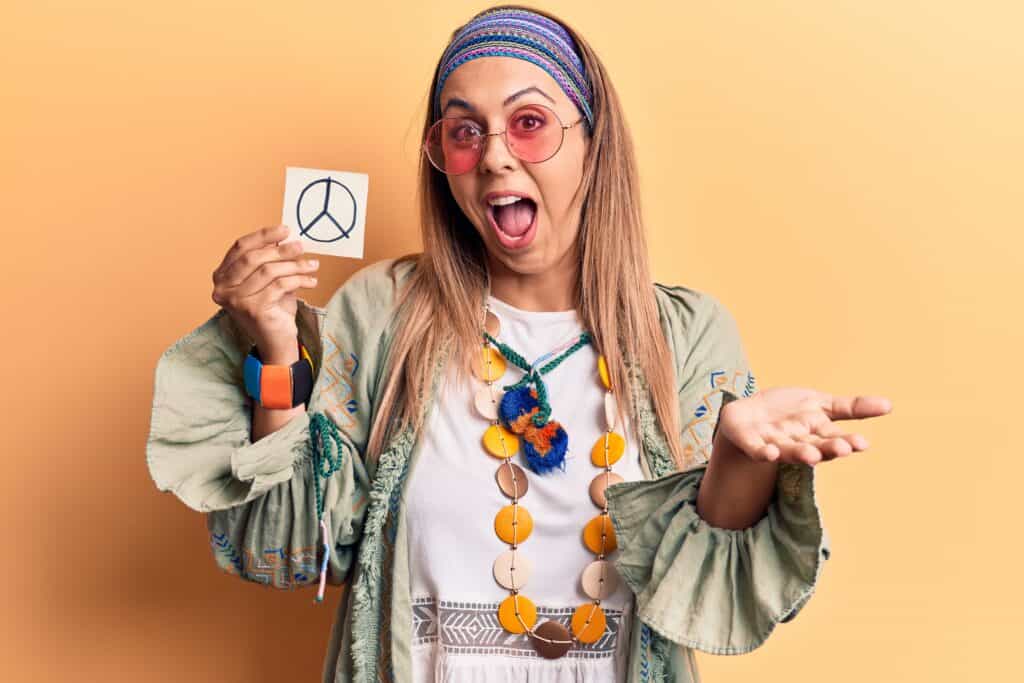
Not everything from hippie slang stayed trapped in 1969. Peace out, good vibes, bad vibes, bummer, freak out, and dig all still feel understandable, and some still sound completely normal. The ones that survived tend to be the ones that do a real conversational job, rather than just signaling an era.
The more decorative phrases, like outta sight or groovy, are still fun, but they usually arrive with quotation marks in the listener’s head. That does not make them bad. It just means they now carry costume energy as much as meaning.