
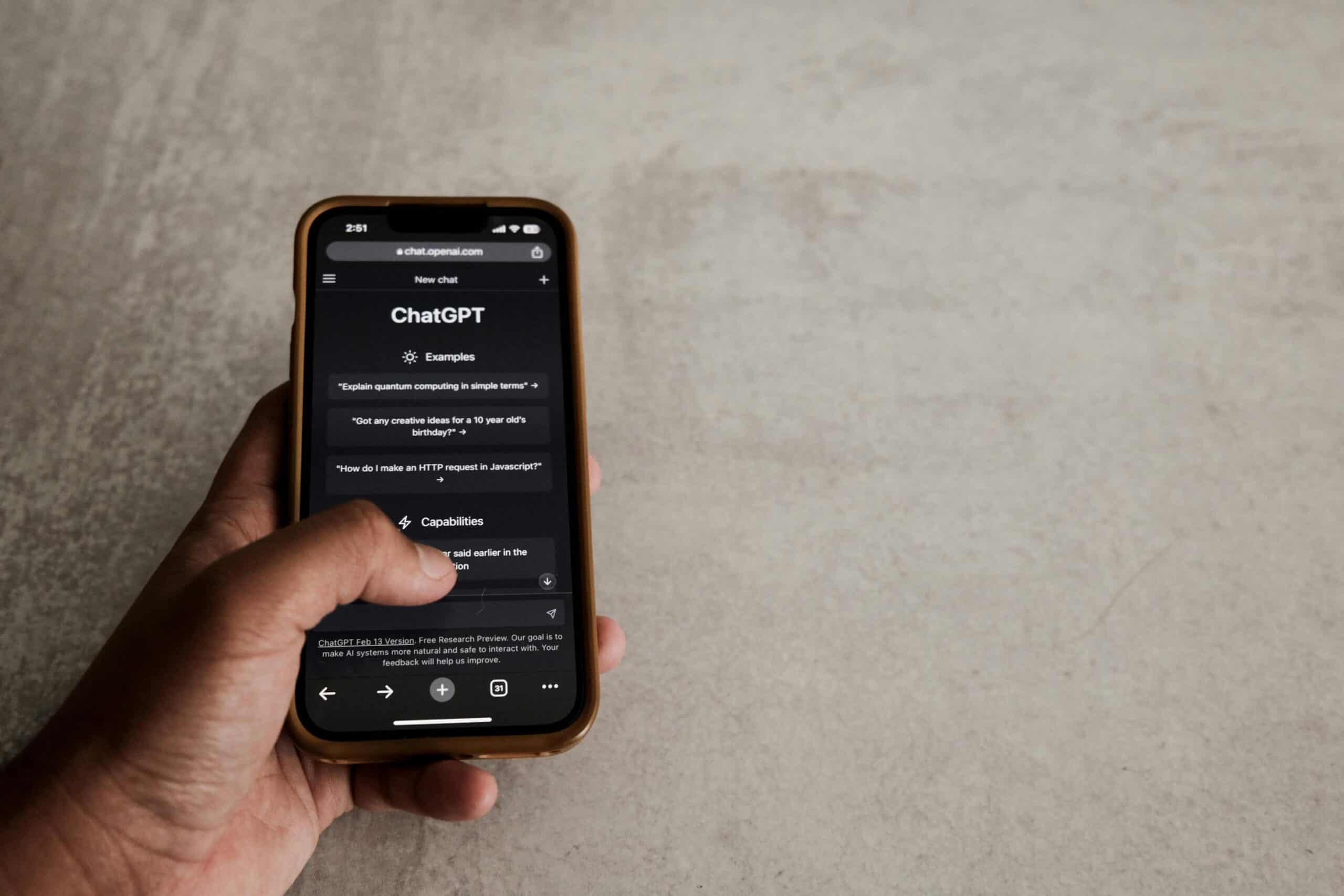
AI chatbots have become a cornerstone of modern digital life—powering everything from customer service and content creation to casual conversation and coding. Among them, ChatGPT by OpenAI has emerged as one of the most prominent names, widely adopted for both personal and professional use. With its powerful language capabilities and versatile integrations, ChatGPT has set a high standard.
However, 2025 is seeing a diverse ecosystem of AI chatbots rise to meet different user needs. Whether you’re a developer looking for coding assistance, a marketer generating copy, or a student seeking tutoring help, there’s likely a ChatGPT alternative tailored just for you.
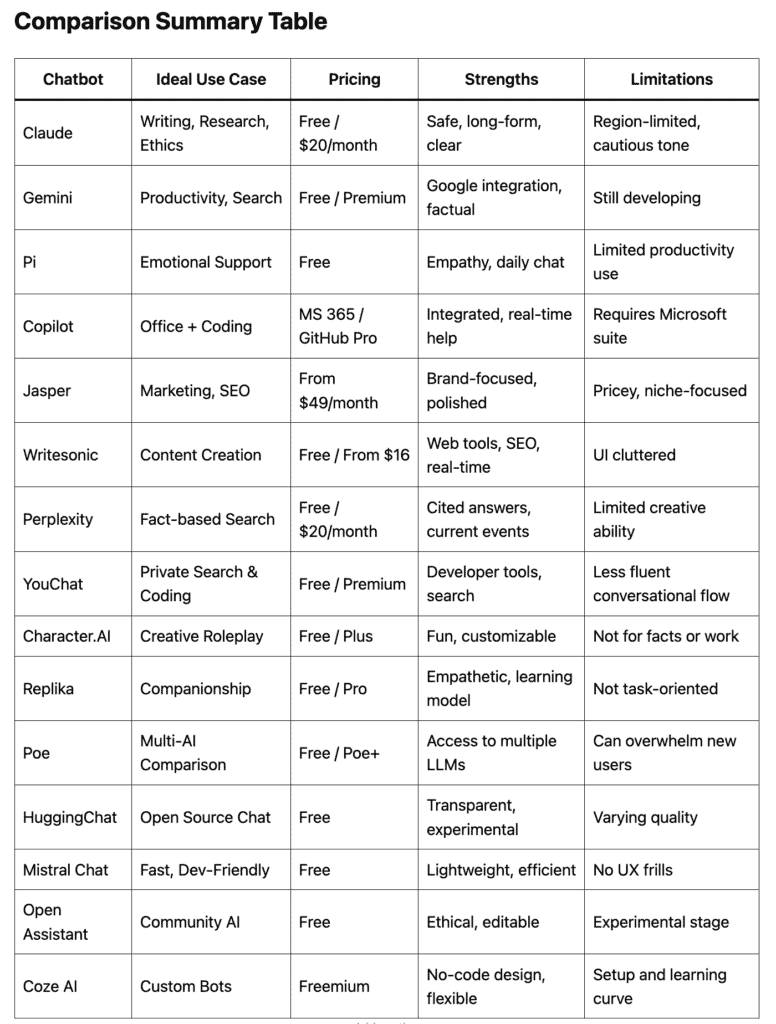
Below are 15 of the best ChatGPT alternatives to try in 2025, each offering unique strengths in functionality, pricing, and usability.
1. Claude (Anthropic)
Overview: Claude is Anthropic’s flagship conversational AI, known for its focus on safety, interpretability, and user alignment. Its newest version, Claude 3, is fast, articulate, and contextually aware, handling long documents and nuanced prompts with ease.
Ideal for: Professionals, researchers, enterprise-level users, safety-conscious applications
Pricing: Free tier available; Pro version (Claude Pro) at ~$20/month
Pros
- Strong focus on ethical AI and safe responses
- Handles long-form content exceptionally well
Cons
- Less accessible in some regions
- May be more cautious in tone than other bots
2. Gemini (Google)
Overview: Previously known as Bard, Gemini is Google’s conversational AI based on its Gemini LLMs. It integrates deeply with Google services like Gmail, Docs, and Search.
Ideal for: Students, productivity users, casual researchers
Pricing: Free for most features; Premium available via Google One
Pros
- Seamless integration with Google Workspace
- Strong performance on web-based queries and math
Cons
- Still evolving compared to some rivals
- Occasional factual inaccuracies
3. Pi (Inflection AI)
Overview: Pi is a personal AI assistant designed to be friendly, empathetic, and helpful in emotional and day-to-day support. It focuses more on conversational well-being than productivity.
Ideal for: Mental wellness, casual chatting, reflection
Pricing: Free
Pros
- Extremely user-friendly and emotionally intelligent
- Great for conversation and journaling-like uses
Cons
- Limited in productivity or technical tasks
- May feel too “soft” for professional users
4. Microsoft Copilot
Overview: Microsoft Copilot integrates OpenAI’s models into Office 365, Windows, and development tools like GitHub Copilot.
Ideal for: Office users, developers, enterprise teams
Pricing: Part of Microsoft 365 subscriptions (business tier); GitHub Copilot at ~$10/month
Pros
- Deep integration with Word, Excel, PowerPoint, and coding tools
- Supports real-time productivity
Cons
- Requires Microsoft ecosystem
- Enterprise-focused pricing
5. Jasper
Overview: Jasper is an AI writing assistant designed for marketers, content creators, and agencies. It specializes in tone control, SEO content, and brand-specific voice customization.
Ideal for: Marketing, blogging, social media, branded content
Pricing: Starts at $49/month
Pros
- Marketing-focused tools and templates
- Excellent brand voice training
Cons
- Higher cost than many general-purpose chatbots
- Not ideal for casual use or technical tasks
6. Writesonic
Overview: Writesonic offers a suite of tools for content writing, including blog generation, ad copy, and AI chat. It also powers ChatSonic, a ChatGPT-like chatbot with web browsing capabilities.
Ideal for: Copywriters, businesses, SEO professionals
Pricing: Free tier available; paid plans start at ~$16/month
Pros
- Includes real-time data with ChatSonic
- Built-in plagiarism checker and AI image generator
Cons
- Slightly lower quality in long-form text
- Interface can be cluttered
7. Perplexity AI
Overview: A research-focused chatbot that gives cited, up-to-date answers, Perplexity is designed like a conversational search engine. It’s great for users who value verifiable information.
Ideal for: Researchers, students, journalists
Pricing: Free tier; Pro plan at ~$20/month
Pros
- Real-time, cited sources
- Strong fact-checking and summarization
Cons
- Not as good for creative writing or storytelling
- May rely heavily on web snippets
8. You.com (YouChat)
Overview: YouChat is part of the You.com ecosystem—a privacy-first AI search engine. It provides a chatbot with real-time web access and coding capabilities.
Ideal for: Web search with privacy, developers, casual users
Pricing: Free tier; Pro available
Pros
- Real-time search and answer integration
- Developer-friendly
Cons
- Less refined conversational flow
- Limited customization
9. Character.AI
Overview: Character.AI is a unique platform where you can chat with AI personalities—from fictional characters to historical figures. It emphasizes creative role-play and custom AI companions.
Ideal for: Entertainment, storytelling, fans of fictional personas
Pricing: Free with optional Plus plan
Pros
- Highly creative and customizable
- Fun and engaging for fans
Cons
- Not useful for factual or professional tasks
- Heavily filtered conversations
10. Replika
Overview: Replika is an AI chatbot designed to be a virtual friend or companion, learning from your conversations to build an emotional bond. It’s popular for mental health support and companionship.
Ideal for: Loneliness, self-reflection, friendship
Pricing: Free basic tier; Pro at ~$15/month
Pros
- Emotional intelligence and memory
- Customizable avatars
Cons
- Not designed for productivity or professional use
- Limited factual depth
11. Poe by Quora
Overview: Poe is a chat platform by Quora that aggregates multiple LLMs (ChatGPT, Claude, Gemini, etc.) in one place, letting users switch between them for comparative use.
Ideal for: AI enthusiasts, researchers, power users
Pricing: Free tier; Poe+ plan ~$20/month
Pros
- All-in-one access to multiple AIs
- Seamless switching between bots
Cons
- Can feel fragmented for casual users
- Interface less streamlined
12. HuggingChat (Hugging Face)
Overview: An open-source alternative to ChatGPT, HuggingChat is built on open models like Meta’s LLaMA or Mistral. It prioritizes transparency and community-driven development.
Ideal for: Developers, open-source advocates
Pricing: Free
Pros
- Fully open and customizable
- Ideal for experimentation
Cons
- Interface less polished
- Varies in quality depending on model used
13. Mistral Chat
Overview: Mistral is a newer player offering high-performance open-source LLMs with impressive efficiency. Its chatbot interfaces are growing in popularity among tech-savvy users.
Ideal for: Developers, tinkerers, lightweight AI users
Pricing: Free
Pros
- Fast and resource-efficient
- Strong open-source credentials
Cons
- Limited front-end tools
- Less support for casual users
14. Open Assistant (LAION)
Overview: A fully open-source chatbot project aiming to democratize AI, Open Assistant emphasizes transparency, ethical development, and collaborative improvement.
Ideal for: Developers, researchers, education
Pricing: Free
Pros
- 100% open-source and community-driven
- Customizable for niche projects
Cons
- Early-stage compared to mainstream bots
- Less stable UX
15. Coze AI
Overview: Coze is a rising platform for building custom chatbots using prebuilt components and large language models. It’s aimed at startups, creators, and small businesses.
Ideal for: No-code chatbot building, startups
Pricing: Freemium with paid features
Pros
- Easy custom chatbot development
- Multiple model integrations
Cons
- Not for casual chatting
- Requires setup time