

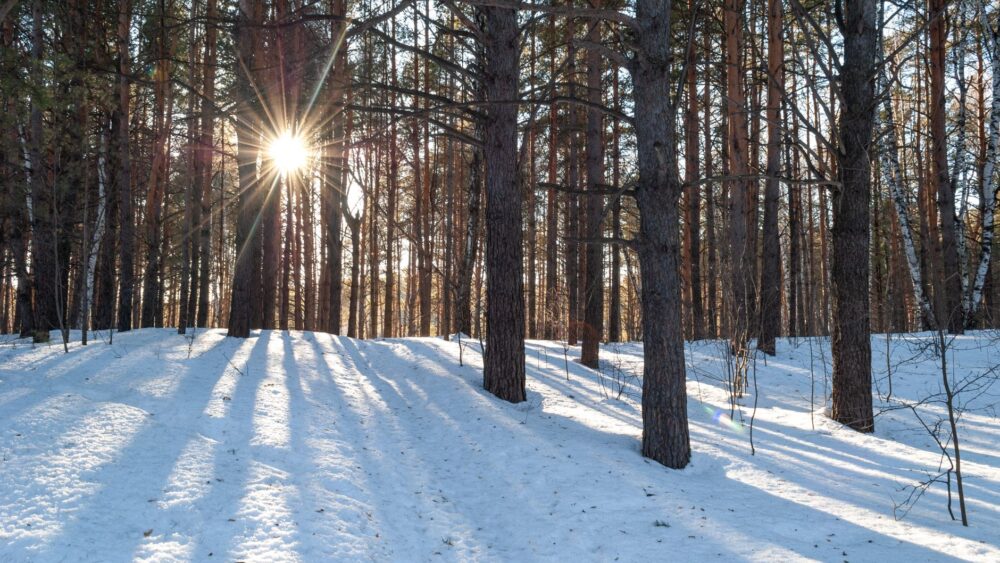
Winter solstice names tap into something elemental: the longest night of the year, the slow return of light, frost and stillness and the quiet drama of the cold. Whether you’re drawn to the darkness of December or the promise of lengthening days, there are names rooted in snow, ice, celestial cycles, Norse mythology, and midwinter lore that carry that same mood beautifully.
This list gathers the strongest of them, grouped by theme. Some are ancient, some are quietly climbing the charts, and a few are genuinely rare finds waiting for the right family to use them. All of them feel at home on a baby born when the world goes quiet and the stars burn brightest.
Names That Literally Mean Winter
The most direct winter solstice names are the ones that simply mean winter itself. These names wear the season openly and confidently.
Winter
Used as a given name in English-speaking countries since at least the mid-twentieth century, Winter has settled into quiet modern use for both boys and girls. It carries crisp, cinematic energy without trying too hard.
Wynter
An alternate spelling of Winter that gives the name a slightly more distinctive look. It has its own usage history as a given name and reads as contemporary without being trendy.
Hiems
The Latin word for winter, used in classical texts, and occasionally found as a given name in historical records. It is rare and bold, but it has genuine precedent as a name rather than just a word.
Fuyu
A Japanese given name meaning “winter,” written with the kanji for the season. It is gentle and spare, and carries the contemplative quality the season deserves.
Dong
A Chinese given name that can mean “winter” depending on the character used. It is a real and common given name in Chinese-speaking communities and carries clean, seasonal meaning.
Gwanwyn
This Welsh name actually means “spring,” but its counterpart Gaeaf is the Welsh word for winter and appears in Welsh personal name traditions. If you want winter in Welsh, Gaeaf is the authentic root.
Zima
Meaning “winter” in several Slavic languages, Zima has been used as a given name in Eastern Europe. It is unusual in English-speaking countries, which makes it a genuinely rare find with a strong, clear meaning.
Names Meaning Snow, Ice, and Frost
Frost, ice, and snow are the most vivid symbols of the winter solstice season. These names carry that cold, crystalline quality without feeling gimmicky.
Nieves
A Spanish given name meaning “snows,” traditionally associated with the Virgin Mary under the title Nuestra Senora de las Nieves. It is well-established in Spanish-speaking communities and has a soft, lyrical sound.
Neve
Meaning “snow” in Italian and Portuguese, Neve is used as a given name across Europe and is climbing in popularity in English-speaking countries. It is sleek and simple and one of the stronger snow names available.
Neva
Related to Neve, Neva also carries the meaning “snow” and is used as a given name in Spanish and Slavic traditions. It has a warmth to it despite its wintry meaning.
Eira
A Welsh name meaning “snow,” Eira is soft and melodic and genuinely underused outside Wales. It has the kind of quiet beauty that winter solstice names should have.
Eirwen
Another Welsh name, meaning “white snow” or “blessed snow,” combining eira (snow) with gwen (white, holy). It is even rarer than Eira but equally lovely.
Frostine
A French-origin given name meaning “frost” or “little frost,” occasionally found in historical French records. It has an old-fashioned charm that suits the season perfectly.
Yukio
A Japanese name that can mean “snow boy” or “man of snow” depending on the kanji. It is a well-established Japanese given name with a clean, wintry resonance.
Yuki
Meaning “snow” or “happiness” in Japanese depending on the characters used, Yuki is a common and beloved Japanese given name. Its snow meaning makes it a natural fit here.
Crystal
From the Greek krystallos, meaning “ice” or “clear ice,” Crystal was a top-100 staple in the United States through the 1970s and 1980s. It has faded from the charts since, which paradoxically makes it feel fresher now.
Frost
Used as both a surname and a given name, Frost carries the cold snap of winter in a single syllable. It is strong and spare and works exceptionally well as a middle name.
Isen
An Old English and Germanic root meaning “ice,” found in place names and occasionally in personal names in the early medieval period. It is rare as a given name today but has genuine historical roots.
Kari
In Old Norse, Kari is a name associated with the wind and cold air, personified as a frost giant in Norse mythology. It is used as a given name in Scandinavian countries and carries authentic northern winter energy.
Names Rooted in Darkness and the Longest Night
The winter solstice is defined by darkness just as much as by cold. These names are rooted in night, shadow, and the quiet depth of the season’s darkest point.
Nox
The Latin personification of night, Nox appears in Roman mythology as a primordial deity. It is used as a given name today and carries a dramatic, celestial weight that suits the solstice perfectly.
Nacht
The German word for night, Nacht appears in historical Germanic naming traditions and has been used as a given name. It is stark and serious, not for everyone, but genuinely evocative of the long solstice night.
Erebus
In Greek mythology, Erebus is the primordial deity of deep darkness, born from Chaos. It is used as a given name in some communities and has the grandeur that a name rooted in cosmic darkness should have.
Ciar
An Irish given name meaning “dark” or “black,” Ciar was borne by several early Irish saints. It is simple, ancient, and carries the deep, still darkness of a midwinter night.
Kieran
Derived from the same Irish root as Ciar, meaning “little dark one,” Kieran is well-established across English-speaking countries. It is a top-200 name that connects beautifully to winter’s dark season without announcing it.
Dusk
Used as a given name in modern times, Dusk evokes the early nightfall of winter days when the sky dims before five in the afternoon. It is short, atmospheric, and genuinely wearable.
Vesper
From the Latin for “evening star” or “evening,” Vesper is climbing in popularity and suits the long winter evenings of the solstice season. It has a cool, celestial elegance that is hard to beat.
Morana
A Slavic goddess of winter, death, and the night, Morana is used as a given name in Slavic countries. She represents exactly the dark, dormant side of the solstice season.
Names Meaning Light, Sun, and the Return of Day
The winter solstice is not only the darkest point but the turning point, the moment the sun begins its return. These names celebrate that other face of the solstice: warmth, light, and solar renewal.
Sol
The Latin word for sun, Sol is used as a given name across multiple cultures and has real momentum in Scandinavian countries as well. It is short, warm, and carries exactly the solar energy of the solstice’s promise.
Solstice
Used rarely but genuinely as a given name, Solstice is the most direct of all winter solstice names. It is bold, unusual, and marks a child’s birth or conception at an extraordinary moment in the calendar.
Helios
The Greek god of the sun, Helios personified the solar disk in Greek mythology and religion. It is used as a given name today and has a mythological grandeur that fits the solstice’s astronomical significance.
Surya
The Hindu god and personification of the sun, Surya is a well-established given name across South Asia. It carries ancient solar reverence and a beautiful, open sound.
Elio
The Italian form of Helios, Elio is warm and approachable where Helios is grand. It is gaining traction in European and American naming circles and is one of the best sun names available right now.
Lucian
From the Latin lux, meaning “light,” Lucian is a classic name with genuine historical depth. It has been climbing back toward popularity after decades of quiet and suits a winter solstice baby born at the turning of the light.
Lux
The Latin word for “light” used directly as a given name, Lux is sharp, modern, and unmistakably bright. It works as a first name or a punchy middle name against a longer first.
Phebus
A variant spelling of Phoebus, the epithet of Apollo as the god of light and the sun in Greek mythology. It has been used as a given name historically and carries real classical weight.
Phoebus
The more standard form, meaning “radiant” or “shining” in Greek, Phoebus was an epithet of Apollo. It is dramatic but has genuine classical precedent as a given name.
Altan
A Mongolian and Turkic name meaning “golden” or “red dawn,” Altan evokes the low winter sun blazing on the horizon. It is used widely across Central Asia and has a warm, vivid energy.
Kiran
A Sanskrit name meaning “ray of light” or “beam of sunlight,” Kiran is popular across South Asian communities and is rising in use in the West. It is elegant and unambiguous in its solar meaning.
Names from Norse and Germanic Winter Mythology
Norse and Germanic cultures lived deeply attuned to the solstice. Yule, the midwinter festival, was one of the most sacred points in the calendar. These names come from that tradition.
Odin
The Allfather of Norse mythology, Odin is associated with the Wild Hunt that rides through the winter sky during the Yule season. The name is rising steadily in English-speaking countries and carries enormous mythological power.
Baldur
The Norse god of light and purity, Baldur’s death is one of the great mythological events that ushers in the long darkness before the world’s renewal. It is used as a given name in Scandinavia and has a noble, antique feel.
Tyr
A Norse god associated with justice and celestial order, Tyr is the origin of Tuesday’s name. Short, strong, and deeply rooted in Germanic tradition, it is an unusual but authentic choice.
Fenrir
The great wolf of Norse mythology, Fenrir is a powerful, primordial figure associated with chaos and the darkness of Fimbulwinter. Used as a given name in some Nordic communities, it is striking and genuinely rare.
Vidar
A Norse god, son of Odin, associated with silence and vengeance, Vidar is one of the few gods fated to survive Ragnarok and usher in the new world. It is used as a given name in Scandinavia and carries a deep, wintry silence.
Ull
The Norse god of winter, hunting, and skiing, Ull (sometimes spelled Ullr) is directly associated with the cold season. It is used as a given name in Norway and Sweden and is the most direct Norse winter name available.
Skadi
The Norse goddess of winter, mountains, and skiing, Skadi is used as a given name in Scandinavia. She is one of the clearest mythological figures tied to winter itself and her name carries that association completely.
Freki
One of Odin’s wolves, whose name means “the greedy one” or “the fierce one” in Old Norse. Used occasionally as a given name in Nordic communities, it is rare and wild in the best possible way.
Yule
The Old Norse and Old English word for the midwinter festival that predates Christmas in northern Europe, Yule is used as a given name in some Scandinavian and English-speaking families. It is the single most direct name tied to the winter solstice season.
Jol
The Old Norse form of Yule, Jol (sometimes written Joel in adapted form) is the ancestral word for the midwinter feast. As a given name it is rare but has genuine precedent in Nordic naming history.
Names Rooted in Cold, Wind, and Arctic Nature
Beyond mythology and meaning, some names simply evoke the physical world of winter: cold wind, bare trees, frozen rivers, and the deep stillness of a December landscape.
Aquilo
The Roman god of the north wind, Aquilo is the Latin equivalent of Boreas. It is used occasionally as a given name and carries the bite of a winter gale in its sound.
Boreas
The Greek god of the north wind, Boreas was one of the four wind deities and was closely associated with winter. It is used as a given name in some communities and has a bold, atmospheric quality.
Zephyr
Technically the god of the west wind in Greek mythology, Zephyr is included here because in some ancient traditions it signaled the seasonal turn. It is a genuinely popular modern given name with an airy, elemental feel.
Eurus
The Greek personification of the east wind, Eurus is rarely used as a given name but has mythological precedent. It is sharp and unusual and fits the windswept, elemental quality of a winter solstice name.
Glacier
Used occasionally as a given name in recent decades, Glacier is unusual but has genuine modern precedent. It is bold and visual, evoking the slow, massive coldness of the season.
Colt
While primarily meaning “young horse,” Colt also evokes the cold snap and spare quality of winter landscapes. It is a well-used American given name with a crisp, seasonal feel.
Gale
A given name used for both boys and girls, Gale evokes the biting winter wind. It has mid-century American charm and is genuinely underused at this point.
Blaze
From the Old English for “fire” or “torch,” Blaze evokes the hearth fire and the Yule log burning against the cold. It is a real given name with a warm, defiant energy that suits the solstice season perfectly.
Names with a Celestial and Solstice Connection
The winter solstice is an astronomical event, and the long clear nights of December are some of the best stargazing of the year. These names connect to the sky, stars, and celestial cycles.
Orion
The great hunter constellation is at its highest and most visible in the winter sky, making Orion one of the most naturally fitting winter solstice names. It is a top-200 name in several countries and has a grand, mythological sweep.
Rigel
The brightest star in the Orion constellation, Rigel is a given name used in astronomical and science fiction naming traditions. It is rare and striking and genuinely connected to the winter night sky.
Castor
One of the twin stars of Gemini, a constellation prominent in the winter sky, Castor is a real given name with Greek mythological roots. It is vintage and strong and deserves far more use than it gets.
Pollux
Castor’s twin in Gemini mythology, Pollux is the brighter of the two stars and a real given name with ancient precedent. It is bold and unusual and carries a classical authority.
Sirius
The brightest star in the night sky, Sirius blazes through winter evenings in the northern hemisphere. It is used as a given name and has gained recognition through popular culture in recent decades.
Aldebaran
A prominent red giant star in the winter constellation Taurus, Aldebaran is used as a given name in some communities. It is long and dramatic, the kind of name that takes up the whole room.
Caelum
A Latin name meaning “sky” or “heaven,” Caelum is used as a given name and has a spare, celestial quality. It suits a child born under the vast, star-filled sky of the winter solstice.
Stellan
A Scandinavian given name with roots connecting to “star” or “calm,” Stellan is well-used in Sweden and gaining ground in English-speaking countries. It has a quiet, northern feel that suits the season.
Altair
A prominent star in the constellation Aquila, Altair is used as a given name in some Arabic and Latin American communities. It carries a bright, spare energy and genuine astronomical significance.
Names from Winter Celebrations and Sacred Traditions
Winter solstice names also come from the global traditions that grew up around the darkest time of year: Saturnalia, Yule, Dongzhi, and the many midwinter festivals that humans have celebrated across cultures.
Saturn
The Roman god who gave his name to Saturnalia, the great midwinter festival celebrated around the solstice, Saturn is used as a given name in some communities. It is ancient, planetary, and carries the weight of one of Rome’s most beloved festivals.
Nicholas
Saint Nicholas is the patron of winter gift-giving whose feast day falls on December 6, deep in the solstice season. Nicholas is a classic top-100 name with genuine midwinter associations across European traditions.
Nikolai
The Russian and Scandinavian form of Nicholas, Nikolai has a frosty northern elegance that suits the season beautifully. It is well-used across Europe and climbing in the United States.
Midwinter
Used very rarely as a given name but with genuine modern precedent, Midwinter is the most literal of all seasonal names. It is an outlier, but for a family that marks the solstice as sacred, it has a certain brave beauty.
Alban
In some Celtic traditions, the winter solstice is called Alban Arthan, meaning “Light of Arthur” or “Light of Winter.” Alban is used as a given name with roots in Latin, meaning “white” or “bright,” and it connects directly to the solstice in Celtic spirituality.
Koliada
A Slavic deity and tradition associated with the winter solstice festival of the same name, Koliada is used as a given name in some Eastern European communities. It is unusual but carries genuine cultural and seasonal roots.
How to Choose a Winter Solstice Name
Start with what draws you to the season. If it is the darkness and the depth of the long night, names like Nox, Vesper, Ciar, or Morana will feel right. If it is the return of the sun and the promise of light, Elio, Lucian, Sol, or Kiran carry that energy. The solstice is a pivot point, and the name you choose can lean into either side of it.
Think about how literal you want to be. Yule, Solstice, and Winter wear the season openly on their sleeve. Orion, Stellan, and Castor connect through the winter sky without announcing it. Kieran and Lucian carry the darkness and light of the season through etymology alone, in a way that only you might know. All three approaches are valid, and the right one depends on how much you want the name to speak for itself.
Consider the sound alongside the meaning. A short, sharp name like Frost or Lux captures the cold snap of the season. A longer name like Aquilo, Aldebaran, or Eirwen has the sweep of a winter landscape. Neither is better, but pairing the mood of the sound with the mood of the meaning will give the name its full power.
Finally, think about the life the child will grow into. Yule and Solstice are extraordinary names, but they ask something of the person wearing them. Elio, Kieran, Neve, and Stellan carry the same seasonal depth with a lighter touch. The best winter solstice name is one the child will be able to own completely, at six and at sixty.
Whatever you choose, a name rooted in the winter solstice carries something rare: a connection to one of the oldest and most universal human experiences, the long night, the fire lit against it, and the slow, certain return of the light.