

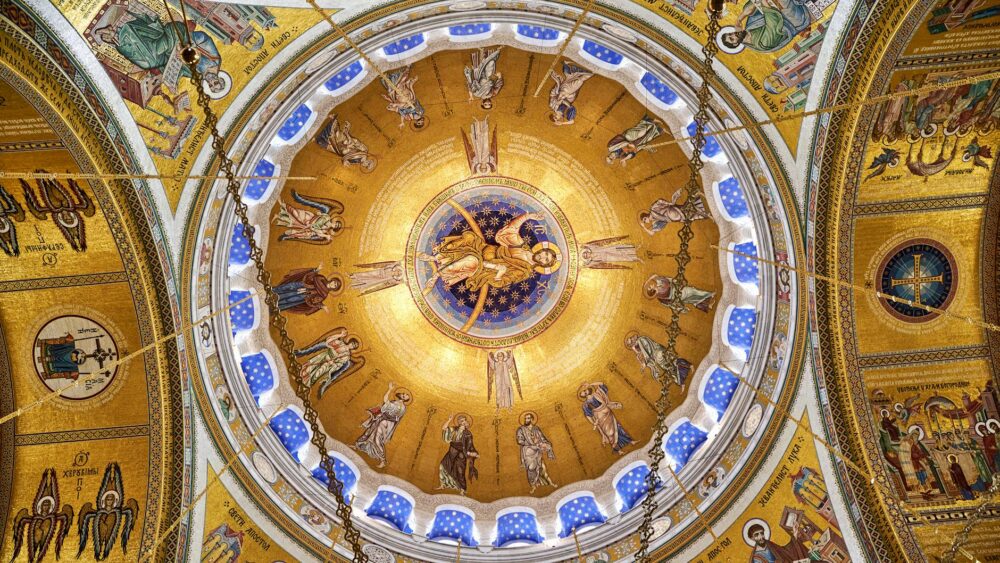
Saints names have been shaping the naming landscape for two thousand years, and they show no signs of fading. From the earliest martyrs of Rome to medieval mystics, Renaissance missionaries, and modern canonizations, the Catholic, Orthodox, Anglican, and other Christian traditions have produced a catalogue of given names that spans continents, languages, and centuries.
What makes saints names so compelling right now is the range. You can find a saint’s name that sounds sleek and modern, one that feels warmly vintage, or one so rare it will stop people in their tracks. The list below is organized by era and style so you can find the right fit, whether you want something rooted in ancient history or a name that simply sounds beautiful and happens to carry a remarkable story behind it.
Ancient and Early Christian Saints Names (Before 400 AD)
These names come from the earliest centuries of Christianity, many belonging to martyrs who died under Roman persecution. They carry enormous historical weight and yet several feel surprisingly fresh today.
Agnes
From the Greek hagnos, meaning pure or holy, Agnes of Rome was a third-century martyr and one of the most venerated saints in early Christianity. The name stayed popular throughout medieval Europe and is quietly climbing again, beloved for its clean, serious sound.
Cecilia
A Roman family name, possibly from the Latin caecus meaning blind, Cecilia was a second or third-century martyr who became the patron saint of musicians. It is one of the most beloved saints names in the English-speaking world, warm and musical in its own right.
Clement
From the Latin clemens, meaning merciful or gentle, Clement was the name of one of the earliest popes and an Apostolic Father of the Church. Uncommon enough to feel distinctive today, but grounded and easy to wear.
Felicity
From the Latin felicitas, meaning happiness or good fortune, Felicity was a third-century martyr executed alongside Perpetua in Carthage. Their story is one of the most vivid in early Christian literature, and the name itself is bright and appealing.
Perpetua
Latin for perpetual or everlasting, Perpetua of Carthage died in 203 AD and left behind a prison diary that is among the earliest writings by a Christian woman. Bold and unusual as a given name, it is genuinely rare in modern use.
Ignatius
Possibly from the Latin ignis meaning fire, Ignatius of Antioch was an early bishop and martyr who wrote influential letters on his way to execution in Rome around 108 AD. The name has a strong, distinguished sound that wears well on a child and an adult alike.
Polycarp
From the Greek meaning much fruit, Polycarp was a second-century bishop of Smyrna and a direct disciple of the Apostle John. Extremely rare as a given name today, which is exactly what makes it interesting for the adventurous namer.
Irenaeus
From the Greek eirene, meaning peace, Irenaeus was a second-century bishop of Lyon and a foundational theologian. A striking, uncommon choice with a beautiful meaning.
Lucian
From the Latin lux, meaning light, Saint Lucian of Antioch was a third-century martyr and biblical scholar. The name has a sleek, modern feel that belies its ancient roots.
Marcellus
A Roman diminutive of Marcus, Marcellus was the name of a pope-martyr of the early fourth century. Stately and underused, it pairs well with both classic and modern middle names.
Prisca
The older Latin form of Priscilla, Prisca was a first-century saint mentioned by Paul in his letters. Crisp and ancient-feeling, it is a genuinely rare choice that carries real New Testament roots.
Anastasia
From the Greek anastasis, meaning resurrection, Anastasia was a fourth-century martyr venerated across both Eastern and Western Christianity. Grand and flowing, it is currently having a notable revival.
Rufina
A feminine form of Rufus, from the Latin for red-haired, Rufina was an early Spanish martyr from Seville. Rare and appealing, it has a warmth that feels surprisingly modern.
Sebastian
Possibly from the Greek meaning from Sebastia, Sebastian was a third-century Roman soldier and martyr whose story made him one of the most depicted saints in Renaissance art. Handsome, strong, and comfortably popular without being overused.
Fabian
A Roman family name of uncertain origin, Fabian was a third-century pope who led the Church for fourteen years before dying in the Decian persecution. Cool and underused, it deserves far more attention than it gets.
Caius
A classic Roman praenomen, Caius was the name of a late third-century pope and saint. Short, strong, and genuinely ancient, it is currently gaining quiet traction among classically minded namers.
Sixtus
Possibly from the Greek xystos, meaning polished, Sixtus was the name of several early popes and martyrs. Audacious and rare, it is not for the faint of heart, but it is entirely real and wearable.
Marcellina
The feminine form of Marcellinus, Marcellina was a fourth-century saint, sister of Ambrose of Milan. Elegant and uncommon, with that flowing Latin rhythm that feels both ancient and fresh.
Eusebius
From the Greek, meaning pious or devout, Eusebius of Caesarea was the great historian of the early Church. Rare as a given name but genuinely used, especially in Catholic and Orthodox communities.
Zephyrinus
Derived from Zephyr, the Greek west wind, Zephyrinus was an early third-century pope and martyr. It is long and unusual, but for those who love rare saints names with a classical feel, it is extraordinary.
Golden Age Saints: 400 to 900 AD
This era produced some of the most influential figures in Christian history, from the great theologians of the West to the missionaries who carried Christianity across Europe. The names reflect a mix of Latin, Greek, Celtic, and Germanic roots.
Augustine
From the Latin augustus, meaning venerable or great, Augustine of Hippo is one of the most important theologians in Western history. The name is distinguished and serious, currently sitting in a sweet spot: familiar enough to feel accessible, rare enough to feel considered.
Ambrose
From the Greek ambrotos, meaning immortal, Ambrose of Milan was a fourth-century bishop and Doctor of the Church. Warm, literary, and gently vintage, Ambrose is a strong candidate for a revival.
Monica
Of uncertain origin, possibly Berber or Latin, Monica was the mother of Augustine of Hippo, whose patient faith is celebrated in her own right. A mid-century staple that feels ripe for return.
Jerome
From the Greek Hieronymos, meaning sacred name, Jerome translated the Bible into Latin (the Vulgate) and is a Doctor of the Church. Sharp and underused, Jerome is a name that deserves a serious second look.
Patrick
From the Latin patricius, meaning nobleman, Patrick evangelized Ireland in the fifth century and remains one of the most recognized saints in the world. A classic that will never go away, and rightfully so.
Bridget
Likely derived from the Irish Bríd or Brigid, possibly connected to an old Celtic word meaning exalted or strength, Bridget of Ireland is one of the patron saints of Ireland. Warm and familiar, it is a name that works beautifully across generations.
Columba
From the Latin for dove, Columba was a sixth-century Irish monk who founded the famous monastery on Iona and helped spread Christianity across Scotland. Rare as a given name today and genuinely beautiful.
Brendan
From the Irish Bréanainn, possibly meaning prince or sword, Brendan the Navigator was a sixth-century Irish monk famous for legendary sea voyages. A solid, warm Irish name with a wonderful story attached.
Gregory
From the Greek gregorios, meaning watchful or alert, Gregory the Great was a sixth-century pope who shaped the medieval Church profoundly. A grounded classic that has never truly gone out of style.
Benedict
From the Latin benedictus, meaning blessed, Benedict of Nursia founded Western monasticism in the sixth century. Dignified and warm, it has been climbing steadily and is a genuinely handsome name.
Scholastica
From the Latin for scholar or learned, Scholastica was the twin sister of Benedict of Nursia and the founder of Benedictine nuns. Rare and striking, it is an unusual choice with a strong, intellectual feel.
Isidore
From the Greek, meaning gift of Isis, Isidore of Seville was a seventh-century scholar and Doctor of the Church who compiled one of the first encyclopedias. Warm and old-fashioned in the best possible way.
Hilda
From the Old English and Old Norse element hild, meaning battle or war, Hilda of Whitby was a seventh-century abbess who hosted the famous Synod of Whitby. Strong, short, and genuinely coming back into fashion.
Cuthbert
From the Old English meaning famous and bright, Cuthbert was a seventh-century monk and bishop of Lindisfarne, one of the most beloved saints of northern England. Rare today, but it has a warm, sturdy feel that rewards the adventurous namer.
Bede
Possibly from the Old English for prayer, Bede was an eighth-century monk, scholar, and Doctor of the Church, often called the Father of English History. Short, strong, and genuinely rare, Bede is a sleeper pick.
Boniface
From the Latin bonus fatum, meaning good fate or good destiny, Boniface was an eighth-century English missionary who evangelized much of Germany and is called the Apostle of the Germans. Unusual and bold, with a meaning that is hard to beat.
Lioba
From the Old English leof, meaning beloved, Lioba was an eighth-century English nun who went as a missionary to Germany alongside Boniface. Extremely rare and lovely, a genuine hidden treasure of the saints calendar.
Alcuin
Of Old English origin, possibly meaning temple friend, Alcuin was an eighth-century scholar and adviser to Charlemagne who is venerated as blessed in some traditions. Rare and distinctive, with a scholarly pedigree.
Ansgar
From the Old Norse, combining áss (god) and geirr (spear), Ansgar was a ninth-century Frankish missionary who evangelized Scandinavia and is called the Apostle of the North. Strong and unusual, with a powerful sound.
Cyril
From the Greek kyrios, meaning lord, Cyril was a ninth-century Byzantine missionary who, with his brother Methodius, created the Glagolitic alphabet for the Slavic peoples. A clean, strong name with an extraordinary legacy.
Methodius
From the Greek methodos, meaning method or pursuit of knowledge, Methodius co-created the written language for Slavic Christianity alongside his brother Cyril. Rare in the English-speaking world but genuinely used in Eastern Europe.
Medieval Saints Names: 900 to 1400
The medieval period gave us some of the most beloved and enduring saints names in Western culture, from the great theologians and founders of religious orders to warrior saints and mystics. Many of these names are still top-100 staples; others are quietly waiting to be rediscovered.
Francis
From the Latin Franciscus, meaning Frenchman, Francis of Assisi founded the Franciscan order in the thirteenth century and is one of the most beloved saints in history. Classic, warm, and carrying enormous goodwill.
Clare
From the Latin clarus, meaning clear or bright, Clare of Assisi was the founder of the Order of Poor Ladies and a close companion of Francis. Simple, luminous, and elegant, Clare is a name that never overstays its welcome.
Dominic
From the Latin dominicus, meaning belonging to the Lord, Dominic founded the Order of Preachers (Dominicans) in the thirteenth century. Strong and familiar, it has a clean authority that works beautifully.
Thomas
From the Aramaic toma, meaning twin, Thomas Aquinas was the thirteenth-century Dominican theologian whose work defined Catholic intellectual tradition. A perennial classic, one of the most enduring saints names of all time.
Hildegard
From the Old High German, combining hild (battle) and gard (enclosure), Hildegard of Bingen was a twelfth-century abbess, composer, scientist, and mystic. Rare in English but growing in use among admirers of strong, unusual names.
Bernard
From the Old Germanic, meaning brave as a bear, Bernard of Clairvaux was a twelfth-century monk, reformer, and Doctor of the Church. Warm and solid, it is one of those names that feels both distinguished and approachable.
Anselm
From the Old Germanic, combining ans (god) and helm (helmet or protection), Anselm of Canterbury was an eleventh-century archbishop and philosopher. Rare, strong, and intellectually charged.
Bonaventure
From the Italian meaning good fortune, Bonaventure was a thirteenth-century Franciscan theologian and Doctor of the Church. Unusual and grand, it is the kind of name that announces itself with confidence.
Louis
From the Old Frankish Chlodovech, meaning famous warrior, Louis IX of France was a thirteenth-century king canonized for his piety and justice. A perennial classic that moves between fashionable and simply solid.
Elizabeth
From the Hebrew Elisheba, meaning my God is an oath or my God is abundance, Elizabeth of Hungary was a thirteenth-century princess renowned for her care of the poor. One of the most enduring names in all of Western culture, with a saint to match.
Margaret
From the Greek margarites, meaning pearl, Margaret of Scotland was an eleventh-century queen venerated for her piety and charity. A perennial classic that is firmly back in fashion.
Gertrude
From the Old Germanic, meaning spear of strength, Gertrude of Helfta was a thirteenth-century mystic and one of the most significant women theologians of the medieval period. Vintage and warm, Gertrude is genuinely due for a comeback.
Albert
From the Old Germanic Adalbert, meaning noble and bright, Albert the Great was a thirteenth-century Dominican friar, philosopher, and Doctor of the Church. Solidly vintage, Albert is climbing back into favor.
Edmund
From the Old English, meaning wealthy protector, Edmund of Abingdon was a thirteenth-century Archbishop of Canterbury and saint. Warm and distinguished, Edmund is a strong choice for those who love English names with depth.
Hugh
From the Old Germanic hug, meaning mind or spirit, Hugh of Lincoln was a twelfth-century Carthusian bishop renowned for his compassion and independence. Short, strong, and quietly appealing.
Wulfstan
From the Old English, combining wulf (wolf) and stan (stone), Wulfstan was an eleventh-century Bishop of Worcester who navigated the Norman Conquest with remarkable integrity. A genuinely rare and characterful Anglo-Saxon name.
Hedwig
From the Old Germanic, meaning battle contention, Hedwig of Silesia was a thirteenth-century duchess canonized for her charity and humility. Unusual and strong, with a sound that is more appealing than its reputation suggests.
Mechthild
From the Old Germanic, meaning mighty in battle, Mechthild of Magdeburg was a thirteenth-century mystic and poet whose visions were recorded in the flowing light of the Godhead. Rare in English, but genuinely used in German-speaking countries.
Catherine
From the Greek katharos, meaning pure, Catherine of Siena was a fourteenth-century mystic, theologian, and Doctor of the Church who influenced papal politics. A top-tier classic with a remarkable woman behind it.
Birgitta
A Scandinavian form of Bridget, Birgitta of Sweden was a fourteenth-century mystic and founder of the Bridgettine order. Elegant and rare in English, it is the original form of a beloved name.
Roch
From the Old French and Germanic, possibly meaning rest, Roch (or Rocco) was a fourteenth-century French pilgrim and healer venerated across Europe during plague epidemics. Short and unusual in English, but widely used in Romance-language countries.
Nicholas
From the Greek Nikolaos, meaning victory of the people, Nicholas of Myra was a fourth-century bishop whose legend became the foundation of the Santa Claus tradition. A perennial saints name with warmth and familiarity built in.
Renaissance and Early Modern Saints Names: 1400 to 1700
The age of the Reformation and Counter-Reformation produced a wave of remarkable saints, many of them founders, missionaries, or martyrs in a newly divided Christian world. Their names range from familiar classics to genuinely unusual picks.
Teresa
Of uncertain origin, possibly from the Greek island of Thera or from a Greek word meaning to harvest, Teresa of Avila was a sixteenth-century Spanish mystic, reformer, and Doctor of the Church. Warm and classic, Teresa carries genuine depth.
John
From the Hebrew Yohanan, meaning God is gracious, John of the Cross was a sixteenth-century Spanish mystic and poet, Doctor of the Church and one of the greatest writers in the Spanish language. The most enduring saints name in all of Christian history.
Philip
From the Greek Philippos, meaning lover of horses, Philip Neri was a sixteenth-century Roman priest famous for his joy, humor, and founding of the Oratory. A warm, solid classic with a delightful saint behind it.
Charles
From the Old Germanic Karl, meaning free man, Charles Borromeo was a sixteenth-century Archbishop of Milan and a leading figure of the Counter-Reformation. Royal, serious, and enduring.
Aloysius
A Latinized form of Luigi (Louis), Aloysius Gonzaga was a sixteenth-century Italian Jesuit novice who died caring for plague victims and became the patron of youth. Rare and distinctive in the English-speaking world, it is a name with genuine character.
Robert
From the Old Germanic, meaning bright fame, Robert Bellarmine was a sixteenth-century Jesuit cardinal and Doctor of the Church. A classic that has never needed rescuing.
Peter
From the Greek petros, meaning rock, Peter Canisius was a sixteenth-century Dutch Jesuit and Doctor of the Church who revitalized Catholicism in German-speaking lands. One of the foundational saints names of all time.
Rose
From the Latin rosa, meaning the flower, Rose of Lima was the first person born in the Americas to be canonized, a seventeenth-century Peruvian Dominican tertiary. Sweet, simple, and carrying a beautiful story.
Kateri
A Mohawk form of Catherine, Kateri Tekakwitha was a seventeenth-century Mohawk woman who converted to Catholicism and was canonized in 2012. Rare, beautiful, and carrying a unique place in the history of North American saints.
Martin
From the Latin Martinus, related to Mars, Martin de Porres was a seventeenth-century Peruvian lay brother renowned for his care of the sick and poor. A warm, solid name with a remarkable saint behind it.
Joseph
From the Hebrew Yosef, meaning he will add, Joseph of Cupertino was a seventeenth-century Franciscan friar famous for his reported levitations during prayer. One of the great saints names of the Christian tradition, Joseph is enduring for good reason.
Modern and Recently Canonized Saints Names: 1700 to Present
The Church has canonized hundreds of saints from the last three centuries, many of them martyrs of the twentieth century or founders who worked among the poor. These names feel current because they are, in some cases, still within living memory.
Alphonsus
A Latinized form of Alfonso, from the Old Germanic meaning noble and ready, Alphonsus Liguori was an eighteenth-century Italian bishop, theologian, and Doctor of the Church. Rare and distinguished, with a warm Italian feel.
Gerard
From the Old Germanic, meaning spear-strong, Gerard Majella was an eighteenth-century Italian Redemptorist lay brother who became one of the most popular saints in Catholic devotion. Warm and slightly vintage, Gerard is genuinely underused.
Paul
From the Latin paulus, meaning small or humble, Paul of the Cross was an eighteenth-century Italian mystic who founded the Passionists. One of the great names of the Christian tradition, Paul is concise and enduring.
Therese
A French form of Teresa, Therese of Lisieux was a nineteenth-century Carmelite nun whose autobiography became one of the most widely read spiritual books in history. Elegant and gentle, Therese feels both classic and quietly fresh.
Bernadette
A French feminine diminutive of Bernard, Bernadette Soubirous was the nineteenth-century French visionary of Lourdes. Warm, vintage, and carrying one of the most famous stories in modern Catholic history.
Damien
From the Greek Damianos, possibly meaning to tame, Damien of Molokai was a nineteenth-century Belgian priest who ministered to leprosy patients in Hawaii and was canonized in 2009. Cool and underused, Damien has an unfair association with a horror film that obscures a genuinely heroic name.
Frances
The feminine form of Francis, Frances Xavier Cabrini was a nineteenth-century Italian-American nun who founded schools and hospitals and became the patron saint of immigrants. A name with quiet strength and a remarkable American story.
Josephine
Feminine form of Joseph, from the Hebrew meaning he will add, Josephine Bakhita was a nineteenth-century Sudanese woman who survived slavery to become a Canossian nun and is venerated as a patron of Sudan. A name with a deeply moving story behind it.
Pius
From the Latin meaning pious or devout, Pius X was a twentieth-century pope canonized for his spiritual reforms and resistance to modernism. Rare as a given name outside Catholic communities, but genuine and striking.
Maximilian
From the Latin, a combination of Maximus (greatest) and Aemilianus, Maximilian Kolbe was a twentieth-century Polish Franciscan friar who volunteered to die in place of a stranger at Auschwitz. Stately and uncommon, with one of the most powerful stories in the modern saints calendar.
Edith
From the Old English, meaning wealth and war, Edith Stein was a twentieth-century Jewish philosopher who converted to Catholicism, became a Carmelite nun, and died at Auschwitz. She was canonized as Teresa Benedicta of the Cross. Gentle, vintage, and climbing back into fashion.
Gianna
An Italian short form of Giovanna (Joan), Gianna Beretta Molla was a twentieth-century Italian pediatrician and mother who sacrificed her own life to protect her unborn child. Warm and melodious, Gianna has become a beloved name in Catholic families.
Faustina
A feminine form of Faustus, from the Latin meaning fortunate, Faustina Kowalska was a twentieth-century Polish nun whose visions gave rise to the Divine Mercy devotion. Unusual and beautiful, it is a name worth far more attention than it gets.
Oscar
From the Old Norse or Old English, meaning god spear or deer friend, Oscar Romero was a twentieth-century Archbishop of El Salvador assassinated while saying Mass and canonized in 2018. A name that feels thoroughly contemporary and carries an extraordinary modern saint.
Carlo
The Italian form of Charles, from the Old Germanic meaning free man, Carlo Acutis was a twenty-first-century Italian teenager known for his faith and web design work who was beatified in 2020 and is widely expected to be canonized. Already a name beloved in Catholic communities around the world.
Pier
An Italian form of Peter, meaning rock, Pier Giorgio Frassati was a twentieth-century Italian layman known for his athletic life, social activism, and deep faith, beatified in 1990 and canonized in 2026. Short, warm, and carrying a saint who has inspired millions of young Catholics.
Rare and Unusual Saints Names Worth Knowing
These names come from every era and tradition but share one quality: they are genuine saints names that almost nobody uses today. For the namer who wants something with deep roots and real rarity, this is the list.
Thecla
From the Greek, meaning glory of God, Thecla was a legendary first-century companion of Paul the Apostle, venerated as a saint across Eastern and Western Christianity. Rare and striking, with a beautiful sound.
Wenceslas
From the Slavic, meaning greater glory, Wenceslas was a tenth-century Duke of Bohemia martyred by his brother and venerated as a patron saint of the Czech Republic. Rare in English, but a genuine given name with a famous carol attached.
Genesius
From the Latin meaning birth or origin, Genesius of Rome was a legendary actor-martyr who converted during a performance mocking Christianity. Rare, theatrical in the best sense, and genuinely unusual.
Odile
Possibly from the Old Germanic othal, meaning homeland or heritage, Odile of Alsace was a seventh-century abbess and patron saint of Alsace. A beautiful and rare French saints name.
Fiacre
Of Irish origin, possibly from the Celtic meaning raven, Fiacre was a seventh-century Irish hermit-monk who settled in France and became the patron of gardeners. Extremely rare and distinctly Irish-French.
Radegund
From the Old Germanic, meaning counsel in battle, Radegund was a sixth-century Frankish queen who left her husband to found a monastery and became one of the most celebrated saints of early medieval France. Rare and powerful, it is a name with remarkable historical resonance.
Gobnait
An Irish name of uncertain origin, Gobnait was a sixth-century Irish abbess venerated in County Cork, patron of beekeepers and blacksmiths. Rare outside Ireland and utterly distinctive.
Lúthais
A Scottish Gaelic form of Lewis or Louis, Lúthais is the name used for several Gaelic saints and is genuinely used in Scottish Gaelic-speaking communities. Rare and beautiful in its Gaelic form.
Sadoth
A Persian-origin name, Sadoth was a fourth-century Bishop of Seleucia-Ctesiphon martyred under the Sassanid king Shapur II. One of the most unusual names in the entire saints calendar.
Bathild
From the Old Germanic, meaning bold battle-maiden, Bathild was a seventh-century Anglo-Saxon slave who became Queen of the Franks and worked to abolish slavery. Extraordinary story, extraordinary name.
Leocadia
Of Latin origin, possibly from the Greek meaning brightness, Leocadia was a fourth-century Spanish martyr from Toledo. Rare, flowing, and beautiful.
Eulogius
From the Greek, meaning good word or praise, Eulogius of Cordoba was a ninth-century Spanish priest and martyr who documented the Martyrs of Cordoba. Unusual and intellectually appealing.
Thorlak
From the Old Norse, meaning Thor’s play or Thor’s work, Thorlak Thorhallsson was a twelfth-century Bishop of Skalholt in Iceland, patron saint of Iceland. A genuine Norse saints name, rare and striking.
Dymphna
Possibly from the Irish meaning eligible one or poet, Dymphna was a seventh-century Irish princess who became a patron saint of mental illness and nervous disorders. Rare and quietly lovely, it is a name with real depth of story.
Ita
From the Irish, possibly meaning thirst for holiness or truth, Ita was a sixth-century Irish abbess, one of the most important early Irish saints, sometimes called the Foster-Mother of the Saints of Ireland. Short, striking, and entirely genuine.
Attracta
Of Irish origin, Attracta was a fifth or sixth-century Irish virgin saint who founded a hospice on the shores of Lough Gara. Genuinely rare and intriguing, it is a name almost nobody knows.
Conleth
From the Irish, possibly meaning prudent chief, Conleth was a fifth-century bishop of Kildare and craftsman who worked alongside Brigid of Ireland. Rare and genuinely Irish, a strong choice for those seeking Celtic depth.
Ninian
Of uncertain origin, possibly from the Brittonic, Ninian was a fifth-century missionary who evangelized Scotland and built a church at Whithorn. Rare, ancient, and quietly beautiful.
Winefride
From the Welsh Gwenfrewi, meaning blessed reconciliation or white stream, Winefride was a seventh-century Welsh saint associated with the healing spring at Holywell in Wales. Unusual and appealing for those drawn to Celtic saints names.
Odo
From the Old Germanic od, meaning wealth or fortune, Odo of Cluny was a tenth-century abbot who led the great monastic reform of Cluny. Short, distinctive, and genuinely underused.
Eastern Christian and Orthodox Saints Names
The Eastern Church has its own vast calendar of saints, and many of these names are either rare in the West or carry a distinctly different cultural flavor. They are all genuine names in active use in Greek, Russian, Serbian, Armenian, Georgian, and other Orthodox communities.
Xenia
From the Greek xenos, meaning stranger or hospitality, Xenia of Saint Petersburg was an eighteenth-century Russian holy fool venerated across the Orthodox world. Cool, unusual, and increasingly seen in Western naming circles.
Seraphim
From the Hebrew seraphim, meaning burning ones, Seraphim of Sarov was an eighteenth and nineteenth-century Russian monk and mystic who is one of the most beloved saints in Russian Orthodoxy. Rare but genuine as a given name in Orthodox communities.
Paisios
From the Greek form of Paesius, a name of uncertain origin, Paisios of Mount Athos was a twentieth-century Greek monk canonized in 2015 and beloved throughout the Orthodox world. Rare in the West but a genuine given name in Greece.
Nino
Possibly a Georgian form of Nina, meaning grace or favor, Nino was a fourth-century Cappadocian woman who evangelized Georgia and is venerated as Equal to the Apostles. Short, warm, and genuinely beautiful.
Porphyrios
From the Greek meaning purple, Porphyrios of Kavsokalyvia was a twentieth-century Greek monk and elder canonized in 2013. Rare and striking, used in Greek communities.
Matrona
From the Latin matrona, meaning married woman or lady, Matrona of Moscow was a twentieth-century Russian holy woman and blind healer canonized by the Russian Orthodox Church. Warm and unusual in the English-speaking world.
Sophia
From the Greek, meaning wisdom, Sophia was a second-century Roman martyr whose daughters Faith, Hope, and Charity were also martyred. Currently one of the most popular names in the English-speaking world, it carries ancient saints roots.
Kosmas
From the Greek kosmos, meaning order or beauty, Kosmas and Damian were twin physician-martyrs of the fourth century venerated across Christianity. Rare in English, but genuine and striking.
Panteleimon
From the Greek, meaning all-merciful, Panteleimon was a fourth-century physician-martyr venerated as a great healer in Orthodox Christianity. Very rare in the English-speaking world, but a genuine and magnificent name.
Euphrosyne
From the Greek, meaning joy or merriment, Euphrosyne was a fifth-century Alexandrian saint who disguised herself as a monk to enter a monastery. Beautiful, rare, and deeply unusual in English.
Macrina
Possibly from the Latin macer, meaning lean or thin, Macrina the Elder and Macrina the Younger were fourth-century saints, the grandmother and sister respectively of Gregory of Nyssa and Basil the Great. Rare and lovely, with an extraordinary theological family behind it.
Basil
From the Greek basilios, meaning royal or kingly, Basil the Great was a fourth-century Cappadocian bishop and Doctor of the Church who shaped Eastern monasticism and theology. A name with genuine warmth and a long history of use.
Tikhon
A Russian form of the Greek Tychon, meaning hitting the mark, Tikhon of Moscow was the first Patriarch of Moscow after the Russian Revolution and a twentieth-century confessor. Rare in the English-speaking world but genuine.
Photine
From the Greek photos, meaning light, Photine is the name given in Orthodox tradition to the Samaritan Woman at the Well from the Gospel of John, venerated as a martyr. Rare and luminous, a name with a beautiful story.
How to Choose a Saints Name That Fits Your Family
The most important question is whether you are drawn to the saint, the name, or both. Some families want a name that carries a specific patron relationship, and in that case, starting with the feast day closest to a child’s due date, or the saint whose life story resonates most deeply, is a natural way in. Others simply love the sound of a name and are pleased to discover the saint attached to it.
Think about how the name will wear across a lifetime. Hildegard and Bonaventure are magnificent names, but they ask something of the child who bears them. Shorter, cleaner saints names like Clare, Bede, Ita, and Hilda carry the same depth with less weight to carry on a school register. Neither approach is wrong, but it is worth being honest about which fits your family’s style.
Consider the cultural origin. Many of the rarest and most beautiful saints names come from Irish, Welsh, Eastern European, or Greek traditions and may feel more natural if your family has roots in those communities. A name like Gobnait or Dymphna will feel at home in an Irish family in a way it might not elsewhere. That said, saints names have always traveled across cultures, and there is no rule against choosing a Georgian saint’s name for a child with no Georgian heritage, as long as you love it.
Finally, do not overlook the middle name position. Some of the grandest saints names, Panteleimon, Bonaventure, Euphrosyne, work beautifully as middle names where they carry their full weight without the daily practicality burden. Pairing a simple, familiar first name with an unusual saints name in the middle is a time-honored Catholic and Orthodox tradition that gives a child something remarkable to grow into.
Saints names are one of the richest naming traditions in human history. Two thousand years of remarkable people have carried these names, and every one of them is available to you now. The only question is which story you want your child to carry with them.