

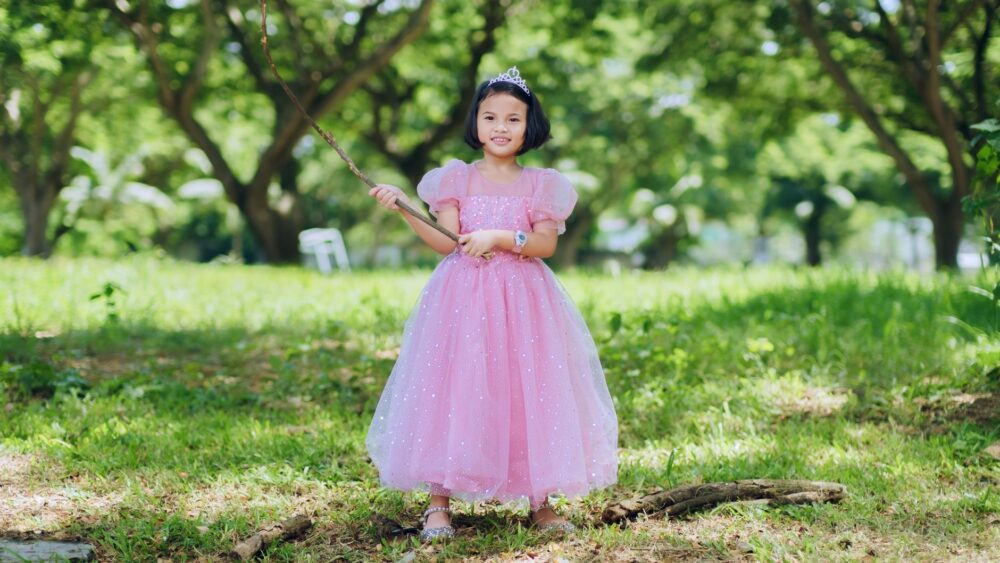
Princess names carry a particular kind of weight. They feel grand without being cold, familiar without being plain, and they have a way of making a child feel like she was named for something bigger than herself. Whether you’re drawn to real-world royal history, the sweeping romance of Disney storytelling, or simply names that carry that innate sense of dignity and grace, there is a whole world of options beyond the obvious.
This list pulls from three overlapping worlds: genuine royalty (queens, princesses, and noblewomen who shaped history), Disney’s iconic roster of princess characters, and names that simply carry that regal, storybook quality in their bones.
Classic Disney Princess Names
These are the names that launched a thousand birthday cakes. Disney’s princess lineup has genuinely influenced baby naming trends for decades, and several of these names saw measurable climbs right alongside their film releases.
Aurora
The name of Sleeping Beauty, Aurora comes from the Latin word for dawn and refers to the Roman goddess of the morning sky. It has quietly become a powerhouse in modern baby naming, sitting comfortably in the top 100 in multiple countries. The Disney connection only adds to its already breathtaking sound.
Ariel
The Little Mermaid gave this Hebrew name, meaning “lion of God,” a massive cultural boost in the late 1980s. Before 1989 it was relatively rare for girls; after, it became a generation-defining choice. Still deeply tied to the Disney film but warm and genuinely pretty on its own terms.
Belle
From Beauty and the Beast, Belle is the French word for beautiful used as a given name. It’s short, confident, and has been used as both a standalone name and a nickname for Isabella and Isabelle for well over a century. The Disney version made it feel literary and spirited rather than merely decorative.
Jasmine
The heroine of Aladdin brought this floral name into its modern peak. Jasmine is a Persian-origin name derived from the fragrant flower, and it was already climbing before 1992 but the film sent it soaring. It carries both exotic romance and an easy, familiar feel.
Cinderella
Rarely used as an actual given name, and honestly, that’s fair. It works better as an archetype than a birth certificate entry, so we’re moving on.
Tiana
The Princess and the Frog gave this name a genuine moment. Tiana is likely a short form of Tatiana or Christiana, with Slavic and Latin roots. It had been in use before the 2009 film but gained new energy and visibility afterward, particularly as a name with a strong, ambitious character behind it.
Rapunzel
Like Cinderella, this one is essentially unusable as a real given name. Its roots are actually the German word for a type of plant, not a personal name. Skip it.
Merida
The fierce Scottish heroine of Brave. Merida is believed to be a variant of Merida or derived from Spanish roots meaning “one who has achieved a high place of honor.” It’s rare in real-world use but genuinely striking and fully wearable as a given name.
Moana
A Hawaiian and Maori word meaning “ocean” or “wide expanse of water,” Moana is used as a given name throughout Polynesia. The 2016 Disney film brought it to global attention. It’s a name with deep cultural meaning and a beautiful, open sound.
Elsa
Frozen’s ice queen is technically a queen, not a princess, but she started as one. Elsa is a Scandinavian short form of Elisabeth, and while it was already a classic Nordic name, the film gave it enormous new life. It’s serious, elegant, and genuinely old-fashioned in the best way.
Anna
Elsa’s sister in Frozen, and one of the most enduring names in Western history. Anna is the Latin and Greek form of the Hebrew Hannah, meaning “grace” or “favor.” It has never really gone out of style and probably never will. Frozen simply reminded a new generation of its charm.
Pocahontas
An Algonquian name with deep historical roots, Pocahontas was a real historical figure whose actual name was Amonute. The name itself means something close to “playful one” or “ill-behaved child” in her language. Rarely used as a given name today, but worth knowing the real history behind it.
Mulan
A Chinese name meaning “magnolia,” Mulan is used as a given name in China and Chinese diaspora communities. The legendary heroine predates Disney by centuries. It’s a name with genuine history and quiet strength.
Raya
The protagonist of Raya and the Last Dragon, this name has Hebrew and Arabic roots meaning “friend” or “flow.” It’s a genuinely modern choice that feels fresh and international without being invented.
Asha
The heroine of Disney’s Wish, Asha is a Sanskrit name meaning “hope” or “wish,” which makes it almost too perfect for the film. It’s widely used across South Asian, East African, and Middle Eastern communities and has a warmth and simplicity that travels beautifully.
Real Royal Names from History
These are names worn by actual queens, princesses, and noblewomen across centuries of European and world history. They carry genuine pedigree and the weight of real lives lived at the center of history.
Catherine
From the Greek Aikaterine, with uncertain deeper roots, Catherine has been the name of queens of England, France, Russia, and Aragon. Catherine the Great, Catherine of Aragon, Catherine de’ Medici. It’s a name that has run through the arteries of European power for a thousand years and still feels absolutely current.
Eleanor
Eleanor of Aquitaine is arguably the most powerful woman of the medieval world, and her name has never stopped resonating. Its origin is debated, possibly from the Old French form of the Greek Helen or from a Germanic root. Whatever its source, it is one of the great names in Western history.
Matilda
A Germanic name meaning “strength in battle,” from the elements “maht” (power) and “hild” (battle). Empress Matilda fought for the English throne in the 12th century. The name has made a strong comeback in recent years, beloved for its old-fashioned backbone.
Isabella
A medieval Latinate form of Elizabeth, Isabella was the name of queens of Castile, France, England, and Portugal. Isabella I of Castile funded Columbus’s voyage. It’s been a top-10 name in many English-speaking countries for years and still feels genuinely regal rather than overexposed.
Victoria
From the Latin for “victory,” Victoria was the name of one of Britain’s longest-reigning monarchs and has been a staple of royal families across Europe. It’s authoritative and feminine at once, with the charming nickname Vicky or Tori built right in.
Adelaide
A Germanic name from “adal” (noble) and “heid” (kind, sort), Adelaide was the name of a Holy Roman Empress and a 19th-century Queen of the United Kingdom. It’s having a genuine revival right now, beloved for its vintage elegance and the sweet nickname Addie.
Beatrice
From the Latin Beatrix, meaning “she who brings happiness” or “blessed traveler.” Beatrice of Portugal, Beatrice of Savoy, and today’s Princess Beatrice of York all bear this name. It’s also Dante’s muse in the Divine Comedy, which gives it serious literary credentials alongside the royal ones.
Cecilia
The name of a Roman saint and martyr, Cecilia has been used in royal and noble families across Europe for centuries. Its Latin roots are debated but possibly relate to the Roman family name Caecilius. It’s elegant, musical (Saint Cecilia is the patron of music), and criminally underused in the current naming landscape.
Eugenia
From the Greek “eugenios,” meaning “well-born” or “noble.” Empress Eugenie of France was one of the most famous bearers. Today’s Princess Eugenie of York keeps it current. It’s a name with genuine aristocratic history and a soft, flowing sound.
Leonora
A variant of Eleanor with a warmer, more Southern European feel, Leonora has been used in Spanish, Italian, and Portuguese royal families. It carries all of Eleanor’s historic weight with a slightly more romantic tone.
Philippa
The feminine form of Philip, from the Greek for “lover of horses.” Philippa of Hainault was Queen of England as wife of Edward III and is remembered as a gracious and politically engaged queen. The name is still relatively rare, which makes it feel like a genuine discovery.
Sophia
From the Greek for “wisdom,” Sophia has been a royal staple across Europe for centuries, from Byzantine empresses to the current Spanish royal family. It has also been a top-name-chart regular in recent years, which is a testament to how broadly appealing it is.
Margaret
From the Greek for “pearl,” Margaret has been borne by queens of Scotland, Denmark, England, and beyond. Princess Margaret of the United Kingdom gave the name a certain glamorous, complicated edge. It’s a serious name with surprising nickname flexibility: Maggie, Margo, Greta, Peggy.
Frederica
The feminine form of Frederick, from the Germanic “peaceful ruler.” Used in Prussian, Danish, and British royal families, Frederica is stately and underused. It has a built-in nickname in Freda or Rica and a genuine regal backbone.
Helena
The Latinized form of Helen, from the Greek, possibly meaning “torch” or “bright.” Princess Helena was a daughter of Queen Victoria. Helena of Troy is the ancient archetype. It’s a name that spans myth, history, and royalty with ease.
Louisa
The Latinate feminine form of Louis, from the Germanic “famous warrior.” Queen Louisa of Prussia is one of its most celebrated bearers, remembered for her courage during the Napoleonic Wars. It’s softer than Louise and has a quiet, bookish elegance.
Anastasia
From the Greek “anastasis,” meaning “resurrection.” The tragic story of the youngest daughter of Tsar Nicholas II has made this name one of history’s most haunting and romantic. It’s long, dramatic, and absolutely gorgeous, with the nickname Nastya or Stasia for everyday use.
Olga
A Norse-derived name brought to Russia through the Varangians, Olga is the Russian form of Helga, meaning “holy” or “blessed.” Saint Olga of Kiev was the first Russian ruler to convert to Christianity. It’s fierce, short, and carries enormous historical weight.
Cleopatra
From the Greek, meaning “glory of the father.” Cleopatra VII of Egypt is one of the most famous rulers in all of human history. The name is dramatic and bold, rarely used today, which honestly makes it feel like a more interesting choice than ever.
Nefertiti
An ancient Egyptian name meaning “the beautiful one has come.” Queen Nefertiti was one of the most powerful women of the ancient world, and her name has been used as a given name, particularly in African and African diaspora communities. Striking and deeply historical.
Zenobia
From the Greek, meaning “life of Zeus” or connected to the name Zeus. Queen Zenobia of Palmyra in the 3rd century CE was a warrior queen who challenged the Roman Empire. The name is rare, bold, and has a genuine ancient royal pedigree.
Theodora
The feminine form of Theodore, from the Greek “gift of God.” Empress Theodora of Byzantium rose from circus performer to co-ruler of the empire and is remembered as one of the most remarkable figures of the early medieval world. The name is grand, historical, and ripe for revival.
Irene
From the Greek “eirene,” meaning “peace.” Empress Irene of Byzantium was the first woman to rule the Byzantine Empire in her own right. It’s a name with both mythological roots (Eirene was the goddess of peace) and serious imperial history.
Constance
From the Latin “constantia,” meaning “steadfastness” or “constancy.” Constance of Sicily was a Holy Roman Empress and Queen of Sicily. It has a composed, serious quality that feels both old-fashioned and quietly modern.
Berenguela
A medieval Spanish royal name, Berenguela of Castile was one of the most politically skilled queens of the 13th century. The name is rare in English-speaking contexts, which makes it a genuine find for parents who want something with deep royal roots and no modern competition.
Urraca
Queen Urraca of Leon and Castile was the first ruling queen of a major Christian kingdom in medieval Iberia. The name is of uncertain origin, possibly Basque or pre-Roman. Bold, unusual, and carrying serious historical weight for those who know it.
Names Inspired by Real Modern Royals
The current generation of royal families around the world has given us a fresh set of names to admire. Several of these have directly influenced baby naming trends in recent years.
Charlotte
The French feminine form of Charles, from the Germanic “free man.” Princess Charlotte of Wales, daughter of Prince William and Princess Catherine, gave this already-beloved name an enormous boost after her 2015 birth. It’s elegant, classic, and has beautiful nickname potential in Charlie and Lottie.
Diana
From the Latin, Diana was the Roman goddess of the hunt and the moon. Princess Diana of Wales made this already-classical name deeply emotional for a generation. It’s been climbing again in recent years as her legacy is reassessed and honored.
Meghan
A Welsh variant of Margaret, meaning “pearl.” The Duchess of Sussex brought fresh attention to this spelling, which had been popular in the 1980s and 1990s. It’s approachable and familiar with a quiet royal connection.
Eugenie
The French form of Eugenia, meaning “well-born.” Princess Eugenie of York wears this spelling, which is softer and more French-inflected than the anglicized Eugenia. Rarely used outside royal circles, which gives it an air of exclusivity.
Zara
Zara Tindall, granddaughter of Queen Elizabeth II, bears this name, which has Arabic roots meaning “blooming flower” or “radiance” and is also used in Hebrew contexts. It’s short, modern-feeling, and international in a way that feels genuinely current.
Letizia
The Italian and Spanish form of Laetitia, from the Latin for “joy.” Queen Letizia of Spain is its most prominent current bearer. It’s warm and romantic, rarely used in English-speaking countries but completely accessible.
Maxima
Queen Maxima of the Netherlands has given this bold Latin name, meaning “the greatest,” real-world royal credibility. It’s rare as a given name and carries an undeniable confidence.
Rania
Queen Rania of Jordan is one of the most prominent bearers of this Arabic name, which means “to gaze” or “she who captivates.” It’s elegant, international, and has a soft, flowing sound that works beautifully in English-speaking contexts.
Mette
Queen Mette-Marit of Norway made this Scandinavian name known to a broader audience. Mette is a Danish and Norwegian form of Margaret, meaning “pearl.” Short, Nordic, and quietly cool.
Mary
Queen Mary of Denmark (now Queen Mary, wife of Frederik X) is among the most recent high-profile bearers of this ancient name. From the Hebrew Miriam, with debated meaning, Mary is the most enduring name in Western Christian history. It never really left; it just got quieter, and it’s coming back.
Mythological and Legendary Princess Names
Mythology is full of princesses, and their names carry the same power as royal history. These are names from Greek, Norse, Celtic, and other traditions that belong to legendary figures of princess or royal status.
Persephone
The Greek goddess-princess, daughter of Zeus and Demeter, who became Queen of the Underworld. The meaning of her name is debated but may relate to “bringer of destruction” or “threshing wheat.” It’s dramatic, beautiful, and has been rising steadily in recent years as parents embrace longer, mythological names.
Andromeda
An Ethiopian princess in Greek mythology, chained to a rock and rescued by Perseus. Her name means “ruler of men” or “she who thinks like a man,” from the Greek “aner” (man) and “medon” (to think, to rule). Grand, astronomical (it’s also a galaxy), and genuinely wearable with the nickname Andi.
Cassandra
A Trojan princess gifted with prophecy but cursed never to be believed. From the Greek, possibly meaning “she who entangles men.” It’s one of antiquity’s most dramatically charged names and has a beautiful, flowing sound. The nickname Cassie softens it for everyday use.
Iphigenia
A Greek name meaning “strong-born” or “she who is born strong,” Iphigenia was a princess of Mycenae and a central figure in the Trojan War mythology. Rare to the point of being almost unused today, but fully pronounceable and deeply beautiful for the right family.
Isolde
A Celtic name of debated origin, possibly from the Germanic “ice battle” elements or from a Welsh root. Princess Isolde of the Tristan and Isolde legend is one of medieval literature’s great romantic heroines. The name is rare, haunting, and carries an enormous amount of romantic weight.
Guinevere
The Welsh name of King Arthur’s queen, from “gwenhwyfar,” meaning “white phantom” or “white enchantress.” It’s the origin of Jennifer, but Guinevere itself is far rarer and more dramatic. Gwen is the natural nickname.
Niamh
Pronounced “Neev,” this Irish name means “bright” or “radiant.” In Irish mythology, Niamh of the Golden Hair was a princess of Tir na nOg, the land of eternal youth. It’s a top name in Ireland and gaining recognition in the wider English-speaking world.
Rhiannon
A Welsh name meaning “great queen” or “divine queen,” from the Proto-Celtic “rigantona.” Rhiannon is a central figure in the Mabinogion, the collection of Welsh mythological tales, and later became famous through the Fleetwood Mac song. It’s lyrical, mystical, and deeply connected to Welsh royal mythology.
Atalanta
A Greek mythological princess and huntress, her name is thought to mean “equal in weight” or “balanced.” She was a formidable figure in Greek myth, a princess who could outrun any man. Rarely used today, which makes it a striking find.
Calypso
A sea nymph and princess figure in Greek mythology, Calypso is from the Greek “kalypto,” meaning “to cover” or “to conceal.” It’s musical, spirited, and has a rhythm that makes it genuinely fun to say.
Oenone
A Naiad nymph and princess of Phrygia in Greek mythology, Oenone was the first wife of Paris before he abandoned her for Helen. The name means “wine” from the Greek “oinos.” Rare and unusual, for families who want something truly off the beaten path.
Names That Feel Inherently Regal
Some names carry a royal quality not because of a specific queen or princess but because of their sound, their history of aristocratic use, or their association with power and beauty. These are princess names in spirit.
Seraphina
From the Hebrew “seraphim,” the highest order of angels. It’s a name of breathtaking sound and genuine religious history, used in noble and aristocratic families across Europe. Jennifer Garner and Ben Affleck choosing it for their daughter brought it into wider American consciousness.
Valentina
The Latin feminine form of Valentinus, meaning “strong” or “healthy.” It’s widely used across Latin America and Southern Europe, carries a warm, romantic quality, and has been climbing in English-speaking countries. Grand without being stiff.
Vivienne
From the Latin “vivus,” meaning “alive.” The French spelling Vivienne has an aristocratic, Parisian elegance. The Lady of the Lake in Arthurian legend is sometimes called Vivienne, which gives it a mythological princess dimension as well.
Celeste
From the Latin “caelestis,” meaning “heavenly” or “of the sky.” It’s been used in noble families across France and Italy and has a soft, dreamy quality that feels genuinely regal without being heavy.
Rosalind
From the Germanic elements “hros” (horse) and “lind” (tender, soft), though long associated through folk etymology with the Latin “rosa linda” (beautiful rose). Rosalind is the heroine of Shakespeare’s As You Like It, one of his most capable and spirited characters. It has an aristocratic, literary quality and the lovely nickname Ros or Roz.
Cordelia
From Shakespeare’s King Lear, Cordelia is the loyal youngest daughter of a king, making her a literal literary princess. The name may derive from the Latin “cor” (heart) or from a Celtic root. It’s rare, beautiful, and carries genuine emotional weight.
Genevieve
From the Germanic Genovefa, of uncertain meaning, possibly “woman of the people” or “tribe woman.” Saint Genevieve is the patron saint of Paris, and the name has been used in French noble families for centuries. It has a flowing, romantic sound and the nickname Genny or Evie.
Arabella
Likely a variant of Annabel or possibly from the Latin “orabilis,” meaning “yielding to prayer.” It was used in Scottish noble families in the medieval period and has a melodic, aristocratic quality that makes it feel genuinely princess-like.
Rosalba
An Italian and Spanish name meaning “white rose,” from the Latin “rosa” (rose) and “alba” (white). Used in noble Italian families, it’s rare in English-speaking countries but has an undeniable elegance.
Isadora
From the Greek “Isis” and “doron,” meaning “gift of Isis.” Isadora Duncan, the pioneering American dancer, is its most famous bearer. It has a dramatic, artistic quality and carries genuine historical gravitas alongside its beauty.
Lavinia
From the Latin, Lavinia was a princess in Roman mythology and legend, the daughter of King Latinus and the woman for whom Aeneas fought in Virgil’s Aeneid. The name has deep roots in Roman literary tradition and has a soft, flowing sound.
Octavia
From the Latin “octavus,” meaning “eighth.” Octavia was a Roman noblewoman of exceptional standing, sister of Augustus. The name is confident, classical, and has been rising steadily alongside other Latin revival names like Livia and Aurelia.
Aurelia
From the Latin “aureus,” meaning “golden.” A name used in Roman noble families, Aurelia was the name of Julius Caesar’s mother. It’s warm, glowing, and has the beautiful short form Aura for everyday use.
Thessaly
From the ancient Greek region of Thessaly, a name sometimes used as a given name with a mythological and regal association. It’s rare and genuinely distinctive, with a classical weight that fits naturally into this company.
Calista
From the Greek “kallistos,” meaning “most beautiful.” It’s connected to the mythological figure Callisto, a nymph associated with Artemis. The name has a classical elegance and a soft sound that carries without being heavy.
Selene
The Greek goddess of the moon, her name simply means “moon.” It’s been used as a given name in Greek and other Mediterranean cultures for a very long time. Soft, luminous, and genuinely beautiful without being as loaded with cultural baggage as Luna or Diana.
How to Choose the Right Princess Name
The first question worth asking is what kind of “regal” you’re after. A name like Victoria or Catherine brings institutional, historical weight. A name like Ariel or Elsa brings warmth and story. A name like Persephone or Isolde brings mythology and literary romance. These feel different on a real child, so it helps to know which register speaks to you before you start narrowing down.
Sound matters enormously with long, grand names. Many princess names are three or four syllables, which is beautiful in full but needs to work with your last name and feel manageable day-to-day. Test it: say it five times fast, shout it across a playground, whisper it as a comfort. A name that passes all three tests is a keeper. And always check what nickname naturally emerges, because that is what she will likely go by for large chunks of her life.
Consider the weight of the association you’re choosing. A name like Diana carries an enormous emotional legacy. A name like Anastasia carries a tragic history. A name like Cleopatra is bold and will prompt comments. None of that is a reason to avoid a name, but it’s worth going in with your eyes open about what you’re attaching to your child’s identity.
Finally, trust the name that feels like hers. The best princess names, from Aurora to Zenobia, work because they feel simultaneously like a story and like a real person. When you find the one that feels both grand and completely, naturally right, that’s the one.
The range here is genuinely wide. From the Disney classics that shaped a generation’s imagination to the warrior queens of ancient history, from Norse mythology to modern royal families, princess names come in every flavor. The one you’re looking for is probably already on this list.