
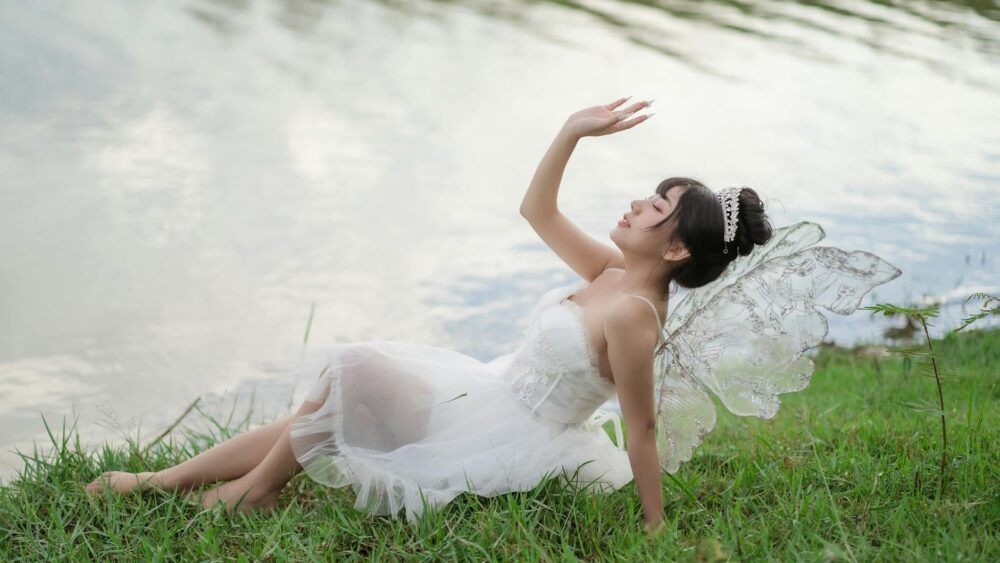
Fairy names carry a particular kind of magic: they feel at once ancient and otherworldly, rooted in folklore and myth yet light enough to float off the tongue. The best fairy names for girls draw from Celtic legend, Shakespearean invention, Norse mythology, and the natural world, the sources that have always fed our imagination of the fae.
Whether you want something that sounds like it belongs in an enchanted forest or a name with a documented fairy connection in literature and folklore, this list is built around names that genuinely belong in that world. Every name here has a real story behind it.
Classic Fairy Names from Folklore and Legend
These names come directly from fairy lore, mythology, and the long oral traditions that gave us our earliest images of the fae.
Titania
The queen of the fairies in Shakespeare’s A Midsummer Night’s DreamTitania is derived from the Latin Titaniusmeaning “of the Titans.” Shakespeare likely coined it from the classical tradition, and it has been synonymous with fairy royalty ever since. Stately, theatrical, and genuinely rare as a given name.
Mab
Queen Mab is one of the oldest fairy figures in British folklore, appearing in Shakespeare, Spenser, and Shelley. The name’s origin is debated, but it may derive from a Celtic root meaning “baby” or “infant.” Short and fierce, it works beautifully as a standalone name or a nickname.
Melusine
A water fairy of French and Germanic legend, Melusine is said to be part woman, part serpent or fish. The name’s origin is uncertain but may derive from a Breton or Frankish source. She appears in medieval romances across Europe, and her name has a haunting, liquid beauty.
Morgan
Morgan le Fay, the enchantress of Arthurian legend, gives this Welsh name its fairy credentials. It derives from the Old Welsh elements mor (sea) and cant (circle) or possibly gen (born of). Strong, unisex, and deeply rooted in Celtic magical tradition.
Nimue
The Lady of the Lake in Arthurian legend, Nimue is a fairy woman who enchants Merlin and raises Lancelot. The name’s origin is obscure, possibly derived from Old French or a Celtic root. Ethereal and rare, it has been quietly gaining notice among parents who love Arthurian myth.
Viviane
Another name for the Lady of the Lake, Viviane (also spelled Vivien) is thought to derive from the Latin vivusmeaning “alive.” In the Arthurian cycle she is a powerful fairy enchantress, and the name carries that sense of vital, ancient magic. Elegant and underused.
Aoife
In Irish mythology, Aoife is a powerful fairy woman and warrior. The name is pronounced EE-fah and derives from the Old Irish aoibhmeaning “beauty” or “radiance.” It sits comfortably in the fairy tradition while being a real, beloved Irish name with centuries of use.
Etain
One of the most beautiful figures in Irish fairy mythology, Etain is transformed into a butterfly and lives among the fairy mounds. The name likely derives from Old Irish meaning “jealousy” or possibly “bright, shining.” Pronounced EH-tawn or ay-TAWN, it is rare outside Ireland and quietly luminous.
Cliodhna
Cliodhna (pronounced KLEE-na) is a fairy queen in Irish mythology, ruler of the Land of Promise and associated with beauty and the sea. The name’s origin is uncertain, possibly related to an Old Irish word for “shapely.” She is one of the most specifically fairy-connected names in the entire Celtic tradition.
Aine
Pronounced AWN-ya, Aine is a fairy queen of Irish legend associated with summer, wealth, and sovereignty. The name derives from Old Irish and means “brightness” or “radiance.” She is one of the most important figures in the Irish fairy tradition, and the name is widely used in Ireland today.
Shakespearean and Literary Fairy Names
Literature has given us some of the most enduring fairy names, from Shakespeare’s magical forest to Victorian fantasy. These names were invented or popularized by writers but have taken on lives of their own.
Ariel
In The TempestAriel is a magical spirit or fairy who serves Prospero. The name derives from Hebrew, meaning “lion of God,” but Shakespeare gave it a distinctly airy, fairy quality. It later became beloved worldwide, partly through Disney’s The Little Mermaidand works for both boys and girls.
Cobweb
One of the fairy attendants in A Midsummer Night’s DreamCobweb is a genuine given name in creative and fairy-naming traditions. Unusual to the point of being avant-garde, it nonetheless has a real literary pedigree. For the truly adventurous namer.
Peaseblossom
Another of Titania’s fairies in Shakespeare’s play, Peaseblossom is a compound nature name with genuine fairy-world credentials. It is rarely given as a first name but has appeared in naming records among parents committed to the whimsical. A bold, joyful choice.
Tinker Bell
J.M. Barrie’s fairy in Peter Pan goes by Tinker Bell, with Tinker used as a given name in some modern fairy-inspired naming. The name refers to a tinker who works with metal, but Barrie’s character has made it purely fairy in cultural imagination. More of a name-inspiration than an everyday choice, but genuinely used.
Lorelei
The Lorelei is a siren or water fairy of German legend, a beautiful woman who lured sailors on the Rhine. The name derives from a place name meaning “murmuring rock.” It has crossed fully into given-name use and is a top-tier fairy name with real mainstream traction today.
Ondine
From the Latin undameaning “wave,” Ondine is a water nymph or fairy of European legend, most famously treated in Friedrich de la Motte Fouque’s novella. The name has a French elegance and a genuinely mythic backstory. Rare, beautiful, and completely underused.
Sylvie
Derived from the Latin silvameaning “forest,” Sylvie is associated with woodland spirits and fairy tradition throughout European literature and ballet. It is a real, widely used French name that has been consistently given to girls for centuries. Soft, pretty, and firmly rooted in the enchanted-forest aesthetic.
Rosamund
From the Old High German elements meaning “horse protection,” but long blended with the Latin rosa mundi meaning “rose of the world,” Rosamund appears in fairy tales and medieval romance as an archetypal enchanted heroine. It has a storybook quality that places it squarely in fairy-name territory.
Celtic and Irish Fairy Names
Celtic mythology is the deepest well for fairy names. The Irish and Welsh traditions gave us the Tuatha De Danann, the Sídhe, and dozens of otherworldly women whose names are among the most beautiful in any language.
Siofra
An Irish name meaning “sprite” or “elf,” Siofra (pronounced SHIF-ra) is about as directly fairy as a name can get. It is used in Ireland and is genuinely rare elsewhere, which makes it feel like a discovery. One of the most honest fairy names on any list.
Niamh
Pronounced NEE-av, Niamh is a princess of the fairy realm Tir na nOg in Irish mythology. Her name means “bright” or “radiant.” She rides a white horse across the sea to carry the poet Oisin to the land of eternal youth. A top Irish name with an unimpeachable fairy pedigree.
Fionnuala
In Irish legend, Fionnuala (pronounced fin-OO-la) is the daughter of Lir, transformed into a swan by her stepmother. The name means “white shoulder” from Old Irish fionn (white, fair) and guala (shoulder). She spends hundreds of years in the fairy-touched world between human and animal, and the name has a haunting, lyrical beauty.
Caer
Caer Ibormeith is a fairy woman in Irish mythology who alternates between human and swan form. The name is Old Irish, possibly meaning “yew berry.” Pronounced roughly KARE, it is rare as a given name but genuine and lovely for parents steeped in Celtic lore.
Sorcha
An Old Irish name meaning “brightness” or “radiance,” Sorcha (pronounced SOR-a-kha or SUR-uh-kha) appears throughout Irish fairy tales and is widely used in Ireland today. The luminous meaning fits the fairy world perfectly. A solid, beautiful choice that works in and outside Celtic communities.
Deirdre
The great tragic heroine of Irish legend, Deirdre moves through a world thick with fairy prophecy and magical intervention. Her name’s origin is uncertain, possibly from Old Irish meaning “broken-hearted” or “she who rages.” Dramatic, ancient, and completely authentic to the Celtic tradition.
Brigid
The goddess Brigid was absorbed into both Irish Christianity and fairy belief, becoming associated with sacred wells, healing, and the liminal spaces where the fairy world touches the human one. The name derives from Old Irish Brigmeaning “exalted one.” A foundational name in Irish culture with genuine otherworldly connections.
Rhiannon
The Welsh goddess and enchantress Rhiannon rides a white horse that no mortal can catch and is linked to the Otherworld throughout the Mabinogion. Her name likely derives from the Brittonic Rigantonameaning “great queen.” Fleetwood Mac made it globally famous, but its fairy credentials go back over a thousand years.
Branwen
A central figure of Welsh mythology and the Mabinogion, Branwen’s name means “white raven” or “blessed raven” from the Welsh elements bran (raven) and gwen (white, blessed). She moves through a world of magic and supernatural consequence. Rare, striking, and deeply rooted in the Celtic Otherworld tradition.
Arianrhod
A Welsh goddess and figure of the Mabinogion, Arianrhod’s name means “silver wheel” or “silver disc,” from arian (silver) and rhod (wheel). She is associated with the moon, fate, and the magical realm. Long and complex, it is a name for parents who want something genuinely ancient and rare.
Fairy Names from Norse and Germanic Tradition
Norse mythology has its own fairy-adjacent beings: the elves, the Valkyries, and the spirits of the land. These names come from that tradition.
Alvina
Derived from Old English and Old Norse elements meaning “elf friend,” Alvina connects directly to the fairy and elf world of Northern European mythology. It is a real given name with historical use in England and Scandinavia. Gentle, vintage, and quietly magical.
Alva
From the Old Norse alfrmeaning “elf,” Alva is a genuine Scandinavian name used for both girls and boys. Elves in Norse tradition were nature spirits closely related to the fairy concept. Short, clean, and beautifully simple.
Alfhild
A Norse name meaning “elf battle,” from alfr (elf) and hildr (battle). Alfhild is the name of a legendary Norse woman who chose adventure over marriage, and the name has a fierce, mythic quality. Rare outside Scandinavia, but genuinely striking.
Hulda
In Norse and Germanic folklore, Hulda (also Holda or Holle) is a supernatural woman associated with magic, spinning, and the hidden world. The name derives from Old Norse or Old High German meaning “gracious” or “sweet.” It is used in Scandinavia and has a warm, ancient character.
Rusalka
A Slavic water fairy or spirit, the Rusalka is a figure of Slavic folklore who has also inspired opera (Dvorak’s Rusalka). The name is used as a given name in Slavic countries and is rooted in the Old Slavic word for “river.” Exotic, musical, and genuinely fairy-world in origin.
Idun
In Norse mythology, Idun (also Idunn) is the goddess who guards the apples of immortality, associated with youth and the magical world beyond ordinary life. The name derives from Old Norse and likely means “ever young” or “rejuvenating.” Rare outside Scandinavia but completely authentic.
Fairy Names Meaning Light, Magic, or the Otherworld
Some names earn their place in fairy territory through their meanings: light, magic, enchantment, or the liminal world between the human and the supernatural.
Faye
Faye derives from the Middle English and Old French word faiemeaning “fairy.” It is the most direct fairy name in the English language, with a clear etymological line to the fae. Simple, sweet, and currently popular without being overexposed.
Fay
The older spelling of Faye, Fay has the same Middle English root meaning “fairy.” It was more common in the early twentieth century and has a crisp, vintage quality. A real name with a real fairy meaning, nothing invented.
Morgan le Fay takes its second element from the same root, but the standalone name Fata
is used in Italian, derived from Latin fatum (fate), and Italian fairy women in folklore are called fate. Fata as a given name appears in Italian naming tradition and carries the fairy meaning directly through the culture that used it.
Elva
An anglicized form connected to the Old Norse alfr (elf), Elva is used in Ireland and Scandinavia. It sits between the elf and fairy worlds etymologically and has a soft, vintage feel. Genuinely rare and genuinely lovely.
Elvina
Related to Old English and Old Norse roots meaning “elf friend” or “elf,” Elvina is a longer form of the Elva/Alva family. It has been used as a given name in England and America, particularly in the nineteenth century, and is ready for a quiet revival.
Tindra
A Swedish name meaning “to twinkle” or “to sparkle,” Tindra evokes the visual magic of fairy light and has become a popular given name in Sweden. It has a crisp, starlit quality that puts it firmly in the enchanted aesthetic. Rare outside Scandinavia but completely usable.
Lumina
From the Latin lumenmeaning “light,” Lumina has been used as a given name and carries an ethereal, glowing quality that suits the fairy world. It is rare but genuine, and the meaning supports its place in a list of names that evoke magic and the otherworldly.
Seraphina
From the Hebrew seraphimmeaning “fiery ones” or “burning ones,” Seraphina is an angelic name that has long crossed into fairy-name territory in popular imagination. It is long, musical, and currently one of the most fashionable names in this category. Genuinely beautiful.
Flower and Nature Names with Deep Fairy Roots
Fairies in folklore are inseparable from the natural world. These names come from flowers, trees, and natural phenomena that have a specific and documented place in fairy tradition.
Hazel
The hazel tree is one of the most sacred trees in Celtic fairy lore, associated with wisdom and the fairy mounds. Hazel as a given name has been used in English-speaking countries for well over a century and is currently very popular. It earns its place here through genuine folkloric connection, not just its nature-name charm.
Rowan
The rowan tree was traditionally planted to ward off fairies and witches in British and Irish folklore, which places it at the very center of fairy belief. As a given name, Rowan is now used for both girls and boys and has strong momentum. The fairy connection is real and specific.
Willow
Willow trees are associated with witchcraft, the moon, and fairy magic throughout British folklore. The name has been in consistent use since at least the twentieth century and is now a mainstream favorite. Its connection to the fairy world is rooted in genuine folk tradition.
Briar
From the Old English word for a thorny plant, Briar is woven into fairy-tale tradition through Sleeping Beauty (sometimes called Briar Rose) and the hedge of thorns that guards enchanted spaces. It has become a genuine given name with real modern use. Edgy, beautiful, and authentically fairy-tale.
Primrose
In British folklore, primroses placed on a doorstep allowed entry to fairyland, making Primrose one of the most specifically fairy-connected flower names. It is a real given name used in England and Scotland, with a vintage quality that is ripe for revival. Charming and specific.
Foxglove
Known in Irish and British folklore as a fairy flower, the foxglove was called “fairy thimble” and “fairy bell” across the Celtic world. Foxglove has appeared as a given name in creative naming circles and has genuine fairy-lore credentials. Unusual to the point of being a statement, but real.
Blossom
A gentle English nature name meaning exactly what it says, Blossom has been used as a given name since at least the nineteenth century. It sits in the fairy-name world through its association with flowering and the spring world of fairy revels. Warm, sweet, and genuinely old-fashioned in the best way.
How to Choose the Right Fairy Name for Your Daughter
Start with the source that matters most to you. If Celtic mythology is your world, names like Niamh, Cliodhna, and Siofra will feel authentic in a way that a more invented fairy name never quite can. If you love the literary tradition, Titania and Ondine carry centuries of storytelling weight. The fairy name that feels right usually connects to a tradition you already love.
Think about how the name will live in the real world. Niamh and Aoife are genuinely used names in Ireland with established pronunciations, but they will need explaining outside Celtic communities. Faye and Willow carry their fairy meaning lightly and travel easily. Neither path is wrong, but it is worth thinking about which suits your family’s life.
Consider pairing an unusual fairy name with a simple middle name, or vice versa. Arianrhod Mae, Cliodhna Rose, or Titania Jane all ground an extraordinary first name with something familiar. The balance tends to make the whole name feel more wearable without softening its magic.
Finally, trust the ones that give you a genuine feeling of recognition. The best fairy names carry a quality that is hard to define but easy to feel: a sense that the name belongs to a world slightly larger than the ordinary one. That feeling is a reliable guide.
Fairy names span a remarkable range, from the Celtic Otherworld to Shakespeare’s enchanted forest to the Norse realm of elves and light spirits. The names on this list have earned their place through real etymology, real folklore, and real stories. The magic is genuine.