

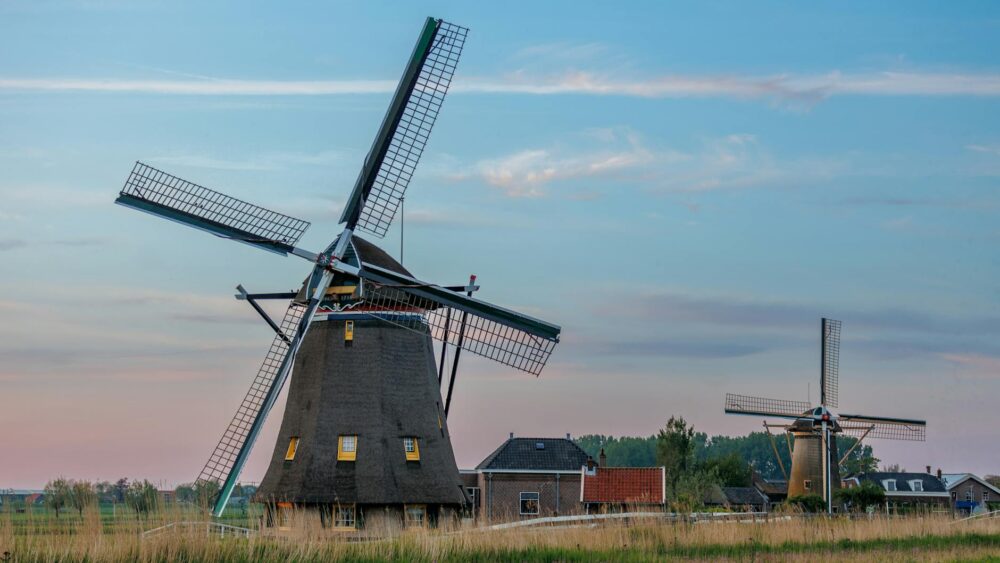
Dutch surnames are among the most vivid and descriptive in all of Europe. Many were locked in place during a Napoleonic-era registration drive around 1811, when the Netherlands was under French rule and citizens were required to register a hereditary family name for the first time. Before that, most Dutch families used patronymics, your surname changed every generation based on your father’s first name. The result of that 1811 registration is a surname landscape packed with occupations, landscapes, colors, animals, and family geography, all frozen in amber from the late medieval and early modern world.
Dutch surnames also carry a direct line back to the Golden Age of the 17th century, when the Netherlands was a global trading power, a center of art and science, and home to names that sailed to South Africa, Indonesia, New York, and beyond. If you are researching family history, looking for character names with historical weight, or simply curious about what your Dutch surname actually means, this guide covers the origins and present-day resonance of the most significant ones.
Patronymic Dutch Surnames (Names Built from a Father’s First Name)
The oldest layer of Dutch surnames is the patronymic: a father’s first name turned into a family name. These are the names that were “frozen” in 1811 and are now some of the most common Dutch surnames in existence.
Janssen
The Dutch form of “son of Jan,” itself the local form of John. Janssen (also spelled Jansen) is one of the most common surnames in the Netherlands, the Dutch equivalent of Johnson or Jones. It traveled widely with Dutch emigrants and appears in Belgian, German, and South African records alike.
Pietersen
Son of Pieter, the Dutch form of Peter, meaning “rock” in Greek. Pietersen is common across the Netherlands and in Afrikaans-speaking South Africa, where Dutch colonial history left deep roots in the surname pool.
Hendriksen
Son of Hendrik, the Dutch form of Henry, meaning “ruler of the home.” Hendriksen and its variant Hendricks appear throughout Dutch genealogical records from the Golden Age onward.
Cornelissen
Son of Cornelis, one of the most distinctively Dutch given names, with Latin roots in the old Roman clan name Cornelius. Cornelissen is a surname you see constantly in 17th-century Amsterdam guild records and VOC (Dutch East India Company) ship manifests.
Willemsen
Son of Willem, the Dutch form of William, meaning “resolute protector.” Willemsen is a solid mid-frequency surname that anchors itself firmly in the Dutch-Flemish world.
Jacobsen
Son of Jacob, the Hebrew patriarch name meaning “supplanter.” Jacobsen crosses easily into Scandinavian territory but has a strong Dutch lineage, especially in the southern provinces and in Dutch colonial records.
Thomassen
Son of Thomas, the Aramaic name meaning “twin.” Thomassen appears in Dutch church registers from the late medieval period and was registered as a fixed surname by many families in 1811.
Adriaansen
Son of Adriaan, the Dutch form of Adrian, ultimately from the Latin Hadrianus, relating to the city of Hadria. This is a distinctly Dutch-sounding surname that signals roots in the southern Netherlands or Zeeland.
Gerritsen
Son of Gerrit, the Dutch form of Gerard, meaning “spear-brave.” Gerritsen is a classic Amsterdam and North Holland surname, appearing in Golden Age merchant records with regularity.
Dirksen
Son of Dirk, the Dutch short form of Diederik (Theodoric), meaning “ruler of the people.” Dirksen is compact and punchy, and it has a particularly strong presence in the eastern Netherlands.
Occupational Dutch Surnames (Names That Record What Your Ancestor Did)
Occupational surnames are a goldmine for genealogists. Dutch ones are especially precise, often describing a very specific trade or guild role that places an ancestor in a particular economic world.
De Bakker
The baker. De Bakker is one of the most common occupational surnames in the Netherlands, and the “De” article (meaning “the”) is a hallmark of Dutch surname structure. Bakers were central figures in every Dutch town and city.
De Boer
The farmer. One of the most iconic Dutch surnames, De Boer is heard constantly across the Netherlands and in South Africa (where it became “Boer,” the Afrikaans word for farmer that entered English during the Boer Wars). It is a top-20 Dutch surname by frequency.
De Visser
The fisherman. Given that the Dutch economy was built in large part on herring fishing and North Sea trade, De Visser is exactly the kind of occupational name you would expect to be common, and it is.
De Smit / Smits
The smith, a blacksmith or metalworker. Smits (and its variant De Smit) is the Dutch cognate of Smith, Schmidt, and Ferraro, and it is one of the most universally common occupational names across the Germanic world.
De Bruin / Bruin
Technically meaning “the brown one,” Bruin sits on the border between occupational (a dyer who worked with brown pigments) and descriptive (someone with brown hair or a dark complexion). Bruin is also the traditional Dutch name for a bear, so it carries folkloric weight as well.
Kuiper
A cooper, someone who makes barrels and casks. In a nation whose economy ran on trade, brewing, and herring (all of which required barrels), coopers were essential. Kuiper is a solidly Golden Age surname with a strong Amsterdam trading-class feel.
Timmerman
Carpenter. Timmerman is a compound of “timmer” (timber) and “man,” and it was one of the most important building trades in a country that constructed everything from canal houses to the world’s finest ships. It remains a recognizable Dutch surname today.
Molenaar
Miller, specifically someone who operated a windmill or watermill. In a landscape defined by windmills, Molenaar is an almost poetic occupational name, and it has a great sound to go with its visual imagery.
Schoenmaker
Shoemaker. This one is self-explanatory but worth including because it perfectly illustrates how literal Dutch occupational surnames can be. Schoenmaker is “shoe” plus “maker” and leaves nothing to interpretation.
Visser
Fisherman, without the “De” article. Visser on its own (without the definite article) is actually one of the most common Dutch surnames, sitting in the top 15 nationally. The fishing industry was so central to Dutch identity that this name spread across every coastal province.
Brouwer
Brewer. The Netherlands had a thriving beer-brewing culture, particularly in cities like Haarlem and Gouda. Brouwer is a clean, strong-sounding surname with an obvious and proud occupational meaning.
Schrijver
Writer or scribe. In the Golden Age, a schrijver was often a clerk, notary, or administrative scribe, roles that were in high demand in a literate merchant society. Schrijver has an intellectual quality that sets it apart from the craft-trade surnames.
Schipper
Skipper or ship captain. Given the Netherlands’ identity as a maritime power, Schipper is one of the most evocative Dutch occupational surnames. It is still a reasonably common name today.
Koopman
Merchant or trader. Koopman is literally “buy-man” and was the defining social role of the Dutch Golden Age. Merchants funded the great art, built the canal houses, and ran the VOC. This name carries enormous historical resonance.
Posthumus
A Latinized Dutch surname meaning “born after the father’s death.” It was given to children born posthumously and is one of the more poignant and unusual occupational-status surnames in the Dutch tradition, sitting somewhere between a status marker and a biographical note.
Topographic Dutch Surnames (Names That Describe the Land)
The Dutch landscape is flat, watery, and defined by very specific features: polders, dykes, dunes, rivers, and forests. Topographic surnames reflect this geography with great precision.
Van den Berg
From the mountain or hill. One of the most common Dutch surnames, Van den Berg is somewhat ironic in a country famous for its flatness, but “berg” referred to any raised ground, including dunes and low hills. It is a top-10 Dutch surname nationally.
Van Dijk
From the dyke. Dykes were the defining feature of Dutch engineering and daily life, holding back the sea and creating livable land. Van Dijk is one of the most recognizably Dutch surnames in existence. The footballer Virgil van Dijk has made it internationally known.
Van den Heuvel
From the hill. Like Van den Berg, this name refers to elevated ground in a land where even a modest rise was notable. Heuvel is the more specifically Dutch word for a gentle hill or mound.
Van der Meer
From the lake or sea. “Meer” means a lake or inland body of water, and this surname places an ancestor near one. Van der Meer is a graceful, liquid-sounding name with obvious geographic logic.
Van de Velde
From the field. A flat open field, or “velde,” was a common landscape feature, and this surname simply records that an ancestor lived near one. The Golden Age painter Jan van de Velde is one famous bearer.
Van den Broek
From the marsh or wetland. “Broek” refers to low, marshy ground, a feature everywhere in the Dutch waterscape. Van den Broek is a common surname in the western and northern Netherlands.
Van der Laan
From the lane or avenue. A “laan” is a tree-lined lane or path, and this surname suggests an ancestor who lived along one of the formal avenues that bordered estates and towns. It has a slightly more upmarket historical feel than purely landscape-based names.
Van der Hoeven
From the farmstead or courtyard. “Hoeve” means a farm or smallholding, and Van der Hoeven places an ancestor in a rural agricultural setting. It is common in Brabant and the southern provinces.
Van der Burg
From the castle or fortified town. “Burg” means a fortified place, and this surname suggests an ancestor who lived near or within a medieval fortification. It has a more urban and defensive flavor than the purely landscape names.
Van der Poel
From the pool or pond. A “poel” is a small pool or pond, and this is a highly specific topographic marker. Van der Poel is a recognizable Dutch surname with a pleasingly compact sound.
Van der Zee
From the sea. One of the most evocative Dutch surnames, Van der Zee places an ancestor directly on the coast. Given that the Dutch relationship with the sea is foundational to their entire national identity, this is a name that carries real cultural weight.
Van der Linden
From the linden trees. The linden (lime tree) was a common landmark tree in Dutch villages, often marking a town square or meeting place. Van der Linden is a gentle, nature-rooted topographic name.
Van der Wal
From the embankment or rampart. “Wal” means a raised earthwork or bank, another feature of the Dutch water-management landscape. Van der Wal is common across the Netherlands.
Van der Waal
From the Waal, the major Dutch river that forms the southern branch of the Rhine delta. The Van der Waal surname is geographically specific in a way that makes it especially useful for genealogical research.
Vandenberg
The Americanized, unhyphenated form of Van den Berg, common among Dutch emigrants to the United States. It represents the natural simplification that happened when Dutch surnames crossed the Atlantic and lost their spacing conventions.
Color and Descriptive Dutch Surnames (Names That Describe a Person or Place)
Some Dutch surnames began as nicknames describing a person’s appearance, personality, or the color associated with their land or livelihood. These names are vivid and often still immediately understandable in modern Dutch.
De Wit / Witte
The white one. De Wit refers to fair coloring, whether hair, skin, or the color of a house or field. It is one of the most common Dutch color-based surnames and was borne by Johan de Witt, the 17th-century Grand Pensionary of Holland who was a central figure of the Golden Age.
De Zwart
The dark or black one. The counterpart to De Wit, De Zwart describes dark coloring and is a common Dutch nickname-surname. It is straightforwardly descriptive in the way that medieval nicknames often were.
De Groot
The great or the large. De Groot could refer to physical stature or, in some cases, to social prominence. The humanist scholar Hugo Grotius was born Hugo de Groot, making this one of the most intellectually distinguished Dutch surnames.
De Lange
The tall one. Height was apparently a notable enough feature to generate one of the most common descriptive Dutch surnames. De Lange is found throughout the Netherlands and in South African records.
De Jonge / De Jong
The young one. De Jong is one of the single most common Dutch surnames, typically given to the younger of two men with the same first name in a community. It is a top-5 Dutch surname nationally.
De Oud / De Oude
The old one, often given to distinguish an older man from a younger one with the same name. De Oude is less common than De Jong but follows the same logical structure.
De Vries
The Frisian, someone who came from Friesland, the northern coastal province. De Vries is one of the most common Dutch surnames, a reminder that regional identity was a meaningful social marker in the medieval Netherlands. It consistently ranks in the top 5 nationally.
De Roos
The rose, often a descriptive name for someone associated with the rose symbol (perhaps a sign above their house or inn) or someone with a rosy complexion. De Roos has a soft, appealing sound that makes it one of the more attractive Dutch descriptive surnames.
De Graaf
The count or the steward. “Graaf” means a count or earl, but in surname usage it more often referred to someone who worked for a count’s household or managed agricultural land. De Graaf is a common Dutch surname with aristocratic overtones that were not always literal.
De Wolf
The wolf. Animal-based surnames are common across Europe, and De Wolf is the Dutch version. It could refer to someone thought to have wolf-like qualities or to someone who lived near a place associated with wolves.
Nature and Animal Dutch Surnames
Beyond wolves and roses, the Dutch surname pool includes a range of animals, birds, and natural features that were used as identifying markers in a world before formal registration.
De Haan
The rooster or cock. De Haan is a common Dutch surname that likely began as a nickname for a boastful or combative man, or for someone who kept poultry. It is a top-30 Dutch surname today.
De Leeuw
The lion. The lion is the central symbol of Dutch heraldry, appearing on the national coat of arms and countless provincial emblems. De Leeuw was likely a house-name (from a house marked with a lion sign) or a nickname for someone bold and fierce.
De Valk
The falcon. Falconry was a noble sport, and De Valk suggests a connection to that world, either as a falconer or as someone who lived at a house marked with a falcon. It has a sharp, aristocratic sound.
De Mos / Mosselman
These names relate to moss and mossy ground, reflecting the boggy Dutch landscape. De Mos and related forms are less common but genuinely Dutch in their landscape-rooted logic.
Haas
The hare. Haas is a common Dutch and Flemish surname that was likely a nickname for someone quick or timid, or a house-name from a sign depicting a hare. It is short, memorable, and still common across the Netherlands and Belgium.
Vos
The fox. Vos is one of the most common animal-based Dutch surnames. Like Haas, it likely began as a nickname (for someone cunning) or a house-name. Vos is in the top 50 Dutch surnames by frequency.
Kok
Cook. Kok is the Dutch word for a cook or chef, and this is technically an occupational surname, but it also doubles as a nature-adjacent description in some folk uses. Primarily it is occupational: the family cook or a professional in a great household.
Mulder
Miller. Mulder is a variant of Molenaar, also meaning a miller, but it comes from a Low German form. It is extremely common in the eastern and northern Netherlands, and became briefly famous to international audiences through the TV character Fox Mulder.
Dutch Surnames from the Colonial and Maritime World
The Golden Age sent Dutch surnames across the globe. Many were simplified, Anglicized, or absorbed into other languages, but their Dutch origins are traceable.
Van Riebeeck
Jan van Riebeeck founded the Dutch settlement at the Cape of Good Hope in 1652, and this surname became one of the most historically significant in South African history. It is a topographic name, likely referring to a place called Riebeeck in the Netherlands.
Stuyvesant
Peter Stuyvesant was the last Dutch Director-General of New Netherland (now New York) before the British takeover in 1664. The surname is Dutch, likely derived from a place name, and it is permanently embedded in New York City history and geography.
Van Houten
From Houten, a place near Utrecht. This topographic surname became internationally known through Coenraad Johannes van Houten, the 19th-century Dutch chemist who invented the process for making cocoa powder.
Heineken
Derived from a diminutive of the name Hein (a short form of Hendrik or Heinz), the Heineken surname became globally recognized through Gerard Adriaan Heineken, who built the Dutch brewing empire in the 19th century.
Rembrandt
Technically a given name (Rembrandt Harmenszoon van Rijn), the “van Rijn” component of the great painter’s name is a topographic Dutch surname meaning “from the Rhine.” Van Rijn places the family near the Rhine river, the great artery of Dutch geography.
Van Leeuwenhoek
Antonie van Leeuwenhoek, the father of microbiology, bore a topographic surname meaning “from the lion’s corner,” combining “leeuw” (lion) and “hoek” (corner or angle). It is a compound topographic name of the kind common in Dutch urban environments.
Huygens
A patronymic from “Hugo’s son,” the Huygens surname is most famous through Christiaan Huygens, the 17th-century mathematician and astronomer who discovered Saturn’s rings. It represents the educated, scientific class of the Dutch Golden Age.
Vermeer
The painter Johannes Vermeer’s surname likely derives from “meer” (lake or sea), possibly a topographic reference. Vermeer is one of the most recognizable Dutch surnames in the world today, entirely because of the Delft master.
Common Dutch Surname Prefixes Explained
Understanding the prefixes that appear repeatedly in Dutch surnames unlocks their meaning instantly. These particles are not decorative; they are geographic prepositions frozen in time.
Van
“From” or “of.” Van is the most common Dutch surname prefix and indicates origin, either from a place or from a family. Van alone (without a following article) suggests the family came directly from a named place: Van Amsterdam, Van Utrecht.
Van de / Van den / Van der
These are “van” plus the definite article in its various grammatical forms (neuter, masculine/feminine with preposition, genitive). Van de is used before neuter nouns, Van den before masculine and feminine nouns in the dative case, and Van der in the genitive. Together they make up the largest group of Dutch compound surnames.
De
“The.” De before a surname indicates a descriptive or occupational origin: De Boer (the farmer), De Groot (the great one), De Vries (the Frisian). It is the second most common Dutch surname particle after Van.
Ten / Ter / Te
These are contractions of “to the” in various grammatical forms, used in topographic surnames. Ten Bosch (at the forest), Ter Haar (at the hare), Te Winkel (at the shop corner). They are less common than Van and De but distinctly Dutch.
How to Research and Choose a Dutch Surname for Your Family History
If you are researching Dutch ancestry, the structure of the surname itself is your first clue. A “Van der” surname almost certainly places your ancestor near a specific geographic feature. An occupational name tells you what trade your family practiced. A patronymic ending in “-sen” tells you the given name of your ancestor’s father and the generation when the name was fixed.
The 1811 registration records are a crucial primary source. When Napoleon required all Dutch citizens to register surnames, many families chose names that reflected their actual situation: their trade, their village, their landlord’s estate, or simply a descriptive nickname that had been following the family for generations. Some families, reportedly in protest or with a sense of humor, chose names that were deliberately comic or crude, which is why the Netherlands has a handful of very unusual surnames that would make any genealogist do a double take.
For genealogical research specifically, the Dutch Genealogical Society (Centraal Bureau voor Genealogie) maintains extensive records, and the WieWasWie database (meaning “who was who”) aggregates church and civil records. If you are tracing a Dutch surname that has been Anglicized, look for the original “Van” particle that was often dropped or merged: Van Dyke became Vandyke, Van Houten became Vanhooton in some American records, and Janssen became Johnson in many English-speaking communities.
For writers and character namers, Dutch surnames offer something that many European surname pools do not: extreme transparency. You almost always know exactly what a Dutch surname means the moment you understand the vocabulary. A character named Kuiper is the cooper’s descendant. A character named Van der Zee comes from the sea. That directness makes Dutch surnames unusually powerful tools for building a character’s background into their name without making it feel invented.
The one thing to keep in mind is that “Van” does not indicate nobility in the Netherlands the way “von” does in German. Most Dutch Van surnames are purely geographic, indicating the town or landscape feature the family came from. Dutch nobility did exist, but the Van particle alone is not a marker of aristocratic origin. This is a common misconception worth correcting, especially for writers who might be tempted to use a Dutch Van surname to signal high birth.
Dutch surnames are a living record of a small country that had an outsized impact on the world. Whether you are tracing your own family tree, naming a fictional character, or simply curious about the names you encounter, the Golden Age is always just a prefix away.