
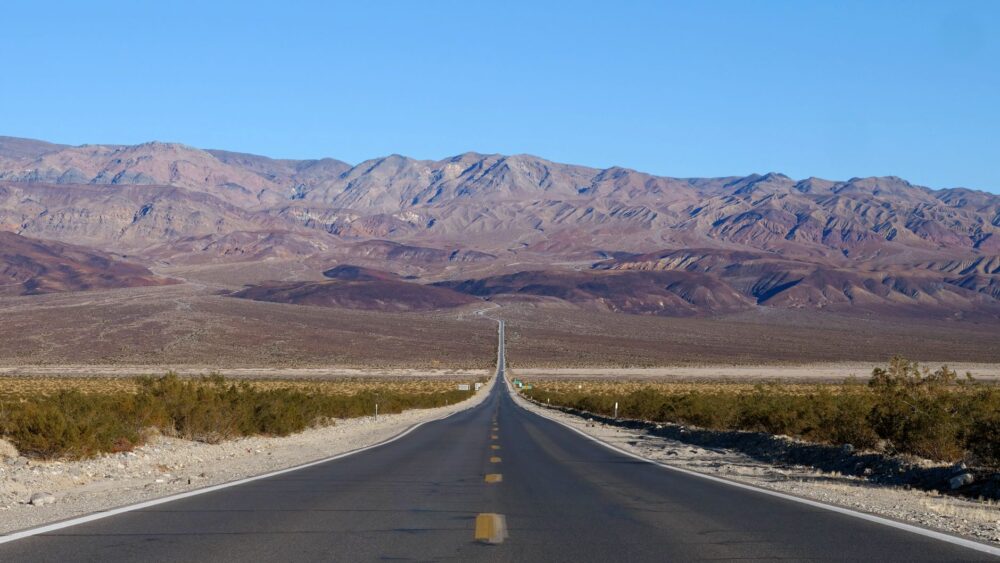
The California desert is one of the most dramatic landscapes on earth, vast salt flats, towering dunes, sun-scorched canyons, and oasis towns that feel like they exist outside of time. The names attached to these places carry all of that weight: Spanish colonial history, Indigenous heritage, frontier grit, and a kind of sun-bleached poetry that makes them surprisingly compelling as given names, middle names, or names for characters who need a sense of place built right into their identity.
This guide covers california desert names drawn from the Mojave, the Sonoran, the Colorado Desert, Death Valley, and the high desert regions of the Inland Empire and beyond. Some are already crossing over into baby name territory. Others are waiting to be discovered. All of them carry the heat, the light, and the strange beauty of the California desert.
Death Valley Names
Death Valley is the most famous stretch of California desert, and its place names range from the haunting to the oddly lyrical. Several translate beautifully onto a name tag.
Dante
Dante’s View is one of Death Valley’s most spectacular overlooks, named for the Italian poet whose descent into the underworld felt thematically appropriate for a valley below sea level. As a given name, Dante has strong Italian roots and a literary backbone that most people recognize immediately. It has been climbing steadily on U.S. charts and carries serious artistic credibility.
Panamint
The Panamint Range forms the western wall of Death Valley, and Panamint City was a short-lived silver boomtown in the 1870s. As a name it is genuinely unusual, with a rugged, frontier sound that sits somewhere between Phineas and Emmett. It is rare enough that your child would almost certainly be the only one in any room.
Furnace
Furnace Creek is the beating heart of Death Valley, the location of its resort, its visitor center, and its famously brutal temperature records. As a name it is bold to the point of audacity, but in an era when Bear and Blaze are in regular use, Furnace has a scorched, elemental quality that some parents will find irresistible.
Zabriskie
Zabriskie Point is named for Christian Brevoort Zabriskie, a borax company executive, but the name itself has taken on a life of its own, immortalized by Michelangelo Antonioni’s 1970 film. Long, Slavic-origin, and genuinely striking, Zabriskie works as a bold surname-style first name or an adventurous middle.
Badwater
Badwater Basin is the lowest point in North America, a vast salt flat 282 feet below sea level. As a name it is a two-word compound that some adventurous namers use in the spirit of Stormy or River, though it sits firmly on the wild end of the spectrum. It’s the kind of name that demands a strong personality to carry it.
Mojave Desert Names
The Mojave covers a huge swath of Southern California and has produced some of the most name-ready place identities in the state. These names carry both Indigenous heritage and frontier history.
Mojave
The name of the desert itself comes from the Mojave people, whose name derives from a Yuman-language word meaning “beside the water.” As a given name it has a sweeping, open-vowel sound and carries immediate geographic identity. It reads as a strong, slightly unconventional choice with real Indigenous roots worth acknowledging.
Joshua
Joshua Tree is arguably the most iconic address in the California high desert, named for the distinctive yucca trees that early Mormon settlers thought resembled the biblical figure Joshua raising his arms. As a given name, Joshua is a Hebrew classic meaning “God is salvation” and has been a top-100 staple for decades. The desert connection gives it an extra layer of romance.
Victorville
Named for Jacob Nash Victor, a Southern Pacific Railroad official, Victorville sits at the edge of the Mojave and has a crisp, surname-style sound. Victor is a strong given name in its own right, and Victorville extends that into something more place-specific and unusual.
Needles
The city of Needles sits where California meets Arizona on the Colorado River, named for the sharp rock formations visible from the river. As a name it is sharp, spare, and genuinely unexpected, closer to the edge of wearable than most entries here, but with a kind of desert-punk energy that some namers will love.
Barstow
Named for William Barstow Strong, a president of the Atchison, Topeka and Santa Fe Railway, Barstow is a Mojave crossroads town with a dusty, sun-faded atmosphere. As a given name it has an old English surname quality, sitting stylistically near Harlow or Marlowe, and could work well as a middle name.
Hesperia
Hesperia is a high desert city in San Bernardino County, but its name is actually ancient Greek, meaning “western land” or “land of the evening star.” It was used poetically to refer to Italy or Spain, and later to the American West. As a given name it is long, melodic, and genuinely beautiful, with a mythological depth that names like Cassiopeia share.
Lucerne
Lucerne Valley is a small community in the high desert, sharing its name with the Swiss city. As a given name, Lucerne has a soft, romantic sound with European elegance. It’s underused in the U.S. and has the kind of gentle luminosity that makes it feel like a cousin to Lorraine or Lucinda.
Coachella Valley and Colorado Desert Names
The Coachella Valley is the most populated stretch of California’s low desert, and its place names blend Spanish, Indigenous, and mid-century resort culture into a distinctive mix.
Coachella
The name Coachella is believed to derive from a Spanish approximation of a Cahuilla word. It has become globally famous thanks to the music festival, but as a given name it is surprisingly rare. It has a flowing, feminine sound and a cultural cachet that is hard to ignore in 2026.
Indio
The city of Indio, the oldest in the Coachella Valley, takes its name from the Spanish word for “Indian,” reflecting the area’s Indigenous heritage. As a given name, Indio has Latin warmth and a relaxed, sun-soaked feel. Actor Gary Oldman named his son Indio, which gave it a small but memorable moment of real-world usage.
Paloma
Paloma Valley is a community in Riverside County on the edge of the Colorado Desert, and Paloma is Spanish for “dove.” It is a fully established given name with deep Spanish-language roots, used across Latin America and increasingly popular in the U.S. It has a soft, lyrical sound and a peaceful meaning that makes it genuinely appealing.
Salton
The Salton Sea is one of California’s most surreal landscapes, an accidental inland sea created in the early 1900s. Salton as a given name is unusual and slightly eerie in the best possible way, with an old English quality that makes it feel like a forgotten surname waiting for a revival.
Blythe
Blythe is a small city on the Colorado River at the southeastern edge of California’s desert region. As a given name, Blythe is an Old English word meaning “happy” or “cheerful,” and it has genuine name-world credentials. It is crisp, confident, and has been used as both a given name and a surname for generations.
Mecca
The small desert community of Mecca sits on the southern shore of the Salton Sea in the Coachella Valley. As a given name it carries enormous historical and religious weight as the holiest city in Islam, and it has been used as a given name in various communities. It is bold, resonant, and meaningful at multiple levels.
Thermal
Thermal is a small agricultural town in the Coachella Valley, named for the hot temperatures that make it ideal for date farming. As a given name it sits in very experimental territory, but it shares the elemental, weather-word energy of names like Storm or Gale.
Anza-Borrego and Southern Desert Names
The Anza-Borrego Desert State Park is the largest state park in the contiguous U.S., and its names come from Spanish colonial exploration and the Cahuilla people who have called this land home for centuries.
Anza
Juan Bautista de Anza was the Spanish colonial explorer who led expeditions through this desert in the 1770s, opening the overland route to Alta California. Anza as a given name is short, strong, and has a feminine crispness similar to Anya or Anza. It carries genuine historical weight as the name of a real explorer and pioneer.
Borrego
Borrego comes from the Spanish word for “lamb” or “young sheep,” referring to the bighorn sheep found in the area. Borrego Springs is the gateway town to the park. As a given name, Borrego is unusual but carries a warm Spanish sound and a humble, natural meaning.
Cuyamaca
The Cuyamaca Mountains rise on the western edge of the Anza-Borrego region, with the name coming from a Kumeyaay word believed to mean “the place where it rains.” It is long, rhythmically complex, and genuinely Indigenous in origin. As a name it is a real stretch for everyday use, but in the tradition of place-names-as-names, it has an undeniable wildness.
Ocotillo
Ocotillo is both a small desert community near the Mexican border and the name of the distinctive spiny desert plant that blooms scarlet each spring. As a given name it is rare but not unheard of, and it has the long, flowing vowel quality that makes Spanish-origin names so appealing. It carries a vivid visual identity.
High Desert and Eastern Sierra Names
The high desert of California stretches from the Antelope Valley in the south to the Owens Valley in the east, where the Sierra Nevada meets the Great Basin. These names tend to be more rugged and less resort-polished than their Coachella counterparts.
Owens
The Owens Valley is one of California’s most dramatic geographical features, a deep trough between the Sierra Nevada and the White Mountains. Owens as a given name is a Welsh surname meaning “son of Owen,” and it sits comfortably in the current trend for surname-style names. It has quiet strength and a lot of room to breathe.
Mammoth
Mammoth Lakes is technically at the edge of the high desert, where the mountains meet the basin. As a given name, Mammoth is enormous in its audacity, but in an age when Bear and Hawk are in use, it has a prehistoric, elemental power that some parents genuinely find compelling.
Bishop
Bishop is the largest city in the Owens Valley and a gateway to the eastern Sierra. As a given name, Bishop has been climbing steadily as a surname-style choice, with an authority and gravitas that makes it feel both old-fashioned and current. It has strong religious title-name energy, similar to Deacon or Canon.
Bodie
Bodie is a ghost town in the Mono County high desert, one of the best-preserved in the American West. The name comes from Waterman S. Body, an early prospector. As a given name, Bodie has a warm, friendly sound and has been rising on naming charts in recent years, fitting into the broader trend of names like Bodhi without requiring a specific spiritual meaning.
Lone Pine
Lone Pine is a small town at the foot of Mount Whitney in the Owens Valley, a staging point for climbers and a beloved filming location for Western movies. As a compound name it is more evocative than practical, but Pine on its own is a spare, nature-name option that fits the current trend for tree names.
Ridgecrest
Ridgecrest is the main city of the Indian Wells Valley in the northern Mojave, known for its proximity to Naval Air Weapons Station China Lake. As a given name, Ridge is the wearable core here, and it has been gaining ground as a bold, outdoorsy choice with a sharp, single-syllable confidence.
Spanish Colonial and Mission-Era Desert Names
Spanish explorers and missionaries named enormous stretches of the California desert, and many of those names have long histories as given names in the Spanish-speaking world.
Cruz
Santa Cruz de la Cañada and various Cruz-named desert landmarks reflect the Spanish word for “cross.” Cruz is a strong, widely-used given name across Latin America and increasingly popular in the U.S., used for both boys and girls. It is short, meaningful, and has an easy confidence about it.
Serrano
The Serrano people are the Indigenous inhabitants of the San Bernardino Mountains and high desert, and the Spanish word means “mountaineer” or “highlander.” As a given name, Serrano is most familiar as a surname (and a chili pepper name), but as a first name it has a rugged, geographic quality.
Esperanza
Several desert communities and historical ranchos in Southern California carried the name Esperanza, Spanish for “hope.” As a given name it is warmly established in Spanish-speaking communities and has been gaining broader use in the U.S. It is long, beautiful, and carries a quietly optimistic meaning that gives it genuine staying power.
Ramon
The San Ramon and Santa Ramona place names appear throughout the desert regions of Southern California, reflecting the given name Ramon, which is the Spanish form of Raymond, meaning “wise protector.” Ramon is a fully established given name with deep roots and a warm, classic sound.
Soledad
Soledad means “solitude” or “loneliness” in Spanish and appears in various California place names. As a given name it has a poetic, melancholy beauty and deep roots in Spanish-speaking Catholic tradition, where it is used as a title of the Virgin Mary. It is rare in the U.S. but genuinely lovely.
How to Choose the Right California Desert Name
The first question worth asking is whether you want a name that most people will recognize as a place name immediately or one that wears its geography more quietly. Joshua and Blythe have lives completely independent of their desert geography. Zabriskie and Panamint announce their origin loudly and will prompt questions everywhere.
Consider the sound before the story. California desert names tend to cluster around two sonic families: long, flowing Spanish and Indigenous names with open vowels (Esperanza, Hesperia, Ocotillo, Coachella) and short, hard-edged frontier names (Ridge, Cruz, Bodie, Anza). Think about what fits your surname and what you actually want to say out loud several hundred times a year.
The middle name slot is where the boldest of these names tend to thrive. Furnace, Zabriskie, Panamint, and Salton are genuinely compelling in the middle position, where they add identity and story without the child having to spell them out at every new school. A solid, familiar first name paired with a desert-place middle is a combination that works beautifully on paper and in life.
Finally, if a name comes from Indigenous heritage (Mojave, Cuyamaca, Serrano), it is worth spending some time understanding that heritage before using the name. These names carry history that goes far deeper than geography, and wearing them with knowledge and respect makes the choice more meaningful, not less.
The California desert has been inspiring people to name things — children, characters, pets, and creative projects — for as long as anyone has been crossing it. These names carry sun, silence, and a kind of stubborn endurance that is hard to manufacture. That is exactly what makes them worth considering.