

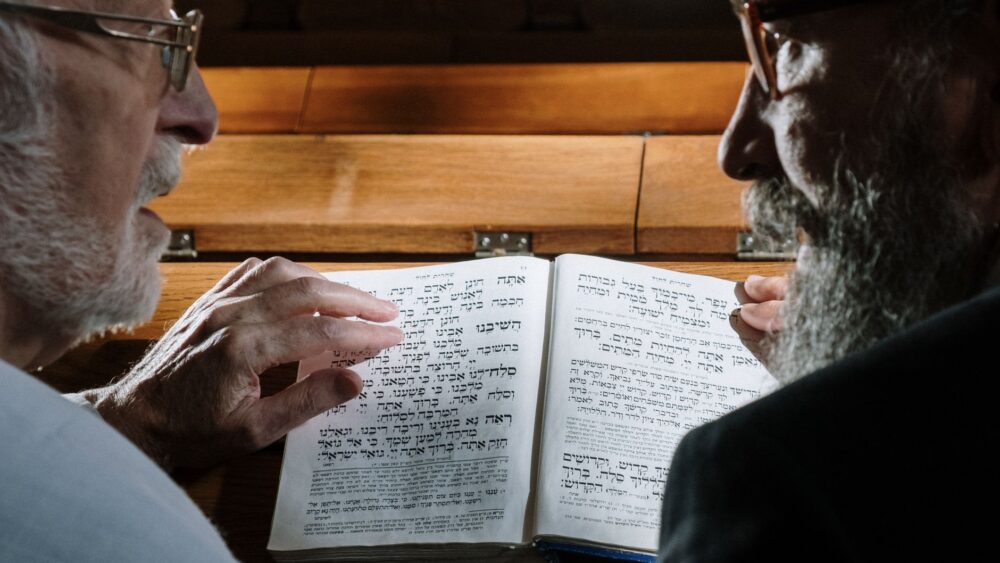
Hebrew names carry something most naming traditions can’t quite match: centuries of layered meaning, spiritual weight, and a living connection to one of the world’s oldest languages. Whether drawn from the Hebrew Bible, ancient poetry, or the modern revival of Hebrew as a spoken language in Israel, these names have traveled across cultures and centuries without losing their power.
This list covers the full range of Hebrew names worth knowing in 2026, classic biblical names that have shaped Western naming for millennia, alongside less familiar gems that deserve far more attention than they get.
Strong and Classic Hebrew Names for Boys
These are the names that built the foundation of Western naming. They’ve endured because they carry real weight, not in spite of their age, but because of it.
Abram
The earlier form of Abraham, meaning “exalted father” in Hebrew. It has a rougher, more grounded feel than Abraham, which makes it quietly appealing for parents who want the biblical depth without the grandeur.
Asher
From the Hebrew word meaning “happy” or “blessed,” Asher is one of Jacob’s twelve sons in the Hebrew Bible. It has surged in popularity over the past decade and sits comfortably in the top tier of modern baby names without feeling trendy or disposable.
Caleb
Most likely derived from the Hebrew word for “dog,” used in the ancient world as a symbol of loyalty and devotion. Caleb was one of the two spies in the Hebrew Bible who trusted that the Israelites could enter Canaan, which gives the name a strong narrative backbone.
Eli
A short, resonant Hebrew name meaning “my God” or “ascended.” It appears in the Bible as a high priest of Israel and has the rare quality of feeling both ancient and effortlessly modern at the same time.
Ezra
Meaning “help” in Hebrew, Ezra was a scribe and leader who helped restore Jewish life after the Babylonian exile. This name has made a remarkable comeback and now feels like one of the defining boys’ names of its generation.
Gideon
From a Hebrew root meaning “one who cuts down” or “great warrior,” Gideon was a military judge in the Book of Judges. It’s a strong, underused name that deserves far more attention than it currently gets.
Ira
A Hebrew name meaning “watchful” or “city of the sun.” It has a vintage American feel thanks to mid-century usage, but its Hebrew roots go back to a warrior in King David’s service. Short, solid, and criminally underused.
Jonah
Meaning “dove” in Hebrew, Jonah is the prophet famously swallowed by a great fish. The name has shed its old superstitious associations entirely and now reads as warm, literary, and quietly cool.
Levi
From the Hebrew meaning “joined” or “attached,” Levi was one of Jacob’s sons and the ancestor of the priestly tribe. It’s been climbing steadily for years and has a confident, easy-wearing quality that makes it work on anyone.
Micah
A Hebrew name meaning “who is like God?”, a rhetorical question expressing divine incomparability rather than a literal inquiry. It’s gentler and less familiar than Michael while sharing the same deep root.
Nathan
Meaning “he gave” in Hebrew, Nathan was a prophet and advisor to King David. It’s a name that has held steady across generations without ever feeling dated or overexposed.
Reuben
From the Hebrew meaning “behold, a son,” Reuben is the firstborn of Jacob’s twelve sons. It has a warm, slightly retro charm that places it squarely in the category of names ready for a full revival.
Seth
Meaning “appointed” or “placed” in Hebrew, Seth was the third son of Adam and Eve, born after the death of Abel. It’s lean, direct, and has a quiet mythological gravity that longer names sometimes lack.
Tobias
The Greek form of the Hebrew name Tobiyah, meaning “God is good.” It has a literary and slightly old-world feel, common in medieval Europe and now re-emerging as parents reach for names with real history.
Timeless Hebrew Names for Girls
Hebrew girls’ names range from ancient to lyrical to strikingly modern-sounding. These have real staying power.
Abigail
From the Hebrew meaning “my father’s joy” or “source of joy,” Abigail appears in the Bible as one of King David’s wives and is described as both beautiful and wise. It’s been a top-100 staple for decades, and for good reason.
Adina
A Hebrew name meaning “gentle” or “delicate,” used in the Bible for one of David’s warriors. It works beautifully as a name for a girl and has a softness that feels both old and quietly contemporary.
Dinah
Meaning “judged” or “vindicated” in Hebrew, Dinah is a daughter of Jacob in the Book of Genesis. It has a warm, vintage feel and belongs to the same revival wave as Ada and Cora.
Eden
From the Hebrew meaning “delight” or “pleasure,” Eden is the garden described as paradise in Genesis. It’s been rising steadily as a given name and has a fresh, modern sound built on very ancient roots.
Hannah
One of the most enduring Hebrew names of all time, meaning “grace” or “favor.” Hannah is the mother of Samuel in the Bible and one of the most emotionally powerful characters in the Hebrew narrative. The name has been in steady use for centuries across dozens of cultures.
Jael
A Hebrew name meaning “mountain goat” or “ibex,” Jael is a heroine in the Book of Judges known for her boldness. It’s rare in English-speaking countries, which makes it an interesting choice for parents who want genuine biblical roots without the familiar names.
Kezia
One of the daughters of Job in the Hebrew Bible, her name comes from the Hebrew word for cassia, a fragrant spice. It has an exotic, slightly spiky sound and is almost entirely off the radar in the U.S. and U.K.
Leah
From the Hebrew meaning “weary” or possibly “wild cow”, though the emotional resonance of Leah’s story in Genesis has always outrun her name’s etymology. She is one of the matriarchs of Israel, and the name has a soft, steady quality that has kept it in use for millennia.
Miriam
The original form of Mary, meaning either “beloved” or “bitter sea” in Hebrew, scholars still debate it. Miriam was the sister of Moses and a prophet in her own right. It’s a name with enormous historical depth and a sound that feels both grounded and musical.
Naomi
Meaning “pleasantness” in Hebrew, Naomi is one of the central figures of the Book of Ruth and one of the most complex characters in the entire Hebrew Bible. The name has a lyrical, graceful sound and has been climbing for years.
Noa
Not the same as Noah, Noa is a distinct name, borne by one of the five daughters of Zelophehad who successfully argued for their inheritance rights in the Book of Numbers. It means “movement” in Hebrew and is currently one of the most popular girls’ names in Israel.
Rachel
From the Hebrew meaning “ewe”, a symbol of gentleness and motherhood. Rachel is one of the four matriarchs of Israel and arguably the most beloved figure in the patriarchal narratives. The name has been quietly consistent across centuries.
Rebecca
The English form of the Hebrew Rivkah, meaning “to bind” or possibly “a snare”, though the name has always carried connotations of beauty and strength. Rebecca is one of the matriarchs and a figure of remarkable agency in Genesis.
Sarah
From the Hebrew meaning “princess” or “noblewoman,” Sarah is the first matriarch of Israel and one of the most widely used Hebrew names in history. It’s been a top-50 staple in English-speaking countries for generations and shows no sign of fading.
Tamar
Meaning “date palm” in Hebrew, a symbol of grace and uprightness. Tamar appears multiple times in the Hebrew Bible and the name has a beautiful, spare elegance that makes it an excellent choice for parents who want something biblical but less worn.
Tirzah
Another of the daughters of Zelophehad, Tirzah means “delight” or “pleasantness” in Hebrew. It was also the name of an ancient Canaanite city taken by the Israelites. Rare, beautiful, and carrying a quiet dignity.
Hebrew Names with Nature Meanings
Nature imagery is woven deeply into the Hebrew language and its names. These carry the natural world in their roots.
Alon
A Hebrew name meaning “oak tree,” traditionally given to boys. It’s widely used in Israel and has a clean, strong sound that translates well in English-speaking countries.
Carmel
From the Hebrew meaning “garden” or “vineyard,” Carmel is also the name of a mountain range in northern Israel that appears throughout the Hebrew Bible. It works for both boys and girls, though it leans feminine in most Western contexts.
Dalia
A Hebrew name meaning “branch” or “hanging bough,” also used to refer to a flowering vine. It’s distinct from the Scandinavian Dahlia (named for botanist Anders Dahl) and has been used in Israel for generations.
Elon
Meaning “oak” or “strong tree” in Hebrew, Elon appears in the Bible as both a judge of Israel and a place name. It has a modern, open sound while carrying genuine ancient roots.
Gal
A short, direct Hebrew name meaning “wave” (as in a wave of the sea). It’s used for both boys and girls in Israel and has the kind of simplicity that ages beautifully.
Oren
From the Hebrew meaning “pine tree” or “ash tree,” Oren is a biblical name and a consistently popular choice in Israel. It has a warm, earthy sound and is almost entirely undiscovered in English-speaking naming culture.
Sharon
From the Hebrew meaning “a plain” or “flat land,” referring specifically to the fertile coastal plain of ancient Israel. The Rose of Sharon in the Song of Songs made this a deeply lyrical name, though in English it peaked mid-century. It’s due for a reassessment.
Tavor
The Hebrew name of Mount Tabor, a significant peak in the Jezreel Valley that appears in the Books of Judges and Joshua. As a given name it’s rare outside Israel, which makes it an intriguing option for parents drawn to place-based names with deep biblical resonance.
Hebrew Names Meaning Light, God, or Strength
A significant thread in Hebrew naming ties names to God, light, and spiritual strength. These are some of the most meaningful in the tradition.
Ariel
From the Hebrew meaning “lion of God,” Ariel appears in the Bible as a poetic name for Jerusalem. It works beautifully for any gender and has a soaring, open sound.
Eliana
A Hebrew name meaning “my God has answered,” composed of El (God) and ana (answered). It’s been rising quickly in English-speaking countries and has a flowing, musical quality that makes it immediately appealing.
Elijah
Meaning “my God is Yahweh” in Hebrew, Elijah was one of the most dramatic prophets in the Hebrew Bible. The name has been on a sustained rise for years and now sits among the most popular boys’ names in the U.S. and U.K.
Gabriel
From the Hebrew meaning “God is my strength,” Gabriel is one of the archangels named in the Bible and in Jewish tradition. It has a strong, classic sound and works across many languages and cultures.
Isaiah
Meaning “God is salvation” in Hebrew, Isaiah is one of the major prophets and one of the most important books of the Hebrew Bible. The name has been climbing steadily and has a musical, weighty feel.
Lior
A modern Hebrew name meaning “I have light” or “my light,” popular in Israel for both boys and girls. It’s spare and striking, and almost entirely unused in English-speaking countries.
Neriah
From the Hebrew meaning “lamp of God” or “light of God,” Neriah appears in the Bible as the father of Baruch, Jeremiah’s scribe. It’s rare in English-speaking countries and has a beautiful, resonant sound.
Uriah
Meaning “God is my light” or “flame of God” in Hebrew, Uriah is a figure in the story of King David. It has a bold, slightly austere quality and sits in the same revival territory as Ezra and Tobias.
Uziel
From the Hebrew meaning “God is my strength,” Uziel appears in the Bible as a son of Kohath and a grandson of Levi. It’s rare in Western naming and has a strong, distinctive sound for parents who want genuine biblical depth off the beaten path.
Lyrical and Less Common Hebrew Names
These names are less familiar in English-speaking countries but are genuinely used and carry beautiful meanings. They’re the ones worth discovering.
Avital
A Hebrew name meaning “father of dew,” Avital appears in the Bible as one of King David’s wives. It has a soft, lilting sound and is popular in Israel while remaining almost unknown elsewhere.
Azariah
From the Hebrew meaning “God has helped,” Azariah is a name that appears repeatedly in the Hebrew Bible across several important figures. It’s stately, melodic, and quietly powerful.
Barak
Meaning “lightning” or “flash of light” in Hebrew, Barak was a military commander in the Book of Judges. It’s bold, short, and carries a kinetic energy that few names can match.
Devorah
The original Hebrew form of Deborah, meaning “bee.” Devorah was a prophet and judge in ancient Israel and one of the most remarkable leaders in the entire Hebrew Bible. Using this form rather than Deborah gives the name back its original texture.
Hadassah
The Hebrew name of Queen Esther, meaning “myrtle tree.” It’s a name of real beauty and historical significance, more often seen in Jewish communities than in general use, which makes it distinctive without being obscure.
Itai
A Hebrew name meaning “with me” or “near,” Itai appears in the Bible as a loyal companion of King David. It’s warm, short, and easy to pronounce, yet almost entirely off the radar in English-speaking naming culture.
Shiloh
A place name in the Hebrew Bible meaning “tranquil” or “his gift,” Shiloh was the location of the Tabernacle before the Temple was built in Jerusalem. It has been used as a given name in English-speaking countries for some time and has a gentle, open sound that works across genders.
How to Choose the Right Hebrew Name
The first question worth asking is whether you want a name that will be immediately recognized or one that requires a little explanation. Eli, Naomi, and Caleb need no introduction in most English-speaking countries. Avital, Tirzah, and Devorah carry just as much history but will be new to most people your child meets. Neither approach is wrong, but knowing which you prefer narrows the field quickly.
Meaning matters more with Hebrew names than with almost any other tradition, because so many of them were chosen deliberately to express something about the child’s birth, the parents’ faith, or a moment in a family’s story. It’s worth reading beyond the surface translation. “Weary” doesn’t tell you much about Leah until you know her story. “Who is like God?” reads differently once you understand it as a declaration rather than a question.
Think about how the name will wear across a lifetime. Short Hebrew names like Eli, Gal, and Noa have a modern, easy quality. Longer names like Azariah, Hadassah, or Eliana carry more weight and often benefit from a natural short form for everyday use. Eli works as a nickname for Eliana or Elijah; Haddie or Addie can soften Hadassah. A name that can contract naturally is a practical asset.
Finally, consider the sound of the full name. Hebrew names often have strong final syllables, which means a one-syllable surname can feel blunt after a longer first name. A two-syllable surname tends to balance a longer Hebrew name beautifully. Read the full name aloud a few times before committing. The rhythm usually tells you what you need to know.
Hebrew names have been traveling the world for thousands of years, showing up in every culture and era without losing their core meaning. That kind of staying power isn’t an accident. These names carry something real, and that’s exactly why they keep getting chosen.