
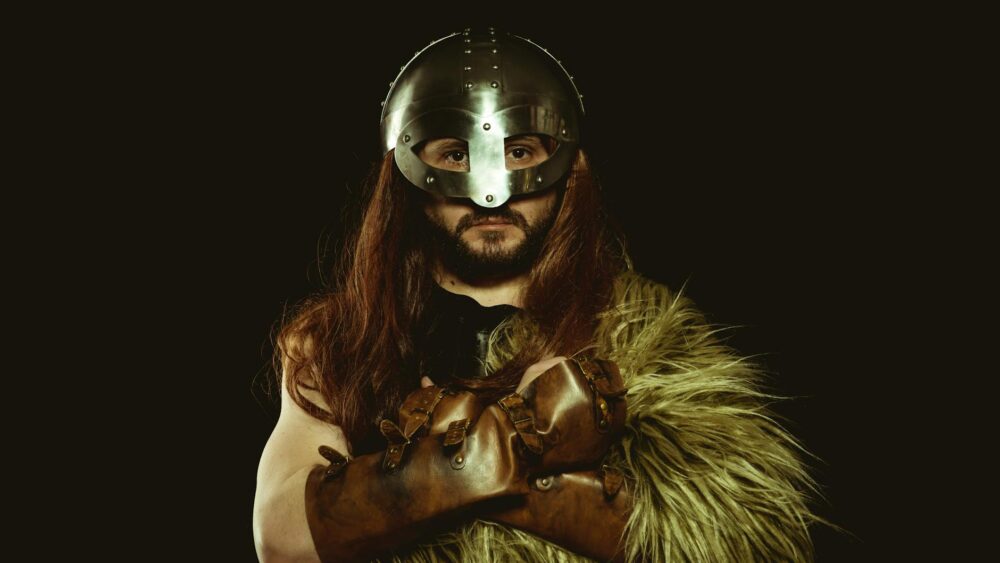
Norse names carry a weight that most modern names simply don’t. Rooted in Old Norse, the language of the Vikings and the medieval Scandinavian world, these names were built from words meaning strength, thunder, war, wisdom, and the gods themselves. A name like Sigrid or Bjorn wasn’t decorative, it was a declaration.
Whether you’re drawn to the mythology, the history, or simply the sound, norse names have surged back into mainstream naming culture in a big way. The following list pulls from genuine Old Norse roots, covering warrior names, goddess names, nature-rooted picks, and modern Scandinavian favorites still in active use today.
Norse Warrior and Battle Names for Boys
These names were built for the battlefield, literally. Many combine Old Norse elements meaning war, victory, or the blade itself.
Gunnar
From the Old Norse elements gunnr (war) and arr (warrior or eagle), Gunnar is one of the most straightforward warrior names in the Norse tradition. It appears throughout the Icelandic sagas and remains a top name in Norway and Iceland today.
Sigurd
From sigr (victory) and vardr (guardian), Sigurd is the hero of the Volsung saga, slayer of the dragon Fafnir and one of the great figures of Norse legend. It’s the Old Norse equivalent of Siegfried and carries enormous mythological weight.
Leif
Derived from Old Norse leifrmeaning heir or descendant. Leif Erikson, the Norse explorer widely credited as the first European to reach North America, makes this name historically untouchable. It’s simple, strong, and genuinely Scandinavian.
Bjorn
Directly from the Old Norse word for bear. Bjorn is one of those names so solidly grounded it barely needs explanation, it’s been in continuous Scandinavian use for over a thousand years and still feels completely modern.
Ragnar
From regin (counsel, decision) and arr (warrior), Ragnar is the name of legendary Viking kings and saga heroes. Its revival in popular culture has only confirmed what Scandinavians already knew: this name commands a room.
Harald
Old Norse Haraldrfrom herr (army) and valdr (ruler). Harald Fairhair, the first king of unified Norway, made this name synonymous with Norse kingship. It’s the direct ancestor of the English name Harold.
Ulf
Simply means wolf in Old Norse, and it was enormously popular among Viking Age Scandinavians as a standalone name. Short, fierce, and phonetically satisfying in a way that longer names can’t replicate.
Ivar
From Old Norse Ivarrcombining yr (yew, bow) and arr (warrior), essentially “bow warrior.” Ivar the Boneless, one of the sons of the legendary Ragnar Lothbrok, is the most famous historical bearer. The name is climbing again in Scandinavia and beyond.
Halfdan
Means “half Dane” in Old Norse, referencing mixed Danish heritage. It was a royal name in the Viking Age, borne by multiple Norwegian and Danish kings. Rare outside Scandinavia, which makes it all the more striking.
Styrbjorn
A compound of styrr (battle, stirring) and bjorn (bear), battle bear, essentially. Styrbjorn the Strong was a real Viking Age warrior and Swedish prince. Bold and completely authentic.
Norse Names Rooted in Mythology and the Gods
The Norse gods were not distant figures, they were present in names, in oaths, and in daily life. These names draw directly from the Aesir and Vanir pantheons.
Thor
The thunder god himself. From Old Norse Thorrrelated to the Proto-Germanic word for thunder. Thor has been a real given name in Scandinavia continuously, not just a Marvel invention, and it remains in use in Norway and Iceland.
Odin
The Allfather of Norse mythology, from Old Norse Odinnlikely connected to odr meaning fury or inspiration. Odin as a given name is genuinely used in modern Scandinavia, particularly in Norway, and has quietly become fashionable in English-speaking countries too.
Tyr
The Norse god of justice and war, whose name gives Tuesday its root. Tyr is short, ancient, and rarely used as a given name outside of Scandinavia, which makes it feel both authentic and surprising.
Vidar
The son of Odin who survives Ragnarok. From Old Norse, likely meaning “wide warrior” or “forest warrior.” Vidar is a real Scandinavian given name, particularly Norwegian, and has a quiet solidity to it.
Baldur
From Old Norse Baldrthe beloved god of light and purity, whose death triggers the beginning of Ragnarok. The name likely derives from Old Norse ballrmeaning bold or fierce, though it became associated with beauty through the myth. Used as a given name in Iceland and Norway.
Loki
The trickster god of Norse mythology, whose name’s etymology is debated but may relate to Old Norse luka (to close, to lock) or simply to a word for fire. Loki is a real given name in Scandinavia, distinct from its pop culture version, though the pop culture version hasn’t hurt its profile.
Freyr
The Norse god of fertility, sunlight, and prosperity, and one of the Vanir gods. Freyr literally means “lord” in Old Norse. Used as a given name in Iceland and Scandinavia, it has a clean, strong sound.
Magni
The son of Thor in Norse mythology, whose name simply means “strength” in Old Norse. Magni is a real given name used in Iceland and Norway, direct, powerful, and steeped in the mythology.
Heimdall
The watchman of the gods, guardian of the Bifrost bridge. The name’s etymology is uncertain but may combine elements meaning “world” and “brightness.” Heimdall is rare as a given name but has documented use in Scandinavia.
Strong Norse Girl Names
Norse women were given names just as formidable as the men’s. Shield-maidens, seeresses, and queens all bore names built from the same warrior vocabulary.
Sigrid
From sigr (victory) and fridr (beautiful, fair), a name meaning something like “beautiful victory.” Sigrid the Haughty was a Norwegian queen of enormous historical reputation. The name is currently enjoying a revival across Scandinavia.
Astrid
From Old Norse Astrithrcombining ass (god) and fridr (beautiful, fair), essentially “divinely beautiful.” Astrid has never really gone out of style in Scandinavia and is now a confident international pick. Author Astrid Lindgren, creator of Pippi Longstocking, is its most beloved modern bearer.
Freya
The goddess of love, war, and magic, whose name simply means “lady” or “noblewoman” in Old Norse. Freya has become genuinely popular in the UK and English-speaking world over the last decade, and for good reason, it’s mythologically rich and phonetically lovely.
Ragnhild
From regin (counsel) and hildr (battle), a name that essentially means “battle counsel.” It was borne by Viking Age queens and is still used in Norway today, though it’s rare outside Scandinavia.
Ingrid
From the god-name Ing (a name for the god Freyr) and fridr (beautiful, fair). Ingrid is one of the most recognized Scandinavian names internationally, partly thanks to actress Ingrid Bergman. It has never felt dated in its home countries.
Gudrun
From gudr (war, battle) and run (secret lore). Gudrun is the tragic heroine of the Volsung saga and a major figure in Norse legend. It’s a serious, weighty name, not a casual choice, which is exactly its appeal.
Solveig
From Old Norse sol (sun) and veig (strength), meaning “sun strength.” Solveig is widely known through Ibsen’s Peer Gyntwhere it is the name of the faithful, steadfast heroine. It’s a quintessentially Norwegian name.
Brynhild
From bryn (armor, protection) and hildr (battle), the armored battle-maiden. Brynhild is the great Valkyrie of the Volsung saga, and the name remains in use in Scandinavia, though it’s rare. Brynhildr is the older Norse form.
Thyra
A Danish royal name with roots in Old Norse, possibly connected to the god Thor or to thyr (Thor’s) combined with vin (friend). Thyra was the name of a tenth-century Danish queen. It has a delicate sound that belies its powerful history.
Hilda
From Old Norse and Old High German hildmeaning battle. Hilda was a common name among Norse women and was carried into England by Scandinavian settlers. It’s currently one of the most talked-about vintage revivals in the UK and US.
Runa
From Old Norse runmeaning secret lore or rune, the sacred carved letters of the Norse world. Runa is a real and current Scandinavian name with a mystical, minimal quality that feels very contemporary.
Signe
From Old Norse Signýbuilt from sigr (victory) and ny (new). Signe is a classic Scandinavian name, still in use across Denmark, Norway, and Sweden, and almost entirely unknown outside those countries, a genuine discovery.
Norse Names from the Sagas
The Icelandic sagas are one of the great literary treasures of the medieval world, and they are packed with names that feel vivid and real because they were. These names belong to the saga heroes and heroines.
Egil
The hero of Egil’s Saga, one of the most celebrated of all Old Norse sagas. The name likely derives from Old Norse agimeaning awe or terror. Egil Skallagrimsson was both a fierce warrior and a celebrated skald (poet), a fascinating combination.
Njord
The Norse god of the sea and wind, and a major figure in the Prose Edda. The name is ancient, possibly pre-Norse, and is used as a given name in Scandinavia today, particularly in Norway.
Gunnhild
From gunnr (war) and hildr (battle), a double-barreled war name. Gunnhild was a powerful Norwegian queen of the Viking Age, known for her ferocity and cunning. The name is rare today but entirely authentic.
Thorvald
From Thor and valdr (ruler), Thor’s ruler. Thorvald Erikson was the brother of Leif Erikson and one of the Norse explorers of North America. It’s a solid, recognizable Norse compound name.
Aud
From Old Norse audrmeaning wealth or prosperity. Aud the Deep-Minded was one of the most celebrated figures of the Icelandic settlement sagas, a matriarch of extraordinary authority. Short, ancient, and powerful.
Floki
A real historical name, borne by Hrafna-Floki Vilgerdarson, the Norse explorer credited with discovering Iceland. The name’s etymology is uncertain but it is genuinely attested as a given name in the Old Norse period and is used in Iceland today.
Eirik
The Old Norse form of Eric, from ei (ever, always) and rikr (ruler, powerful). Eirik the Red, father of Leif Erikson, is the most famous bearer. The original Norse spelling gives it a sharper historical feel than the anglicized Eric.
Hallgerd
From hallr (rock) and gardr (enclosure, protection). Hallgerd is a major female character in Njal’s Saga, one of the greatest Icelandic sagas. The name is rare but authentic, with a striking, angular sound.
Viking Age Royal and Noble Names
The Viking Age Scandinavian aristocracy had a distinctive naming culture, names that announced status, lineage, and divine favor all at once.
Canute
The Anglicized form of Old Norse Knutrmeaning knot. King Canute (Cnut) ruled England, Denmark, and Norway in the eleventh century and was one of the most powerful rulers of the Viking Age. The name is rare in modern use, which makes it feel like a real find.
Knut
The direct Scandinavian form of the name above, from Old Norse knutr (knot). Still used in Norway and Sweden today, Knut is a no-nonsense Norse classic with a royal pedigree.
Olaf
From Old Norse Oleifr or Anleifrmeaning “ancestor’s descendant” or “heir of the ancestors.” Saint Olaf is the patron saint of Norway, and the name has been a Norwegian royal name for centuries. It’s simple, ancient, and completely solid.
Svein
From Old Norse sveinnmeaning boy or young man, but in a noble context implying a young warrior or attendant. Svein Forkbeard was King of Denmark and briefly King of England. The name is still used in Norway and Denmark.
Gorm
An Old Norse name of uncertain exact etymology, possibly from gu-ormr (war serpent) or from a word meaning to take care. Gorm the Old was the first historically recognized King of Denmark, making this one of the oldest attested Scandinavian royal names.
Haakon
From Old Norse Hakoncombining ha (high, chosen) and konr (son, descendant). Haakon has been the name of Norwegian kings from the Viking Age to the present day. It carries an unbroken line of royal use that very few names can match.
Magnus
Adopted into Old Norse from Latin magnus (great), but fully naturalized as a Norse and Scandinavian name by the Viking Age. Magnus was a popular name among Norse kings and is still common across Scandinavia, Iceland, and Scotland.
Ragnvald
From regin (counsel, power) and valdr (ruler), a powerful compound meaning something like “ruling with counsel.” Ragnvald was the name of multiple Norse earls and kings, and it is the origin of the Scottish name Ronald.
Nature-Rooted Norse Names
Old Norse had a deep vocabulary for the natural world, and many names drew directly from it, the sea, the sky, the forest, and the elements that shaped Scandinavian life.
Njal
The hero of Njal’s Saga, the most famous of all Icelandic sagas. The name is the Old Norse form of a name possibly of Irish origin, meaning champion. Njal is used in Iceland and Norway today.
Skye
Used as a given name in Scandinavia and the wider Norse cultural world, connected to the Old Norse sky (cloud). It’s also tied to the Isle of Skye, which has Norse roots in its name. A light, evocative pick that feels both ancient and completely current.
Bard
From Old Norse Bardra name used in the sagas, possibly connected to a word for pine tree or a type of Norse spirit. Bard is a real Scandinavian given name and also the Old Norse ancestor of the Scottish name Bard or Baird.
Dag
Simply means “day” in Old Norse. Dag was a figure in Norse mythology (personification of the day) and the name has been in continuous Scandinavian use. Dag Hammarskjold, the Swedish United Nations Secretary-General, is its most internationally known modern bearer.
Sol
The Norse personification of the sun, Sol (or Sunna) drives the sun chariot across the sky. As a given name, Sol is used across Scandinavia and has a warmth and simplicity that makes it work in almost any language.
Freyja
The older Norse spelling of Freya, meaning “lady” or “noblewoman.” While Freya appears earlier in this list, Freyja is the authentic Old Norse form and is treated as a distinct name in Iceland, where it is one of the most popular girl’s names. Listing it here as the original form is accurate, not redundant.
Ran
The Old Norse goddess of the sea, whose name means “robbery” or “plunder”, she was said to drag sailors down with a net. Ran is used as a given name in Scandinavia, and its brevity gives it a striking, modern feel.
Eira
The Norse goddess of healing and medicine, whose name means mercy or snow in Old Norse. Eira is used as a given name in Scandinavia and Wales (where it independently means snow in Welsh), and it has a quiet, cool beauty to it.
Modern Scandinavian Names with Old Norse Roots
These are names in active use across Denmark, Norway, Sweden, and Iceland today, names that evolved from Old Norse but feel fully contemporary. They sit at the intersection of heritage and freshness.
Axel
The Scandinavian and North German form of the Hebrew name Absalom, but it entered general use through Old Norse Asketill (divine cauldron) and became thoroughly Scandinavian in character. Axel has been a top-100 name in multiple countries and has an unmistakable Norse energy even at its most mainstream.
Sven
The modern Swedish and Norwegian form of Old Norse sveinn (young man, warrior). Sven is one of those names that is so quintessentially Scandinavian it has become a cultural shorthand for the region. Still in solid use across Scandinavia.
Lars
The Scandinavian form of Laurence, but so thoroughly naturalized into Norse naming culture that it functions as a distinctly Scandinavian name. Lars has been a staple in Sweden, Norway, and Denmark for centuries.
Erik
The modern Scandinavian form of Eirik, from Old Norse ei (ever) and rikr (ruler). Erik is one of the most consistently popular Norse-rooted names internationally and remains a top pick across Scandinavia.
Nora
While Nora has multiple origins, it has been fully absorbed into Scandinavian naming culture, particularly in Norway, and is currently one of the most popular girl’s names in the region. Its Norwegian usage gives it a distinctly Norse-adjacent feel.
Liv
From Old Norse hlifmeaning protection or shield, though in modern Scandinavian languages it has merged with the word for life. Liv is currently fashionable across Scandinavia and internationally, partly through actress Liv Ullmann. Clean, minimal, and completely contemporary.
Maja
The Scandinavian form of Maja/Maya, but in Denmark and Sweden it functions as a standalone cultural name with long roots in the region. Maja is consistently popular in Scandinavia and has a soft, approachable sound that contrasts nicely with the harder-edged warrior names.
Tor
The Norwegian and Swedish form of Thor, used as a given name in modern Scandinavia. Tor is the everyday form, simpler and less mythologically theatrical than Thor, but equally authentic.
Vigdis
From Old Norse vig (battle) and dis (goddess, female spirit). Vigdis Finnbogadottir was the President of Iceland from 1980 to 1996, the world’s first democratically elected female head of state. The name is Icelandic and Norwegian, and it is formidable.
Einar
From Old Norse ein (one, alone) and arr (warrior), a lone warrior. Einar is a classic Norse name in continuous Scandinavian use, with a no-frills strength that ages very well.
Short and Striking Norse Names
Not every Norse name is a thunderous compound. Some of the most powerful are just one syllable, built from the same ancient roots but distilled to their essence.
Ro
From Old Norse romeaning calm or rest. Ro is an ancient Scandinavian name that feels startlingly modern, the kind of minimalist pick that works brilliantly as both a given name and a nickname.
Bo
From Old Norse buameaning to live or to dwell. Bo has been used as a given name in Scandinavia for centuries and is currently fashionable internationally. It works for any gender and has an easy, unpretentious energy.
Alf
From Old Norse alfrmeaning elf, and in the Norse world, elves were powerful, luminous beings, not the small creatures of later folklore. Alf is a genuine Scandinavian name with ancient roots, though it has a slightly old-fashioned feel in modern Scandinavia.
Rolf
A contracted form of Old Norse Hrolfrfrom hrodr (fame) and ulfr (wolf), the famous wolf. Rolf the Ganger (Rollo) was the Norse chieftain who founded Normandy and was the ancestor of William the Conqueror. The name is still used in Scandinavia.
Orm
From Old Norse ormrmeaning serpent or dragon. Orm was a common Viking Age name and appears throughout the sagas. Rare today, but completely authentic and striking.
Arn
A short form of Old Norse names containing the element arn (eagle), used as a standalone given name in Scandinavia. Arn is the protagonist of a celebrated Swedish historical novel series and is genuinely used in Sweden and Norway.
How to Choose a Norse Name
Start with the element that draws you in. Norse names are almost always compounds or single powerful words, so knowing whether you love the war vocabulary (gunnrhildrvig), the divine vocabulary (assdisfreyr), or the nature vocabulary (bjornulfsol) will point you toward a cluster of names that feel right together.
Think about how the name will land in your language and culture. Gunnar and Astrid are immediately intuitive for English speakers. Names like Ragnhild, Brynhild, or Gunnhild are equally authentic but will require more explanation, which is not a problem if you love the name, just a reality to factor in.
Consider the saga versions versus the living versions. Some Norse names are primarily historical (Halfdan, Hallgerd, Orm) while others are in active Scandinavian use right now (Astrid, Einar, Maja, Liv). Both are legitimate choices, but they give very different signals. The historical ones feel like a deliberate statement; the modern Scandinavian ones feel like a cultural nod that wears lightly.
Finally, check the nickname landscape. Long Norse compounds often have natural short forms, Brynhild becomes Bryn, Ragnhild becomes Ragna, Thorvald becomes Thor or Val. A name with a built-in nickname gives you the gravitas of the full form and the ease of the short one, which is often the best of both worlds with norse names.
Norse names are not a trend. They are one of the oldest naming traditions in the Western world, and the best of them have been earning their place for over a thousand years. That’s a track record worth trusting.