

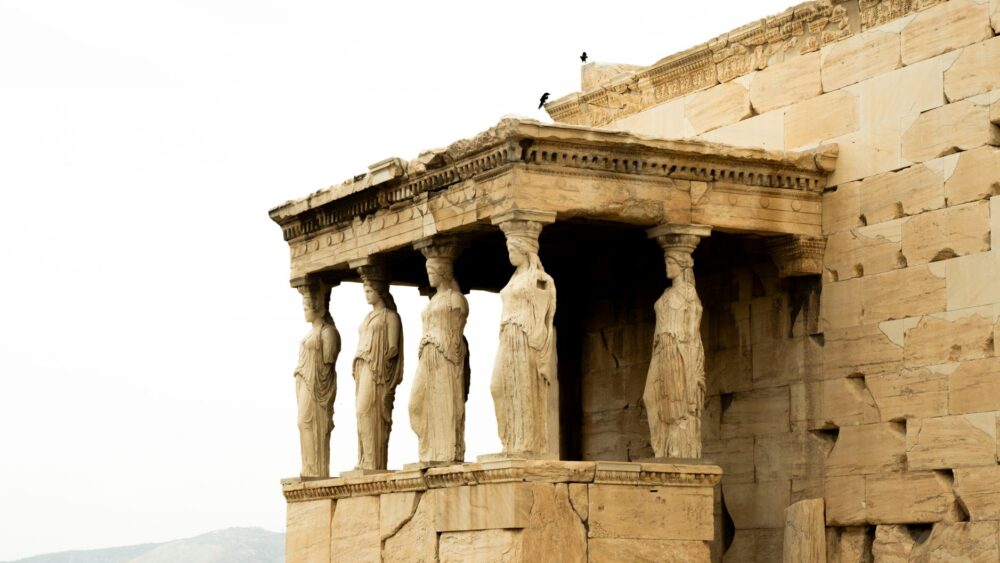
Ancient Greek names carry something most modern names simply don’t: the weight of myth, philosophy, and a civilization that shaped the entire Western world. These are names that belonged to gods and goddesses, warriors who sailed to Troy, philosophers who redefined human thought, and ordinary people who left their mark on stone inscriptions and papyrus scrolls. The tradition of ancient Greek names is very much alive today, and many of them feel surprisingly fresh on a modern child.
This list moves through the major categories of ancient Greek names: the Olympian gods, the heroes and demigods of myth, the great philosophers and historical figures, and the women of Greek legend and history.
Olympian Gods and Goddesses
The twelve Olympians are the most recognizable ancient Greek names in the world. Some, like Apollo, are already well used. Others are genuinely waiting for a comeback.
Apollo
God of the sun, music, poetry, and prophecy. The name’s etymology is debated, but it may derive from a pre-Greek root or from the Greek word apella, relating to assembly or sanctuary. Apollo has been used as a given name across many cultures and is currently having a genuine revival moment in the English-speaking world.
Artemis
Twin sister of Apollo and goddess of the hunt, the moon, and wild animals. The name’s meaning is uncertain, possibly connected to a pre-Greek source, though some ancient writers linked it to artemes, meaning “safe” or “unharmed.” Artemis is bold, strong, and criminally underused as a given name outside Greece.
Athena
Goddess of wisdom, craft, and strategic warfare, and the patron deity of Athens. Like Apollo and Artemis, the name is of uncertain pre-Greek origin. Athena has become a genuine top-tier choice for parents who want a name that sounds both classical and modern, and it has been climbing steadily in English-speaking countries.
Hermes
Messenger of the gods, patron of travelers, commerce, and thieves. The name is likely derived from herma, a pile of stones used as a boundary marker. Hermes is familiar as a word and a brand, but as a given name it remains strikingly rare outside Greece, which makes it an intriguing option.
Hera
Queen of the Olympians and goddess of marriage and family. The etymology may relate to hora, meaning “season” or “the right time,” though this is disputed. Hera is short, powerful, and underused, with a regal sound that stands out in a sea of soft, vowel-heavy girl names.
Ares
God of war, the son of Zeus and Hera. The name likely derives from an ancient root meaning “bane” or “ruin.” Ares has a sharp, punchy sound that modern naming trends tend to love, and it is beginning to appear more frequently in baby name charts.
Hephaestus
God of fire, the forge, and craftsmanship. The etymology is obscure and likely pre-Greek. Hephaestus is a true deep cut for parents who want something ancient and completely off the beaten path.
Demeter
Goddess of the harvest and grain, mother of Persephone. The second element, meter, means “mother” in Greek; the first element is debated, but may relate to an ancient word for earth or grain. Demeter has a warm, earthy sound that suits the current nature-naming trend well.
Dionysus
God of wine, ecstasy, theater, and transformation. The name contains Dios, the genitive of Zeus, combined with nysa, possibly referring to the mythical mountain. Dionysus is a bold, dramatic choice with a fascinating mythological story behind it.
Poseidon
God of the sea, earthquakes, and horses. The second element may derive from the Greek word for “water” or relate to an ancient word for “lord.” Poseidon is recognizable without being overused, and its association with the ocean gives it a strong elemental quality.
Hestia
Goddess of the hearth, home, and family. The name derives from the Greek hestia, meaning “hearth” or “fireside.” Hestia is quiet and warmly domestic in meaning, yet strong in sound, and it is one of the most overlooked of the Olympian names.
Heroes and Demigods of Greek Myth
The heroes of ancient Greek myth are a spectacular source of names. These are figures of extraordinary courage, complexity, and flawed humanity, and their names often carry layered meanings.
Achilles
The greatest Greek warrior of the Trojan War. The name is thought to derive from achos (grief, pain) and laos (people), meaning something like “he who causes grief to the people” or “grief of the people.” Achilles is one of the most recognizable ancient Greek names and has been used as a given name, especially in Southern Europe, for centuries.
Odysseus
The hero of Homer’s Odyssey, famous for his cunning and his long journey home from Troy. The name is linked to the Greek word odyne, meaning “pain” or “trouble,” or possibly to a root meaning “to be angry at.” Odysseus is used as a given name in Greece today and has a wonderfully adventurous feel.
Perseus
The hero who slew Medusa. The name may derive from the Greek verb pertho, meaning “to destroy” or “to sack.” Perseus has a clean, appealing sound and a genuinely heroic story behind it, and it has been gaining quiet traction among name enthusiasts.
Heracles
The greatest of the Greek heroes, known in his Roman form as Hercules. The name means “glory of Hera,” from Hera and kleos (glory). Heracles is the original, authentically ancient Greek form and carries considerably more gravitas than the Romanized version.
Theseus
The founder-hero of Athens, who slew the Minotaur. The name is derived from the Greek root thes, meaning “to place” or “to establish,” giving it a sense of foundation and institution. Theseus is a strong, underused name with deep ties to Athenian identity.
Jason
Leader of the Argonauts, who sailed in search of the Golden Fleece. The name derives from the Greek iasthai, meaning “to heal.” Jason has been a mainstream English-language name for decades, but its ancient Greek mythological roots are as deep as any name on this list.
Orion
The great hunter of Greek myth, placed among the stars by Zeus. The etymology is uncertain but may relate to a pre-Greek place name or to the Greek word for “boundary.” Orion is one of the strongest ancient Greek names in current use, sitting comfortably in the top tier of distinctive but usable names.
Leander
The hero who swam the Hellespont each night to visit Hero, his beloved. The name means “lion man,” from leon (lion) and aner (man). Leander is romantic, literary, and ripe for revival.
Castor
One of the twin Dioscuri, brothers of Helen of Troy. The name may derive from a pre-Greek root or possibly from a Greek word meaning “to shine.” Castor has a crisp, archaic sound that stands apart from more familiar mythological names.
Bellerophon
The hero who tamed Pegasus and slew the Chimaera. The name contains Bellero, possibly a reference to a person he killed, and phon, from phonos (slaughter). A true deep cut, Bellerophon is for the most devoted admirers of ancient Greek mythology.
Cadmus
The legendary founder of Thebes, credited with bringing the alphabet to Greece. The name may derive from a Semitic root meaning “eastern” or “ancient.” Cadmus is distinctive, historically rich, and almost entirely unused in the modern English-speaking world.
Daedalus
The master craftsman and inventor who built the Labyrinth and fashioned wings of feathers and wax. The name derives from the Greek daidalos, meaning “cunning” or “skillfully wrought.” Daedalus is an unusual choice, but for parents drawn to myth and craft, it is genuinely compelling.
Women of Greek Myth and Legend
Ancient Greek names for women span from the fierce and divine to the deeply human. Many of them have a contemporary sound that makes them highly wearable today.
Penelope
The faithful wife of Odysseus, celebrated for her cleverness and patience. The name’s etymology is uncertain, though it has been linked to the Greek word penelops, a type of duck, or to pene (thread) and ops (face). Penelope has been one of the most popular ancient Greek names in the English-speaking world for the past two decades, and it shows no signs of fading.
Persephone
Queen of the Underworld and daughter of Demeter. The name likely means “she who destroys light” or “bringer of destruction,” from pertho (to destroy) and phone (voice, or related to bringing). Persephone is long and mythologically potent, and it has become a favorite among parents who love bold, unusual choices.
Calliope
The Muse of epic poetry. The name means “beautiful voice,” from kallos (beauty) and ops (voice). Calliope is musical, literary, and slightly quirky in the best possible way.
Cassandra
The Trojan prophetess who was cursed to speak true prophecies that no one believed. The name may derive from kekasmai (to shine) and aner (man), or possibly from an older root. Cassandra is a name with dramatic weight, a built-in story, and a beautifully melancholy resonance.
Andromeda
The Ethiopian princess rescued by Perseus, later placed among the stars as a constellation. The name means “ruler of men,” from aner (man) and medon (ruler). Andromeda is grand, astronomical, and one of the more adventurous choices on this list.
Phoebe
A Titaness associated with the moon and prophetic wisdom, whose name means “bright” or “shining,” from the Greek phoibos. Phoebe has been a mainstream favorite for years, a rare ancient Greek name that has fully crossed over into everyday use while retaining its classical elegance.
Selene
The goddess of the moon, distinct from Artemis and later Hecate. The name derives from the Greek selas, meaning “light” or “brightness.” Selene is luminous in both meaning and sound, and it is one of the most appealing ancient Greek names for girls that has not yet reached oversaturation.
Ariadne
The Cretan princess who gave Theseus the thread to navigate the Labyrinth. The name is Cretan Greek in origin and likely means “most holy,” from ari (intensifier) and a root related to holiness or purity. Ariadne is exotic, beautiful, and increasingly being discovered by parents looking beyond the well-worn classics.
Elektra
Daughter of Agamemnon, a central figure in the tragedies of Aeschylus, Sophocles, and Euripides. The name derives from the Greek elektron, meaning “amber” or “shining,” and is the direct origin of the modern word “electricity.” Elektra is fierce, literary, and completely distinctive.
Iphigenia
Daughter of Agamemnon, sacrificed to appease the goddess Artemis before the Greek fleet could sail to Troy. The name means “born to strength” or “she who is born strong,” from iphios (strong) and geneia (birth). Iphigenia is rare in the English-speaking world but has genuine depth and beauty.
Clio
The Muse of history. The name derives from the Greek kleos, meaning “glory” or “fame.” Clio is short, punchy, and elegant, a genuine ancient Greek name that wears as effortlessly as any modern two-syllable choice.
Thalia
The Muse of comedy and pastoral poetry, and also one of the three Graces. The name means “to flourish” or “to bloom,” from the Greek thallein. Thalia has been quietly gaining ground and has a joyful, vibrant energy that its meaning perfectly reflects.
Atalanta
The swift-footed huntress of Greek myth who outran every suitor. The name is thought to derive from a Greek root meaning “equal in weight” or “balanced.” Atalanta is athletic, independent in spirit, and almost entirely unused, which makes it a fantastic find.
Nausicaa
The Phaeacian princess in the Odyssey who helped Odysseus find his way home. The name may derive from naus (ship) and kaio (to burn), possibly meaning “burner of ships.” Nausicaa is one of the most beautiful and underused of all ancient Greek names.
Philosophers, Statesmen, and Historical Greeks
Ancient Greek names were not only for mythological figures. The philosophers, generals, and scientists of the classical world carry names that are equally compelling, and some translate surprisingly well to modern use.
Socrates
The founding figure of Western philosophy. The name means “whole power” or “safe power,” from sos (safe, whole) and kratos (power, strength). Socrates is used as a given name in Greece and Latin America and carries unmistakable intellectual gravitas.
Plato
The philosopher, student of Socrates, and teacher of Aristotle. The name derives from platos, meaning “broad” or “wide,” and was likely a nickname given on account of his broad shoulders or forehead. Plato is brief and striking, and it is genuinely used as a given name in some traditions.
Aristotle
The philosopher who defined logic, biology, ethics, and politics for centuries. The name means “the best purpose” or “best end,” from aristos (best) and telos (end, purpose). Aristotle is used as a given name today, including by the Greek shipping magnate Aristotle Onassis.
Pericles
The great Athenian statesman who oversaw the construction of the Parthenon and the golden age of Athens. The name means “surrounded by glory,” from peri (around) and kleos (glory). Pericles is bold, historically loaded, and almost entirely unused outside Greece.
Leonidas
The Spartan king who led the famous three hundred at Thermopylae. The name derives from leon (lion), meaning “son of the lion” or “lion-like.” Leonidas has been growing in popularity globally, helped along by its Spartan associations and its strong, accessible sound.
Themistocles
The Athenian statesman and naval commander who defeated the Persian fleet at Salamis. The name means “glory of the law,” from themis (law, justice) and kleos (glory). Themistocles is a true deep cut for history lovers.
Xenophon
The historian and soldier who led the famous retreat of the Ten Thousand. The name means “foreign voice” or “strange voice,” from xenos (stranger, foreigner) and phone (voice). Xenophon has an unusual, powerful sound and a fascinating etymology.
Alcibiades
The controversial Athenian general and politician, a student of Socrates. The name means “strong force” or “mighty force,” from alke (strength, force) and bios (life). Alcibiades is an extremely rare choice in the modern world, but it is a real given name with a dramatic history.
Archimedes
The mathematician and inventor of Syracuse, one of the greatest scientists of antiquity. The name means “master of thought” or “great master,” from archi (chief, master) and medomai (to think, to plan). Archimedes is a name that announces intellectual ambition immediately.
Hippocrates
The father of medicine. The name means “horse power” or “tamer of horses,” from hippos (horse) and kratos (power). Hippocrates is used as a given name in Greek-speaking communities and has a remarkable legacy behind it.
Herodotus
The first historian. The name means “gift of Hera,” from Hera and dotos (given). Herodotus is a striking choice, and its meaning is a lovely counterpoint to Hera’s reputation as a jealous goddess.
Thucydides
The historian of the Peloponnesian War, considered by many scholars to be the first true political historian. The name may derive from Thucy (possibly related to a personal name) and dides, from didomi (to give). Thucydides is an exceptionally rare choice outside Greece.
Solon
The Athenian lawmaker credited with laying the foundations of Athenian democracy. The name derives from a root meaning “wise” or possibly related to a concept of worthiness. Solon is short, strong, and genuinely ancient, with a statesmanlike quality.
Pythagoras
The philosopher and mathematician famous for the theorem that bears his name. The name means “market of Pythia” or “voice of the oracle,” from Pythia (the oracle at Delphi) and agora (market, assembly). Pythagoras is a name of extraordinary resonance for anyone who loves mathematics or philosophy.
Ancient Greek Names with Powerful Meanings
Beyond the famous figures, ancient Greek names include many that are simply beautiful in meaning and sound, borne by historical Greeks, minor mythological figures, or documented in ancient inscriptions and literature.
Kallisto
A nymph in Greek mythology transformed into a bear and placed among the stars as the constellation Ursa Major. The name means “most beautiful,” from kallistos, the superlative of kalos (beautiful). Kallisto is one of the most striking ancient Greek names available today.
Nikias
A prominent Athenian general and statesman of the fifth century BC. The name derives from nike (victory), meaning “victory” or “victorious.” Nikias is the ancient Greek original behind the modern name Nikias, and it has a clean, strong sound.
Lysander
The Spartan admiral who defeated Athens to end the Peloponnesian War, and also a character in Shakespeare’s A Midsummer Night’s Dream. The name means “liberator of men,” from lysis (loosening, liberation) and aner (man). Lysander is romantic, literary, and ripe for serious use.
Alexios
A genuinely ancient Greek name meaning “defender” or “helper,” from the Greek verb alexein (to defend, to protect). Alexios is the authentic ancient and Byzantine Greek form behind the modern name Alexis or Alexander.
Nikodemos
A name meaning “victory of the people,” from nike (victory) and demos (people). Nikodemos was a real historical name used in ancient Athens and appears in various ancient Greek inscriptions.
Euphrosyne
One of the three Graces in Greek mythology, the goddess of joy and mirth. The name means “joy” or “merriment,” from the Greek euphrosyne, derived from eu (good, well) and phren (mind, heart). Euphrosyne is elaborate and deeply beautiful, a name for parents who love something truly rare.
Kleio
The ancient Greek original spelling of Clio, the Muse of history. The name means “glory” or “fame,” from kleos. Kleio is the more authentically archaic form and has a striking, unusual look in its original spelling.
Demetrios
The ancient Greek masculine form of Demeter’s name, meaning “devoted to Demeter” or “of the earth.” Demetrios was widely used in the ancient Greek world and appears in countless historical inscriptions. It carries the warm, earthy quality of its root.
Timotheos
Meaning “honoring God” or “honored by God,” from time (honor) and theos (god). Timotheos is the original ancient Greek form behind the modern name Timothy, and it has considerably more character in its unabbreviated form.
Alexandros
The original ancient Greek form of Alexander, meaning “defender of men,” from alexein (to defend) and aner (man). Alexander the Great carried this name, and Alexandros is the form it held in his own language and time.
How to Choose an Ancient Greek Name
The first thing worth considering is whether you want a name that is recognizably ancient or one that has already been absorbed into modern culture. Names like Phoebe, Jason, and Penelope are ancient Greek names that require no explanation. Names like Thucydides or Iphigenia announce themselves as deliberate choices with a story behind them. Neither approach is wrong, but knowing which camp you are in will narrow the field quickly.
Pay attention to the meaning, because ancient Greek names tend to have unusually transparent and powerful etymologies. A name that means “glory of Hera,” “liberator of men,” or “most beautiful” carries that meaning with it every time it is spoken. That is part of the appeal of drawing from this tradition. If the meaning resonates with you, the name will feel right in a way that is hard to explain but easy to recognize.
Think about usability in everyday life. Leonidas, Ariadne, and Calliope are ancient Greek names that work smoothly in English-speaking contexts. Bellerophon and Alcibiades are genuine names with wonderful histories, but they will require patience from the people who hear them. Both are valid choices; just be honest with yourself about which kind of name your life has room for.
Finally, consider the nickname potential. Many ancient Greek names come with natural shortenings that make them far more daily-life-friendly. Persephone becomes Percy or Seph. Andromeda becomes Andi or Romie. Demetrios becomes Demi. The full ancient form can live on the birth certificate while a more practical form takes over in day-to-day use, and that combination is one of the most elegant solutions in all of naming.
Ancient Greek names have survived for two and three thousand years because they carry real meaning, real stories, and real beauty. There is a reason they keep coming back.