
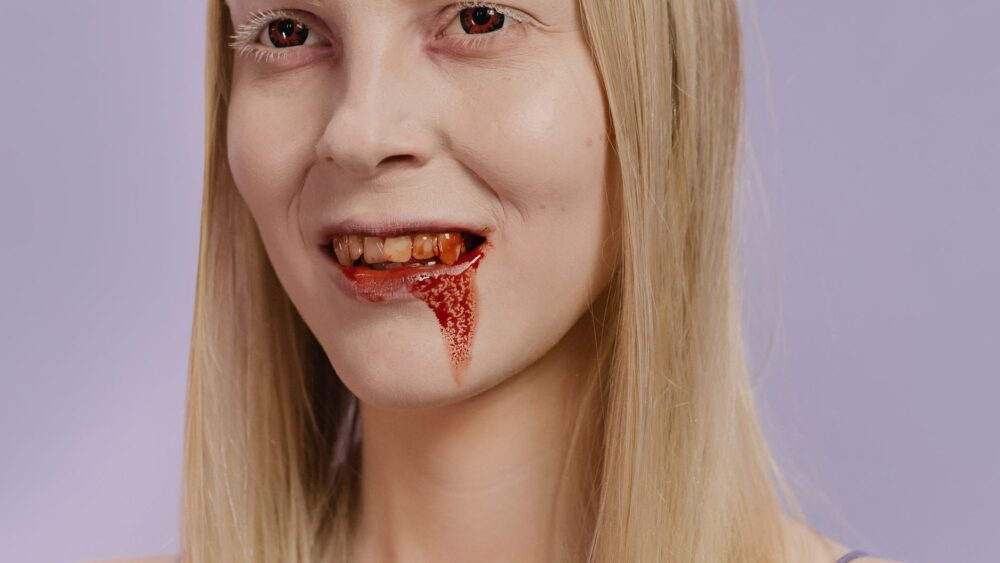
The right vampire last name does half the worldbuilding for you. A surname carries centuries of weight, a family lineage, a country of origin, a hint at how old and how dangerous this creature really is. The best vampire last names feel inherited, aristocratic, and just slightly wrong, like a house that looks beautiful from the street but has no mirrors inside.
This list pulls from real surnames across Eastern Europe, Western Europe, and beyond, names that actual families have carried, many of them with roots in the regions most associated with vampire legend. Whether you are writing a novel, a screenplay, a tabletop campaign, or just naming a character for fun, these vampire last names are organized by mood and origin so you can find the right fit fast.
Classic Gothic European Surnames
These are the surnames that feel pulled straight from a crumbling estate in Transylvania or a candlelit castle in the Carpathians. Aristocratic, old, and unmistakably dark.
Dracul
The historical surname of Vlad II of Wallachia, father of Vlad the Impaler, and the direct root of Bram Stoker’s “Dracula.” In Old Romanian, dracul means both “the dragon” and “the devil,” which gives any vampire bearing it an immediate, terrifying pedigree.
Bathory
The surname of Erzsébet Báthory, the 16th-century Hungarian countess widely considered one of history’s most prolific serial killers and a foundational figure in vampire lore. It comes from the Hungarian noble clan name Bátor, meaning “brave” or “valiant”, the irony is exquisite.
Varney
The surname of Sir Francis Varney, the vampire at the center of the Victorian penny dreadful Varney the Vampire (1847), one of the earliest vampire novels. It has English roots and a wonderfully hissing quality on the tongue.
Ruthven
Lord Ruthven is the vampire in John Polidori’s 1819 short story “The Vampyre,” the first major vampire story in English literature. It is a real Scottish surname, pronounced “RIV-en,” and its misleading spelling adds to its unsettling elegance.
Carmilla
Technically more famous as a given name, Carmilla is the surname-adjacent title of Sheridan Le Fanu’s 1872 novella and has been used as a surname in adaptations. It suggests a feminized Latin root and carries one of the most iconic vampiric associations in literature.
Orlok
Count Orlok is the terrifying vampire of F.W. Murnau’s 1922 silent film Nosferatu. The name is invented but has become so deeply embedded in the genre that it reads as real and ancient, the gold standard of constructed vampire surnames.
Moroi
In Romanian folklore, a moroi is a type of vampire or evil spirit born from the soul of an unbaptized child. It has been adopted as a surname in fiction and carries genuine folkloric weight that few invented names can match.
Strigoi
Another term from Romanian vampire mythology, strigoi refers to a troubled spirit that rises from the dead. Using it as a surname signals deep genre fluency and an authentically Eastern European flavor.
Vasiliev
A real Slavic surname derived from the given name Vasily (from the Greek Basileios, meaning “king”). Its aristocratic Slavic sound and royal meaning make it a natural fit for an ancient, noble vampire lineage.
Moldovan
A Romanian surname denoting someone from Moldova, the region that overlaps historically with Wallachia and the heart of vampire legend. Grounded, geographic, and quietly ominous.
Romanian and Wallachian Surnames
Transylvania and Wallachia are the spiritual homeland of vampire mythology, and real surnames from those regions carry an authenticity that no invented name can replicate.
Ionescu
One of the most common Romanian surnames, derived from Ion (the Romanian form of John). Its very ordinariness is unsettling on a vampire, the creature hiding in plain sight behind the most respectable of names.
Popescu
Derived from the Romanian word popămeaning “priest,” this is one of Romania’s most widespread surnames. A vampire priest’s descendant carries a particularly delicious irony.
Florescu
A Romanian surname meaning “son of Florea,” itself derived from the Latin flos (flower). Radu Florescu was a real historian who co-wrote the landmark study linking Vlad the Impaler to Dracula, giving this name genuine vampire-lore credentials.
Lupescu
From the Romanian lupmeaning “wolf.” Wolves and vampires are deeply intertwined in Eastern European folklore, and a vampire named Lupescu carries that ancient, predatory connection.
Munteanu
A Romanian surname meaning “from the mountains,” specifically the Carpathians. There is no more atmospheric geographic surname for a vampire from the high, fog-wrapped passes of Transylvania.
Petrescu
A common Romanian surname meaning “son of Petre” (the Romanian form of Peter). Solid, real, and with enough Slavic resonance to read immediately as Eastern European.
Vladescu
Derived directly from the given name Vlad, itself from a Slavic root meaning “rule” or “power.” The connection to Vlad the Impaler is baked in, making this one of the most thematically loaded vampire last names available.
Draghici
A Romanian surname with roots in the Slavic dragmeaning “dear” or “beloved.” The gap between its sweet meaning and its dark sound is exactly what makes it interesting for a villain.
Ardelean
Means “from Ardeal,” the Romanian name for Transylvania. You cannot get more geographically on-the-nose than a vampire named Ardelean.
Neagu
A Romanian surname derived from negrumeaning “black.” Short, sharp, and carrying a color meaning that needs no explanation in a vampire context.
Hungarian and Transylvanian Surnames
Transylvania was part of the Kingdom of Hungary for centuries, and Hungarian surnames bring a distinctive, clipped intensity that works beautifully for vampire characters.
Fekete
The Hungarian word for “black,” used as a surname. Direct, dark, and unmistakably Hungarian, a vampire named Fekete carries an immediate chromatic menace.
Farkas
The Hungarian word for “wolf,” widely used as a surname. Like Lupescu, it connects the vampire to the wolf in folklore, but with a harder, more guttural sound.
Varga
One of the most common Hungarian surnames, originally meaning “cobbler” or “shoemaker.” Its very commonness is a useful disguise for an ancient creature who has learned to blend in.
Nemeth
A Hungarian surname meaning “German,” referring to someone of German origin or from a German-speaking area. Its ambiguous ethnic signaling suits a vampire who has moved across borders over centuries.
Horvath
Meaning “Croatian” in Hungarian, this is one of Hungary’s most widespread surnames. It has a strong, aristocratic ring and a genuine connection to the borderlands of Central Europe.
Szabo
Meaning “tailor” in Hungarian, Szabó is another of the country’s most common surnames. A vampire tailor who has been dressing the nobility for five hundred years is a compelling backstory hiding in a single word.
Korvacs
A variant spelling associated with the Hungarian kovácsmeaning “blacksmith.” Kovács and its variants are among the most common Hungarian surnames and carry an industrial, forged-metal hardness.
Zichy
The name of a real Hungarian noble family, the Zichy clan, with estates in Transylvania and a long aristocratic history. Old noble surnames from the region automatically lend a vampire the right kind of class.
Esterházy
One of the most powerful Hungarian noble families in history, with roots going back to the 13th century. A vampire named Esterházy has clearly been accumulating wealth and influence for a very long time.
Teleki
Another real Hungarian noble surname, associated with Transylvanian aristocracy. It is sharp, two-syllabled, and carries genuine historical weight in the region.
Slavic and Eastern European Surnames
The broader Slavic world, Poland, Czech Republic, Slovakia, Serbia, Bulgaria, Ukraine, has its own deep vein of vampire mythology and surnames that sound perfectly suited to the undead.
Volkov
A Russian and Bulgarian surname meaning “of the wolf,” from volk. It is one of the most immediately recognizable Slavic surnames for a supernatural predator, with exactly the right hard consonants.
Czernov
A variant of Chernov, from the Slavic chyornymeaning “black.” The Polish-influenced spelling with the initial “Cz” adds extra visual menace.
Sokolov
From the Russian sokolmeaning “falcon.” Predatory, aristocratic, and widely used as a real surname across Russia, Bulgaria, and the Czech Republic.
Morozov
From the Russian morozmeaning “frost” or “freeze.” A vampire named Morozov carries the cold of the grave in every syllable.
Koval
A Slavic surname meaning “blacksmith,” used in Ukrainian, Slovak, and Czech contexts. Short and hard, it hits like a bolt thrown on a coffin lid.
Zima
Meaning “winter” in several Slavic languages and used as a real surname in Czech, Slovak, and Polish communities. Cold, bleak, and beautiful.
Nocek
A Czech and Slovak surname derived from nocmeaning “night.” A vampire named Nocek is essentially wearing a nametag, and that brazenness is its own kind of power.
Vlček
A Czech and Slovak surname meaning “little wolf,” from vlk (wolf). The diminutive form adds a deceptive softness to a predatory meaning.
Striga
From the Latin strixa screech owl associated with witches and vampires in Roman mythology, this name appears as a real surname in Polish and Italian records. It is one of the most etymologically loaded vampire surnames that also functions as an actual family name.
Novak
One of the most common Slavic surnames, meaning “newcomer” or “new man.” The irony of an immortal being named “newcomer” is too good to pass up.
Krauss
A German and Ashkenazi Jewish surname meaning “curly-haired,” used widely across Central and Eastern Europe. Its hard Germanic sound gives it an institutional, bureaucratic coldness that suits a vampire who has been managing estates for centuries.
Brenner
A German-origin surname meaning “burner” or “distiller,” used across Germany, Austria, and the Czech-German borderlands. The burning connotation has an obvious and satisfying irony for a creature destroyed by sunlight.
Weiss
German for “white,” used as a surname across Germany, Austria, and Eastern European Jewish communities. The pallor of the undead in a single syllable.
Schwarz
German for “black,” the counterpart to Weiss. Schwarz is one of the most common German surnames and carries straightforward chromatic darkness.
Western Gothic and British Surnames
Gothic fiction has deep British and French roots, and Western European surnames carry a different kind of darkness: manor houses, fog-soaked moors, and centuries of cold aristocracy.
Blackwood
A real English surname combining “black” and “wood”, dark forest territory. Algernon Blackwood was a real British horror writer, which gives this name a genuine genre pedigree beyond its obvious visual appeal.
Ravenswood
An English surname and place name, notably used by Sir Walter Scott in The Bride of Lammermoor. Ravens, of course, are the birds most associated with death and the uncanny in Western tradition.
Ashford
A real English place-name surname meaning “ford by the ash trees.” Ash trees have a long folkloric association with protection against evil, a vampire bearing this name carries a certain dark humor.
Cromwell
An English surname and famous historical name, meaning “winding stream.” It has the weight of real history and a slightly ruthless, iron-fisted sound that suits an ancient predator.
Morrow
An English and Scottish surname meaning “one who lives near a moor.” Short, bleak, and loaded with the landscape of Gothic fiction.
Graves
An English surname referring to someone who lived near a grove or ditch. Robert Graves was a real poet who wrote extensively about myth and the uncanny. As a vampire surname, it needs no explanation.
Nightingale
A real English surname, taken from the bird. The nightingale sings only in darkness, and a vampire named Nightingale has a poetic self-awareness that makes them immediately interesting.
Ashcroft
An English surname meaning “enclosure near ash trees.” It has the right combination of natural imagery and hard consonants, and its aristocratic ring suits a long-lived creature.
Mercer
An English occupational surname meaning “cloth merchant.” A vampire who made their fortune in the wool trade in the 13th century and has been quietly compounding interest ever since is a vivid character in a single name.
Crane
A real English surname derived from the bird. Tall, angular, associated with death in some traditions, and carrying the literary echo of Ichabod Crane, it works on multiple levels.
Vane
An English surname meaning “banner” or “flag,” from the Old English fana. Short, sharp, and with a hint of weathervane, something that spins in the dark wind.
Harker
The surname of Jonathan Harker, Bram Stoker’s protagonist in Dracula. It is a real English occupational surname meaning “eavesdropper” or “herald,” and its association with the most famous vampire novel ever written makes it instantly resonant.
Seward
Another surname from DraculaDr. Seward runs the asylum adjacent to Carfax. A real English surname meaning “guardian of the sea,” it has an institutional, professional coldness that suits a vampire operating in polite society.
Westenra
Lucy Westenra is Dracula’s first victim in Stoker’s novel. The surname feels invented but Stoker drew from real naming conventions of the period. As a vampire character name, it has a tragic elegance.
Italian and Mediterranean Surnames
Italy gave the world Renaissance darkness, the Inquisition, and some of the most menacing noble families in history. Italian vampire last names carry luxury and menace in equal measure.
Moretti
From the Italian morettameaning “dark-skinned” or “Moorish,” used as a surname across northern Italy. A vampire named Moretti has been attending masked balls in Venice for four hundred years.
Neri
Italian for “black,” used as a surname throughout Italy. Clean, sharp, and meaning exactly what you want it to mean.
Oscuro
From the Italian and Spanish oscuromeaning “dark” or “obscure.” Used as a surname in Italian records, it is almost too on-the-nose, which is exactly why it works for a self-dramatizing vampire.
Grimaldi
The surname of Monaco’s royal family, with roots meaning “mighty with the helm” from Old Germanic. It has centuries of aristocratic weight and a slightly grim sound that the etymology does not fully explain but the ear absolutely hears.
Falcone
Italian for “falcon,” used as a surname across Italy. Predatory, aristocratic, and carrying the same hunting-bird energy as Sokolov but with a Mediterranean warmth that makes it feel like a mask over something cold.
Montague
A real French-origin surname used extensively in England and Italy, meaning “pointed mountain.” It is best known from Shakespeare’s Romeo and Juliet but predates it by centuries as a noble surname, and a vampire named Montague was probably there for the actual feud.
Valentini
An Italian surname derived from the Latin valensmeaning “strong” or “healthy”, again, the irony for an undead creature is delightful. It has a cultured, northern Italian elegance.
Ferrante
An Italian surname from the given name Ferrante, related to Fernando and ultimately meaning “bold voyager.” Elena Ferrante is a famous (if pseudonymous) bearer. For a vampire, the voyaging connotation fits a creature who has crossed centuries.
Sangiovese
Best known as a grape variety, Sangiovese is also a real Italian surname with roots meaning “blood of Jupiter” from the Latin sanguis (blood) and Iovis (Jupiter). A vampire named Sangiovese has a sense of humor about themselves.
Carnevale
An Italian surname from carnevale (carnival), itself derived from Latin roots meaning “farewell to flesh.” A vampire named Carnevale carries the whole theatrical tradition of masks, excess, and the night.
French and Aristocratic Surnames
French vampires come with velvet coats, elaborate manners, and a coldness that hides behind exquisite politeness. These surnames carry that weight.
Lestat
The surname-turned-given-name of Anne Rice’s most famous vampire, Lestat de Lioncourt. As a standalone surname it has gained enough cultural currency to work on its own, and its French aristocratic particle “de Lioncourt” is the model for the whole category.
Villeneuve
A real French surname meaning “new town,” carried by one of France’s oldest noble families. A vampire named Villeneuve has been watching new towns become old ones for a very long time.
Descartes
The surname of the philosopher René Descartes, meaning “of the maps” or “of the charts.” An ancient vampire philosopher who questioned whether anything is real has obvious appeal.
Moreau
A French surname meaning “dark-complexioned” or “Moorish,” from the Latin Maurus. H.G. Wells gave it to the mad scientist of The Island of Doctor Moreaucementing its sinister literary credentials.
Lacroix
Meaning “the cross” in French, the ultimate irony for a vampire surname. It is a real French-Canadian and French surname, and a vampire named Lacroix either has a very dark sense of humor or a very painful history.
Delacroix
A variant of Lacroix with the particle “de,” giving it a more aristocratic register. Eugène Delacroix was the real French Romantic painter, and there is something very right about a vampire named after the artist who painted Liberty Leading the People.
Nocturne
Used as a surname in French records, from the Latin nocturnusmeaning “of the night.” A vampire named Nocturne has essentially announced their nature to anyone paying attention.
Beaumont
A French surname meaning “beautiful mountain,” carried by numerous noble families across France and England. Its beauty-and-coldness combination is exactly right for a vampire who was once human and has not entirely forgotten it.
Renard
French for “fox,” used as a surname across France. Cunning, predatory, and carrying the long literary tradition of Reynard the Fox, a creature who survives by wit and deception.
Noir
French for “black,” used as a real surname in French-speaking communities. As direct as it gets, and precisely as effective.
Invented but Deeply Convincing Vampire Surnames from Fiction
Some vampire last names were created for fiction but have become so embedded in the genre that they function as reference points. These are the ones worth knowing.
Cullen
The surname of Stephenie Meyer’s vampire family in Twilight. It is actually a real Irish and Scottish surname meaning “holly” or “back of a river,” which makes it a genuine name that fiction has permanently vampirified.
Salvatore
The surname of the vampire brothers in The Vampire Diaries. It is a real Italian surname meaning “savior,” from the Latin salvator. The gap between “savior” and “vampire” is one of the show’s running tensions.
Mikaelson
The surname of the Original vampire family in The Vampire Diaries and The Originals. Constructed from the given name Mikael (the Norse form of Michael), it follows real Scandinavian patronymic naming conventions and sounds completely plausible as an actual old Norse family name.
Lockwood
A real English surname meaning “enclosed wood,” it appears in The Vampire Diaries as the name of a werewolf family but has become associated with the broader supernatural register of the show. It is also the name of the narrator in Emily Bronte’s Wuthering Heights.
Ravenscroft
A real English surname meaning “raven’s enclosure,” used in vampire fiction and gaming. It has the right combination of bird-of-death imagery and enclosed, estate-like geography.
Blackthorn
A real English surname derived from the blackthorn tree, associated with dark magic in British folklore. It appears in Cassandra Clare’s The Dark Artifices series and has become a recognized genre surname.
How to Choose the Right Vampire Last Name for Your Story
The first question is geography and era. A vampire who rose in 15th-century Wallachia should have a Romanian or Slavic surname, Vladescu, Lupescu, or Ardelean. A vampire made in 18th-century Paris belongs to the Lacroix or Villeneuve family. Getting this right is the difference between a character who feels genuinely ancient and one who feels like a costume.
Think about what the surname reveals about the vampire’s original human identity. Occupational surnames like Mercer or Szabo suggest a middle-class origin, someone who clawed their way up before being turned. Noble surnames like Esterházy or Grimaldi imply they were already powerful before they became immortal. That backstory shapes everything about how the character moves through the world.
Consider sound as much as meaning. Vampire last names work best when they have hard consonants (Volkov, Fekete, Czernov), or an unexpected softness that feels like a disguise (Nocturne, Nightingale, Valentini). A name that is slightly difficult to pronounce at first glance carries its own subtle menace, it reminds you that this creature is not from here, or not from now.
Finally, think about irony. Some of the best vampire last names mean something that cuts against the darkness: Lacroix (the cross), Salvatore (savior), Novak (newcomer), Brenner (burner). A name that contains its own contradiction gives your vampire an instant layer of depth that pure darkness cannot match.
Whatever you choose, the surname is the first thing a reader learns about a character’s history. Make it carry weight.