

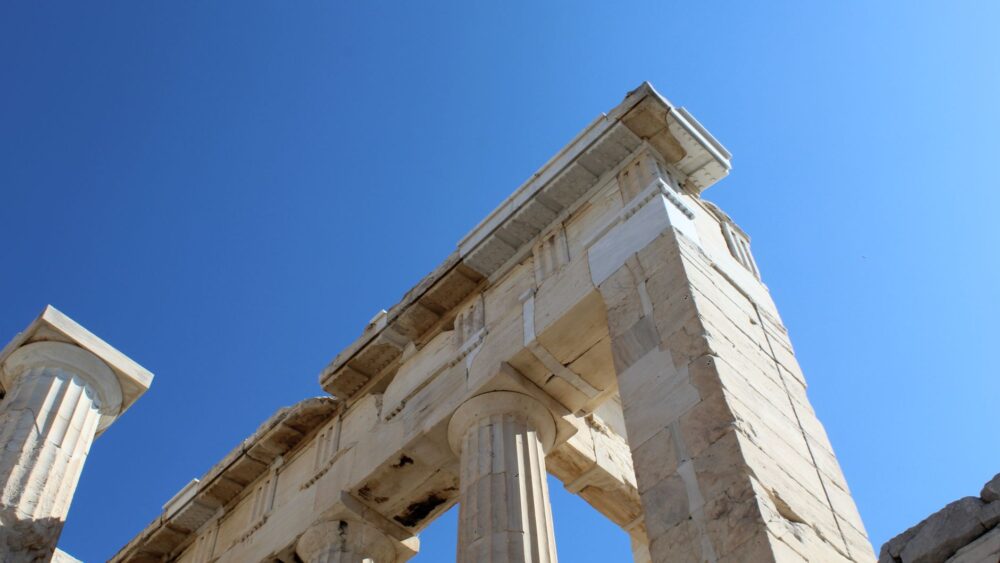
Greek last names carry centuries of history in just a few syllables. Many trace back to ancient professions, geographic features, religious devotion, or the name of a founding ancestor, making them some of the most meaning-dense surnames in the world. Whether you are researching your own family tree, building a fictional character, or simply fascinated by the way language preserves culture, Greek last names reward a close look.
The Greek surname tradition as we know it solidified largely during the Byzantine era and the centuries of Ottoman rule, when families began adopting hereditary surnames to distinguish clans and lineages. You will notice recurring suffixes: -poulos (meaning “son of,” from Latin pullus, a young bird or offspring), -akis (a Cretan and island diminutive suggesting “little son of”), -idis/-ides (meaning “son of,” from ancient Greek), and -opoulos. These endings are not decorative. They are genealogical markers baked into the name itself.
Patronymic Greek Last Names (Son Of…)
The largest category of Greek surnames is patronymic: names built on a father’s or ancestor’s given name, often with a suffix that means “son of.” These are the names that make lineage literal.
Alexandropoulos
Means “son of Alexandros,” itself meaning “defender of men.” One of the most stately patronymics in the Greek canon, carrying the weight of Alexander the Great’s legacy into modern family identity.
Dimitriou
Means “of Dimitrios,” the Greek form of Demetrius, which honors Demeter, the goddess of the harvest. Common across mainland Greece and Cyprus, it signals descent from an ancestor named Dimitrios.
Nikolaides
Means “son of Nikolaos,” from nike (victory) and laos (people). The -ides suffix is among the oldest patronymic endings in Greek, found in ancient texts long before hereditary surnames existed.
Georgiou
Means “of Georgios,” from the Greek georgos, meaning “farmer” or “earth-worker.” Extremely common in Cyprus in particular, where the genitive form became the fixed surname.
Konstantinidis
Means “son of Konstantinos,” the name of the emperor who shaped the Christian Roman world. Families bearing this name often have roots in Constantinople or regions that held the emperor in particular reverence.
Ioannou
Means “of Ioannis” (John), from the Hebrew Yohanan, meaning “God is gracious.” One of the most widespread surnames in Cyprus, reflecting how common the given name Ioannis was across centuries of Greek Christian culture.
Petrakis
Means “little son of Petros,” from the Cretan diminutive suffix -akis. Petros derives from the Greek petra, meaning “rock” or “stone.” The -akis ending immediately signals island or Cretan origin.
Andreou
Means “of Andreas,” from the Greek andreios, meaning “manly” or “brave.” A clean, ancient patronymic widespread across Greece and the diaspora.
Vasilakis
Means “little son of Vasilis,” from the Greek basileus, meaning “king.” The diminutive -akis suffix softens what is otherwise a grandly regal root.
Stefanidis
Means “son of Stefanos,” from the Greek stephanos, meaning “crown” or “garland.” A surname that quietly carries the imagery of honor and distinction.
Panagakos
Built on Panagiota or Panagis, names honoring the Panagia (All-Holy Virgin). The root pan (all) plus hagios (holy) makes this one of the most overtly religious surnames in the Greek tradition.
Papadopoulos
Means “son of a priest.” From papas (priest) plus -poulos (son of). One of the most common surnames in Greece, reflecting the cultural centrality of the Orthodox clergy in village life.
Occupational Greek Last Names
Across medieval and Byzantine Greece, many families took surnames from the trade or craft their ancestor practiced. These names are social history compressed into a single word.
Karpouzis
Derives from karpouzi (watermelon), used to describe a seller or grower of the fruit. Occupational surnames tied to produce were common in agricultural communities throughout Greece.
Argyris
From the Greek argyros, meaning “silver.” Originally an occupational name for a silversmith or silver trader, it later became both a given name and a hereditary surname.
Chalkias
From chalkos, meaning “copper” or “bronze.” This was the name for a coppersmith or metalworker, and families bearing it were likely descended from craftsmen who worked with metal.
Samaras
From samari, a packsaddle. A Samaras was a saddler or harness-maker, an essential trade in a world that ran on horses and mules. The name is still very much in use across Greece today.
Psaras
From psari, the Greek word for “fish.” A Psaras was a fisherman, and the name is especially common in coastal communities and island families.
Keramos
From keramos, meaning “potter’s clay” or “pottery.” It denoted a potter or tile-maker, and the ancient Kerameikos district of Athens took its name from the same root.
Mavros
From the Greek mavros, meaning “black” or “dark.” While it sometimes described a dark complexion, it was also used for a dyer who worked with black pigments or for someone who traded in dark cloth.
Ploumis
Derived from the Greek adaptation of the Latin pluma, meaning “feather.” A Ploumis was likely a feather merchant or a craftsman who worked with feathers for bedding, quills, or ornamentation.
Kalogeropoulos
Means “son of a monk,” from kalogeros (a monk or holy man) plus -poulos. Despite the clerical root, it became a perfectly ordinary hereditary surname, perhaps most famously carried by opera icon Maria Callas, who was born Maria Cecilia Kalogeropoulos.
Stavropoulos
From stavros (cross) plus -poulos. While it has a religious dimension (the cross of Christ), it could also have denoted a craftsman who made crosses, a common trade in Orthodox Christian communities.
Geographic and Place-Based Greek Last Names
Many Greek families took their surname from the village, region, or landscape feature their ancestors called home. These names are essentially addresses frozen in time.
Makedonis
Means “the Macedonian,” denoting a family with roots in the ancient region of Macedonia. The name itself may derive from a root meaning “tall” or “slender,” possibly referring to the highland terrain.
Kretas
Means “the Cretan,” identifying a family as originating from the island of Crete. Straightforward and proud, it was common among families who relocated from Crete to the mainland.
Spartanos
Denotes origin from the city of Sparta in the Peloponnese. Families bearing this name carry one of the most culturally loaded place names in all of Western history.
Limnios
Means “of the lake” or “from Lemnos,” the Aegean island. The root limni means “lake” in Greek, and the name can signal either a geographic origin on the island or an ancestor who lived beside a lake.
Kolettis
Believed to derive from a village name in the mountainous Epirus region of northwestern Greece. Families with this name are often traced to the rugged terrain of the Greek interior.
Corfiatis
Means “from Corfu,” the Ionian island. This type of topographic surname was especially common as Greeks migrated between islands and the mainland during the Venetian and Ottoman periods.
Peloponnesios
Literally means “of the Peloponnese,” the large peninsula forming the southern part of mainland Greece. A clear regional identifier adopted by families who left the peninsula and wanted to preserve that identity.
Thessalonikefs
Denotes origin from Thessaloniki, the major northern Greek city whose name means “victory of the Thessalians.” Families bearing this name often have Byzantine or Sephardic-influenced roots in that cosmopolitan city.
Nisiotes
From nisi, the Greek word for “island.” A Nisiotes was simply “the islander,” used to distinguish a family of island origin when they settled on the mainland.
Kambos
From the Greek word for a flat, open plain or fertile valley. Families named Kambos likely farmed or lived in lowland agricultural areas, and the name is still found across the Aegean islands.
Nature and Landscape Greek Last Names
The Greek landscape, from its rocky mountains to its glittering coastline, left a deep imprint on family names. These surnames evoke the natural world that shaped daily Greek life.
Petros
From the Greek petra, meaning “rock” or “stone.” As a surname, it identified families who lived near a notable rocky outcrop or whose ancestor bore the given name Petros.
Thalassinos
From thalassa, the Greek word for “sea.” A Thalassinos was a sea person, a family of mariners or coastal dwellers, and the name carries the vast, ancient Greek relationship with the Mediterranean.
Dendrinakis
From dendron, meaning “tree,” with the Cretan diminutive -akis. A surname for a family associated with a grove or woodland, it reflects the island tradition of naming families after the landscape around their home.
Limnaios
From limni (lake), meaning “of the lake” or “lake-dweller.” Distinct from the island-based Limnios, this form more directly points to a freshwater landscape.
Potamos
From the Greek potamos, meaning “river.” Families named Potamos likely lived along a riverbank, and the root survives in words like “hippopotamus” (river horse) in the wider Greek-descended vocabulary.
Akrivos
From akra, meaning “cape” or “promontory,” a high point of land jutting into the sea. A geographic surname for families settled at a coastal headland.
Vouno
From the Greek vouno, meaning “mountain.” A straightforward topographic surname identifying a family of mountain origin or highland dwelling.
Elias
While primarily a given name meaning “my God is Yahweh” (from the Hebrew Elijah), Elias became a widespread Greek surname through the tradition of naming a family after a church or chapel of Prophet Elias built on a hilltop. Hilltop chapels dedicated to the prophet are a defining feature of the Greek landscape.
Kastro
From the Greek (via Latin castrum) word for a castle or fortified settlement. Families named Kastro lived near or within a medieval fortification, common throughout the Byzantine and Frankish periods in Greece.
Religious and Byzantine Greek Last Names
Orthodox Christianity saturated Greek identity for over a thousand years. It is no surprise that religious devotion, church roles, and saintly names left a powerful mark on Greek surnames.
Hadjis
From the Arabic hajj, absorbed into Greek to describe a Christian pilgrim who had traveled to Jerusalem. A Hadjis was a person of significant spiritual standing in their community, and the prefix Hadji- was a mark of honor.
Papageorgiou
Means “priest Georgios” or “son of priest Georgios.” One of the most common compound clerical surnames in Greece, combining papas (priest) with the popular given name Georgios.
Papakostas
Means “priest Kostas” or “son of priest Kostas.” Kostas is the short form of Konstantinos, and this compound clerical surname was extremely common in villages with strong Orthodox traditions.
Diakopoulos
From diakonos, meaning “deacon,” plus -poulos. A family whose ancestor served as a deacon in the Orthodox Church, one step below the priesthood in clerical rank.
Monahos
From monahos, meaning “monk” or “one who lives alone.” A surname that almost certainly originated with a family that had a monastic ancestor or lived near a monastery.
Evangelou
Means “of the Gospel” or “of Evangelos,” from euangelion, meaning “good news.” As a surname it honors the Gospels and is among the most spiritually charged names in the Greek tradition.
Stavros
From stavros, the Greek word for “cross.” As a surname, it signals deep devotion to the symbol of Christ’s crucifixion, and families named Stavros were often associated with a church or monastery of the Holy Cross.
Kyriakos
From kyriakos, meaning “of the Lord” or “belonging to the Lord,” from kyrios (lord, master). It also connects to the word for Sunday (Kyriaki), the Lord’s day, and was a common name given to children born on Sundays.
Christodoulou
Means “servant of Christ,” from Christos (Christ) and doulos (servant or slave). One of the most explicitly devotional surnames in the Greek Orthodox tradition, it was particularly common in Cyprus.
Theodorou
Means “of Theodoros,” from theos (God) and doron (gift), so “gift of God.” A surname built on one of the most theologically resonant given names in the Greek world.
Character and Virtue Greek Last Names
Some Greek surnames were built on qualities, traits, or epithets that described an ancestor’s personality, reputation, or physical appearance. These are the names that tell a small story about the person who first carried them.
Kalogeros
From kalos (beautiful, good) and geros (old man). Literally “the good elder” or “the fine old man,” it was used both for respected elderly men and, as noted above, for monks.
Makris
From the Greek makros
From the Greek makros, meaning “long” or “tall.” A descriptive surname for a family whose ancestor was notably tall, still common across Greece and the Greek diaspora. From mikros, meaning “small” or “little.” The counterpart to Makris, it described a short or slight ancestor and became a fixed hereditary surname. From the Greek word for “Slav” or “slave,” reflecting the complex history of Byzantine Greece where Slavic settlers and enslaved peoples were absorbed into the population. Families bearing this name often have mixed Greek-Slavic ancestral roots. From triantafyllo, the Greek word for “rose” (literally “thirty-petaled flower”). Used as a surname for a family associated with rose cultivation or for an ancestor whose given name was the rose-derived Triantafyllos. From the ancient Greek xenos, meaning “stranger” or “foreigner.” It was also the word for “guest,” reflecting the ancient Greek concept of xenia (sacred hospitality). A family named Xenos likely had a foreign ancestor or lived near a place where travelers were hosted. From politis, meaning “citizen” or “city-dweller,” from polis (city). Often specifically used for families from Constantinople (the City, i Poli in Greek), it carries a particular resonance for Greek families displaced after 1922. From the Greek kakos, meaning “bad” or “evil,” though in practice it was used as a nickname for a mischievous or difficult person rather than a genuinely wicked one. Nicknames that seem insulting hardened into hereditary surnames across many cultures, and Greek is no exception. From the Greek agathos, meaning “good” or “noble.” One of the foundational virtue words in ancient Greek philosophy, used by Plato and Aristotle, it became a straightforward surname praising an ancestor’s character. From sophos, meaning “wise.” The root of the English word “philosophy” (love of wisdom), it was used as an honorific for a learned or clever ancestor and became a hereditary surname in some families. Greece’s long history of conflict, from ancient battles to the War of Independence in the 1820s, produced surnames built on strength, weaponry, and martial identity. These are the names that sound like they belong on a battlefield. From leon, meaning “lion,” with the patronymic suffix -idas. Leonidas means “son of a lion” and carries the direct legacy of the Spartan king who held Thermopylae. As a surname it projects extraordinary ancestral pride. From Andrikos, a diminutive of Andreas, plus -poulos. Andreas means “brave” or “manly,” so this is effectively “son of the brave little man,” a patronymic built on martial virtue. From the ancient Greek kratos, meaning “power,” “strength,” or “rule.” In mythology, Kratos was the personification of strength. As a surname it is rare but genuine, found in records of families from the Peloponnese. From nike (victory) and phoros (bearing), meaning “bearer of victory” or “victorious.” A Byzantine imperial name that became a surname, it was popular among families who wanted to signal military success in their lineage. From polemos (war) and archos (leader), meaning “war leader” or “commander.” In ancient Athens, the Polemarch was a senior military official. As a surname, it claimed illustrious martial ancestry. From strategos, the Greek word for a military general or commander. The Byzantine Empire used the title for regional military governors, and families descended from or associated with such figures took it as a surname. From the Greek kokkinos, meaning “red.” It may have described a red-haired ancestor, a soldier associated with red military dress, or a family connected to the red dye trade. A vivid, memorable surname still common in Greece. Denotes descent from the Arvanites, the Albanian-speaking Orthodox Christian communities who settled in Greece from the 14th century onward and played a central role in the Greek War of Independence. Many great Greek independence fighters bore this surname. A smaller but significant group of Greek surnames traces back to ancient family clans, Byzantine aristocratic houses, or names so old they carry meaning from the pre-Christian world. From palaios (ancient, old) and logos (word, reason). The Palaiologos dynasty was the last ruling family of the Byzantine Empire, and families bearing this name claim one of the most historically significant surnames in Greek history. The name of the Komnenian dynasty that ruled Byzantium from 1081 to 1185. Its exact etymology is debated, but the family originated from Komne, a village in Thrace. Families bearing this surname claim direct Byzantine imperial descent. Another Byzantine imperial clan name, borne by emperors and aristocrats from the 9th century onward. The origin is possibly from the Latin dux (leader, duke), absorbed into Byzantine Greek. Families named Doukas carry one of the oldest aristocratic surnames in the Greek world. A great Byzantine aristocratic family name, borne by the emperor John VI Kantakouzenos. The name’s origin is disputed but may relate to a place name in the Byzantine interior. It represents the highest tier of Byzantine noble naming. A family name associated with the Greek Phanariots, the elite Greek families of Constantinople who wielded enormous influence under Ottoman rule. Phanariot surnames like this one became markers of a specific educated, cosmopolitan Greek identity. From mavros (black) and kordatos (possibly from the cord or string of a garment). A prominent Phanariot family name, borne by Alexandros Mavrokordatos, one of the founding figures of the modern Greek state. From the Greek ypselos, meaning “high” or “lofty.” The Ypsilantis family were Phanariot princes, and Alexandros Ypsilantis launched the Greek War of Independence in 1821. The surname literally means “the high-born” or “the elevated one.” A compound name believed to derive from kolokotrona, a type of large gourd or pumpkin. Despite its humble literal meaning, the name belongs to one of the most celebrated families in Greek history: Theodoros Kolokotronis was the greatest military hero of the Greek War of Independence. From the ancient Greek melas, meaning “black” or “dark.” An ancient root that appears in Aristotle’s writings and in the name of the Black Sea (Pontos Melas in some ancient sources). As a surname it is old, spare, and distinguished. Derived from the Venetian name Benizelos, absorbed into Greek through the long Venetian presence in Crete and the Ionian islands. Eleftherios Venizelos, the great Cretan statesman, is its most famous bearer, and the name itself is a record of Greek-Venetian cultural exchange. If you carry a Greek last name or are researching one, the suffix is your first clue. Names ending in -poulos or -akis are almost certainly patronymic and point to a specific region: -poulos is associated with the Peloponnese and southern mainland Greece, while -akis signals Cretan or island origin. Names ending in -idis or -ides tend to come from northern Greece, Pontus, or Asia Minor, regions with strong ancient Greek populations. The prefix is equally telling. Names beginning with Hadji- mark a pilgrim ancestor. Names beginning with Papa- mark clerical descent. Names beginning with Mavro- (black), Makro- (long/tall), or Kalo- (good/beautiful) are descriptive compounds that paint a picture of an ancestor’s appearance or character. For deeper research, Greek civil records became standardized after independence in the 1820s, but earlier records exist in church baptism registers (often held by the local Orthodox metropolis), Ottoman tax records (which are increasingly digitized), and Venetian notarial archives for families from Crete and the Ionian islands. If your family is from Pontus, Cappadocia, or Asia Minor, refugee registers from 1922 and 1923 are an invaluable source. Finally, do not be surprised if the “meaning” of your surname has evolved or been lost. Many Greek surnames have been transliterated, shortened, or altered through emigration to the United States, Australia, or Germany, where immigration officials or families themselves simplified spelling. Going back to the original Greek form often unlocks the etymology that a transliterated version obscures. Greek last names are not just family labels. They are compressed histories, carrying the occupation of a medieval craftsman, the devotion of a Byzantine pilgrim, the battlefield valor of an independence fighter, or the memory of a village that may no longer exist. Reading a Greek surname carefully is, in the truest sense, reading a piece of history.Micros
Sklavos
Triantafyllidis
Xenos
Politis
Kakos
Agathos
Sophos
Warrior and Strength Greek Last Names
Leonidas
Andrikopoulos
Kratos
Nikiforos
Polemarhos
Stratigos
Kokkinos
Arvanitis
Ancient Clan and Dynasty Greek Last Names
Palaiologos
Komnenos
Doukas
Kantakouzenos
Botasis
Mavrokordatos
Ypsilantis
Kolokotronis
Melas
Venizelos
How to Research and Honor Your Greek Last Name