


The Peruvian Amazon holds one of the densest concentrations of wildlife on the planet, and its remote channels, oxbow lakes, and flooded forests are where most of the region’s famous animals actually live. Reaching them on foot is difficult, because the waterways are the real highways here. That is why an Amazon river cruise from Peru out of Iquitos is one of the most reliable ways to see the signature species up close.
None of the animals below are unique to Peru. They range widely across the Amazon and Orinoco basins, from Brazil and Colombia to Bolivia and Ecuador. But the protected waters of reserves like Pacaya-Samiria give you a genuinely strong chance of encountering all five on a single trip. Here are the ones worth watching for.
1. Pink River Dolphin (Boto)
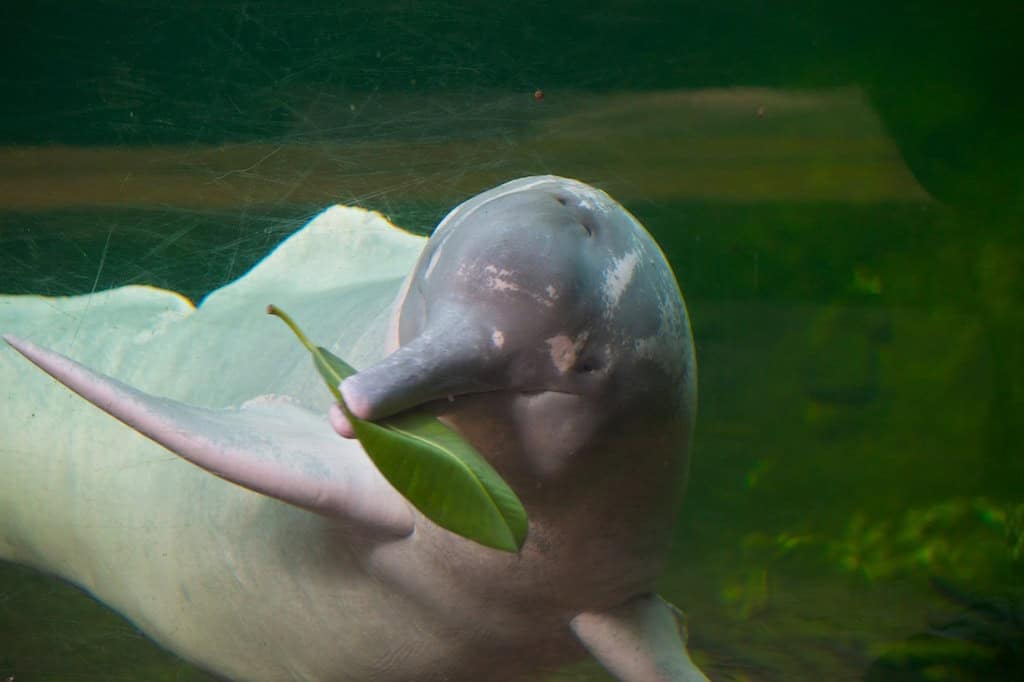
The pink river dolphin (Inia geoffrensis), known locally as the boto, is the largest freshwater dolphin in the world, with adult males reaching about 2.5 metres and 185 kilograms. They are born grey and turn pink with age.
The colour comes from a mix of blood vessels near the skin and scar tissue built up through years of rough play and male-on-male fighting, which is why the oldest, most aggressive males tend to be the pinkest. What makes them so well suited to the flooded forest is their flexibility. Unlike ocean dolphins, the boto has unfused neck vertebrae and can turn its head almost 90 degrees, letting it weave between submerged trunks and branches as it hunts. It feeds on more than 50 species of fish, along with crabs and small turtles, and relies on echolocation in the murky water.
In Peru, the Pacaya-Samiria reserve and the rivers around Iquitos are among the best places to find them, often surfacing curiously near boats.
2. Peruvian Spider Monkey
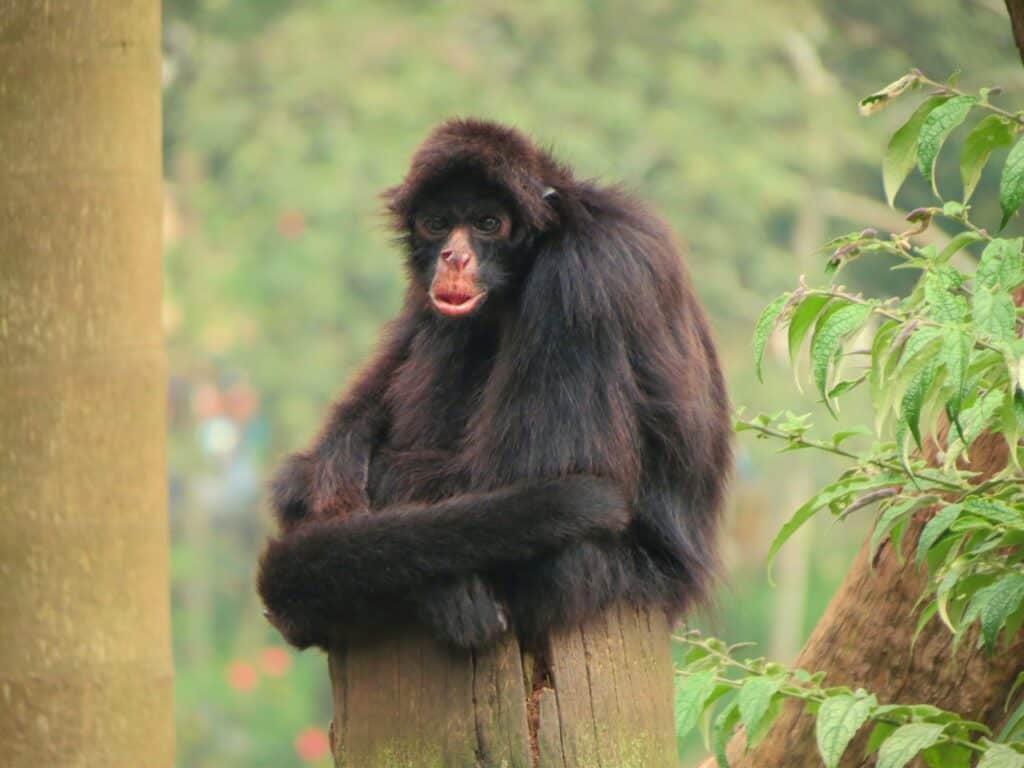
High in the canopy, the Peruvian spider monkey (Ateles chamek) is one of the most acrobatic primates in the Americas. Its standout feature is a prehensile tail, longer than its body and tipped with a bare, ridged pad that grips like a hand.
It works as a fifth limb, strong enough to support the animal’s full weight. Long arms, hook-like hands, and an almost non-existent thumb complete a body built entirely for swinging through the trees.
Spider monkeys live in fluid social groups of 20 to 30 that constantly split into smaller foraging parties and regroup, so the troop you see in the morning may look completely different by afternoon. They feed mainly on ripe fruit, which makes them important seed dispersers across the forest. They also need large stretches of healthy, undisturbed canopy, so spotting them is usually a sign you are in a well-preserved patch of rainforest.
3. Sloth
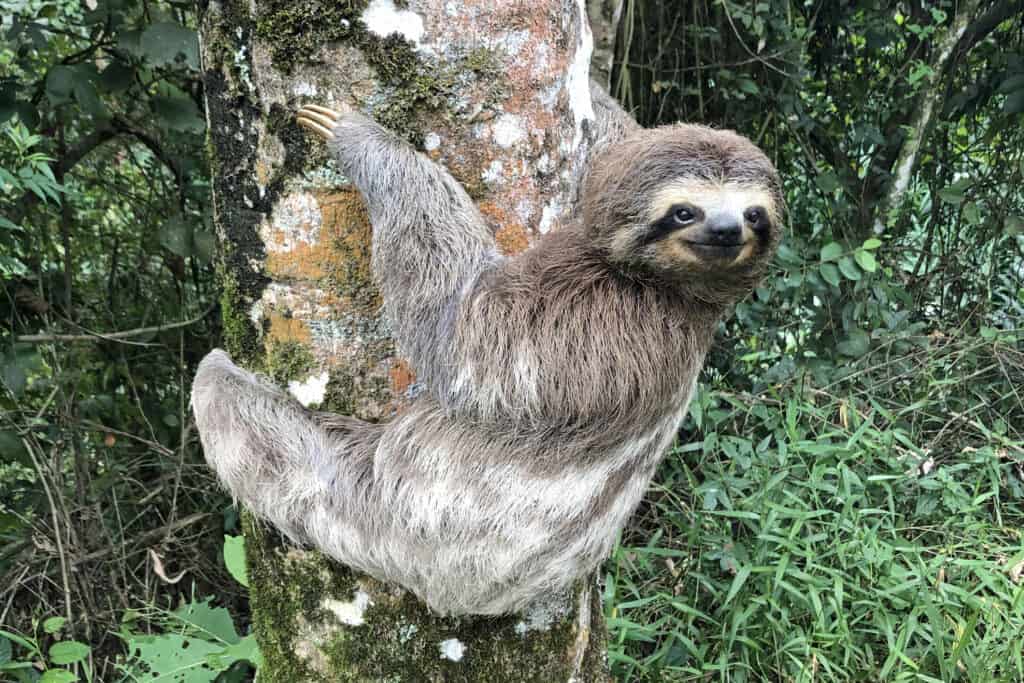
Two sloth species share the Peruvian Amazon: the brown-throated three-toed sloth (Bradypus variegatus), which favours humid flooded forest, and Linnaeus’s two-toed sloth (Choloepus didactylus), which prefers denser upland canopy.
The three-toed sloth has the slowest metabolism of any non-hibernating mammal, and almost everything about its life follows from that. It tops out at roughly one foot per second and survives on a low-calorie diet of leaves digested in a four-chambered stomach. That slow pace has a hidden benefit. Sloths move so little that algae grows in the grooves of their hair, giving them a greenish tint that doubles as camouflage and supports a tiny ecosystem of moths and beetles living in the fur. They descend from the canopy only about once a week.
Three-toed sloths are more active in daylight and easier to spot than the largely nocturnal two-toed species. Look for them curled in the forks of cecropia trees along the riverbanks.
4. Black Caiman
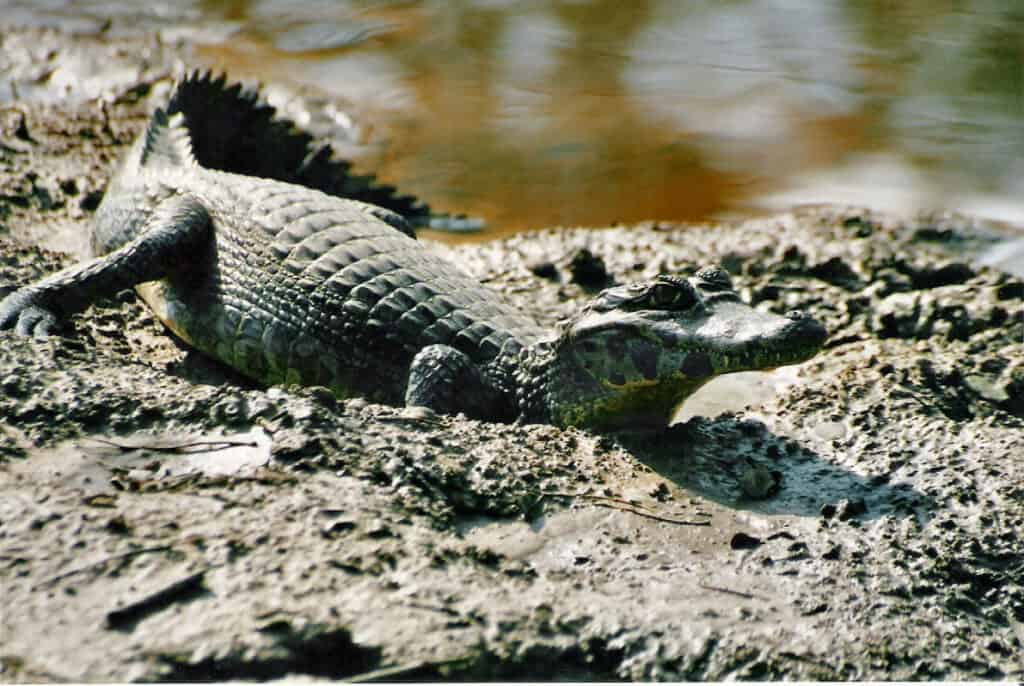
The black caiman (Melanosuchus niger) is the apex predator of the Amazon basin and the largest member of the alligator family. Most adults measure 4 to 5 metres, and the biggest can exceed 6 metres and 450 kilograms. Its dark, almost black hide serves two purposes: camouflage on night hunts and better heat absorption in the water. Like all ambush hunters of its kind, its eyes and nostrils sit high on its head so it can stay almost fully submerged while watching the bank.
Caimans hunt mainly after dark, taking fish such as piranha and catfish along with capybara and other mammals. A reflective layer behind the eyes makes them shine in torchlight, which is exactly how guides find them on night excursions, scanning the shoreline for pairs of glowing eyes. The species was hunted to near collapse for its hide in the 20th century but has recovered well in protected areas such as Pacaya-Samiria, Tambopata, and Manu, where it shares the water with the smaller, far more common spectacled caiman.
5. Green Anaconda
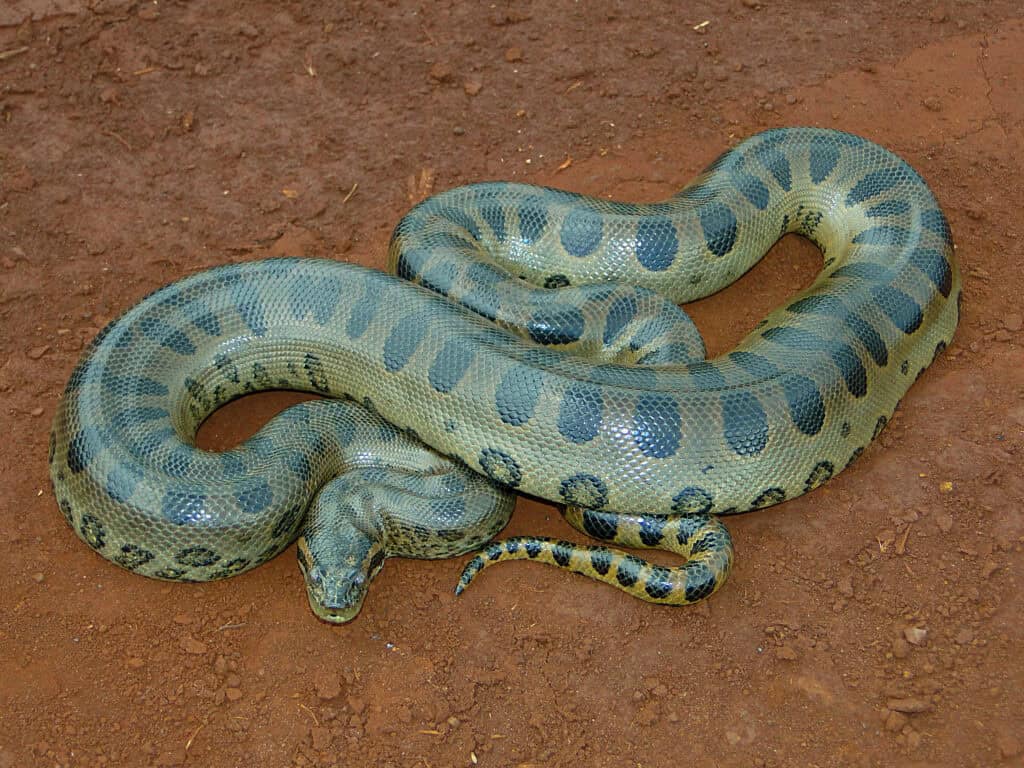
The green anaconda (Eunectes murinus) is the heaviest snake on Earth. It is not the longest, the reticulated python edges it there, but its sheer girth makes it far heavier, with large individuals averaging around 5.5 metres and the biggest reaching well over 6 metres and 250 kilograms. Females are dramatically larger than males, one of the most extreme size differences between the sexes of any land animal. A non-venomous constrictor, the anaconda is built for ambush in slow water. Its eyes and nostrils sit on top of its head, letting it lie nearly invisible at the surface before striking and coiling around prey as large as capybara, deer, and even caiman. It spends most of its time in swamps, lagoons, and sluggish channels, which makes the quiet backwaters reached by cruise excursions the most likely place to glimpse one. An anaconda sighting is rare and never guaranteed, which is exactly what makes it the prize encounter of an Amazon trip.
Final Thoughts
From pink dolphins surfacing beside the boat to a black caiman’s eyes reflecting in the torchlight, the Peruvian Amazon delivers wildlife encounters that are difficult to match anywhere else. None of these animals are exclusive to Peru, but few destinations offer such consistent opportunities to observe all five within a single journey.
Travelling with experienced guides, respecting wildlife from a safe distance, and exploring protected areas such as Pacaya-Samiria greatly increase your chances of unforgettable sightings while helping preserve the rainforest for future generations.
Whether it’s your first visit to the Amazon or a return expedition, these encounters offer an unforgettable glimpse into one of Earth’s richest ecosystems, leaving you with a deeper appreciation for the remarkable biodiversity that makes the Peruvian Amazon one of the world’s premier wildlife destinations.